Schloss Ottenburg: A Medieval Castle and Late-Classical Villa in Germany
Site at a Glance
- Rating
- 4.6
- Popularity
- Very Low
- Country
- Germany
- Primary era
- Medieval
- External website
- Open
- Eras represented
- Medieval, Modern
- Civilizations
- German, Holy Roman Empire
- Site type
- Domestic
- Remains
- Elite Residence
On this page8 sections
History
Schloss Ottenburg is a historic castle complex in Germany, located in Eching, whose present form combines a medieval core with a nineteenth-century late-classicist villa. The site was first recorded in 750 as “Outinpurg” and became a fief of the Freising bishopric by at least 1070, when it served as the ancestral seat of the Counts of Ottenburg-Grögling.
Medieval lordship
A hilltop castle stood at Ottenburg by the twelfth century. Around 1150 to 1158, Otto, Bishop of Freising, expanded the medieval stronghold. In 1212, the acquisition of Eching and a farm in Günzenhausen consolidated Ottenburg as a Hofmark, a Bavarian territorial lordship whose holder exercised lower court jurisdiction. Deutenhausen also belonged to the lordship, while the Freising bailiff who administered it held his seat at Schloss Ottenburg.
War and princely transformation
Swedish forces inflicted extensive damage on Ottenburg in 1632 during the Thirty Years’ War, the major European conflict of the seventeenth century that involved religious and political struggles. By the end of that century, the castle had been transformed into a pleasure palace for the prince-bishop of Freising.
Secularization and nineteenth-century change
In 1803, during the secularization of Bavaria, the transfer of ecclesiastical property to secular political authorities, Ottenburg passed to the Electorate of Bavaria. The state sold it in 1804 to Adam von Aretin, the commissioner responsible for dissolving ecclesiastical institutions.
The Hierl family owned the property from 1809 until the 1830s. It then passed to Joseph Zeiller, a clerk of the royal district and city court in Munich, who died there on 7 April 1836. Part of the historic castle was later demolished, and the structures that remained were incorporated into a late-classicist villa. A new castle chapel was built at its present location in 1845. Schloss Ottenburg remains privately owned and is protected as both a listed architectural monument and an archaeological monument representing a high- and late-medieval castle.
Remains
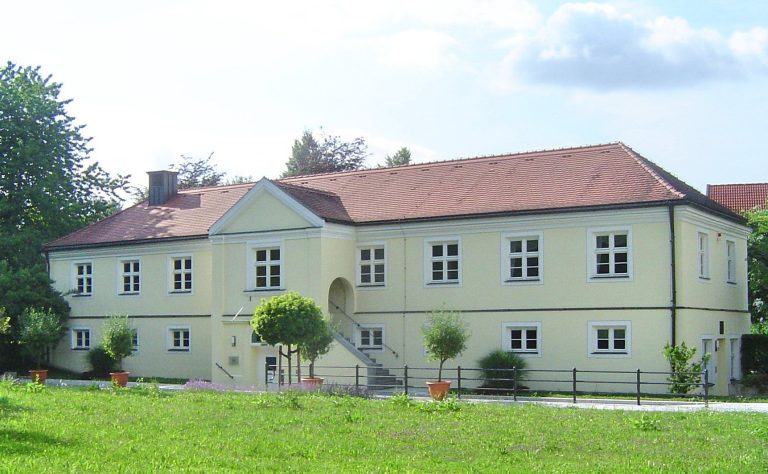
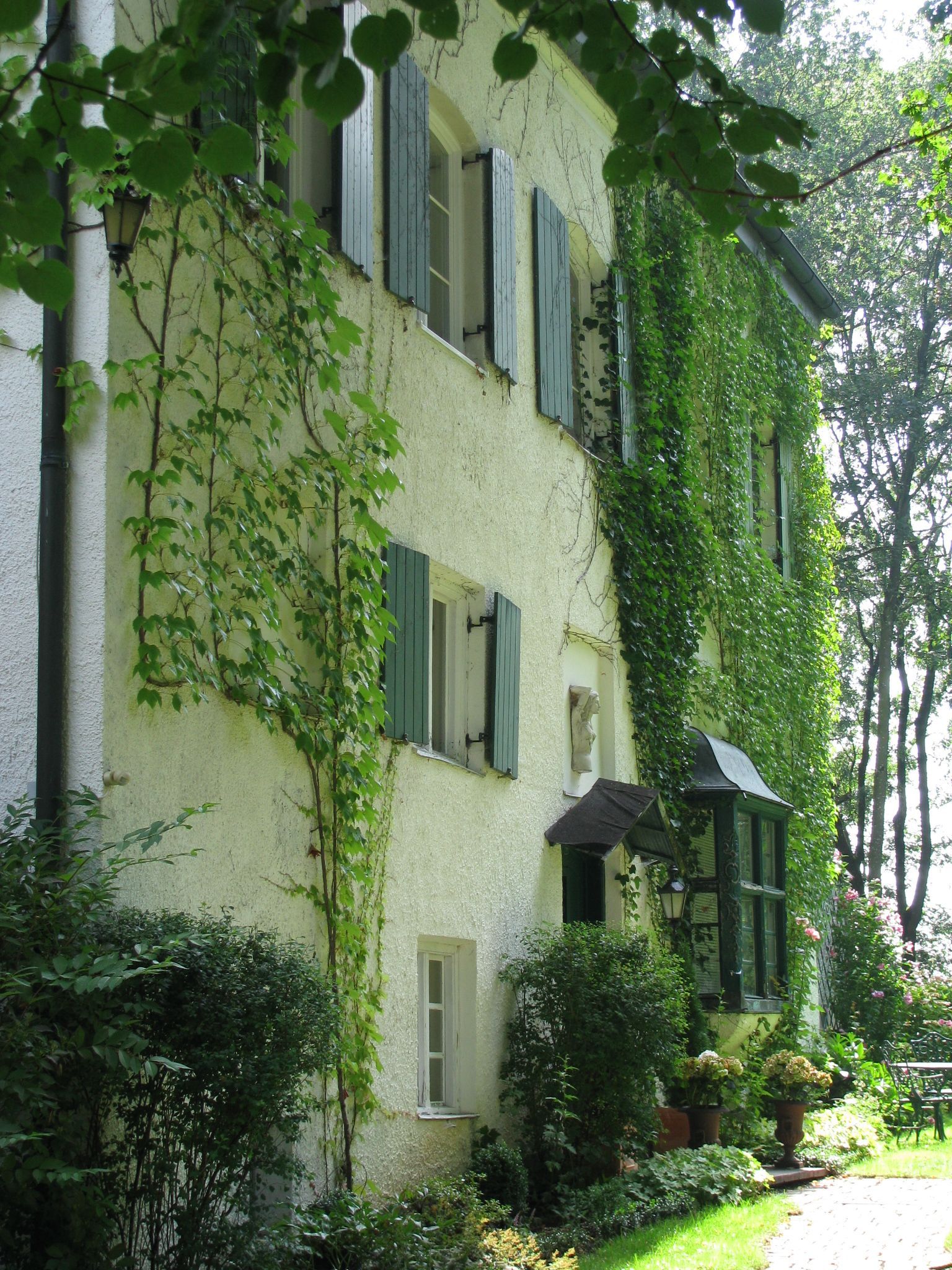
The former castle occupied a spur, with its southern approach defended by a neck ditch, a ditch cut across the narrow connection between a fortified spur and the surrounding land. The surviving complex consists largely of a nineteenth-century late-classicist building with a hipped roof, while its structural core retains fabric from the mid-twelfth century. Remains of the earlier castle were incorporated into the villa after the historic complex was partly demolished.
Villa and incorporated castle remains
Late-classicist villa
The present building dates from the nineteenth century and has a late-classicist design with a hipped roof. Its construction retained the medieval core of Schloss Ottenburg, allowing parts of the earlier castle to survive within the villa created after the partial demolition of the historic complex.
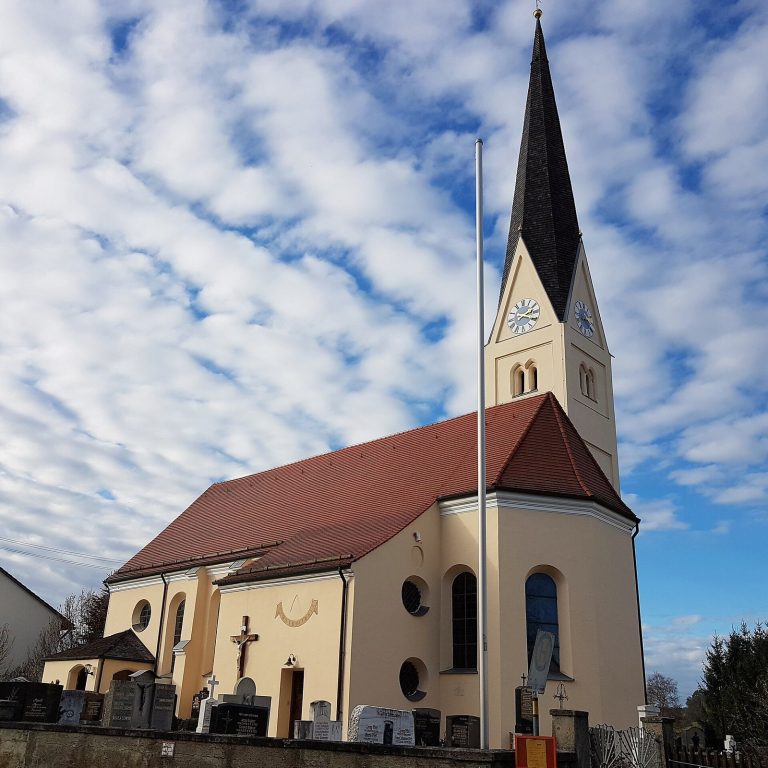
Castle chapel
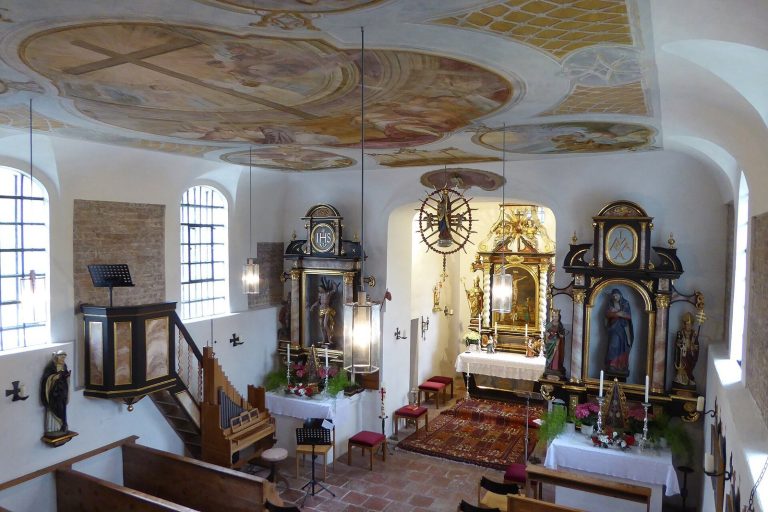
The castle chapel was newly built in 1845 at its current location. It forms part of the later arrangement of the privately owned complex.