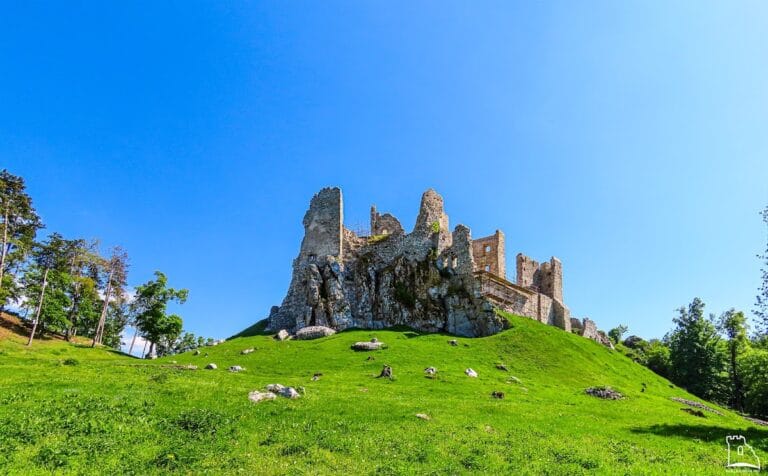
Topoľčany Castle: A Medieval Fortress in Slovakia
Visitor Information
Google Rating: 4.5
Popularity: Medium
Official Website: topolcianskyhrad.sk
Country: Slovakia
Civilization: Early Modern, Medieval European, Modern
Site type: Military
Remains: Castle
History
Topoľčany Castle is a medieval fortress located near the village of Podhradie in present-day Slovakia. It was constructed by local ruling powers in the late 13th or early 14th century as part of the Kingdom of Hungary’s defensive and administrative network.
The castle first appears in historical records in 1235, identified as royal property. It functioned as the central seat of a castle estate, overseeing a group of 26 surrounding villages. Over time, several noble families came to own the fortress, including the Csák and Széchényi families, followed by the Országh and Lossonczy lineages. From 1595 onward, the Forgách family took possession and introduced significant expansions, improving both residential quarters and fortifications to adapt to evolving military needs.
Throughout its history, Topoľčany Castle was never occupied by Hussite forces, despite some claims suggesting otherwise. Archaeological research has disproved their presence during the early 15th century conflicts commonly associated with Hussite activity. In the early 1700s, the castle endured considerable damage during the rebellion led by Francis II Rákóczi. Although reconstruction efforts were carried out in the middle of that century, a gradual decline set in as the estate’s administrative functions moved to the nearby settlement of Tovarníky.
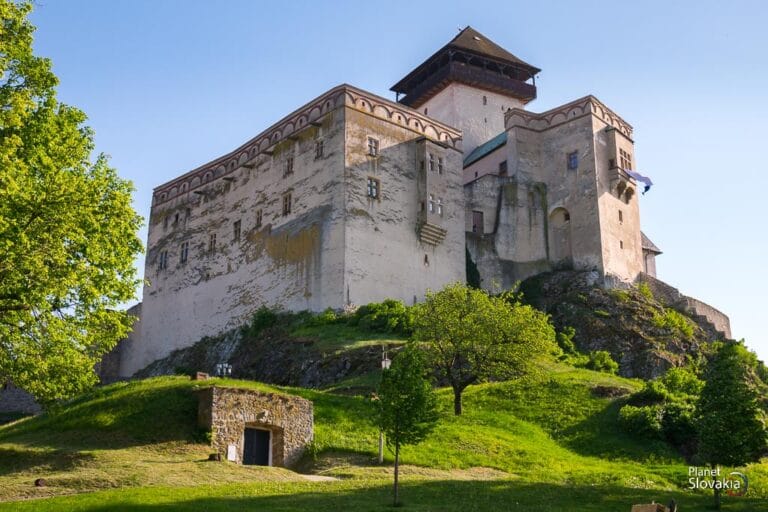
By the late 19th century, the castle belonged to the Stummer family, who undertook restoration work influenced by romantic ideals of medieval architecture. Their modifications included aesthetic changes to the main tower, which altered its original silhouette. Following the Rákóczi uprising, royal authorities confiscated the property, and it ceased to be inhabited. However, it maintained an active role as a place of worship through its chapel dedicated to the Assumption of Mary, which continued to serve local religious needs until the late 1700s.
A severe storm in June 1999 caused part of the palace’s eastern side to collapse. Restoration and conservation efforts initiated that year continue today, aiming to preserve the site’s historical legacy.
Remains
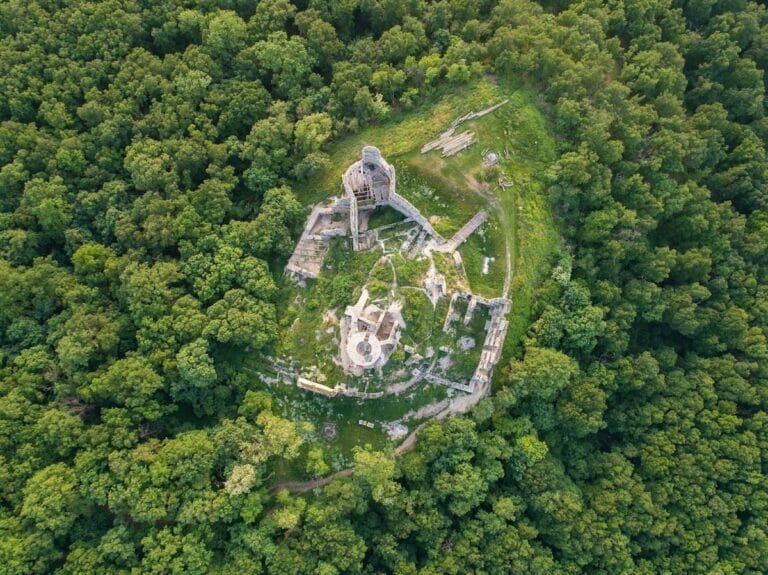
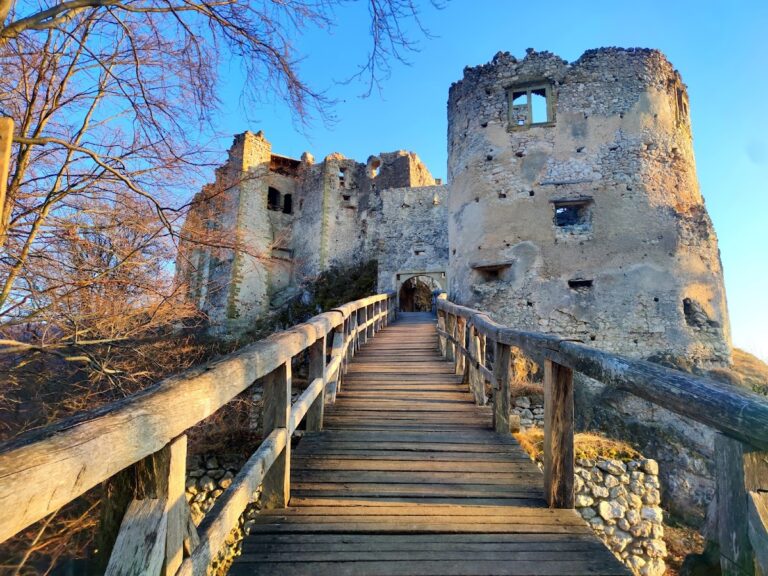
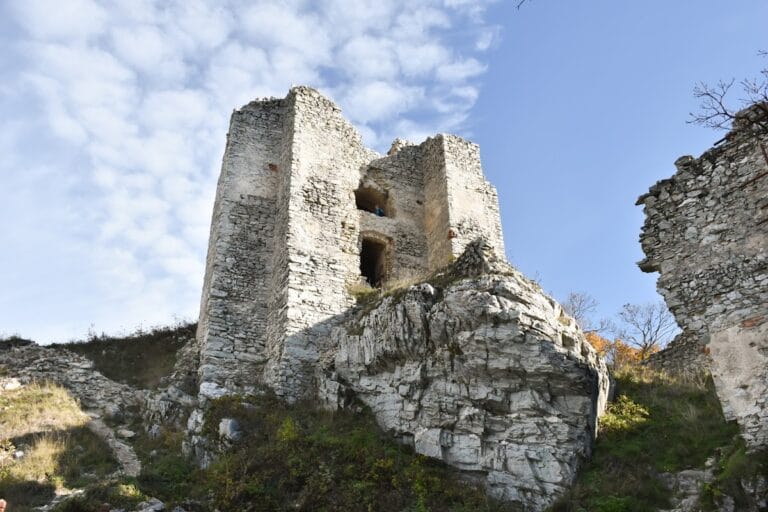
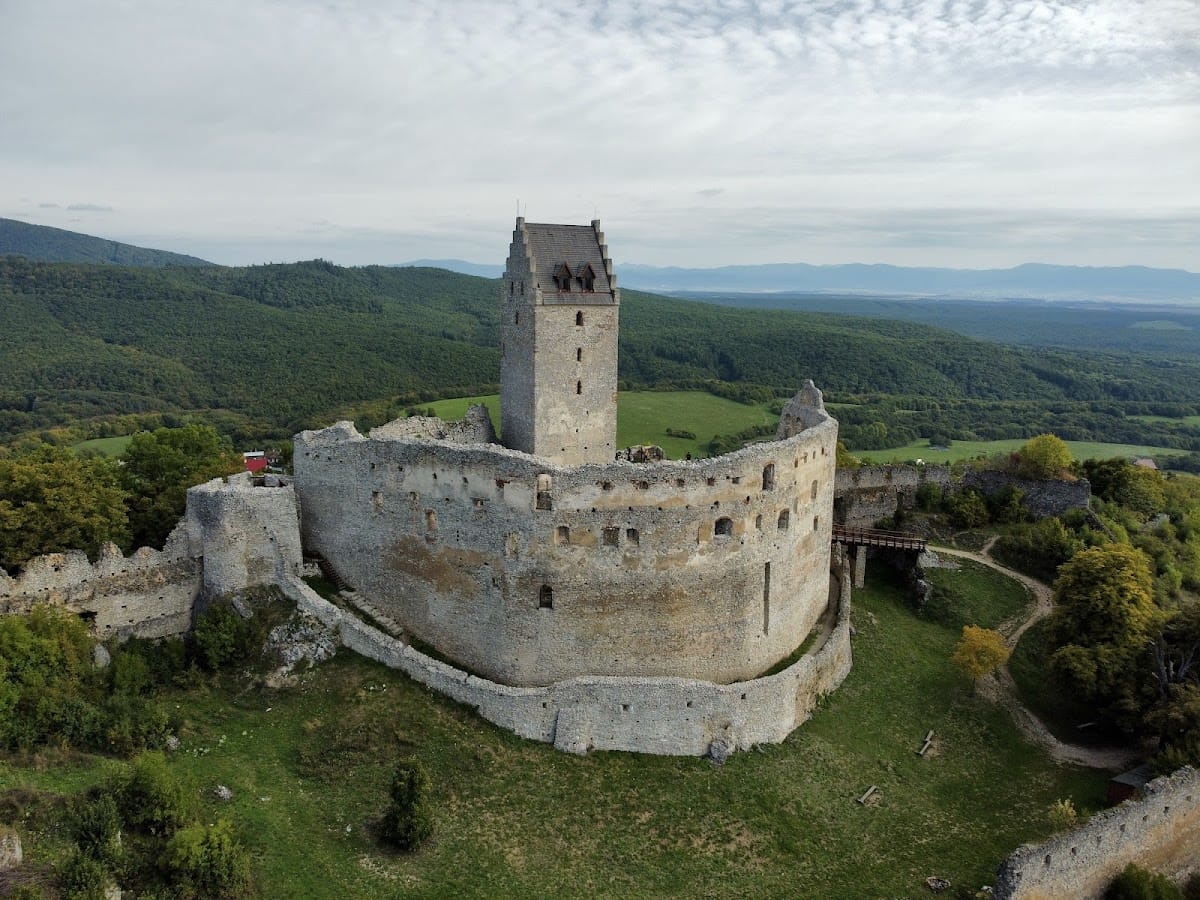
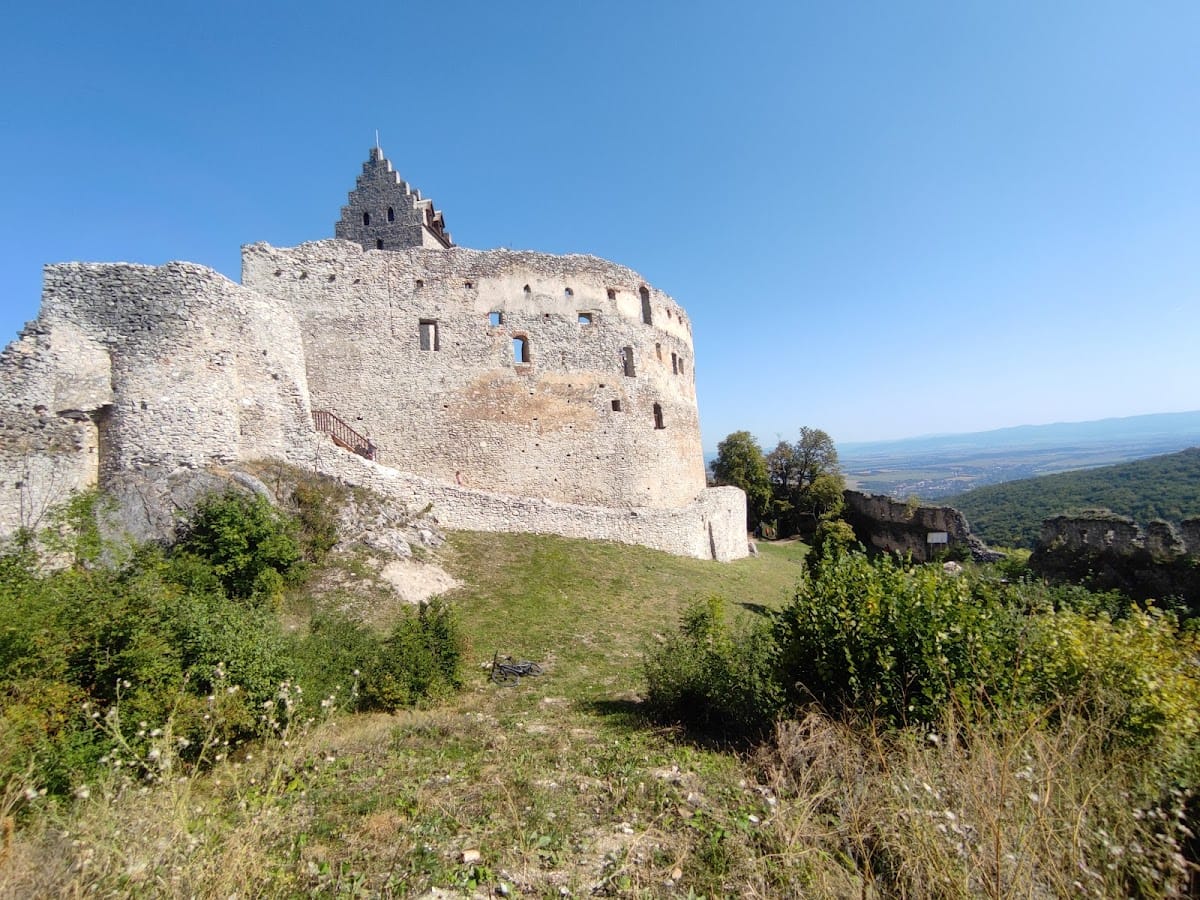
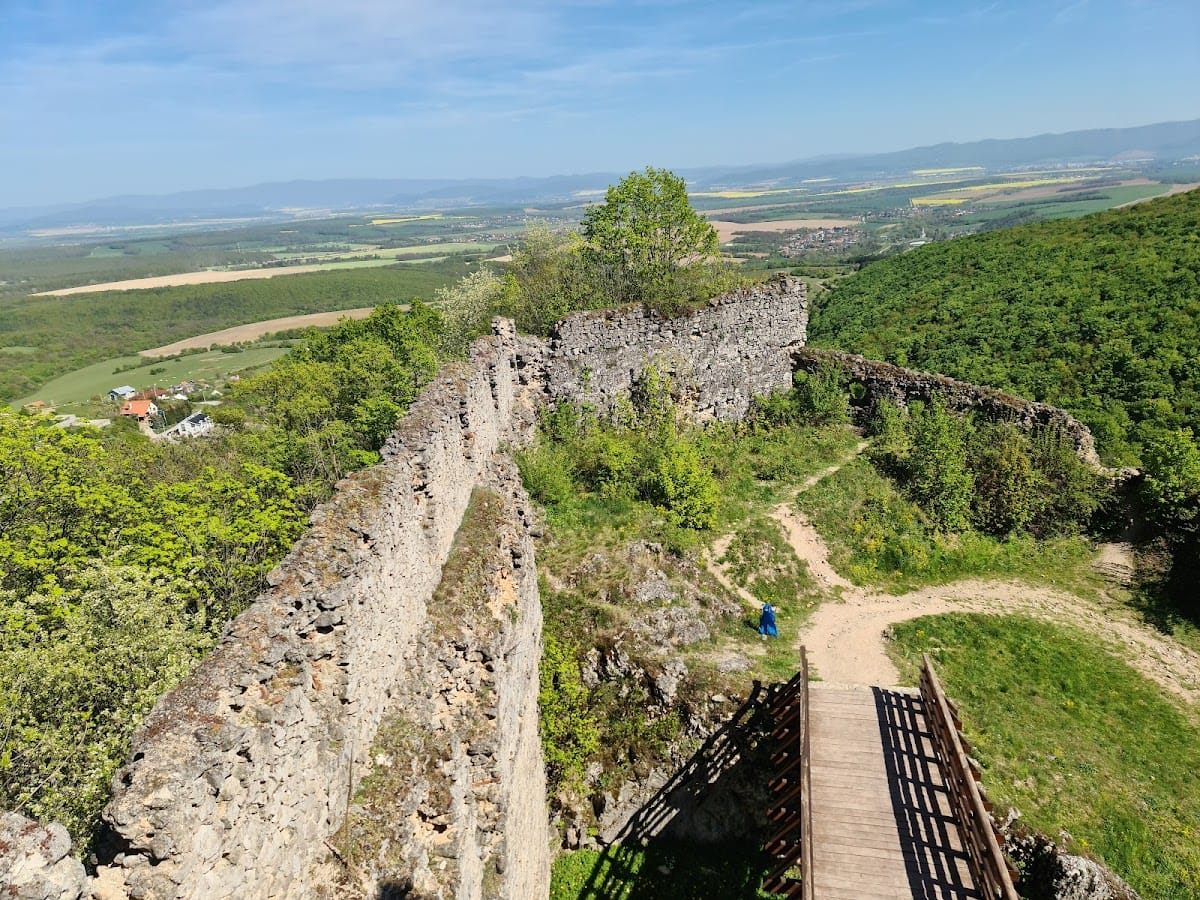
The ruins of Topoľčany Castle occupy a rocky hill made of dolomite limestone, rising between approximately 490 and 525 meters above sea level in the Považský Inovec mountains. The original complex centered around a medieval upper castle constructed in the Gothic style. Its most prominent feature was a prism-shaped residential tower, often called a keep, which served as a fortified living space. Surrounding this tower, remnants of a palace and outer defensive walls with a gateway define the castle’s core layout.
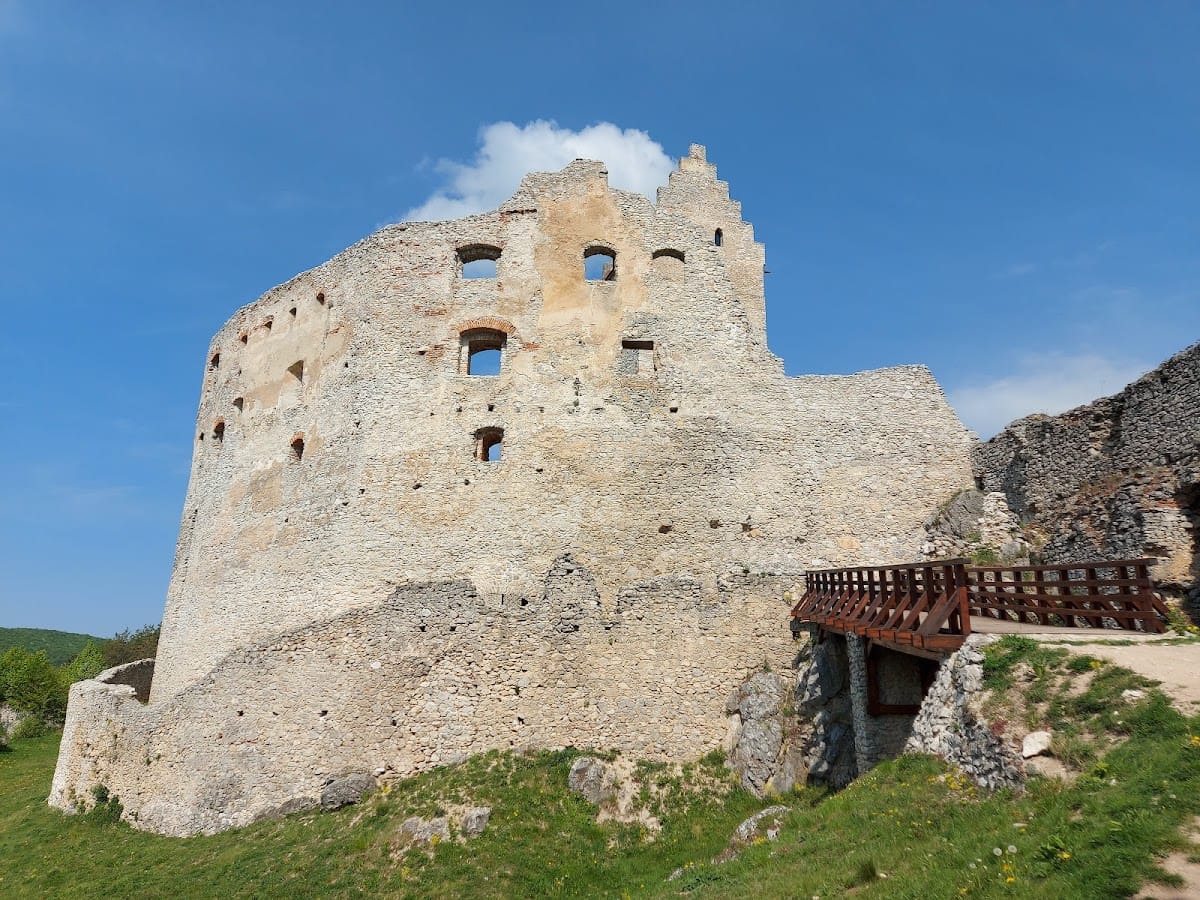
Defensive upgrades made in the 16th century expanded the castle’s protection. These included the addition of a forecourt, or outer bailey, which provided an extra barrier against attack. On the southern side, a shooting bastion was built to allow defenders to target approaching enemies with firearms. Multiple gunports were also integrated into the walls during this period to accommodate the use of early firearms, reflecting adaptations to changing warfare techniques. The medieval core underwent modernization as part of these works.
Construction relied mainly on locally sourced dolomite limestone, a durable rock well-suited to fortifications. During the Stummer family’s romantic restorations in the late 1800s, stepped gable decorations were added to the main tower. These stylistic elements enhanced the castle’s appearance but do not reflect its original medieval design.
A rock-cut moat carved into the natural stone surrounds parts of the castle, enhancing its defensibility by restricting access. The entire complex was deliberately situated on elevated ground, allowing control over nearby border areas and maintaining a strategic distance from the town of Topoľčany itself.
Today, parts of the main tower and some defensive walls have been preserved or restored, while other sections, including the palace’s eastern wing, suffered damage or destruction. The castle also housed a chapel dedicated to the Assumption of Mary, which was maintained for religious purposes until the late 18th century, indicating an integrated spiritual component within the fortress.