Terzi Bridge: An Ottoman-Era Stone Crossing in Kosovo
Site at a Glance
- Popularity
- Low
- Country
- Kosovo
- Primary era
- Early Modern
- Eras represented
- Medieval, Early Modern
- Civilizations
- Ottoman
- Site type
- Infrastructure
- Remains
- Bridge
On this page5 sections
History
Late medieval origins
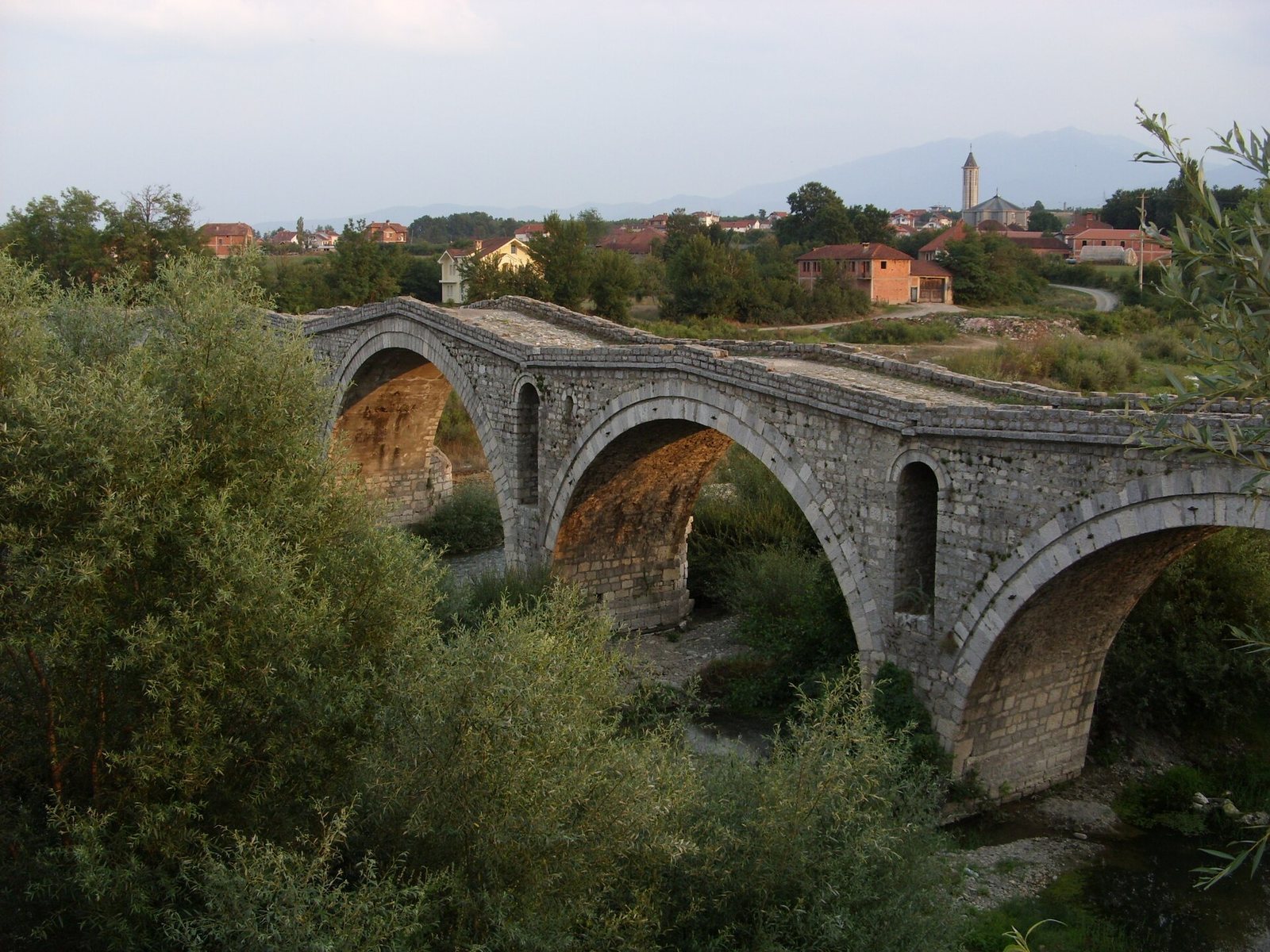
Terzi Bridge is a stone bridge over the Erenik River at Bishtazhin in Kosovo, probably built in the late 15th century during the Ottoman period, when the empire ruled parts of southeastern Europe. It formed part of the medieval route between Gjakova and Prizren, which also served as a trade route.
Eighteenth-century alterations
Changes in the river’s course made it necessary to extend the bridge in the 18th century. The tailors’ guild of Gjakova financed the work, and a Turkish inscription records the guild’s role. The name Terzi derives from the Turkish word for “tailor”; a guild was an association of people in the same trade.
The alterations gave the bridge its present form. It is regarded as an important example of Ottoman-era bridge building in Kosovo.
Restoration and protection
Restoration work carried out from 1982 to 1984 aimed to recover the bridge’s earlier appearance. Serbia protects it as a cultural monument of exceptional importance.
Remains
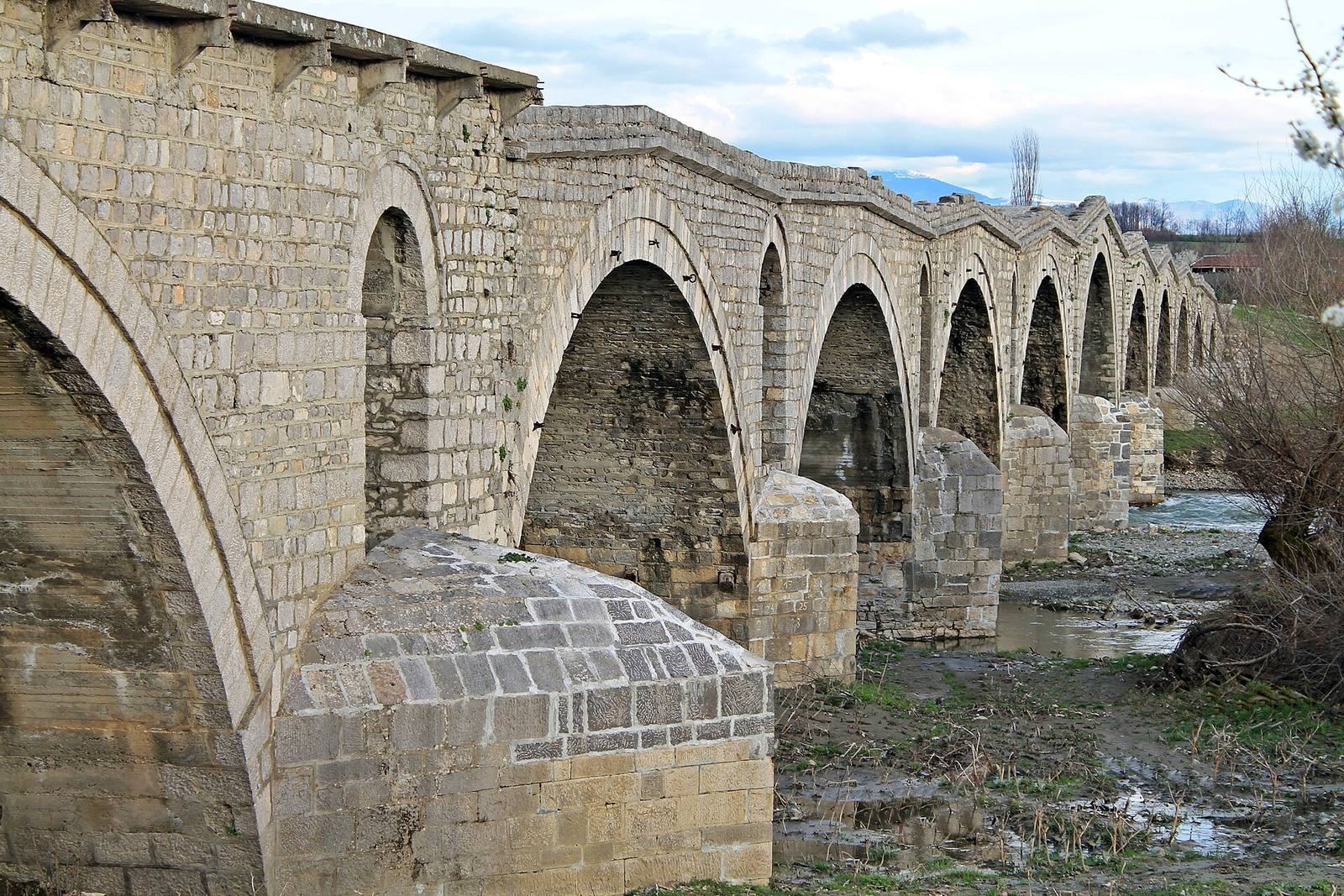
The bridge crosses the Erenik River at the northern edge of Bishtazhin, east of Gjakova. Built from regularly cut local stone in dark-gray and ochre shades, it has 11 rounded arches, with the central arch slightly higher than the others. Niches between the arches help relieve the structure.
It measures 192.8 metres long and at least 5 metres wide. Its original paved roadway was more than 3.5 metres across. The bridge is used by pedestrians; a modern road bridge runs parallel a few metres away and carries traffic between Gjakova and Prizren.