Gazi Mehmet Pasha’s Mosque: An Ottoman Religious Complex in Prizren
Site at a Glance
- Popularity
- Medium
- Country
- Kosovo
- Primary era
- Early Modern
- Eras represented
- Early Modern
- Civilizations
- Ottoman
- Site type
- Religious
- Remains
- Mosque
On this page9 sections
History
Foundation and Ottoman-era use
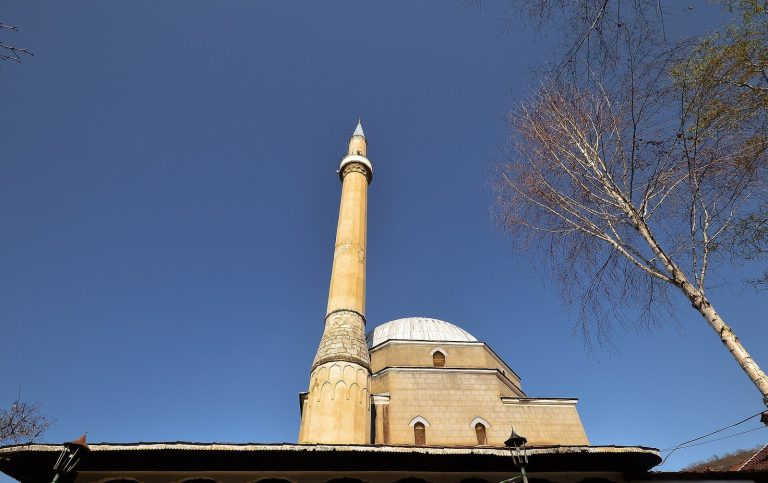
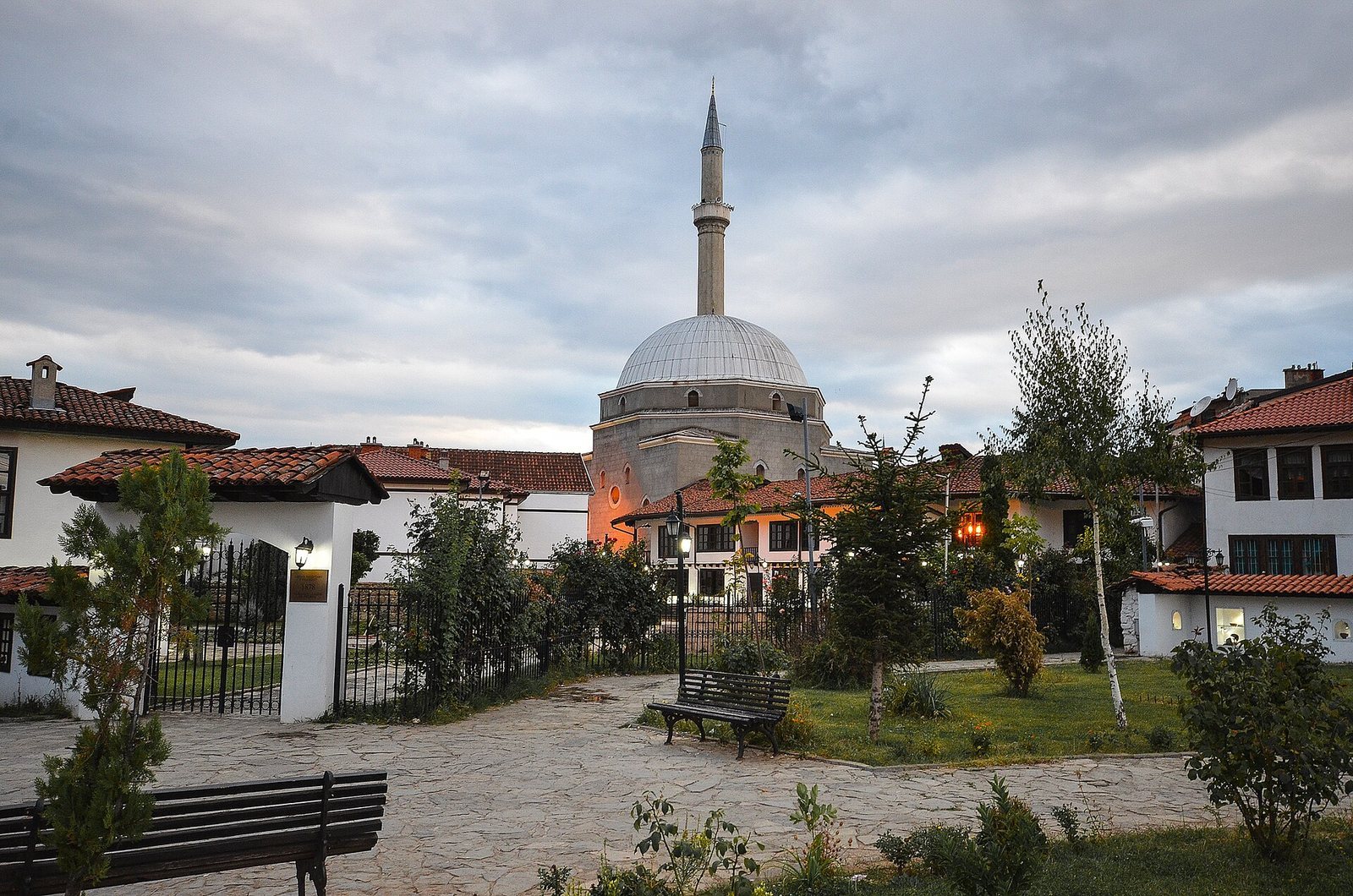
Gazi Mehmet Pasha’s Mosque is an Ottoman mosque in Prizren, Kosovo, built between 1561 and 1573. It is one of Kosovo’s oldest Islamic religious sites. Gazi Mehmet Pasha, an Ottoman official and great-grandson of grand vizier Dukaginzade Ahmed Pasha, endowed the mosque and its wider complex through a waqf, a charitable endowment for religious and public institutions. Construction of the complex, which included the mosque and other institutions, took place from 1563 to 1574.
The mosque is also known as Bajrakli, a name derived from the Turkish word for “flag.” A flag raised there at prayer time signaled the start of prayer at the city’s other mosques. Gazi Mehmet Pasha built a mausoleum in the mosque courtyard, but was not buried there. He died in battle in Pannonia, a historical region much of which lies in present-day Hungary, around 1594–1596.
The League of Prizren and later history
The mosque hosted an assembly of the League of Prizren, an Albanian political organization formed after the 1878 Treaty of Berlin. That treaty redrew political boundaries in southeastern Europe after the Russo-Turkish War; the League aimed to unite Albanian territories in one state.
The complex’s madrasa, an institution for Islamic religious learning, operated until 1947. Books and manuscripts from the library were moved to the mausoleum for protection. In the 1970s, part of the complex became a museum devoted to the League of Prizren, and the madrasa joined the museum complex in 1978. Several restorations have taken place, some unprofessionally; the most substantial was carried out in 1994–1996. The mosque is protected in Kosovo as an architectural monument or ensemble and is also listed among the cultural monuments of the Serbian Academy of Sciences and Arts.
Remains
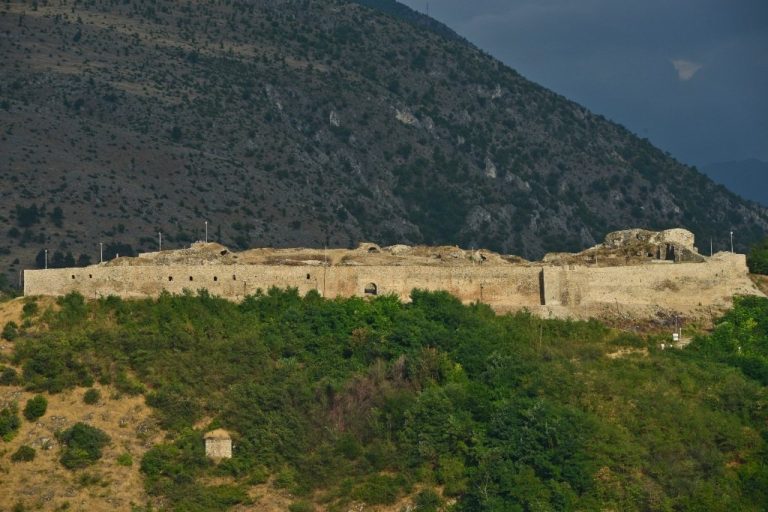
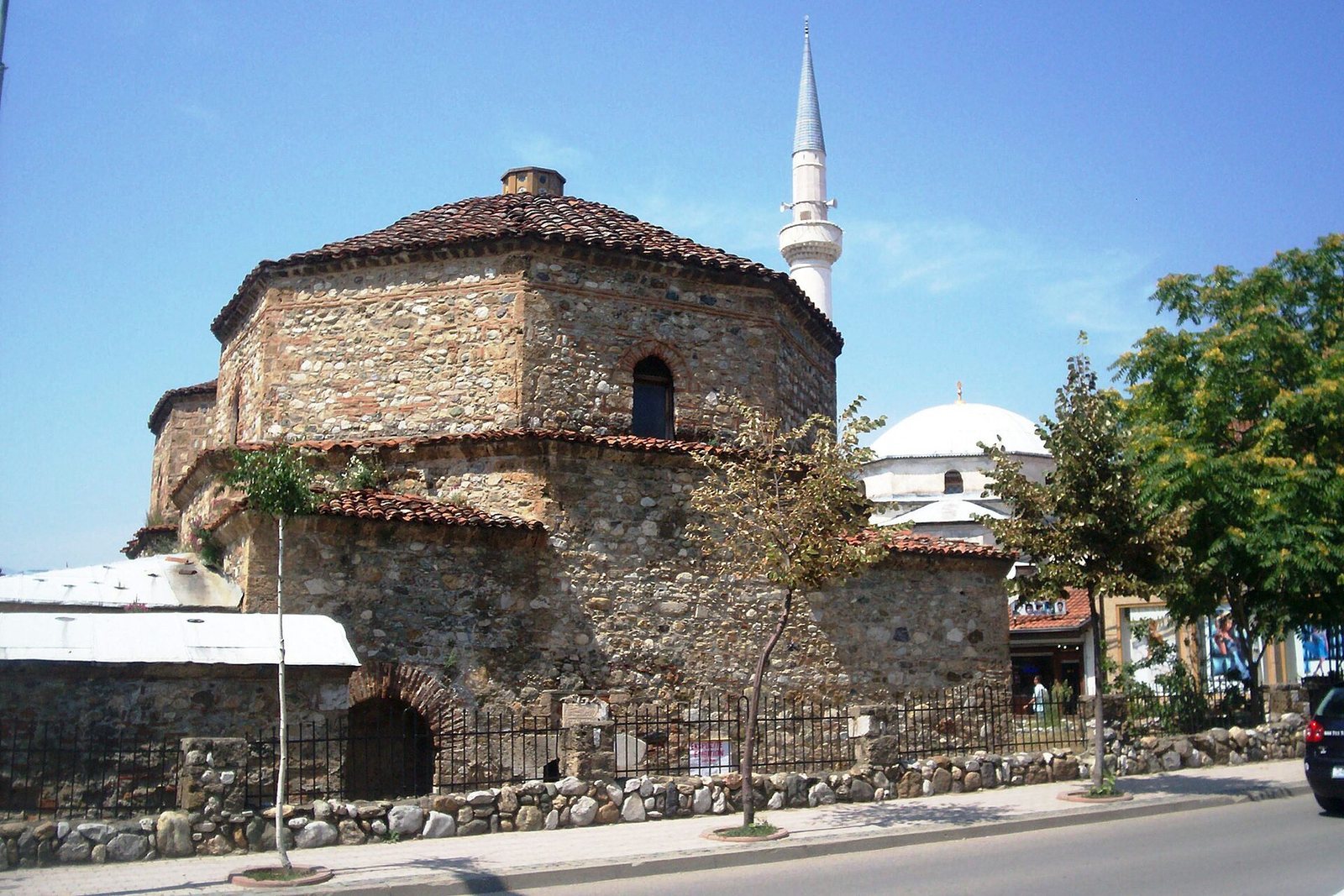
The mosque and its associated buildings form a dispersed complex in historic Prizren, with buildings within a radius of about 150 metres. The stone-and-plaster mosque stands across the Lumbardhi i Prizrenit River from Prizren Fortress. The bathhouse lies to its west, the library to its south, and a gate on the eastern side of the courtyard connects the complex with the League of Prizren complex.
The mosque
The mosque has a square plan and numerous windows. Its large, cube-shaped prayer space is covered by a dome, while an open wooden portico on slender columns extends along three sides beneath a three-sided roof. Lead sheets cover the mosque roof. The building is made of stone and plastered inside and out. Whitewashed exterior walls carry predominantly blue plant forms and medallions. Inside, floral paintings decorate mainly white walls, and the dome bears geometric and floral murals. The mihrab (prayer-direction niche) and minbar (pulpit) are white marble; the mahfil (elevated gallery) is decorated wood.
A marble inscription in Arabic above the main entrance credits Gazi Mehmet Pasha with rebuilding the mosque for God rather than personal fame and calls it a “mosque of silver” in Prizren. It also includes a poem attributed to Sheikh Ali, which compares the city to paradise and describes the Kaaba, Islam’s sacred sanctuary in Mecca, as made by God for the poor.
Courtyard and associated buildings
Courtyard and mausoleum
Cobblestones pave the courtyard. Along its western side, nine cold-water fountains used for ablutions stand beside a water channel. The mausoleum built by Gazi Mehmet Pasha is also in the courtyard.
Madrasa and library
The city’s oldest madrasa had classrooms and accommodation for students. The library is a single-storey building in the southern part of the complex.
Other buildings
The wider ensemble also includes a maktab, a school for basic instruction, housing, and other buildings. Traditional old houses in the neighborhood form part of the architectural ensemble.