Orpheus Monument: A Roman Funerary Monument in Ptuj, Slovenia
Site at a Glance
- Popularity
- Medium
- Country
- Slovenia
- Primary era
- Classical
- Eras represented
- Classical, Medieval
- Civilizations
- Holy Roman Empire, Roman
- Site type
- Burial
- Remains
- Tomb
On this page9 sections
History
Roman foundation
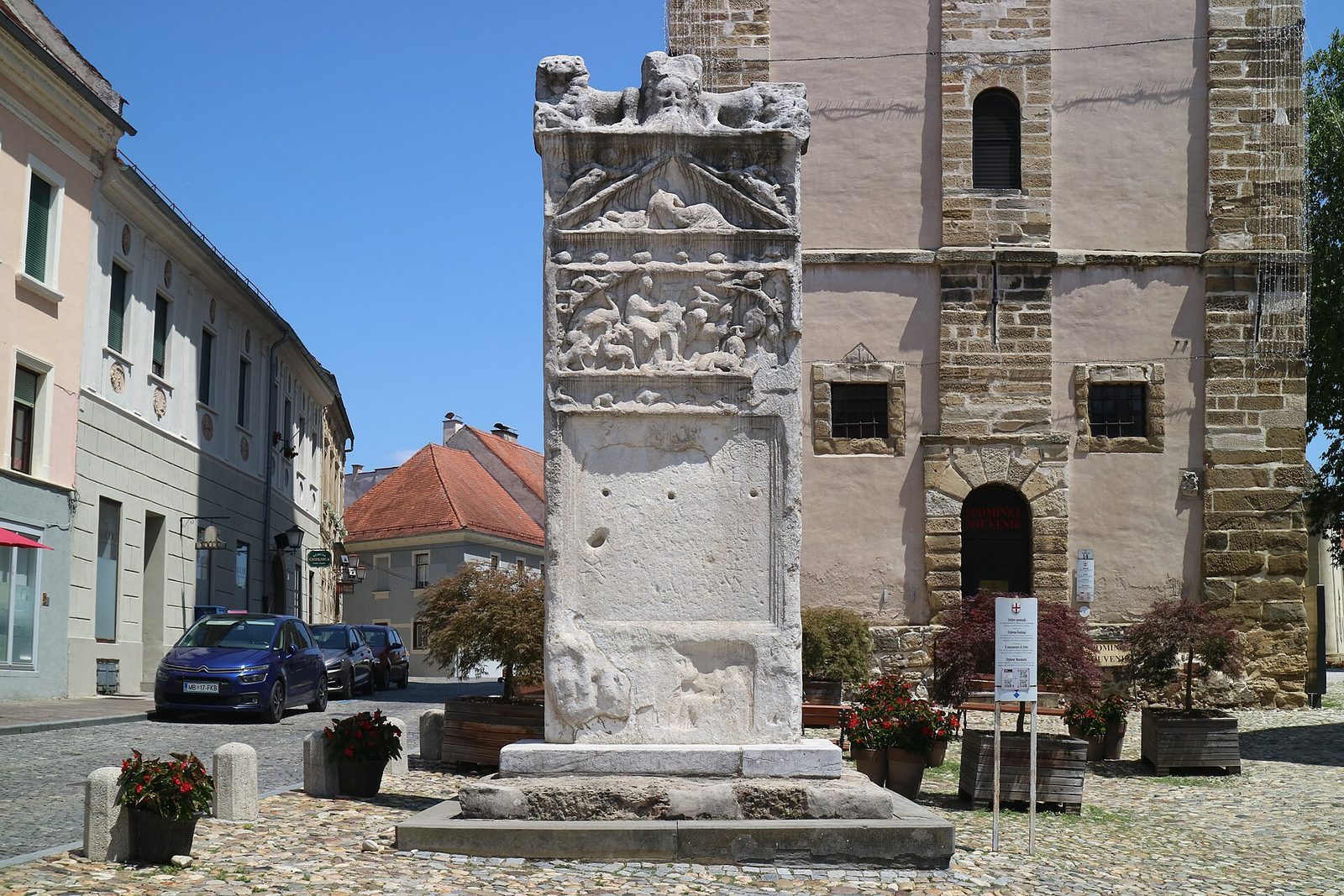
The Orpheus Monument is a Roman tombstone in Ptuj, Slovenia, erected in the second century AD for Marcus Valerius, whose name may have included Verus. He was a decurio, a member of the governing council of Poetovio, the Roman name for Ptuj. The partly preserved inscription also seems to identify him as a duumvir, one of a pair of senior town magistrates.
The monument is considered the largest Roman monument discovered in Upper Pannonia, a Roman province, and one of the province’s important archaeological finds. It is also regarded as a symbol of Ptuj.
Medieval reuse
During the Middle Ages, the tombstone was reused as a pillory, where offenders were restrained in public. This use gave the monument a familiar local name that persisted long after its artistic and historical value had been recognized.
Povoden and national recognition
Simon Povoden, a local historian and priest who lived from 1753 to 1841, drew attention to the monument’s artistic and historical value. The open-air collection of stone antiquities that bears his name includes the Orpheus Monument. Even in the late 1980s, however, people often referred to the stone as the pillory. On 28 February 2008, the Slovenian government designated it a cultural monument of national importance, recognizing its exceptional size, single-block construction and carved decoration.
Remains
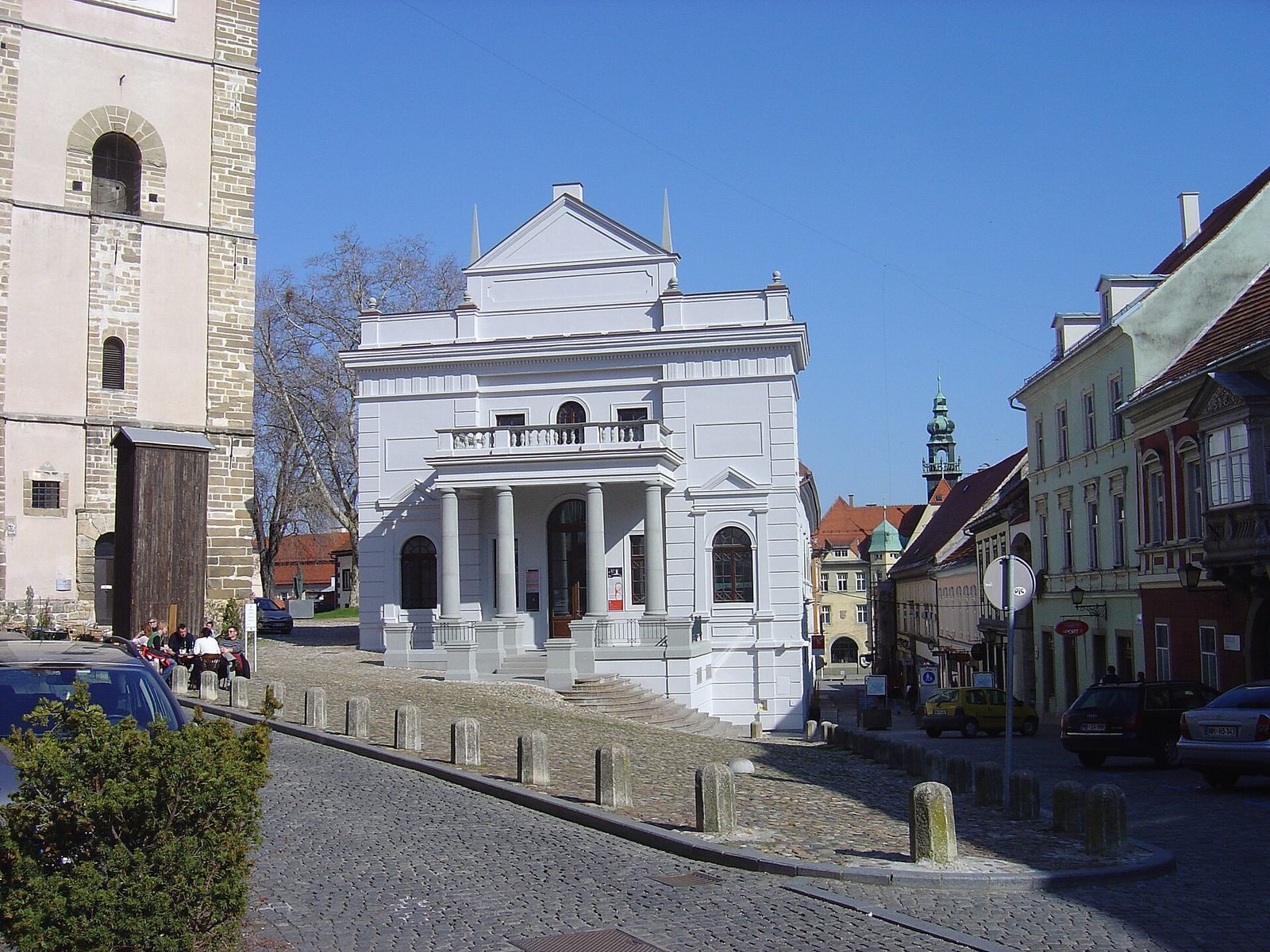
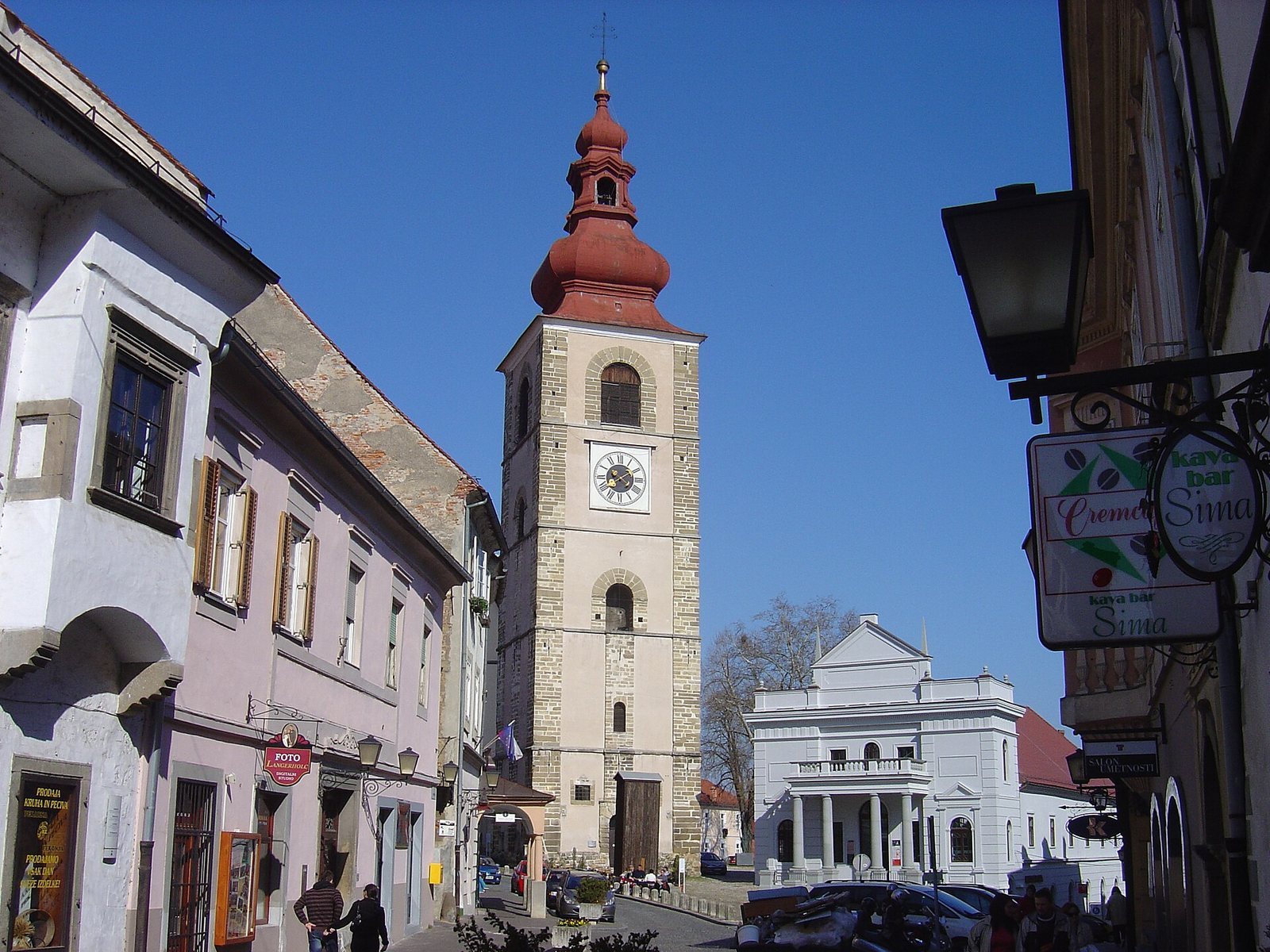
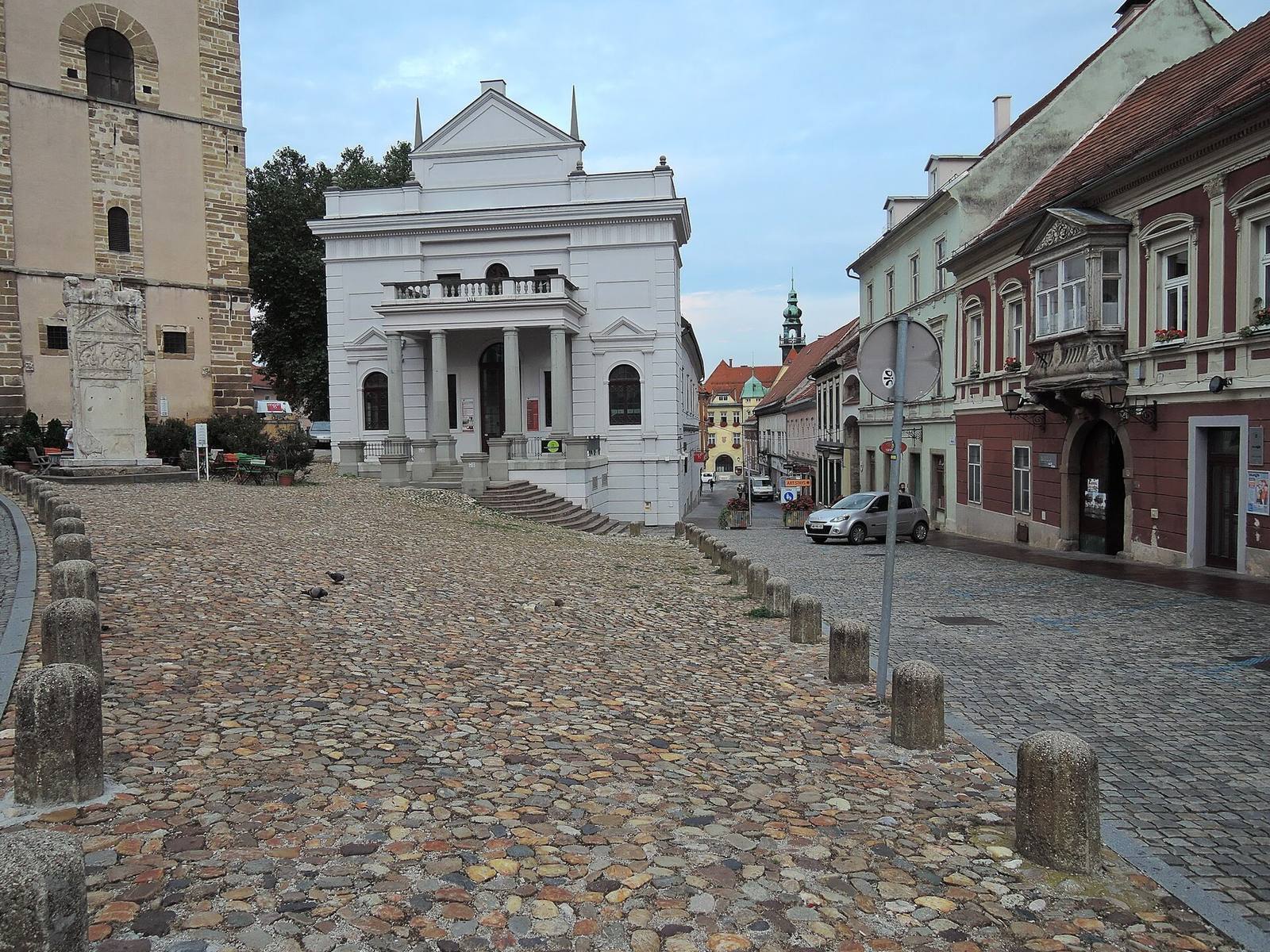
Carved from one block of white Pohorje marble, the monument measures 4.94 metres high and 1.82 metres wide. It stands on Slovene Square, Ptuj’s central square, in front of the Town Tower, and is the largest object in the Povoden Lapidarium, described as Slovenia’s oldest open-air lapidarium. It is believed to stand at the place where it was originally found and is regarded as Slovenia’s oldest public monument preserved in its original location.
Carved scenes
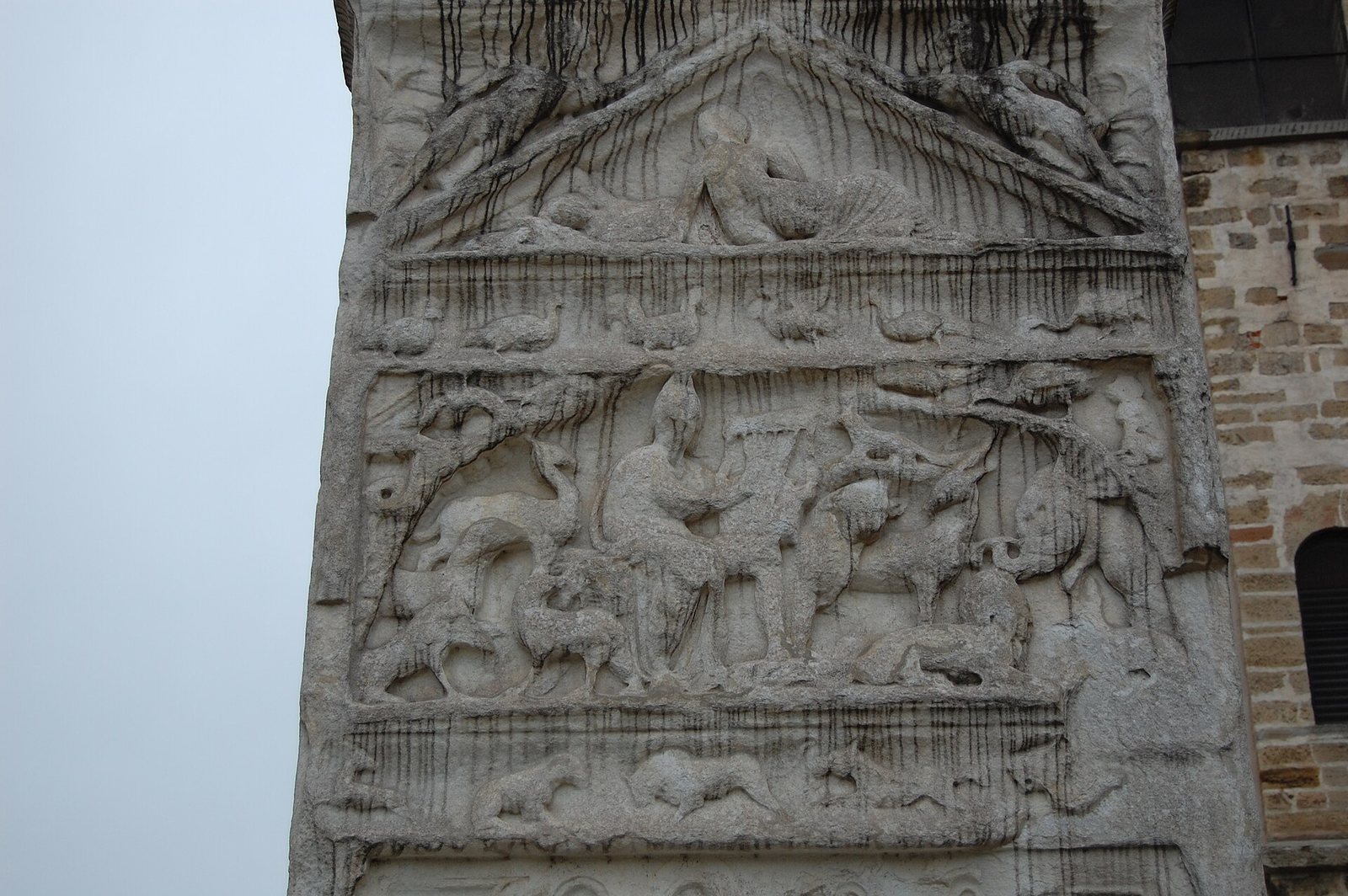
The central scene shows Orpheus, the musician of Greek myth, playing a lyre inside a cave as animals gather to listen. The carved animals include a duck, rooster, peacock, swan, bear, horse, bull and goat. A separate scene shows him playing before Pluto and Persephone, underworld deities, as he pleads for the return of his wife Eurydice. Mercury, the Roman messenger god, stands behind their throne, while Heracles, a Greek hero, appears to the left, freeing Eurydice. Another carving depicts Serapis, a Greco-Egyptian god associated with hope of resurrection.
Upper carvings
Higher on the monument, the Roman goddess Venus mourns her beloved Adonis. Reclining lions hold animal heads, and a bearded figure at the centre wears a basket-shaped crown. Figures associated with love hold torches in the surrounding upper spaces.
Narrow sides and inscription
The narrow sides carry further carvings, including smaller animals, dancing men and nude or partly nude women. The carvings are badly worn, and the inscription is now barely legible. Holes for iron restraint rings remain visible on both the front and back of the stone, physical evidence of its medieval reuse.
The lapidarium collection
The Povoden Lapidarium also holds stone finds from Ptuj and its surroundings. Its collection includes fragments of civilian and military tombstones, ancient ash containers, sacrificial altars, dedication plaques with carvings and square blocks.