Church of Saint John the Baptist in Velika Hoča: A Serbian Orthodox Cemetery Church
Site at a Glance
- Popularity
- Low
- Country
- Serbia
- Primary era
- Medieval
- Eras represented
- Medieval, Early Modern, Modern
- Civilizations
- Ottoman, Serbian
- Site type
- Religious
- Remains
- Church
On this page9 sections
History
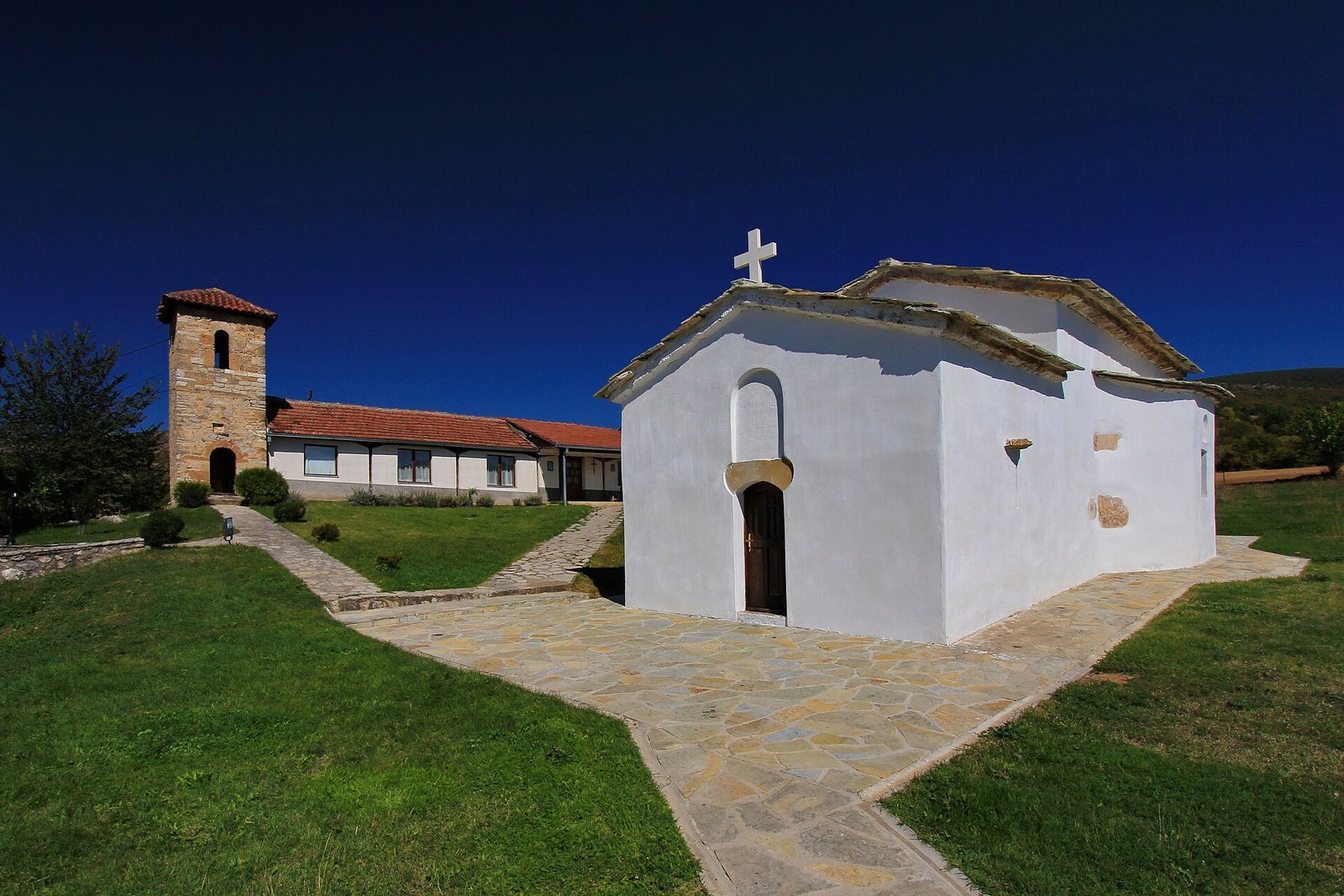
The Church of Saint John the Baptist in Velika Hoča is a Serbian Orthodox cemetery church in Serbia. It was probably built in the 14th century, a date supported by surviving fresco fragments from that period.
The church is affiliated with the Eparchy of Ras-Prizren, an Eastern Christian diocese within the Serbian Orthodox Church. It is protected as a cultural monument of exceptional importance in Serbia and Kosovo, and is also classified in Kosovo as a protected archaeological site or reserve.
Remains
Layout and construction
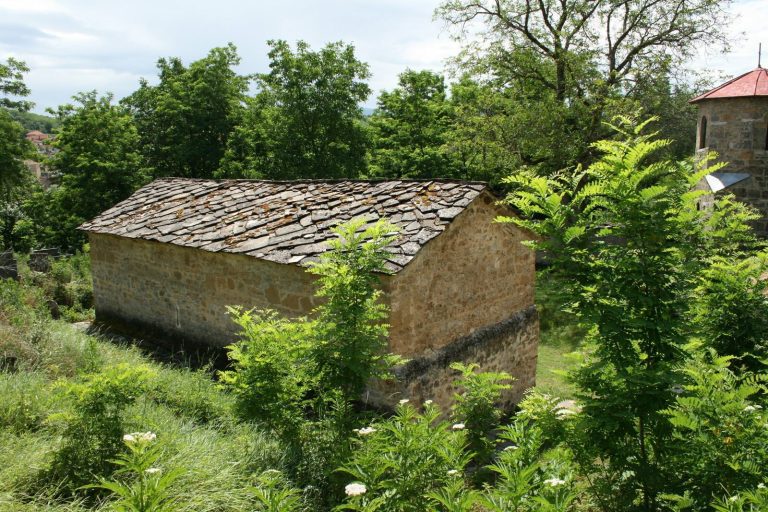
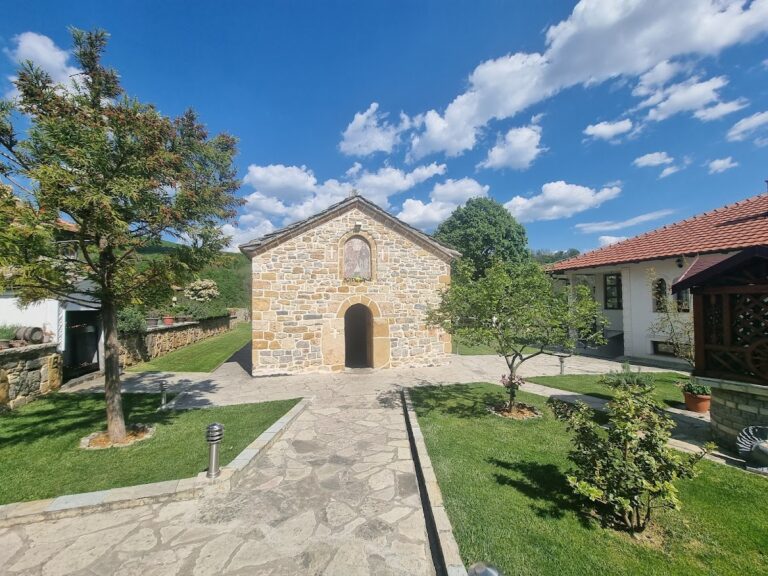
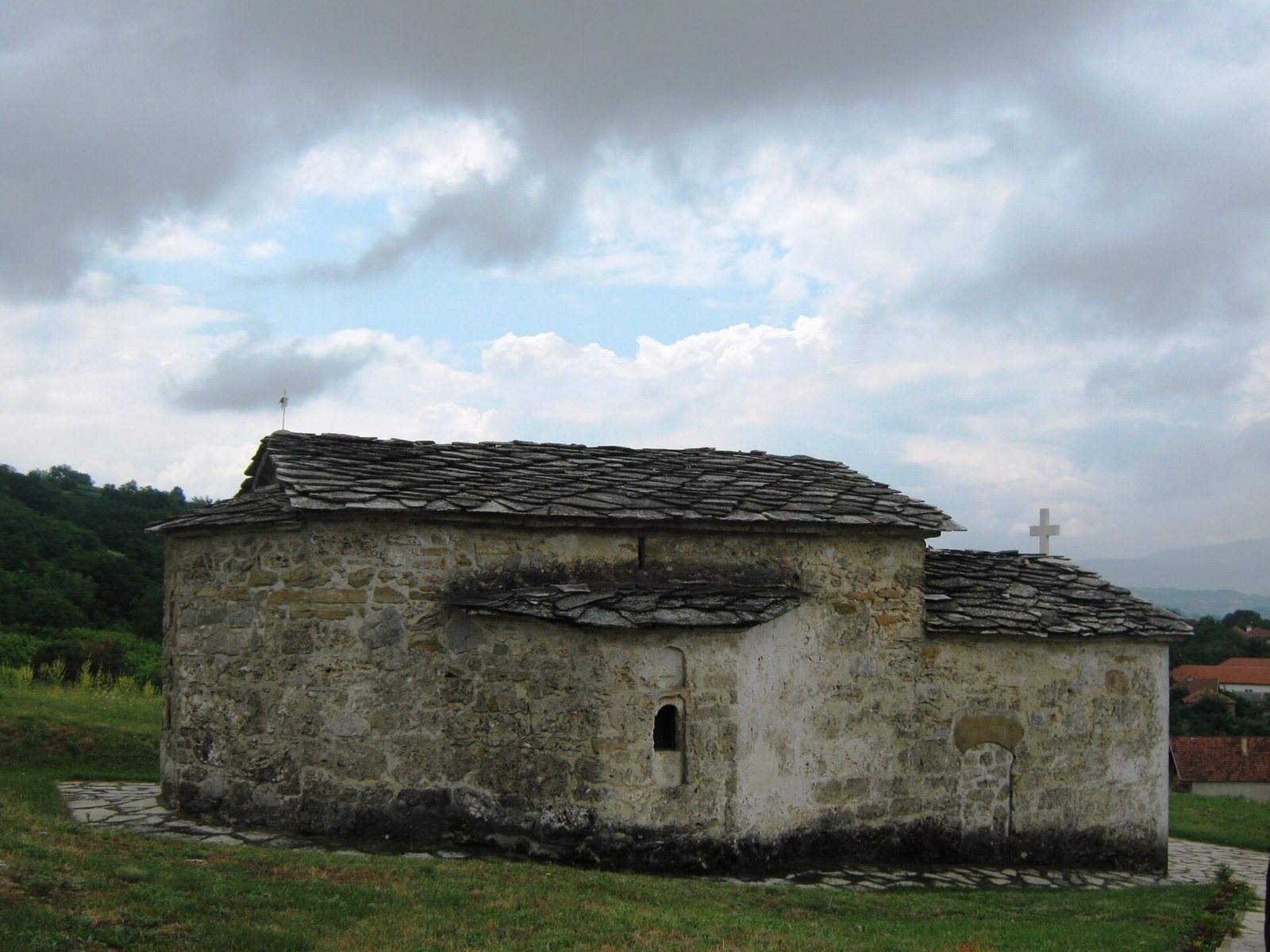
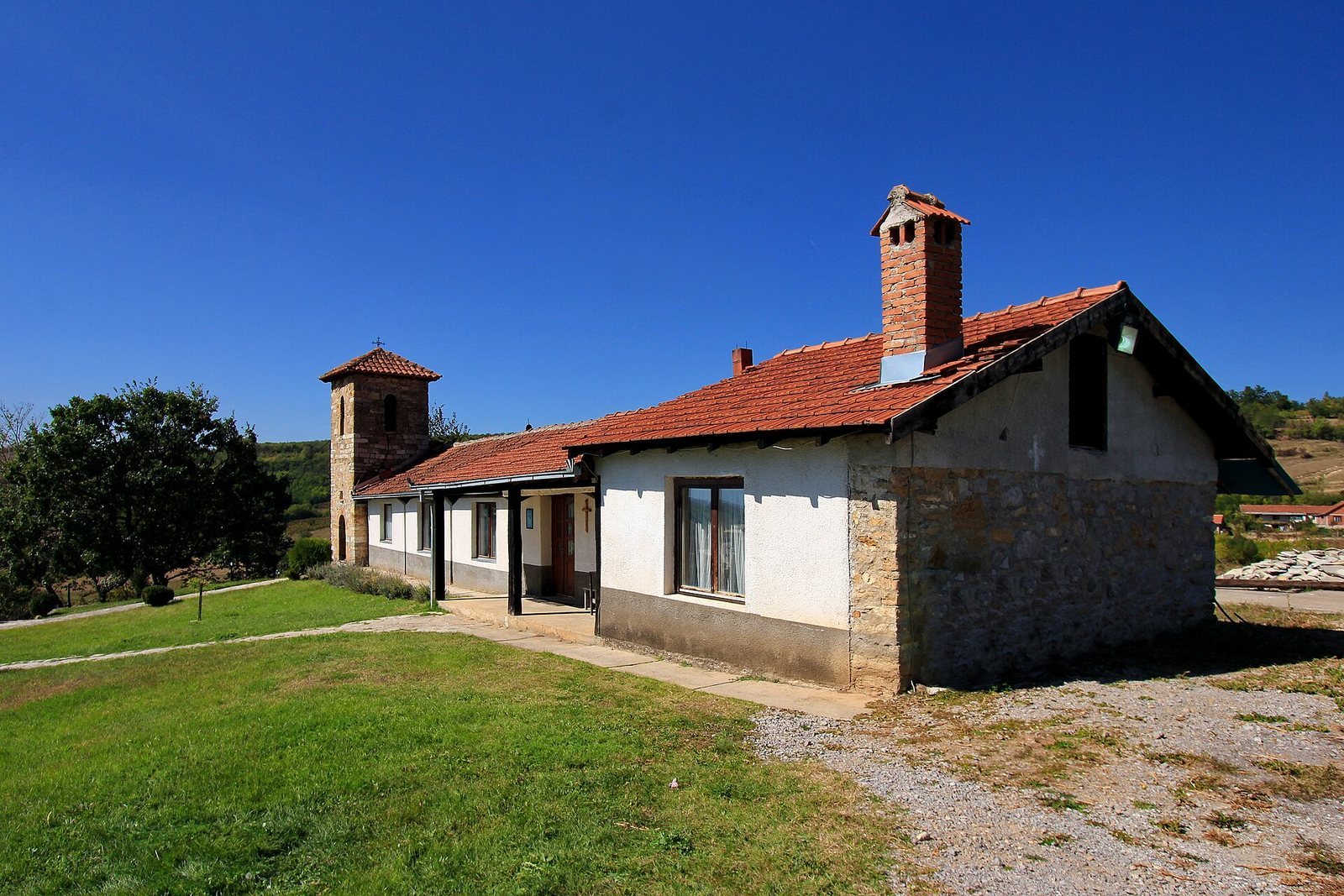
The church stands on a rise near the eastern entrance to Velika Hoča. Within its former enclosure, a bell tower and a residential building used for lodging stand to the north, forming a complex with the church. The building has a tetraconch plan, a design organized around four apses, with a square narthex, or entrance hall, and apses projecting from its sides. The side apses are lower than those at the east and west. Their outer faces are polygonal, while their interiors are semicircular. The nave, the main body of the church, and the narthex are covered by continuous, tunnel-shaped barrel vaults. Massive walls of roughly dressed stone and porous tufa are bonded with lime mortar; part of the south facade is plastered.
Frescoes
Narthex
The earliest surviving fresco fragments are in the altar apse, a projecting sanctuary space, and on the south wall of the nave; they date to the 14th century. Other wall and vault paintings date to the 1580s. In the narthex, a Last Judgment includes Adam and Eve beside an arched entrance, while the east wall carries a Deesis, a composition of Christ with figures praying toward him. The first painted zone includes saints on the south and east walls, and Saint Anthony on the north wall. A niche above the nave entrance contains a half-length image of Saint John the Baptist. Lower sections of scenes from his life survive on the sides of the narthex vault.
Nave
Standing saints fill the lowest painted zone of the nave, with medallions containing half-length saints above them. Scenes from the Akathist, a hymn of praise commonly represented through a sequence of images, appear on the west wall’s second zone and the north and south walls’ third zone.
Sanctuary and apses
The sanctuary’s second painted zone depicts the Communion of the Apostles and the Annunciation. Other subjects include the Virgin Mary and the Three Holy Hierarchs, the Orthodox teachers Basil the Great, Gregory the Theologian, and John Chrysostom. The conch, or semi-dome over an apse, in the western apse shows a badly damaged Transfiguration. The northern apse conch depicts the Three Youths in the Fiery Furnace, a scene from the Book of Daniel.
Upper zones and other scenes
The fourth zone presents the Passion of Christ, beginning at the eastern end of the south wall. The fifth zone is badly damaged and is thought to have contained scenes of the Great Feasts, major annual celebrations in the Orthodox calendar. Fragments at the crown of the vault survive in its southern part. Other identified subjects include the Flight into Egypt, Christ with Saint John the Baptist, and Saints Procopius and Nestor. The frescoes received partial conservation and restoration in 1974 and 1975.
Iconostasis
The iconostasis, the screen bearing icons between the sanctuary and the main body of the church, combines elements from different periods. Its 19th-century structure was arranged around existing throne icons of the Virgin and Christ, with two smaller icons stacked to the right of the Christ icon, between it and the south wall. Longin, a Serbian Orthodox monk and painter of the 16th century, painted the icons of the Virgin and Child and Christ that formerly occupied the throne positions; they are now in the Church of Saint Stephen. An icon for the Deesis tier, attributed to a painter associated with the Peć-Dečani workshops and dated to the second half of the 16th century, is now in the Chapel of Saint Tryphon at the Dečani monastic estate. The late-16th-century royal doors bear a customary composition. Above the north doors is a late-19th-century icon of Saints George and Demetrius on horseback. An element combining a crucifix with icons of the Virgin and John the Theologian is assembled awkwardly; it was probably made in the 19th century by the same craftsman who painted the panel above the north doors.