Templar Castle of Ponferrada: A Historic Fortress in León, Spain
Visitor Information
Google Rating: 4.5
Popularity: Very High
Official Website: www.castillodelostemplarios.com
Country: Spain
Civilization: Crusader, Medieval European
Site type: Military
Remains: Castle
History
The Templar Castle of Ponferrada is located in the city of Ponferrada, within the province of León in northwest Spain. The site occupies a strategic hill at the meeting point of the Boeza and Sil rivers. Its origins trace back to a Celtic fortified settlement known as a castro. Later, the Romans and Visigoths occupied the area, establishing a fortification and a reinforced bridge nearby, which gave the town its name—”pons ferrata,” meaning iron bridge. A church dedicated to Saint Peter was also built to serve pilgrims traveling the Camino de Santiago.
In 1178, King Fernando II of León granted the town and its surrounding lands to the Knights Templar. The Templars began constructing the fortress soon after, with the earliest documented fortification dating to around 1187. The initial castle was completed by 1282, serving to protect pilgrims and control the region. The Templars maintained ownership until their dissolution in 1311–1312, after which the castle passed to various noble families.
From 1340, Pedro Fernández de Castro took possession of the castle. In the 15th century, the Osorio family, particularly Pedro Álvarez Osorio, undertook significant expansions and renovations. The castle played a role in regional conflicts, including the 1467 Irmandiña Revolt and a rebellion between 1485 and 1486. Following these uprisings, the Catholic Monarchs assumed control and reinforced the fortress to secure their authority.
During the early 19th century Peninsular War, French troops briefly occupied the castle. In 1811, parts of the fortress were deliberately damaged to prevent enemy use. After the war, the castle fell into decline and was repurposed for non-military uses, including functioning as a quarry and even a football field. In 1924, it was declared a National Monument, initiating restoration efforts that continue today.
Remains
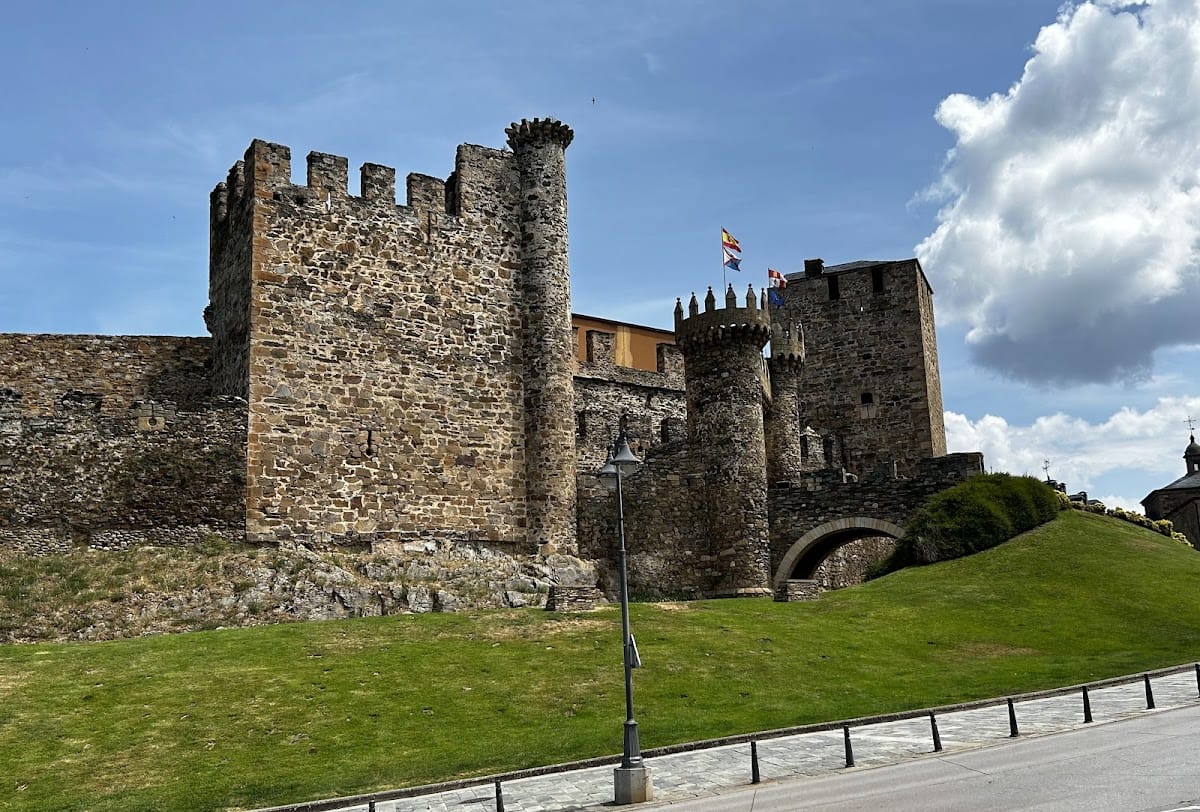
The castle covers an irregular polygonal area exceeding 8,000 square meters atop a hill bordered by the Boeza and Sil rivers. These rivers historically acted as a natural moat on the northwest side. The fortress consists of two main sections: a northern part dating to the 12th century built by the Templars, and a larger 15th-century complex. The latter includes the “Castillo Viejo,” a walled enclosure with defensive barriers, and a Renaissance palace.
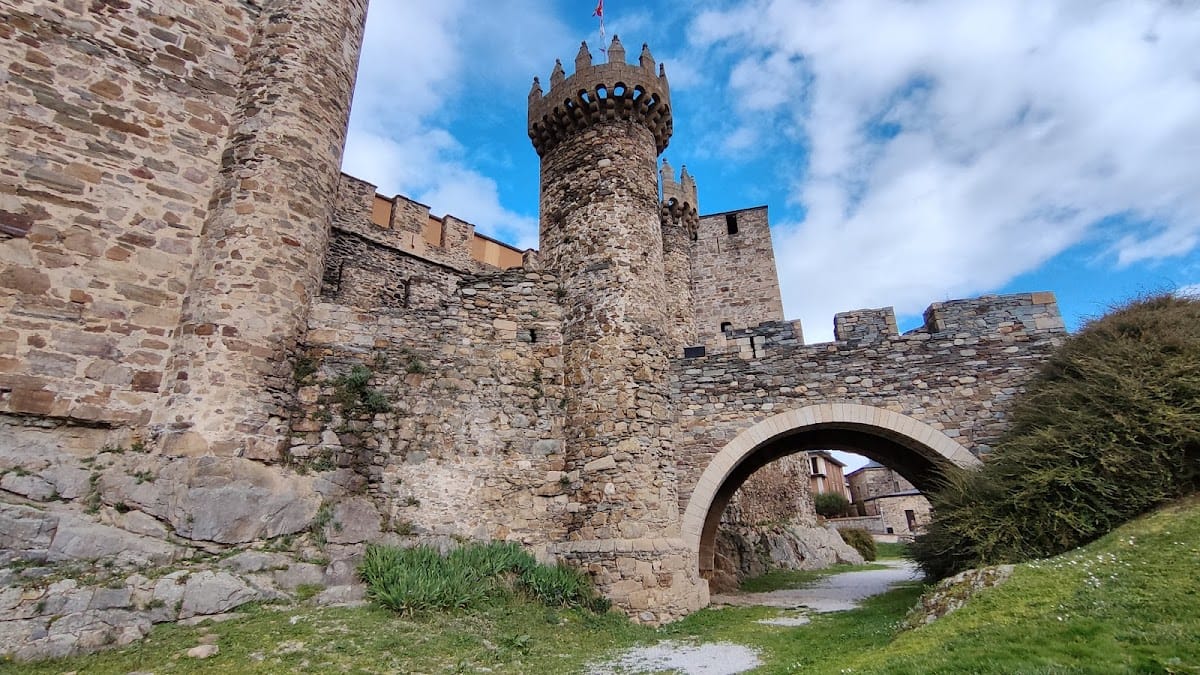
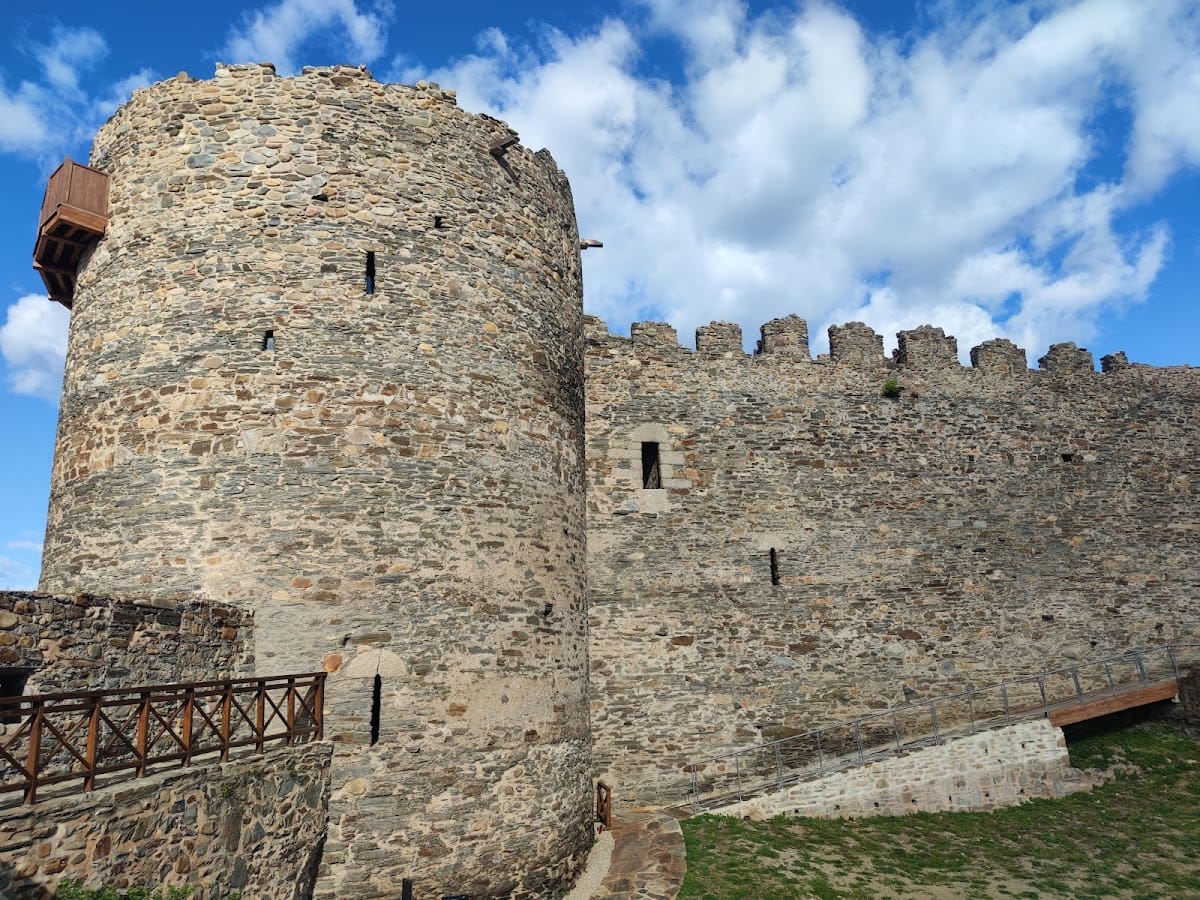
Constructed primarily of stone, the castle features thick walls and multiple towers of various shapes and functions. Notable towers include the elliptical tower, the 15th-century Malvecino tower, the hexagonal Monclín tower with an irregular plan, the southern Cabrera tower, and a semicircular tower that served as dungeons. The Rastrillo, also known as the Torre de los Caracoles, was built between the 14th and 15th centuries and adds to the defensive system.
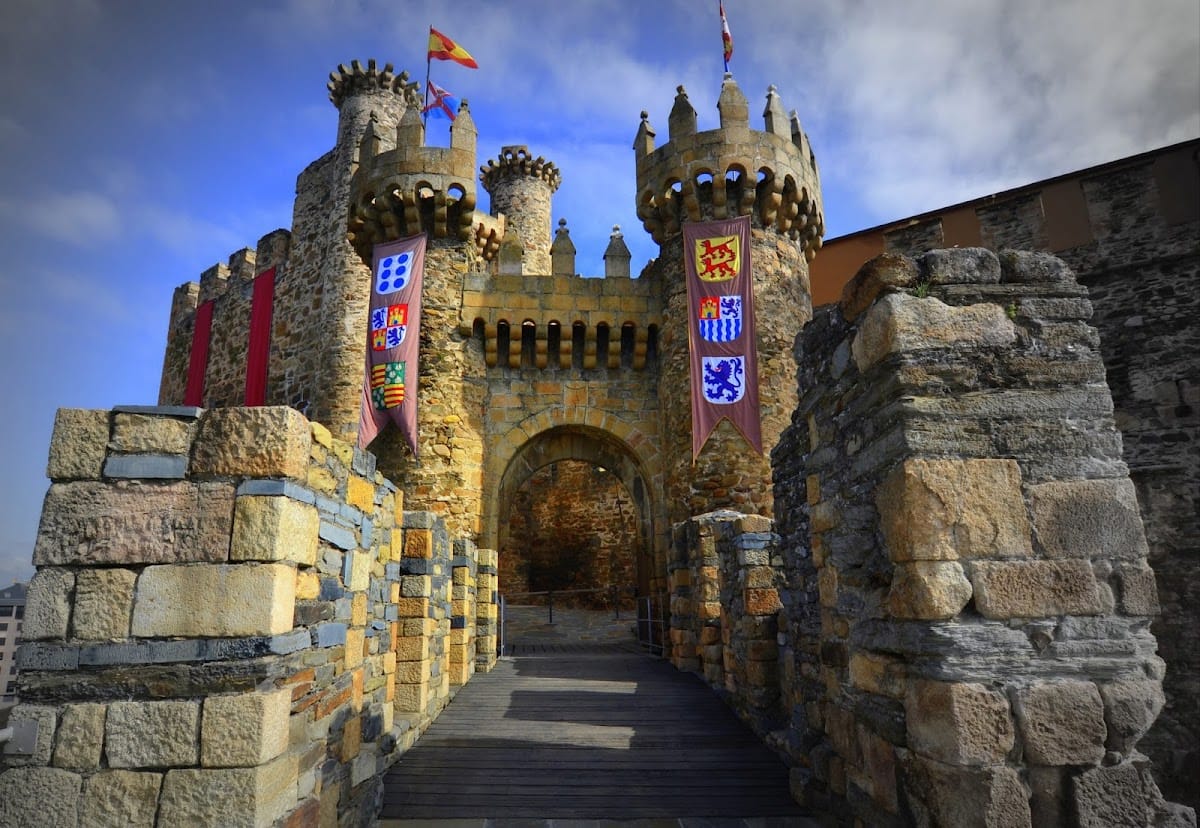
The main entrance lies on the southwest side, marked by a masonry gate flanked by two towers. This entrance is protected by a moat and an iron grille. Beyond the gate is a defensive enclosure leading to the keep tower, called the Torre del Homenaje, and the inner courtyard or patio de armas. Within the courtyard are remains of various buildings, including the Gallery of Tiles, which suffered damage from an 1811 demolition order and later quarrying in the 19th and early 20th centuries.
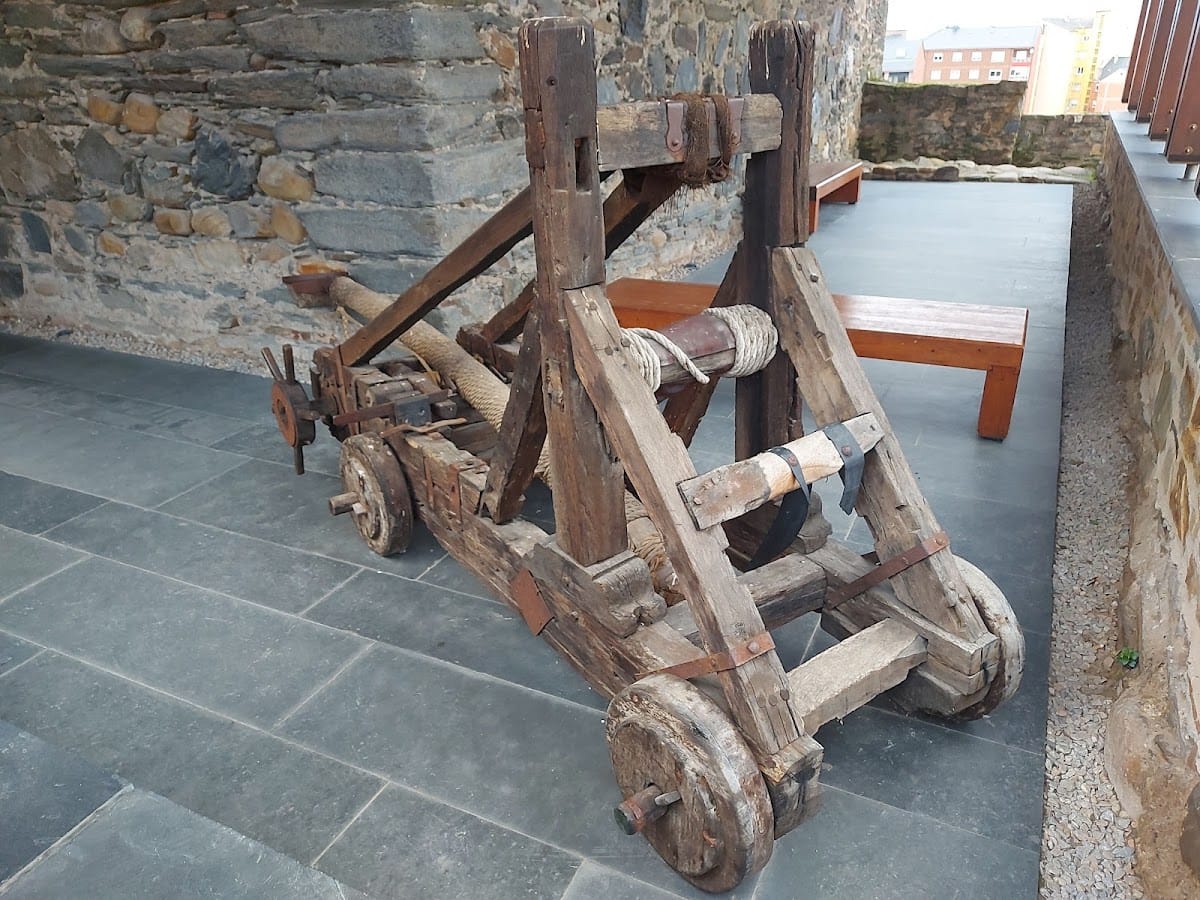
A subterranean passage connects the castle to a cistern located in an albarrana tower, a detached defensive tower linked to the main walls. The fortress’s walls are supported by four principal towers: Malvecino, Monclín, Malpica, and Cabrera. Restoration efforts since the late 20th century have focused on stabilizing the structure, repairing roofs, and recovering wooden galleries and walkways. Today, the castle houses a museum, conference rooms, a library, and visitor facilities.
Nearby sites