Castelo de Doiras: A Medieval Fortification in Spain
Site at a Glance
- Rating
- 4.3
- Popularity
- Very Low
- Country
- Spain
- Primary era
- Medieval
- External website
- Open
- Eras represented
- Medieval
- Civilizations
- Crown of Castile
- Site type
- Military
- Remains
- Castle
On this page12 sections
History
Origins and medieval purpose
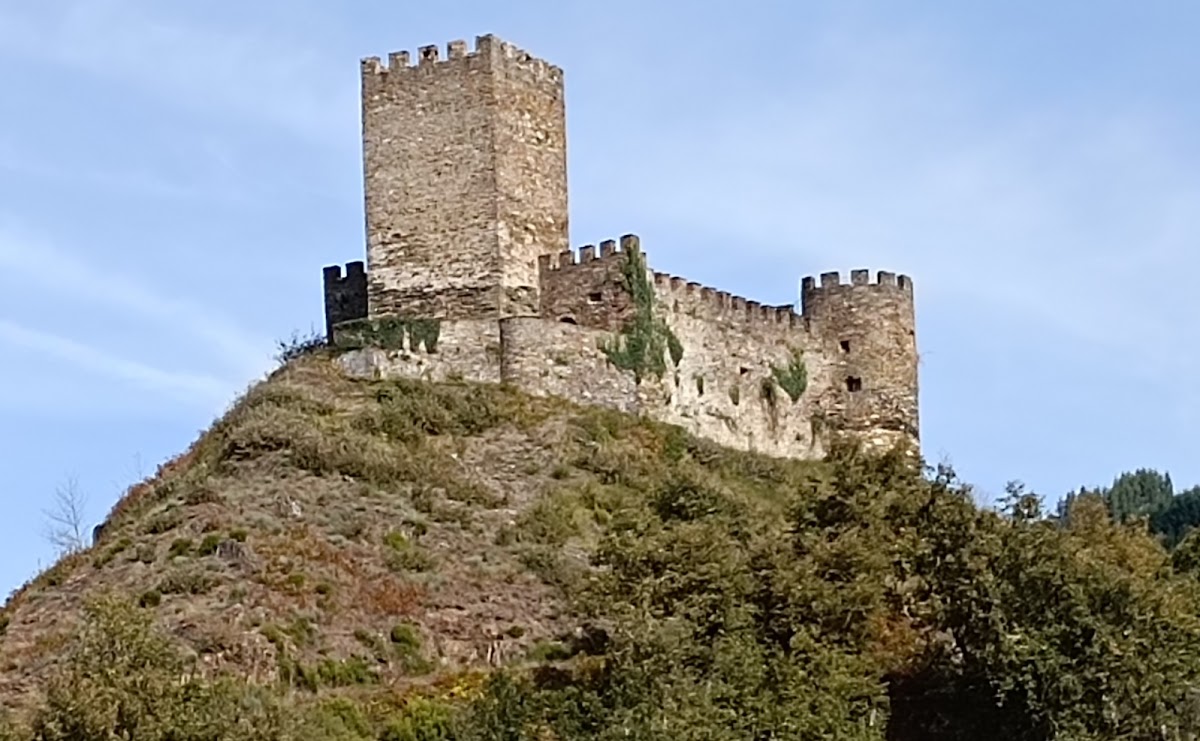
Castelo de Doiras is a medieval fortification in Spain, probably built during the second half of the fifteenth century when the Lordship of Cervantes was created. A lordship was a territorial jurisdiction governed by a lord, who exercised legal and administrative authority over its lands and inhabitants. The castle’s position was intended to protect an approach into Galicia associated with the Camino de Santiago, the network of pilgrimage routes leading to Santiago de Compostela, and with ancient Roman road XIX, which connected Astorga and Lugo.
The castle’s foundation or promotion has been attributed to Paio Guindós and possibly to Diego Pérez Osorio y Guzmán, the first jurisdictional lord of Cervantes and Villacid. Diego belonged to the Osorio noble family, which originated in the former Kingdom of León and gained lands and titles in the Bierzo and Galicia through connections with Castilian royal dynasties.
The Osorio lineage
The Osorio family retained Castelo de Doiras until the seventeenth century, when it merged with the lineage of Grajal de Campos. That family later held the marquisate of Alcañices in the eighteenth century and the duchy of Sesto in the nineteenth. José Osorio Silva, the last Duke of Sesto and lord of Cervantes, died in 1909.
Ruin, restoration, and public ownership
By the beginning of the twentieth century, the castle had fallen into ruin. Emilio Martínez Baladrón, a lawyer, bought it in the 1940s and restored it, creating much of its present visible appearance. After a later sale to Bruno Arrojo, ownership passed to Xosé Soto Rodríguez and then to the Xosé Soto de Fión Foundation. In 2024, the municipality of Cervantes acquired the castle with assistance from the Provincial Government of Lugo.
The castle has also been affected by neglect and disagreements over restoration practices. Annual vegetation clearance was carried out by the owning foundation and the municipality, but the foundation stated that it lacked the funds for proper maintenance. Allegations of limited substantial restoration over several decades were accompanied by accumulated rubbish and widening cracks in some walls.
In late 2016, members of the Colectivo Patrimonio dos Ancares found a structure at O Teso do Castelo, near Doiras. A seventeenth-century coin discovered there led historians to propose that the structure and Castelo de Doiras formed part of a wider defensive or monitoring network. The castle was declared an Asset of Cultural Interest on 17 October 1994, a Spanish heritage designation providing formal legal protection to sites considered of particular importance.
Legends of the castle
Two legends are associated with Castelo de Doiras. One tells of a son cursed by his father and transformed into a werewolf until the father wounded him without killing him. The better-known legend concerns Aldara, who disappeared after becoming a white doe. Her brother Egas later killed the animal unknowingly while hunting, and the family found Aldara’s body without one hand. Another version attributes her enchantment to a supernatural mouro, a figure from Iberian legend, and the story was recorded by Leandro Carré Alvarellos.
Remains
Fortified enclosure
Arms courtyard and walls
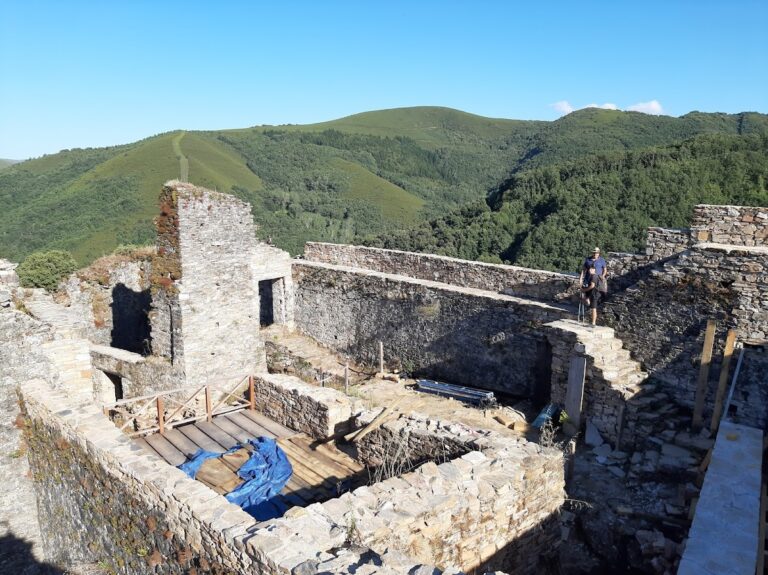
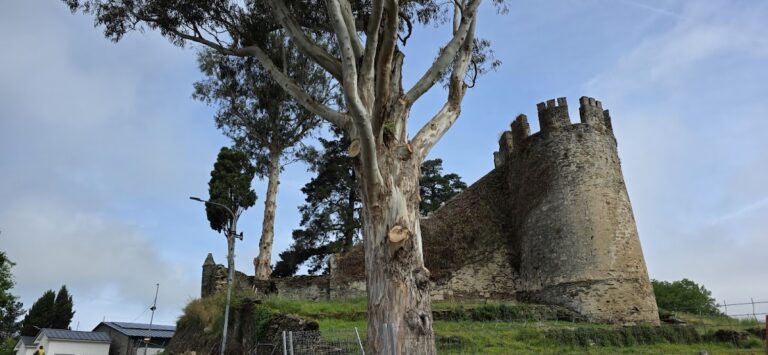
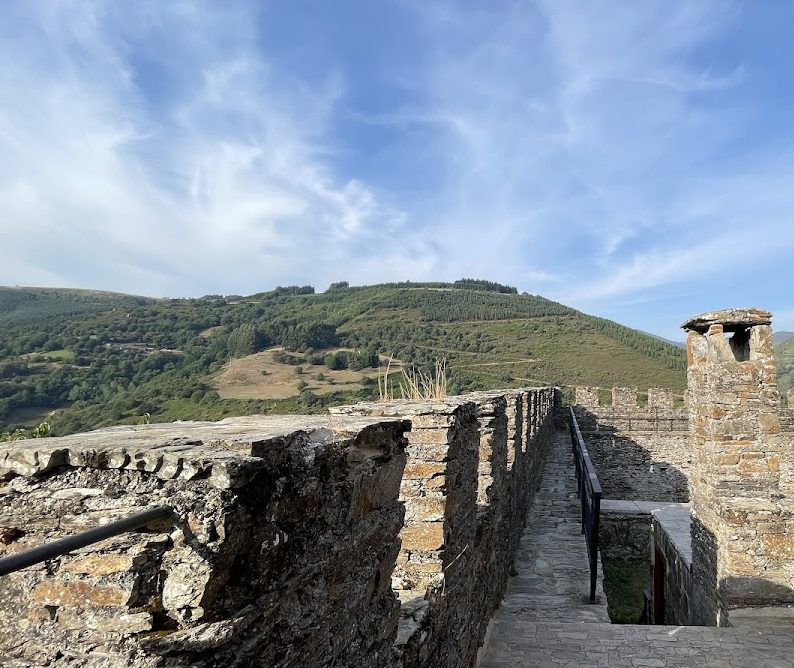
The fortification is arranged around a rectangular arms courtyard measuring approximately 25 by 21 metres. Its plan follows the uneven rocky ground, so the enclosing walls vary in height. They are built of slate rubble masonry and reach about 8 metres in height, with a thickness of approximately 1 to 1.5 metres. The main entrance is a wooden door about 4 metres high that opens toward the arms courtyard.
Keep
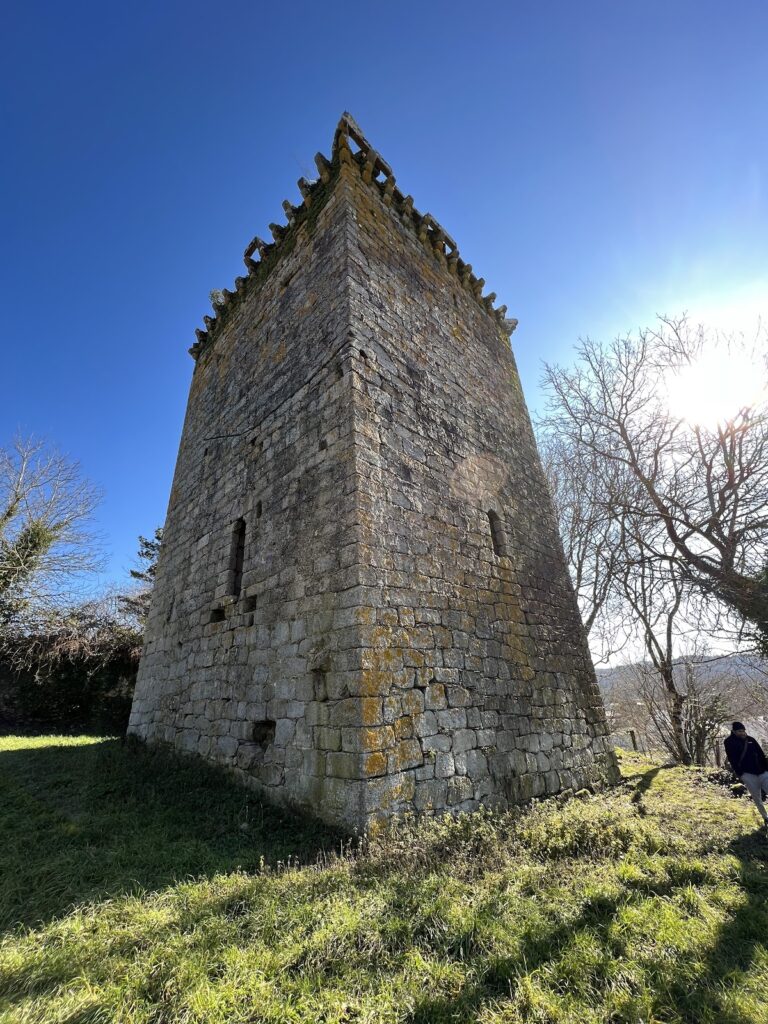
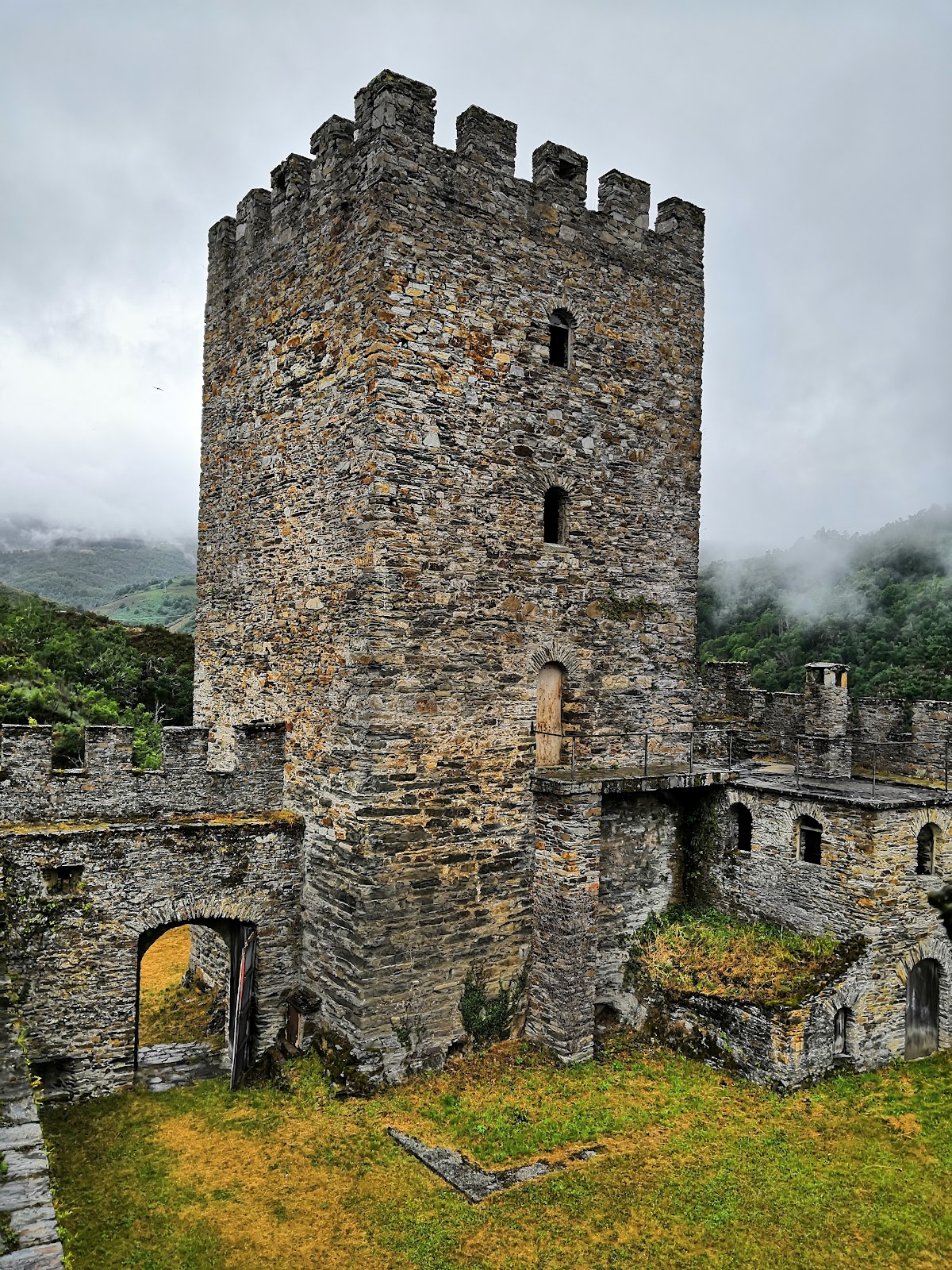
A solitary rectangular keep forms the principal stronghold of the castle. A keep, or tower of homage, was the main and usually strongest tower of a medieval castle, combining defensive and residential functions. The Doiras keep measures about 10 by 8 metres, has walls approximately 2 metres thick, and rises to around 14 metres. Its halls and chambers retain severely deteriorated fresco paintings.
Access points
A semicircular-arched doorway provides access to the courtyard of honor. From the courtyard, a walkway leads to a doorway in the keep positioned about 4 metres above ground level. These entrances form part of the surviving relationship between the enclosure and its principal tower.
River setting and associated buildings
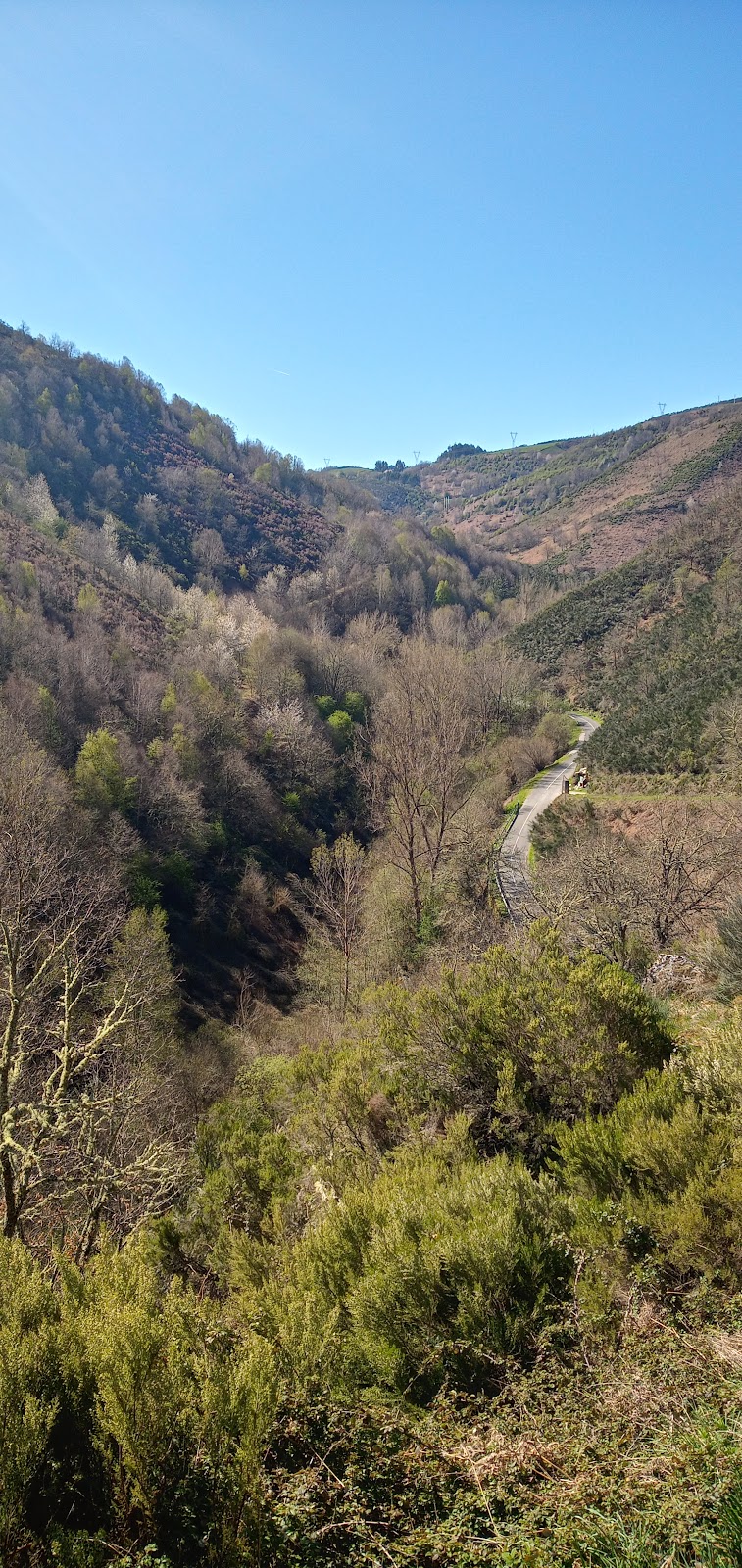
Castelo de Doiras stands on a rocky promontory in the Ancares range, beside the Cancelada River and near the mouth of the Doiras, between the Cancelada and Toural river valleys. It lies at roughly 700 metres above sea level and occupies a commanding position above the river landscape. The castle forms a group with a church that formerly served as the family chapel and with houses in the surrounding settlement. Its present appearance reflects both the surviving medieval structure and the twentieth-century restoration.
Wider defensive evidence
The structure at O Teso do Castelo adds a possible outlying element to the castle’s physical context. Its association with Castelo de Doiras was proposed after a seventeenth-century coin was found there, suggesting that the site may have contributed to a broader system of defense or observation connected with the fortress.
Nearby sites