Sumiyoshi Shrine: A Kyoto Guardian Shrine of Waka Poetry


Site at a Glance
- Rating
- 4
- Popularity
- Very Low
- Country
- Japan
- Primary era
- Early Modern
- Eras represented
- Early Modern
- Civilizations
- Ashikaga shogunate, Tokugawa
- Site type
- Religious
- Remains
- Sanctuary
On this page12 sections
History
Sumiyoshi Shrine in Kyoto, Japan, is a Shinto shrine founded in 1157 during the reign of Emperor Go-Shirakawa, and its principal sanctuary uses the distinctive Sumiyoshi-zukuri style. Originally called New Sumiyoshi Shrine, it was transferred from Sumiyoshi Taisha in Settsu Province and established at the Kyoto residence of Fujiwara no Shunzei as a guardian deity of waka, the traditional Japanese form of lyric poetry particularly associated with the thirty-one-syllable court poem.
Foundation and Medieval Decline
Fujiwara no Shunzei was a major late-Heian and early-Kamakura-period poet and literary scholar whose family became prominent in the transmission of court poetry. Sumiyoshi Shrine was subsequently maintained by the head of the Waka Bureau. During the medieval period, however, the institution declined, and its buildings were destroyed in fires associated with the Onin War. The shrine’s sacred object escaped the destruction.
The former precinct was associated with a shrine dedicated to Shunzei’s spirit. Tradition places it at his former residence, south of the present Matsubara Street and east of Karasuma Street, where the precinct was said to have occupied approximately one town block. By the eighteenth century, the Shunzei Shrine was believed to have stood there for about five hundred years, and local tradition held that moving it would bring misfortune.
Relocation and Imperial Patronage
In 1568, an imperial command from Emperor Ogimachi brought the shrine to its present site. It continued to receive imperial attention during the transmission of waka teachings. Imperial representatives reportedly performed substitute worship, while ritual purification objects were bestowed each year.
Imperial gifts also shaped the shrine’s material history. In 1716, Emperor Nakamikado donated a portable shrine, a ritual spear, and storage chests. Chrysanthemum-crested lanterns followed in 1749 and 1766, and the Arisugawa and other imperial and aristocratic families made occasional offerings.
Fire, Reconstruction, and Later Additions
A major Kyoto fire in January 1788 destroyed part of the shrine. Reconstruction was supported by a grant of 50 ryo in 1798. In 1864, Emperor Komei contributed twenty pieces of silver toward repairs to the portable shrine, but the complex was burned again by a war-related fire in July of that year. A further grant of 100 ryo supported rebuilding.
The present shrine buildings were repaired in 1899 after a fundraising campaign led by Reizei Tameki, a third-rank court noble and waka poet. The grounds also incorporated other religious sites. Kumamaru Shrine was transferred from Hanayama Shrine in Nishinoyama, Kyoto, although the year is unknown. Hitomaru Goryo Shrine, dedicated to the renowned court poet Kakinomoto no Hitomaro, was revived in 1769 by Reizei Tamemura and moved into the Sumiyoshi grounds in 1873.
Deities and Annual Observances
Sumiyoshi Shrine enshrines seven deities: Amaterasu, Tagiri-hime, Sokotsutsu-no-o, Nakatsutsu-no-o, Uwatsutsu-no-o, Empress Jingu, and Takeuchi no Sukune. A shrine-family tradition at Sumiyoshi Taisha identifies Amaterasu, Tagiri-hime, the three Tsutsu-no-o deities, and Empress Jingu among the shrine’s enshrined deities, a tradition understood to have been inherited by Sumiyoshi Shrine. A modern shrine registry lists Tagiri-hime as the principal deity and the other six as associated deities.
The principal annual observance is a procession festival held on the third Sunday of May, followed by a return festival on the fourth Sunday, with dates varying by year. A fire-lighting festival is also held in November.
Remains
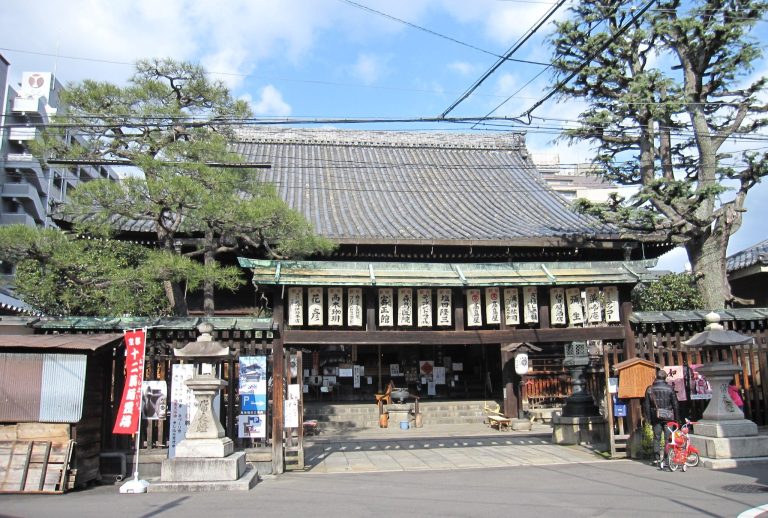
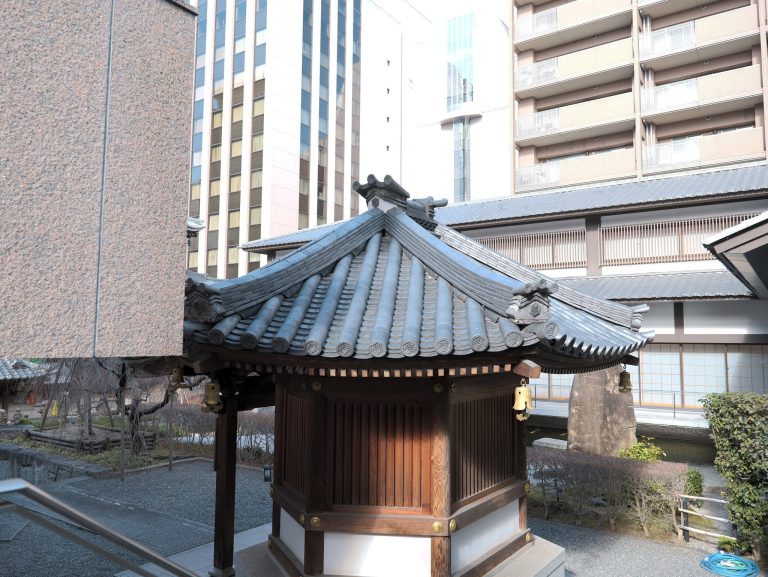
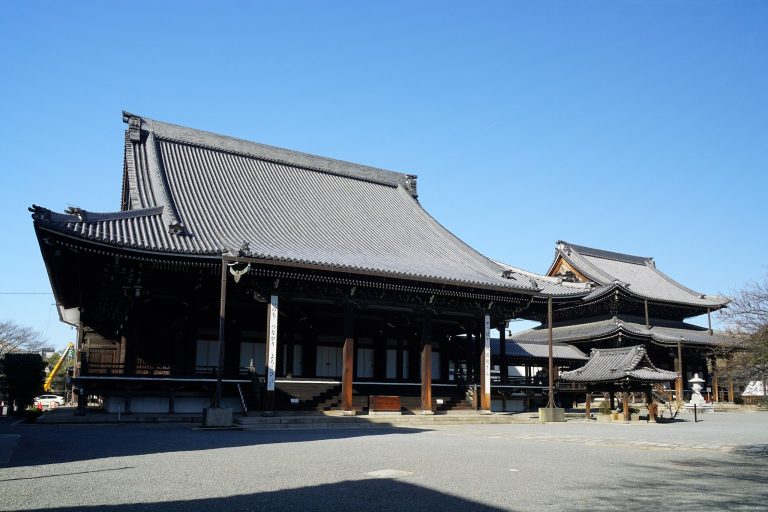
The shrine occupies the site to which it was transferred in 1568 from the former precinct at Fujiwara no Shunzei’s residence. Its principal sanctuary uses Sumiyoshi-zukuri, a Shinto architectural style with a simple sanctuary form, a straight ceremonial ridge line, and strong axial organization. The grounds also contain subordinate shrines connected with the older literary and religious history of the complex.
Principal Sanctuary
The principal sanctuary is the central surviving architectural expression of Sumiyoshi Shrine’s identity. Its Sumiyoshi-zukuri form connects the present buildings with the shrine’s inherited tradition from Sumiyoshi Taisha, the major shrine in present-day Osaka associated with the Sumiyoshi deities and with travel, seafaring, and poetry. The buildings were repaired in 1899 after the fires and rebuilding campaigns of the preceding centuries.
Subordinate Shrines
Shunzei Shrine
Shunzei Shrine stands at the former location associated with the shrine’s original foundation. Dedicated to the spirit of Fujiwara no Shunzei, it preserves the connection between the shrine’s physical history and the poet whose residence served as its first Kyoto setting.
Kumamaru Shrine
Kumamaru Shrine is a subordinate shrine within the Sumiyoshi grounds. It originated as a subordinate shrine of Hanayama Shrine in Nishinoyama, Kyoto, before being transferred into the complex.
Hitomaru Goryo Shrine
Hitomaru Goryo Shrine is another subordinate shrine within the grounds. It was originally a small spirit shrine behind houses south of the main shrine near Takatsuji Street. Reizei Tamemura revived it in 1769 as a shrine to Kakinomoto no Hitomaro, and it was relocated to the Sumiyoshi grounds in 1873. Tamemura also gave waka poems when the shrine was restored, and the local neighborhood kept them.
Historic Shrine Gifts
Objects associated with imperial and aristocratic patronage include a portable shrine, a ritual spear, storage chests, and lanterns bearing chrysanthemum crests. These gifts formed part of the material inheritance preserved through the shrine’s successive relocations, fires, repairs, and rebuilding.