Hōkai-ji Temple: A Hino Family Buddhist Temple in Kyoto


Site at a Glance
- Rating
- 4.3
- Popularity
- Low
- Country
- Japan
- Primary era
- Medieval
- External website
- Open
- Eras represented
- Medieval
- Civilizations
- Ashikaga shogunate, Kamakura shogunate
- Site type
- Religious
- Remains
- Monastery
On this page13 sections
History
Hōkai-ji Temple is a Daigo-branch Shingon Buddhist temple in Kyoto, Japan, traditionally founded in the Heian period and associated with the Hino family. It is a special head temple with the mountain name Tōkōzan, and its lands were connected with Hino in the former Yamashiro Province. The temple developed as the clan temple of the Hino family, a branch of the Northern House of the Fujiwara clan.
Foundation traditions
One foundation tradition places the beginning of Hōkai-ji in 822. Fujiwara no Iemune, serving as an imperial envoy to Enryaku-ji, is said to have received a small image of Yakushi from Ennin, a Tendai abbot. The image was believed to have been carved by Saichō, the monk who founded the Tendai tradition and Enryaku-ji on Mount Hiei. Iemune enshrined the figure, and the tradition holds that he established Hōkai-ji as the Hino family temple.
A second tradition dates the foundation to 1051. Fujiwara no Sukenari, regarded as the founder of the Hino line, is said to have commissioned a larger image of Yakushi, the Buddhist Buddha of healing and medicine. He placed the earlier small image inside it and built a Yakushi Hall. Both traditions connect the temple’s origins with the Hino family and with devotion to Yakushi.
Expansion and destruction
During the late Heian period, devotion to Amida, the Buddha associated with the Pure Land tradition, grew alongside belief in the Latter Dharma age, a period understood in medieval Buddhism as one of declining religious practice. Hōkai-ji responded with the construction of an Amida Hall. The complex also included a Kannon Hall and a Hall of the Five Great Elements, as well as other buildings.
The temple was damaged by fire during the Jōkyū War in 1221. In that conflict, Emperor Go-Toba’s forces challenged the Kamakura shogunate, and the fighting and resulting fires affected Hōkai-ji. The temple did not recover its former scale, although the Amida Hall was rebuilt during the first half of the Kamakura period.
Religious and family associations
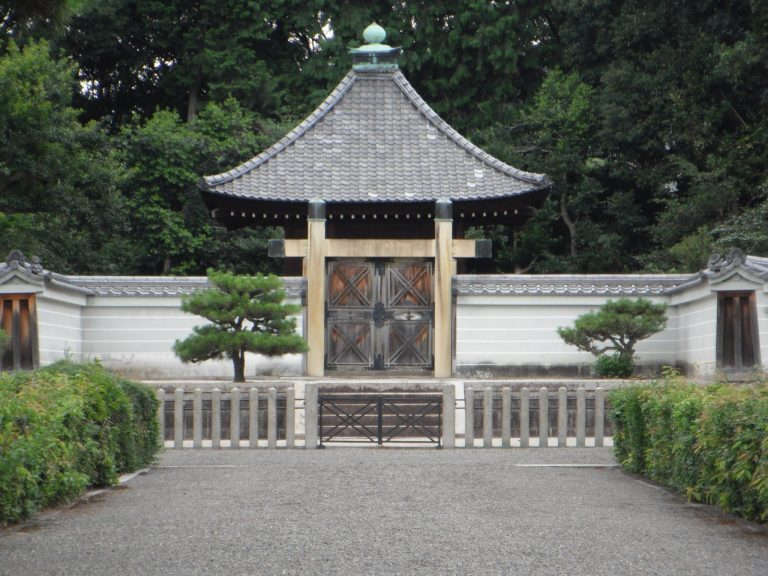
Hōkai-ji is traditionally said to be the birthplace of Shinran in 1173. Shinran was a medieval Buddhist teacher regarded as the founder of Jōdo Shinshū, a major Pure Land Buddhist tradition, and was said to have been the son of Hino Arinori. The Edo-period Hino Birth Hall was later established east of the temple in connection with this tradition. The nearby Hino Mausoleum contains the graves of members of the Hino family.
During the Muromachi period, Hino Tomiko, the wife of the shogun Ashikaga Yoshimasa, is traditionally said to have prayed at Hōkai-ji for a safe childbirth. The temple is also known as Hino Yakushi and Chichi Yakushi. It is the thirty-eighth temple on the Saigoku Forty-Nine Yakushi pilgrimage, a circuit devoted to temples associated with Yakushi.
Protection and ritual tradition
Hōkai-ji’s principal cultural properties have high-level heritage protection. The Amida Hall and its seated Amida image are National Treasures. The Yakushi Hall, its standing Yakushi image, the Twelve Heavenly Generals, and the interior paintings of the Amida Hall are Important Cultural Properties.
The temple is also associated with the Hino Naked Dance, held on January 14 in the open gallery of the Amida Hall. Boys and adult men divide into two groups, join their palms, and jostle while repeating a formula of homage. The ritual remains connected with the temple’s religious identity and its long association with the Hino community.
Remains
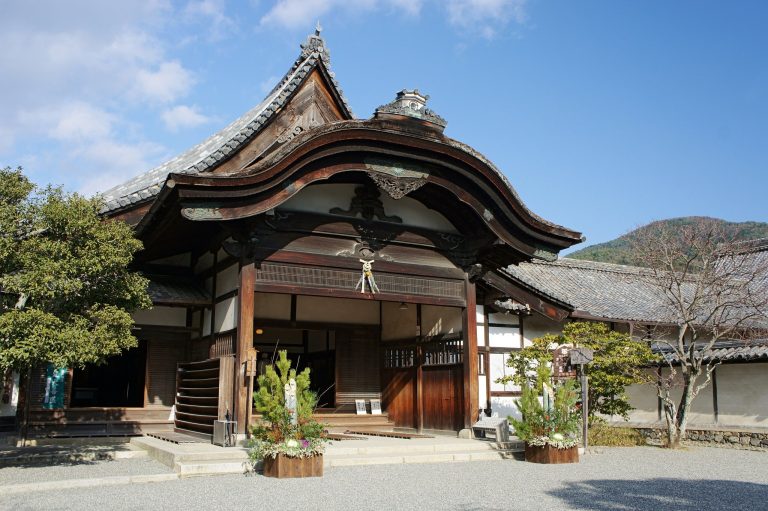
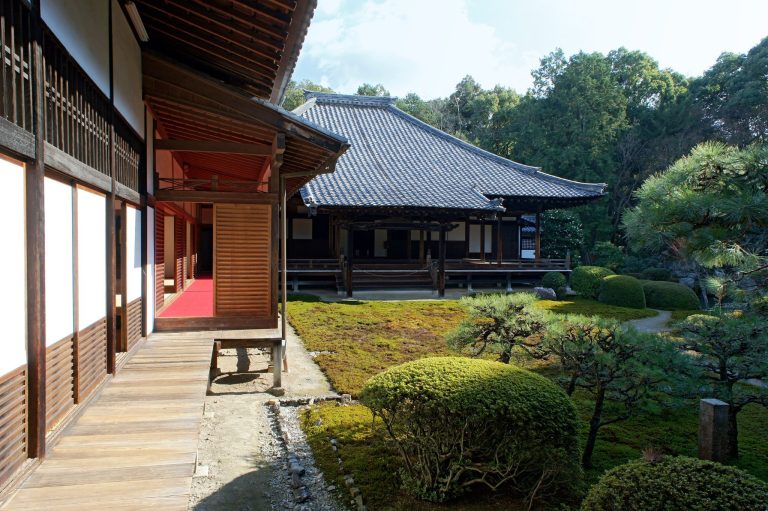
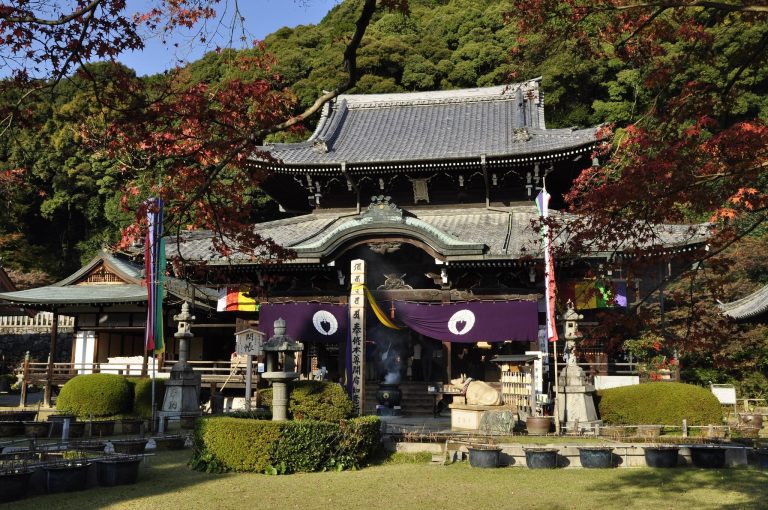
Hōkai-ji stands in Hino in Fushimi, Kyoto, south of Daigo-ji and near the boundary with Uji. The temple occupies the intersection of the Nara Route and the east-west Hino Route. Its surviving buildings form a compact architectural ensemble, with the Amida Hall as the principal structure and the Yakushi Hall positioned slightly to its south.
Principal halls
Amida Hall
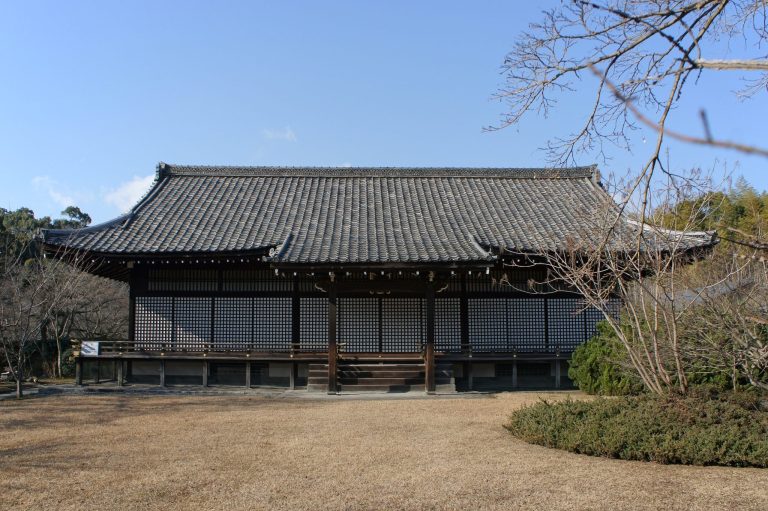
The Amida Hall is a square building measuring approximately 18.5 by 18.5 metres. Its cedar-shingle roof projects over an open gallery running around all four sides. Each side has seven columns, while the two central columns on the front and rear elevations are set somewhat farther apart. This arrangement gives the hall a clearly defined central axis and preserves the surrounding gallery as part of its architectural form.
Inside, paintings cover the columns, walls, and ceiling. The decorative scheme reflects practices current from the late Heian through the Kamakura period, while the surviving paintings date to the Kamakura period. The hall’s central image is a seated wooden Amida Buddha from approximately the end of the eleventh century. The statue is 2.8 metres high and represents the refined Jōchō style, known for serene figures and balanced proportions.
Yakushi Hall
The Yakushi Hall has a tiled roof and is attributed to 1456. In 1904, it was transferred to Hōkai-ji from the now-defunct Dentō-ji. Its principal image is a wooden standing Yakushi Buddha. The figure is said to contain the small Yakushi image associated with one of the temple’s foundation traditions.
Yakushi is believed at Hōkai-ji to assist with childbirth and breastfeeding, giving the image the name Chichi Yakushi, or “Breast Yakushi.” Twelve wooden Heavenly Generals stand before it. Each is approximately 64 centimetres high, and their glass eyes give them a fierce appearance. They are traditionally attributed to Unkei, a major Kamakura-period sculptor known for powerful and physically expressive Buddhist figures.
Other surviving buildings
A refectory and several other buildings also survive within the grounds. Together with the two principal halls, they form the small architectural ensemble that remains from the larger complex described for the temple’s earlier history.
Images and surviving evidence
Early Yakushi image
The small Yakushi figure linked with the 822 foundation tradition is associated with the larger standing image in the Yakushi Hall. Its presence within the later image gives physical form to the story that the Hino family’s original devotional image was preserved inside a successor sculpture.
Amida images
By the late Heian period, Hōkai-ji possessed at least five Amida images made on the Jōroku scale, a standard monumental size for Buddhist figures based on sixteen shaku for a standing figure. The seated Amida now enshrined in the Amida Hall dates from approximately the end of the eleventh century, but it is not known which of the five earlier images it represents.