Byōdō-ji Temple: A Buddhist Healing Temple in Kyoto

Site at a Glance
- Rating
- 4.4
- Popularity
- Medium
- Country
- Japan
- Primary era
- Modern
- External website
- Open
- Eras represented
- Modern
- Civilizations
- Japanese
- Site type
- Religious
- Remains
- Monastery
On this page8 sections
History
Byōdō-ji Temple is a Buddhist temple in Kyoto, Japan, founded in 1003 and belonging to the Chizan branch of Shingon Buddhism, an esoteric Buddhist tradition. It is also known as Inabadō or Inaba Yakushi, names that recall its foundation tradition and its principal image, Yakushi Nyorai, the Buddha associated with healing and medicine.
Foundation and the Yakushi tradition
The temple’s origins are linked to Tachibana Yukihira, the grandson of the court official Tachibana Yoshifuru. His grandson, Kōchō Zenji, is traditionally said to have provided the principal support for the temple’s establishment. The foundation legend gives two possible dates for Yukihira’s journey to Inaba Province, a historical province corresponding broadly to eastern Tottori Prefecture. One places it in 959, when Emperor Murakami ordered him to visit Ube Shrine. The other places it in 997, as he returned to Kyoto after serving as governor of Inaba.
In either version, Yukihira became seriously ill and prayed for recovery. A venerable monk then appeared to him in a dream and told him that a floating log in the sea at Karutsu in Inaba, near present-day Tottori Port, had come from India to save living beings. Yukihira had the object brought ashore with a large net and discovered a life-sized wooden image of Yakushi Nyorai, about 165 centimeters high. After he placed it in a small hall on the Inaba coast, his illness was cured. That hall is identified with the later Zakōji.
The same tradition holds that the image had once been the principal image of the Northeast Hospital, one of forty-nine monasteries at Jetavana in India. Yukihira promised to take it to Kyoto, but years passed before he returned to Inaba. On 8 April 1003, the image is said to have appeared at the gate of his residence at Takatsuji and Karasuma after flying there from Inaba. Yukihira enshrined it in his residence, converted the building into a hall, and named it Inabadō. This event is regarded as the origin of Byōdō-ji. Another tradition says that the image had been preserved at Yakushiji, the clan temple of the local Inaba family, before Yukihira brought it to Kyoto.
Imperial and urban devotion
The foundation legend became widely known in Heian-kyō, the historical name of Kyoto when it served as Japan’s imperial capital. Emperor Ichijō is traditionally said to have established eight subsidiary temples and designated Byōdō-ji as an imperial prayer temple. Later emperors were also said to have shown strong devotion, commissioning prayers at each accession and sending imperial envoys on monthly visits known as “Yakushi pilgrimages.”
Because Buddhist temples other than the officially recognized Tō-ji and Sai-ji were generally prohibited within Heian-kyō, Byōdō-ji was treated as a permitted private Buddhist hall connected with an aristocratic residence. It also developed as a town temple that attracted popular devotion, alongside Rokkaku-dō, also called Chōhō-ji, and Kōdō, also called Gyōgan-ji.
Medieval changes and cultural associations
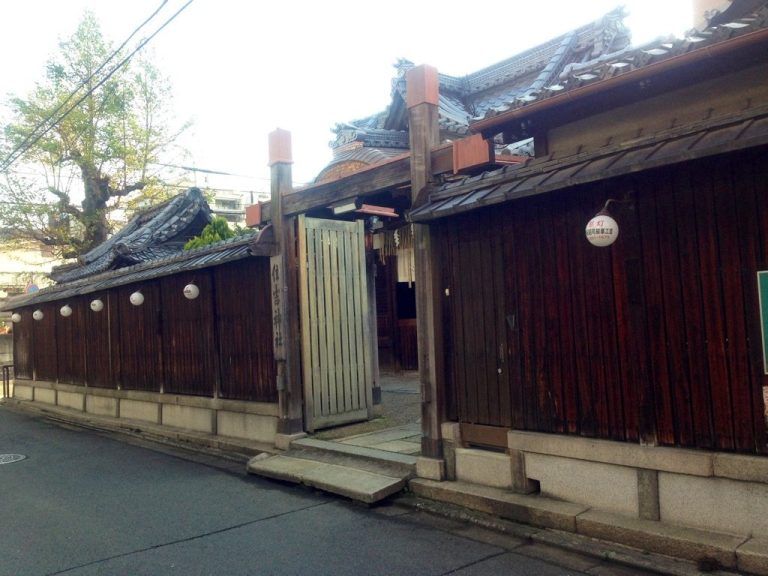
In 1171, Emperor Takakura gave the temple the name Byōdō-ji and presented it with an imperial plaque. During the Jishō–Juei War, a period of upheaval, Takakura resided at the nearby Higashi-Gojō-in. Byōdō-ji’s southern gate was consequently kept closed and became known as the “closed gate.” The north–south street extending from it toward Kyoto Station later took the name Akezu-dōri, although most of the street was laid out after Toyotomi Hideyoshi’s urban reorganization during the Tenshō era.
Byōdō-ji is also connected with several kyōgen plays, short comic dramas traditionally performed alongside nō. These include Inabadō and Onigawara, and the temple has a particularly close relationship with the Ōkura school, one of the principal lineages of kyōgen performance. The temple also appears as a setting in Busshi, Rokujizō, and Kanazu.
The temple continues to be associated with prayers for healing, especially prayers intended to ward off or heal cancer. In recent years, it has received approximately 1,000 prayer requests annually, most of them concerning cancer.
Fire and rebuilding
The Main Hall was destroyed in the Dondonyake conflagration during the upheavals at the end of the Edo period. It was rebuilt in 1886. The temple’s standing wooden image of Yakushi Nyorai, its standing wooden image of Śākyamuni, and its seated wooden image of Nyoirin Kannon are designated Important Cultural Properties of Japan, a legal status providing official protection for works judged important to the country’s cultural heritage.
Remains
Temple complex
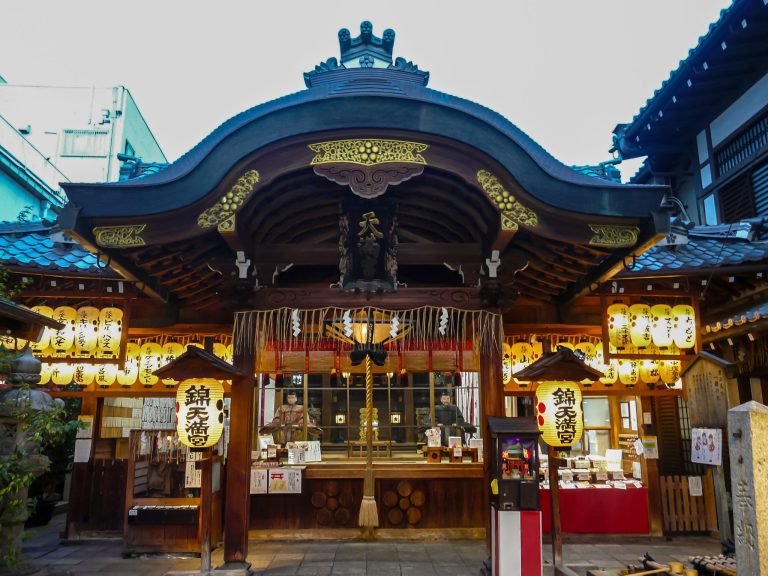
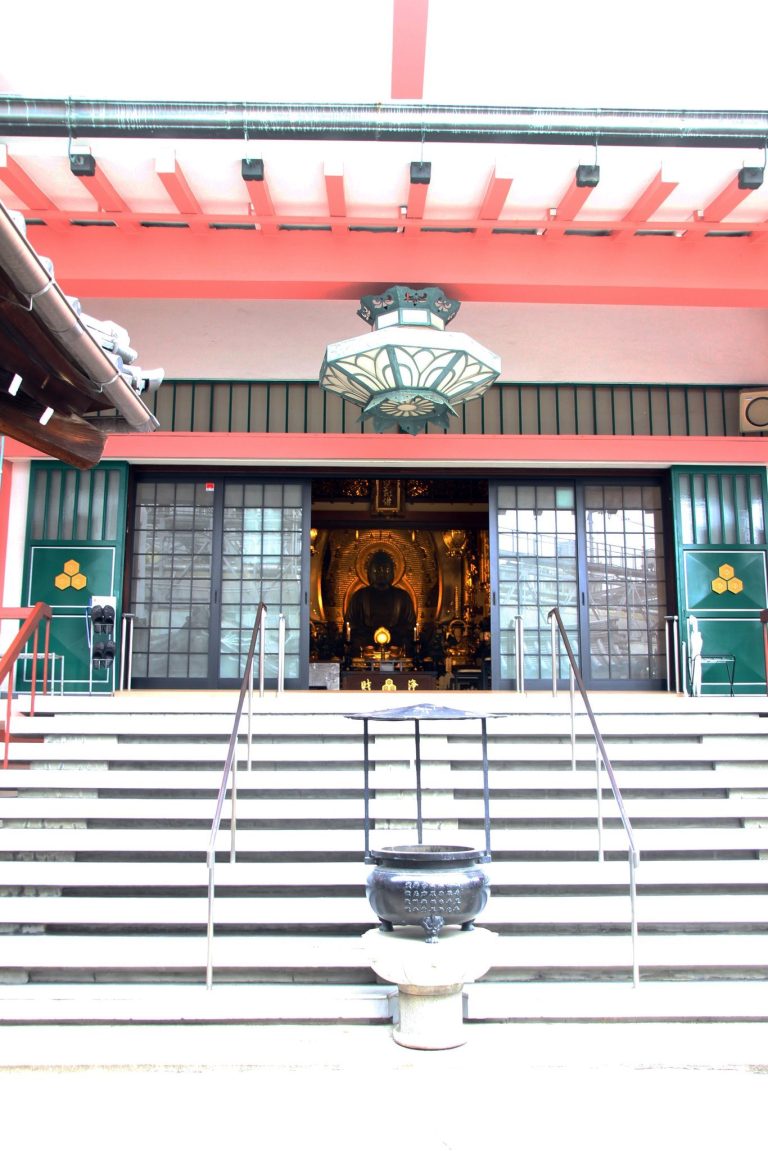
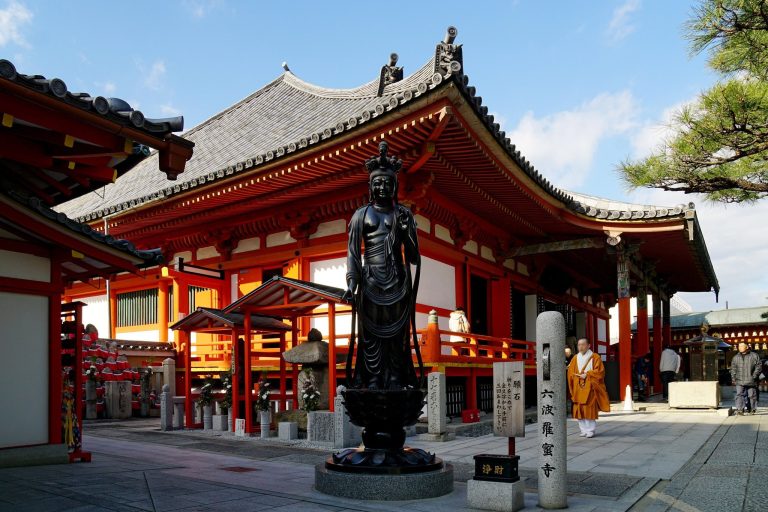
The surviving complex includes the Main Hall, Kannon Hall, a repository, the monks’ residential and service quarters, and a southern gate. The Main Hall, rebuilt in 1886 after the Dondonyake fire, contains paintings of guardian figures by Suzuki Shōnen. The Kannon Hall houses Eleven-Headed Kannon as its principal image and forms the twenty-seventh temple on the Rakuyō Thirty-Three Kannon pilgrimage.
Principal Buddhist images
The principal image is a standing wooden statue of Yakushi Nyorai approximately 165 centimeters high. It is counted among Japan’s Three Great Tathagata images, a traditional category that also includes the standing Śākyamuni at Seiryō-ji and the Amida triad at Zenkō-ji. The statue is said to have survived repeated fires since 1103, linking the physical image to the temple’s long healing tradition.
Byōdō-ji also preserves a standing wooden statue of Śākyamuni with an inscription dated 1213. It is described as a fine work of the Kamakura period. A seated wooden statue of Nyoirin Kannon, the Wish-Fulfilling Wheel form of Avalokiteshvara associated with the fulfillment of religious and worldly wishes, is another fine work of that period. These two statues, together with the standing wooden Yakushi image, are Important Cultural Properties of Japan.