Stolpe Abbey: Pomerania’s First Monastery
Site at a Glance
- Country
- Germany
- Primary era
- Medieval
- Eras represented
- Medieval, Modern
- Civilizations
- Duchy of Pomerania
- Site type
- Religious
- Remains
- Monastery
On this page14 sections
History
Foundation and early development
Stolpe Abbey was a medieval monastery at Stolpe an der Peene, Germany, founded on 3 May 1153 by Duke Ratibor I of Pomerania and Bishop Adalbert. It was the first monastery in Pomerania. Its foundation was associated with the nearby death of Ratibor’s brother, Wartislaw I, an early Christian Pomeranian duke who was killed in the twelfth century. A claim that a pagan Liutician killed him is unsubstantiated, and a Slavic cult site may have stood at Stolpe.
The first community consisted of Benedictine monks sent from Berge Abbey near Magdeburg by its abbot, Arnold. They followed the Hirsau observance, a Benedictine reform tradition. The foundation also served Magdeburg’s church policy in Pomerania. The abbey’s first holding was the village of Stolpe, which had an inn, a market, fields and meadows, as well as a shipping toll on the Ribenitz River. The small community functioned as a priory, a smaller monastic house led by a prior, during its first two decades.
In 1164, amid the Danish-Wendish conflicts, Duke Henry the Lion and King Valdemar I of Denmark met at Groswin to discuss a dynastic alliance. Valdemar then visited Stolpe’s priory, while Henry travelled to Demmin. On 15 August 1176, the monastery’s provost Helmwig, a senior cleric with administrative duties, and Eberhard, later abbot of Kolbatz, received a blessing from Bishop Conrad I of Salzwedel. By then the church’s choir, the area around the altar, and nave, its main central space, were complete.
Expansion and Cistercian reform
The abbey’s lands grew through gifts from Pomeranian rulers and church leaders. A document issued by Duke Bogislaw I in 1182 marks an early stage of acquisitions around Stolpe. Duchess Ingardis gave Liepen to the abbey in 1222. Pope Honorius III confirmed its possessions in 1226–27, and in 1226 Dobroslawa, daughter of Duke Bogislaw II and countess of Gützkow, transferred further properties there. By 1243, the abbey also held Korswandt, the Lassovniza stream, a forest and Wolgast Lake on Usedom. Its holdings in the principality of Gützkow included Quilow, Polzin and settlements that no longer exist. More than 100 references to its possessions survive in documents, and eleven water and wind mills provided substantial income.
Stolpe held patronage rights over churches at Ziethen, Wusseken and Neuenkirchen, as well as at Liepen and Rathebur. Such rights included a role in presenting clergy to parish churches. Ziethen’s jurisdiction also included subsidiary churches at Rubkow and Bünzow. The abbey belonged to the Diocese of Cammin.
By the end of the thirteenth century, the abbey’s finances and religious community were both in difficulty. On 9 October 1301, Abbot Gottfried agreed with Cismar Abbey to measures intended to restore monastic discipline. The houses promised to accept one another’s monks, and Cismar’s abbot was to visit Stolpe with two monks every other year. The arrangement seems to have had little effect. Under Abbot Diethmar, Stolpe adopted the Cistercian rule in 1304 and formally entered the Cistercian Order in 1305. The change was followed by the loss of important privileges.
The Cistercian central assembly assigned Pforta Abbey as Stolpe’s mother house, the institution responsible for supervising it. Stolpe belonged to the Morimond branch of the order’s network. Its daughter houses included Kärkna in Estonia, also known as Falkenau, and Padise. In 1305, the Teutonic Order acquired Dünamünde, and its Cistercian community moved to Padise near Tallinn, where a new monastery was founded in 1310. Padise became Stolpe’s daughter house in 1319.
Prosperity and decline
During the fourteenth century, improved finances supported a hospital and a library. In 1348, the community had thirteen members besides its abbot. Abbot Johann of Stolpe promoted the founding of the University of Greifswald. Economic prosperity gave way to decline toward the end of the fifteenth century, when the abbey sold property and its religious life weakened.
Dissolution and later history
An official inspection in 1520 led to the election of a new abbot in an effort to renew the community. On 27 August 1532, Dukes Barnim XI and Philipp I agreed to expropriate the abbey. In 1534, the Pomeranian estates assembly at Treptow ordered secularization, transferring the monastery and its lands from religious to secular control. The dukes of Pomerania-Wolgast took possession and established the Stolpe administrative district there. Matthias, the last abbot, held office from 1531 to 1534.
During the Thirty Years’ War, the major European conflict of 1618–1648, imperial troops fortified themselves at the monastery. Swedish forces attacked the complex, setting it on fire and looting it on 27 August 1637. Sweden acquired Stolpe in 1648, and Prussia did so in 1720. Some parts of the round church apparently survived in 1654, but were dismantled in later years for building materials. Other monastery buildings remained in good condition into the eighteenth century, before local people took stones for their own use.
Architectural and archaeological investigations at the ruins took place from 1957 to 1960. Further excavation in 2002 clarified the church’s plan, and the surviving remains were subsequently secured.
Remains
The church
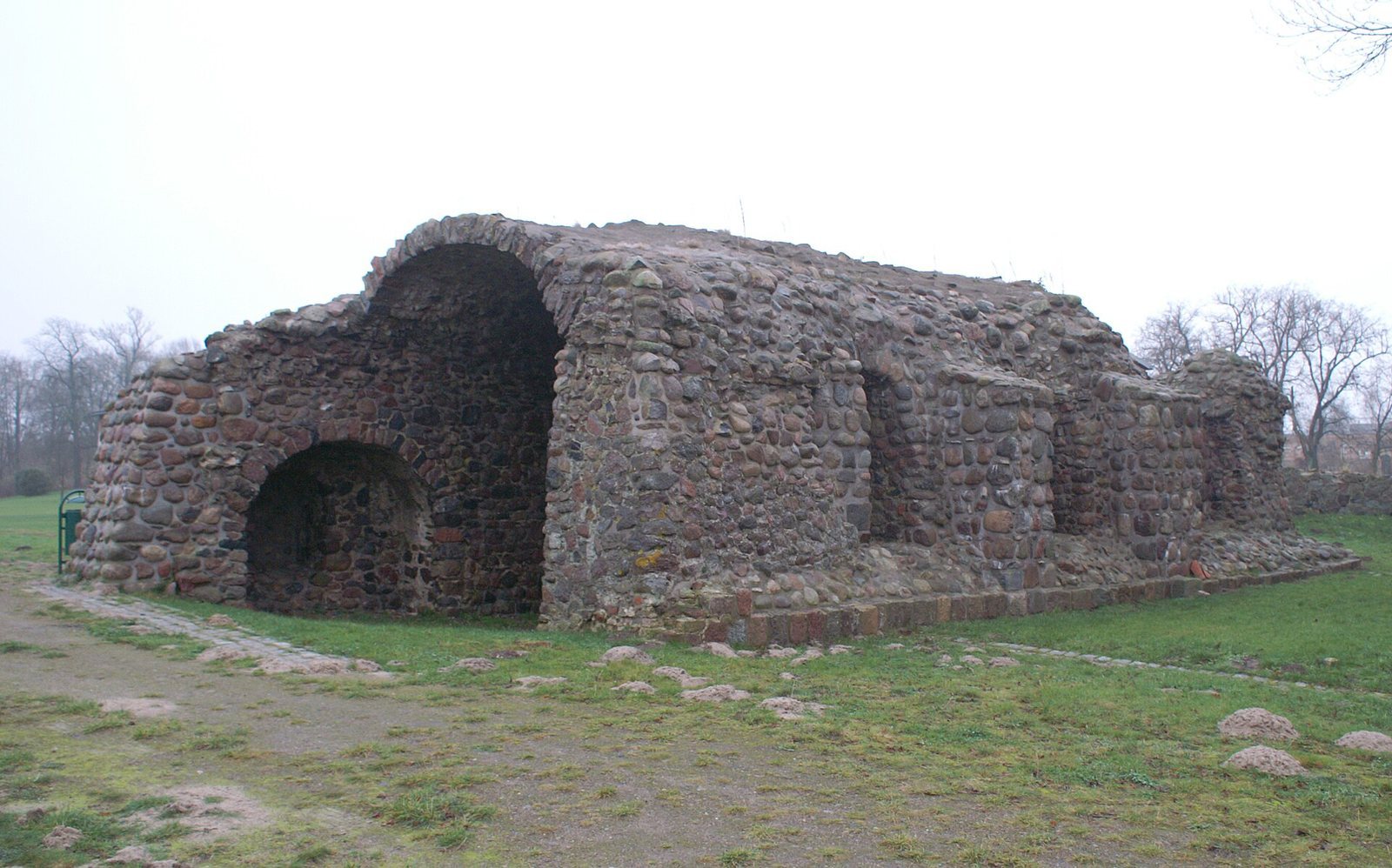
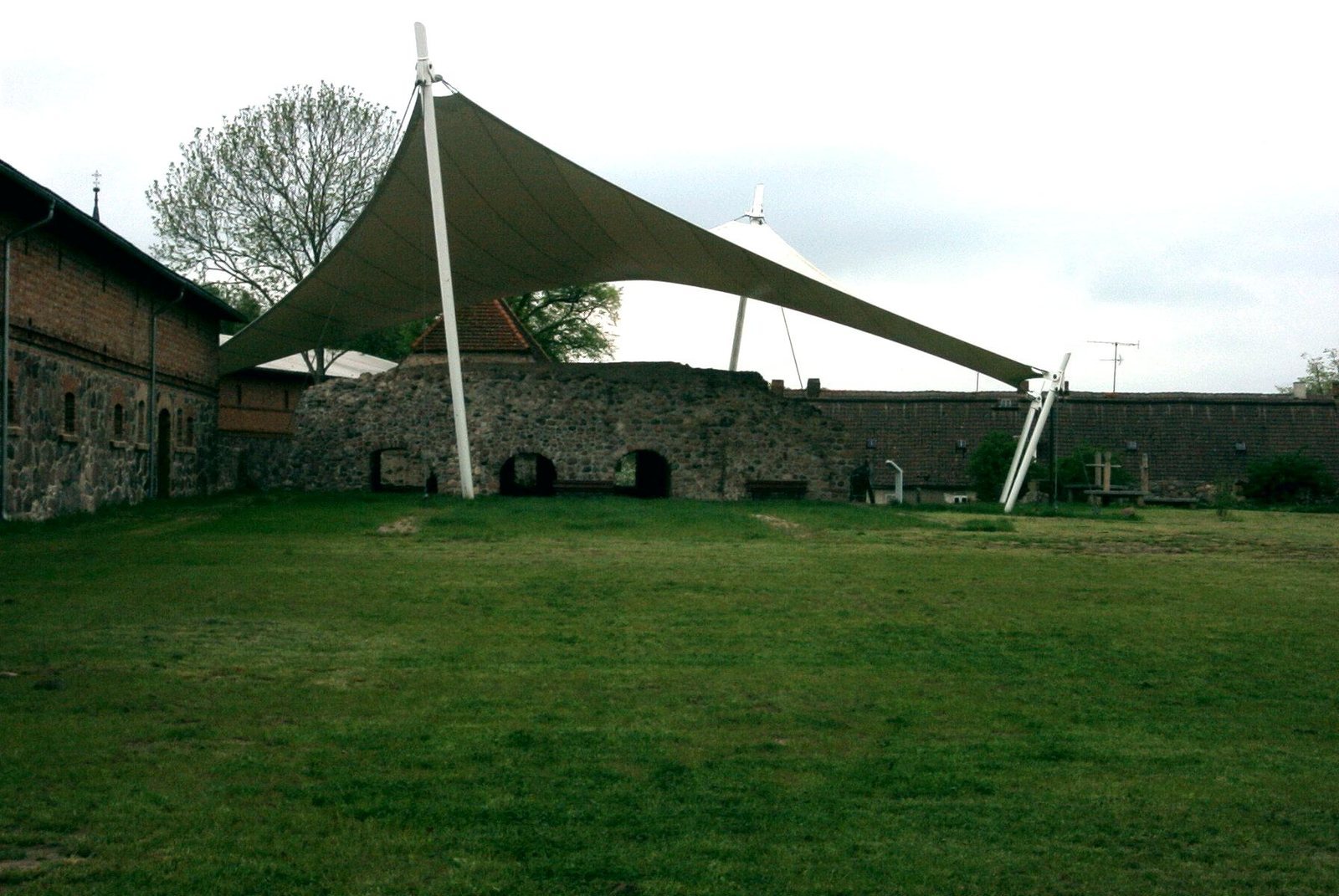
The abbey stood near Stolpe on the southern bank of the Peene River, between Gützkow and Anklam. Its church was a three-aisled fieldstone building, with side aisles running alongside the central space. The surviving church ruin is the lower part of the west tower. Excavated pier foundations established the church’s dimensions, and its outline was later marked with paving in the lawn.
The choir and nave were complete by 1176, while excavated remains indicate that the church as a whole had been built by about 1190. Consistency in its plan, materials and workmanship suggests that the church, including the west tower, was constructed in a largely continuous phase. A broad projection in the wall and crosswise arches divided the choir into two equal spaces and set it apart from the nave. At the eastern end, a straight-ended altar space extended beyond the side aisles. Two smaller choir spaces flanked the church; excavation identified the northern one.
Chapels
A round chapel was consecrated at the monastery in 1176. Another chapel was consecrated in 1423 and is associated with a circular building. Its purpose is uncertain, though a funerary and commemorative role connected with Wartislaw I is considered more likely than use as a baptistery.
Other buildings and movable remains
Wider monastic complex
The wider complex probably began to take shape by the middle of the twelfth century. Other monastery buildings are mentioned from the early fifteenth century. Together with the church, they formed the abbey’s architectural setting.
Administrative house
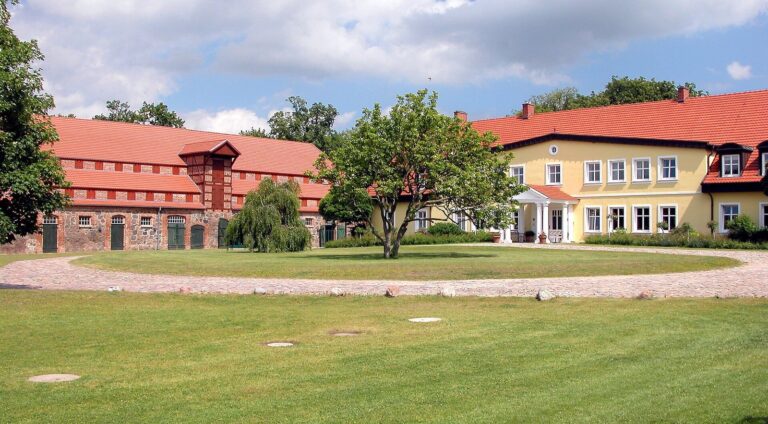
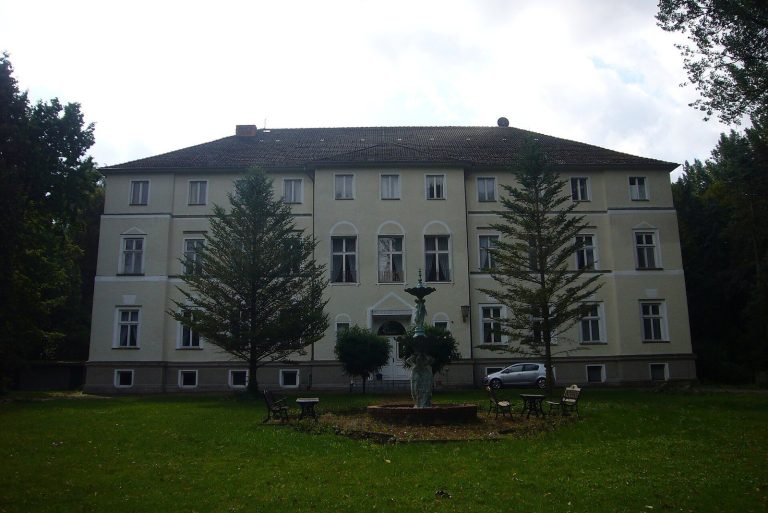
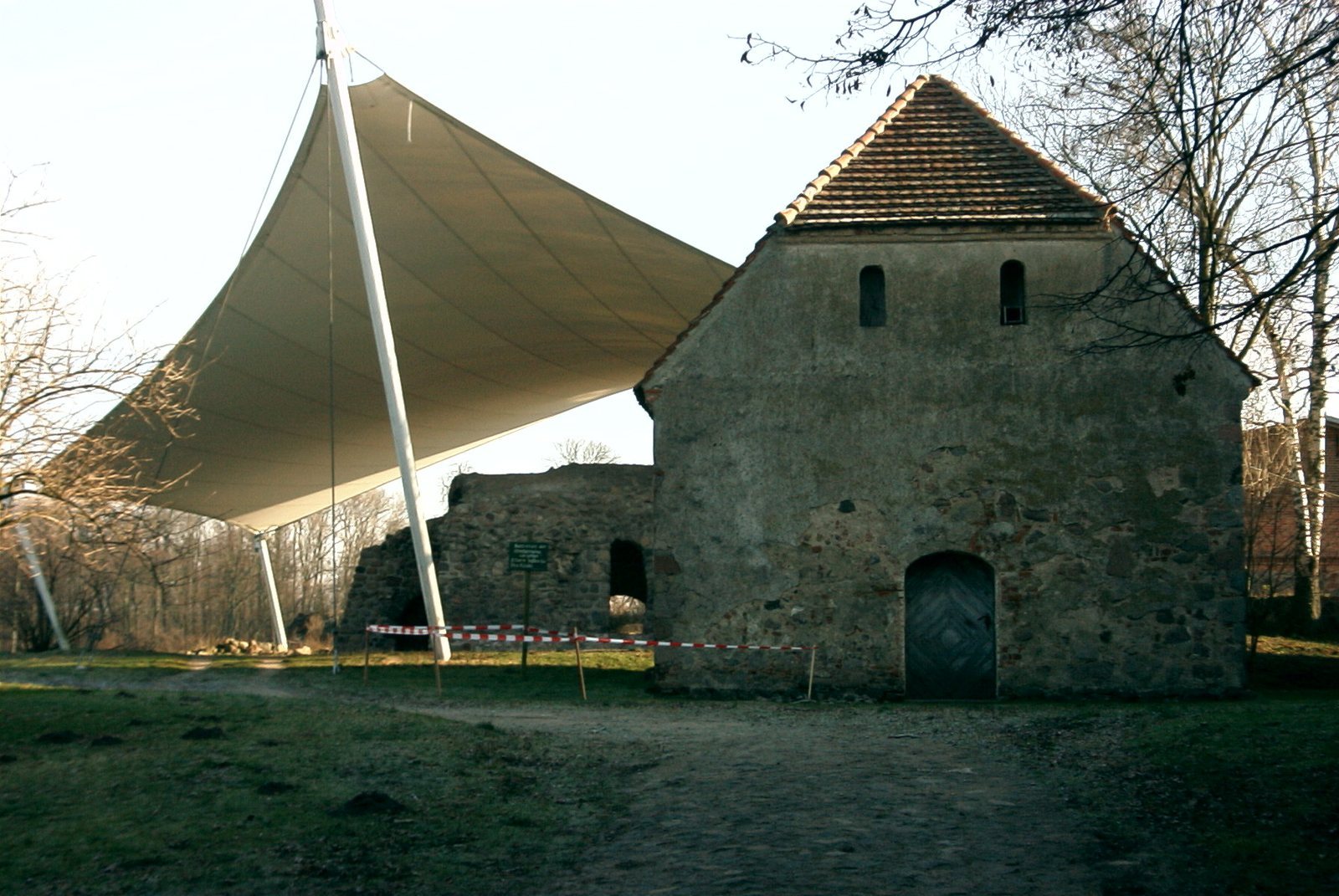
The administrative house beside the ruins was built with stone taken from the monastery. It served as the administrative building of the ducal Stolpe district and later as a church, until a new church was built in Stolpe. The building now houses trough-shaped grinding stones and other millstones dating from the Neolithic, the later Stone Age, to the Slavic period of settlement and material culture.
Reused architectural elements
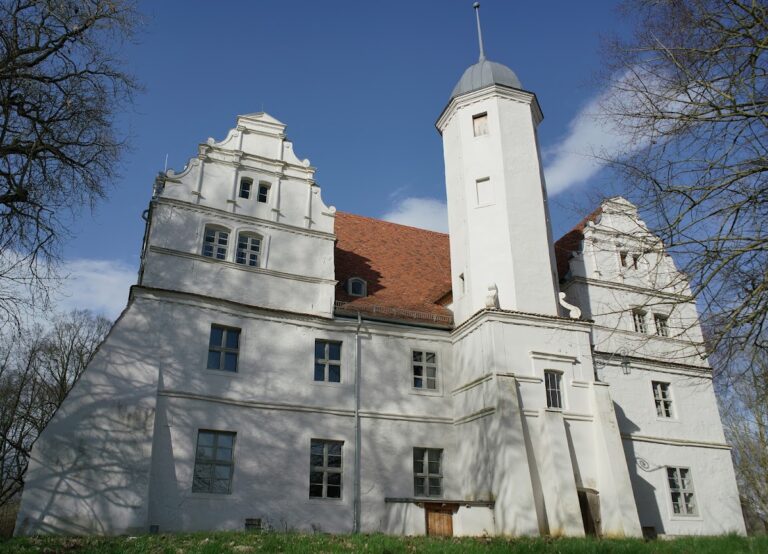
An early Gothic gable on the south wing of Stolpe manor house may also have come from the abbey.
Bells and devotional objects
Two fifteenth-century bells and eight votive discs, devotional offerings depicting biblical scenes, are now in the church at Medow.
Seals and documents
The abbey community’s seal survives on a document issued by Abbot Radulf in 1283, now held in the Lübeck City Archive. Radulf’s own seal is also attached to the document. From 1301, the community seal was kept under three locks, held by the prior, custodian and cantor, the official responsible for liturgical singing. Its inscription identifies the chapter of the church at Stolpe. Radulf’s pointed-oval seal shows him seated on a chair decorated with swan necks, holding an open book in his right hand and an abbot’s staff in his left. Its inscription names him as abbot of St John at Stolpe.