Gut Stolpe: A Historic Estate in Germany
Site at a Glance
- Country
- Germany
- Primary era
- Modern
- Eras represented
- Medieval, Modern
- Civilizations
- Duchy of Pomerania, German, Holy Roman Empire, Kingdom of Prussia
- Site type
- Domestic
- Remains
- Manor House
On this page17 sections
History
Gut Stolpe is a landed estate in Stolpe an der Peene, Germany, whose history is closely linked to the former Stolpe Monastery. After the monastery was secularized in 1534, its property passed to the dukes of Pomerania-Wolgast, who established an administrative district there to manage local lands and revenues.
From monastery estate to Prussian domain
During the Thirty Years’ War, a major European conflict lasting from 1618 to 1648, imperial troops entrenched themselves at the former monastery estate. Swedish forces fired on them, and the fighting and plundering damaged the property. Stolpe came under Swedish rule in 1648 and Prussian rule in 1720.
In 1720, the estate became the personal domain of Prussian King Frederick William I. His great-grandson, Frederick William III, sold it to the Prussian state in 1807. A tenant named Müller leased the property until 1852, when the von Bülow family acquired it and commissioned a manor house.
The estate and Fritz Reuter
The von Bülows made limited personal use of Gut Stolpe, which was generally leased or managed by estate inspectors. Fritz Peters, a friend of the Low German writer Fritz Reuter, farmed there as a tenant from 1853 to 1880. In 1865, the estate had 182 residents, including an inspector, servants, and 30 day laborers with their families. It then comprised eight residential buildings, eleven farm buildings, and a windmill.
Reuter visited Stolpe frequently between 1853 and 1863. He wrote about agricultural affairs there and produced the novel Kein Hüsung in August 1856. The monastery ruins inspired his 1860 work Urgeschicht von Meckelnbörg.
Twentieth-century changes
After Hans von Bülow’s wife Sophie died in 1920, he adopted her niece Ursula von Maltzan the following year. She married Hamburg farmer Kurt Stürken in 1926. Stürken improved the finances of the indebted estate and commissioned new farm buildings. In 1945, the estate was expropriated, and Ursula fled with her six children.
During the German Democratic Republic period, the socialist state in eastern Germany from 1949 to 1990, Gut Stolpe operated as a state-owned seed-breeding farm. The farm administration was based there, and the manor house served as a hostel for apprentices.
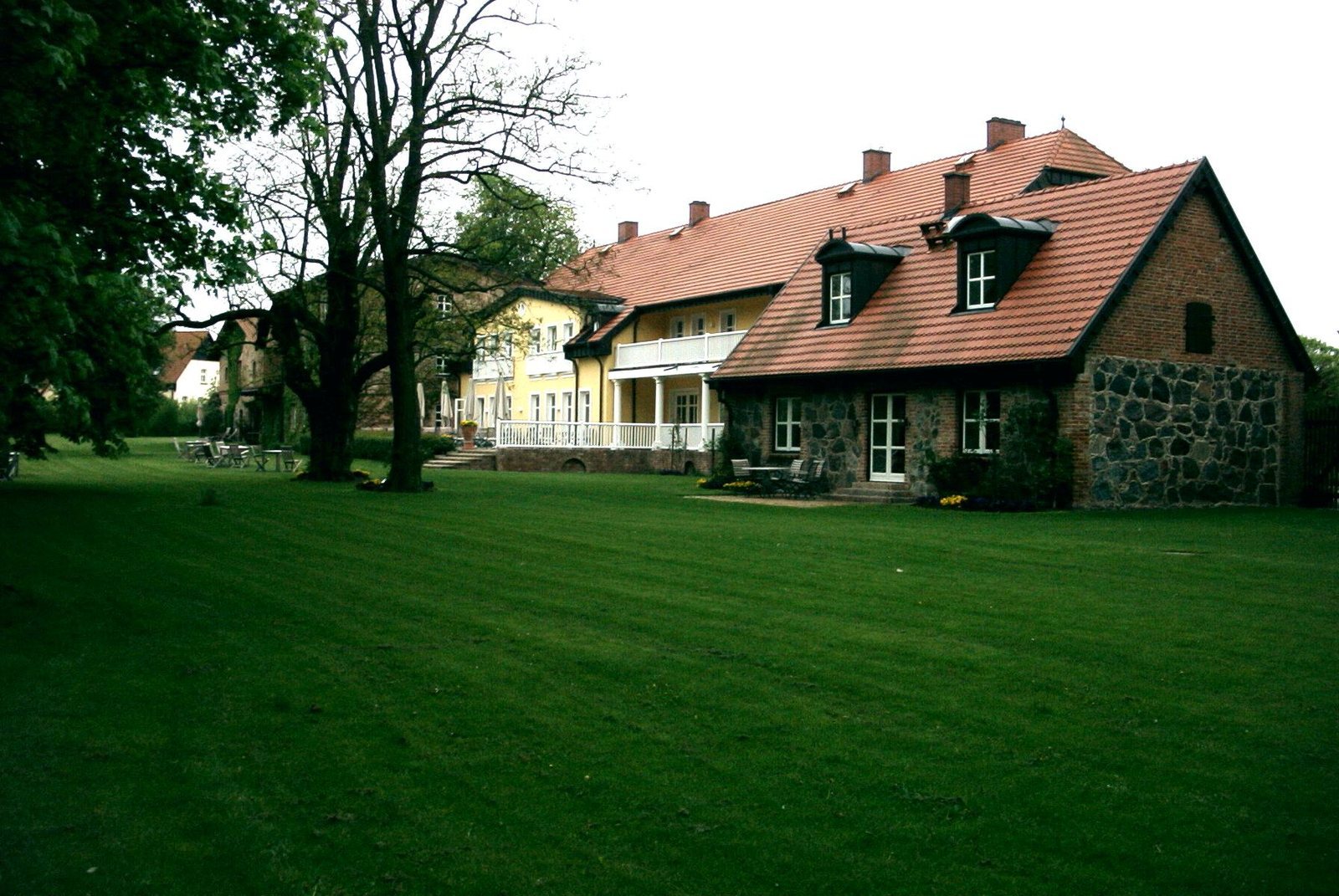
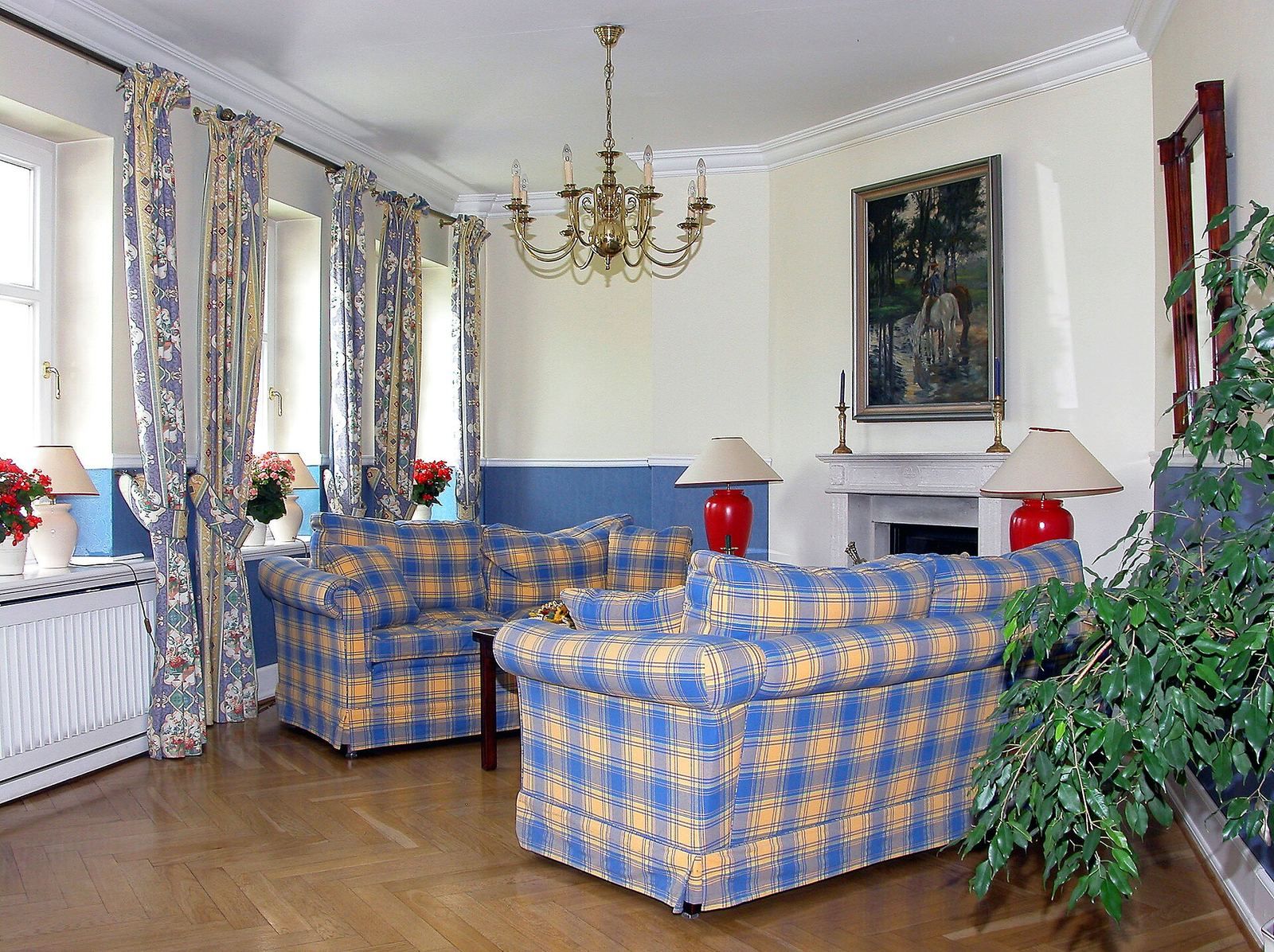
Kurt Stürken, the son of the earlier estate owner, returned in 1990. In 1994, he reacquired the estate buildings and 150 hectares of woodland and meadow, later purchasing the arable land as well. In 1996, he renovated the manor house and adjoining outbuildings for use as a hotel and restaurant. Parts of the farmstead, the Stolpe Ferry Inn, and the fieldstone smithy have historic protection. The estate park was renovated, and the smithy underwent extensive restoration.
Remains
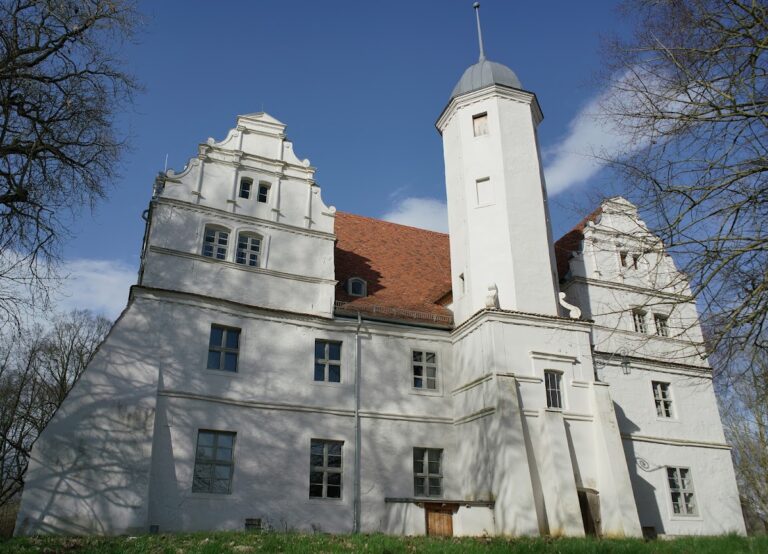
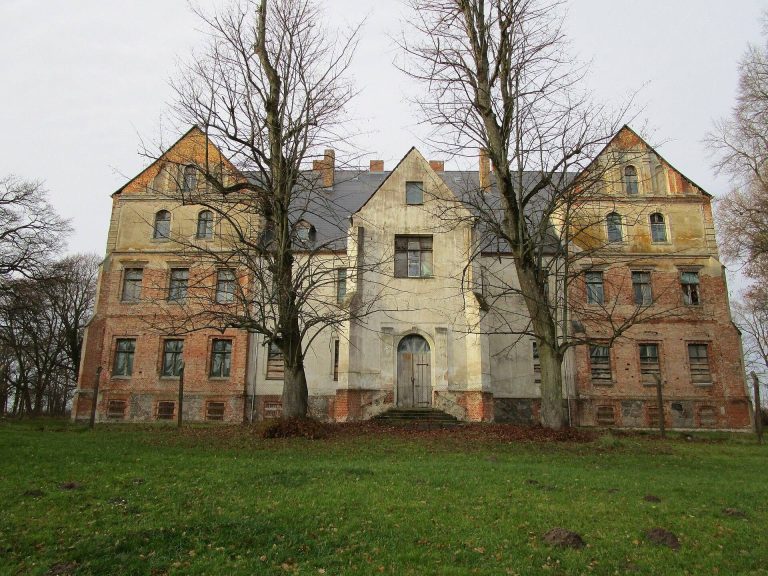
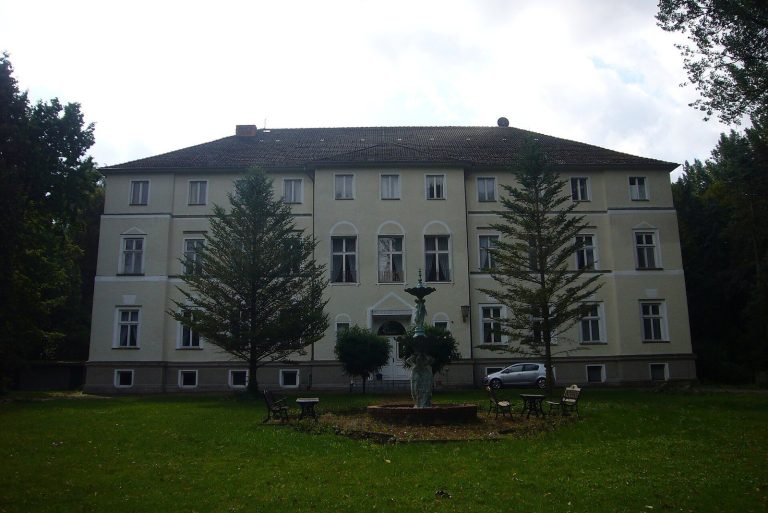
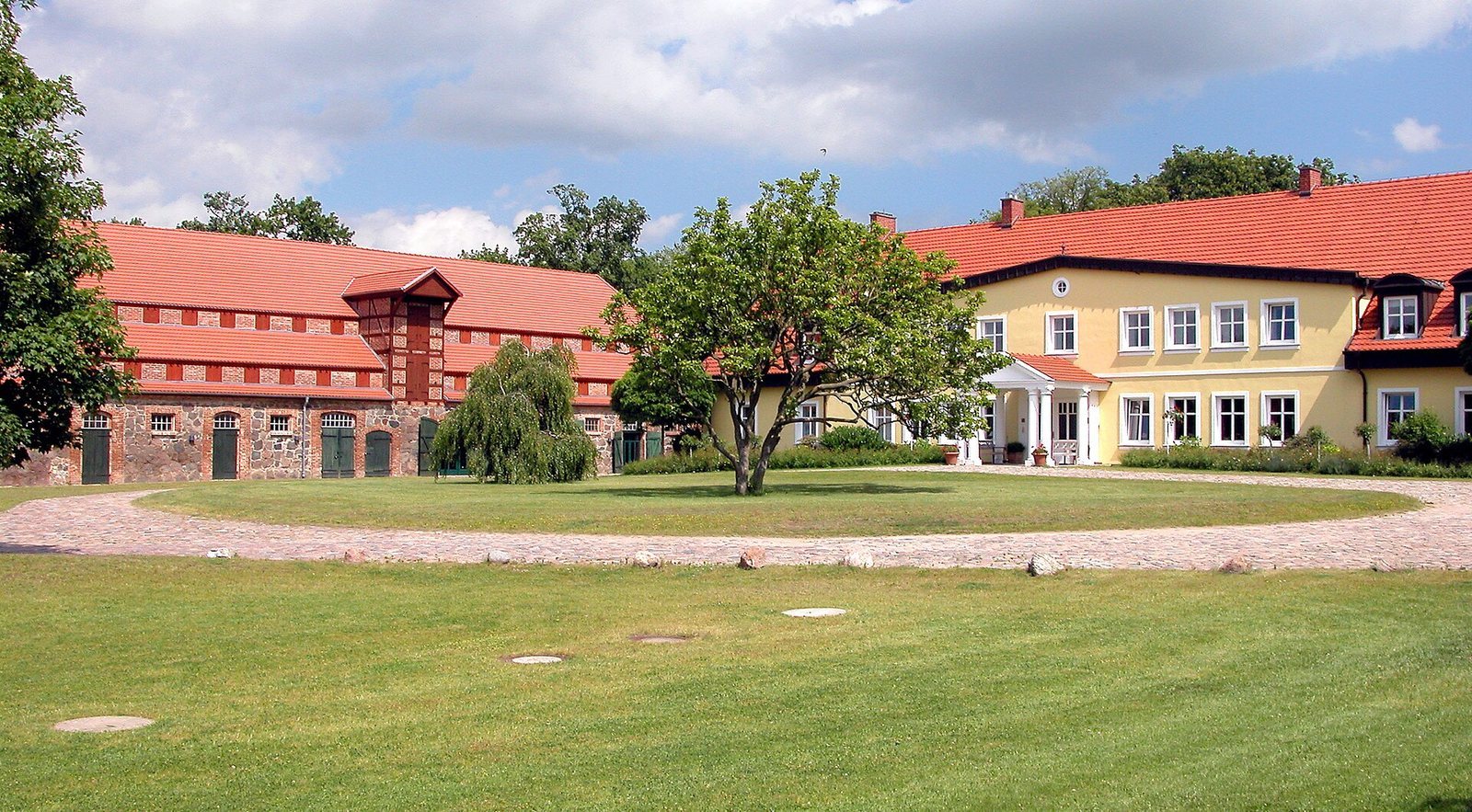
The surviving estate brings together a plastered manor house, connected and separate farm buildings, and the ruins of the monastery church. Paved lanes lined with avenue trees and maintained lawns remain within the farmstead.
Manor house and connected buildings
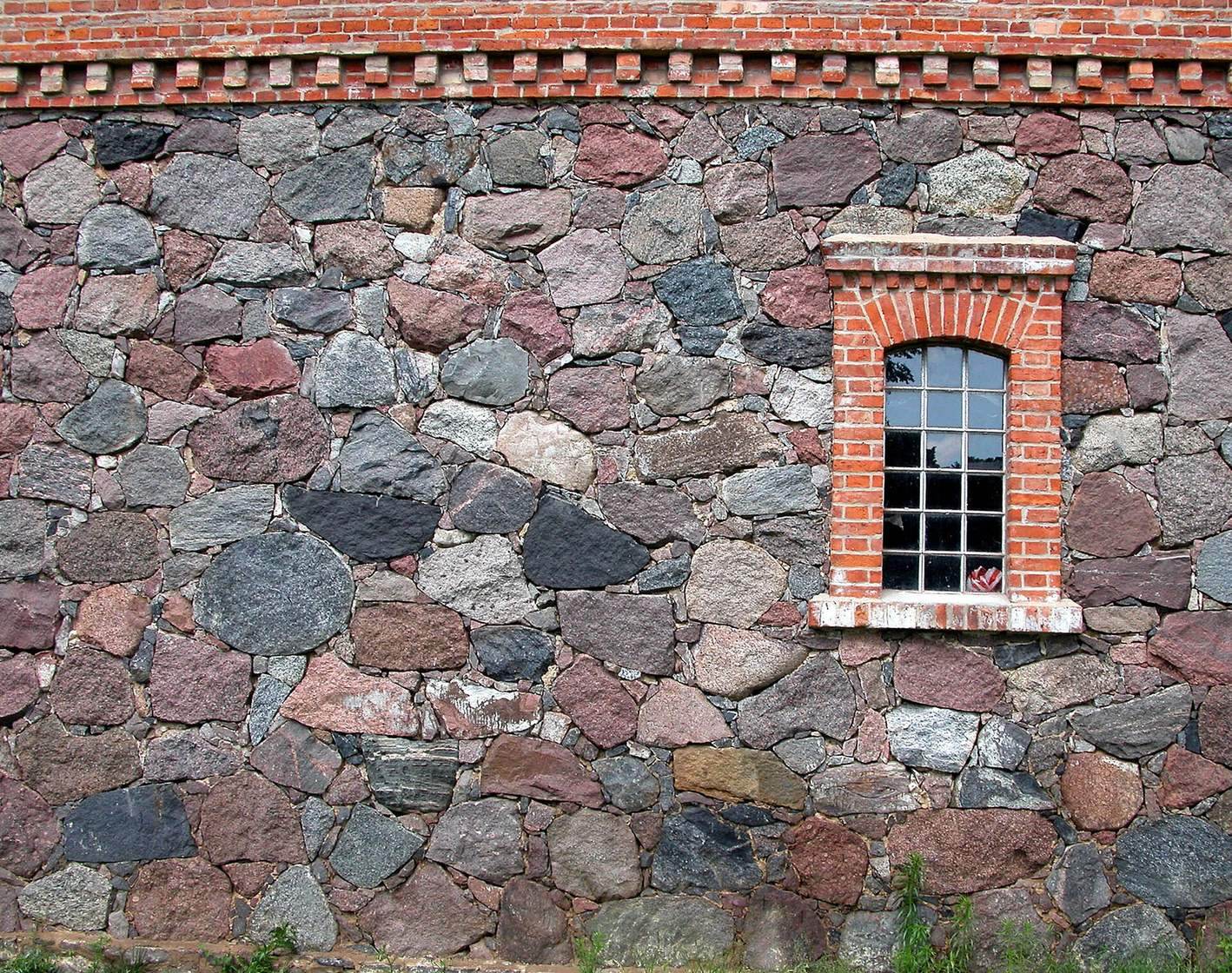
The single-storey manor house stands on a fieldstone base. A broad central section projects from its front and rises to a gable. On the north side, a low fieldstone annex now serves as a wellness area; Reuter stayed in this part of the house. The manor is structurally joined to a granary on its right. An early Gothic gable on the southern side wing may date from the monastery period.
Farm buildings
Stable buildings
A former horse stable with an upper storage floor now serves as an events hall and as a branch of the Anklam civil registry office. Another stable, in front of the monastery ruins, served the farm as a horse stable.
Cow stable and gate-side stable
The large cow stable has burned out, and its foundation walls now enclose the hotel parking area. A stable beside the gate is used for municipal purposes, including by the volunteer fire brigade, and also serves as a workshop.
Oat barn
The former oat barn beside the road is now used as a concert venue.
Monastery and estate grounds
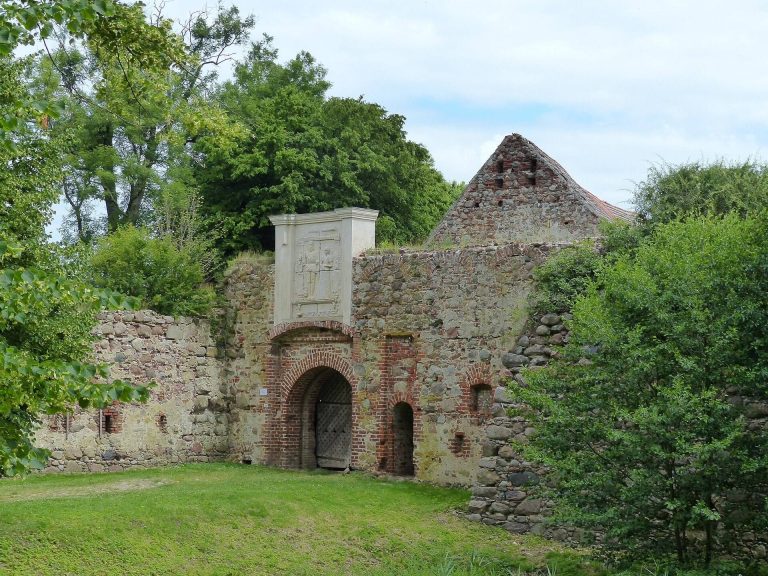
Monastery church
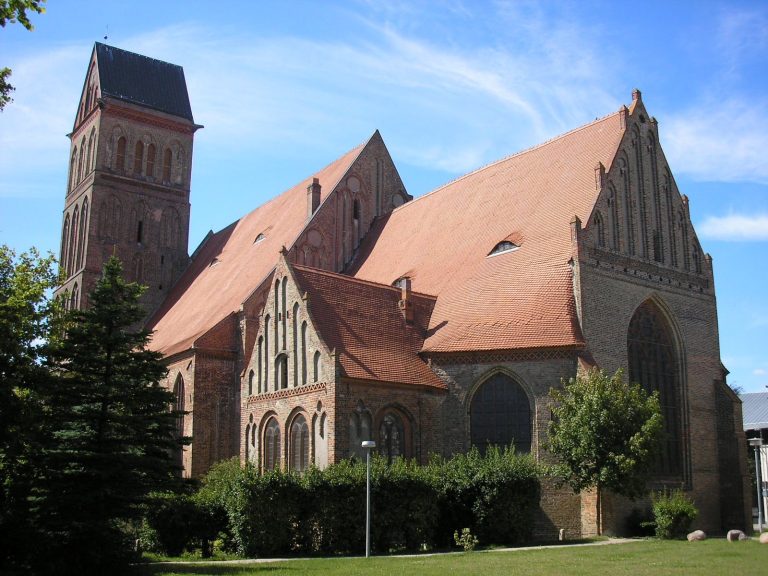
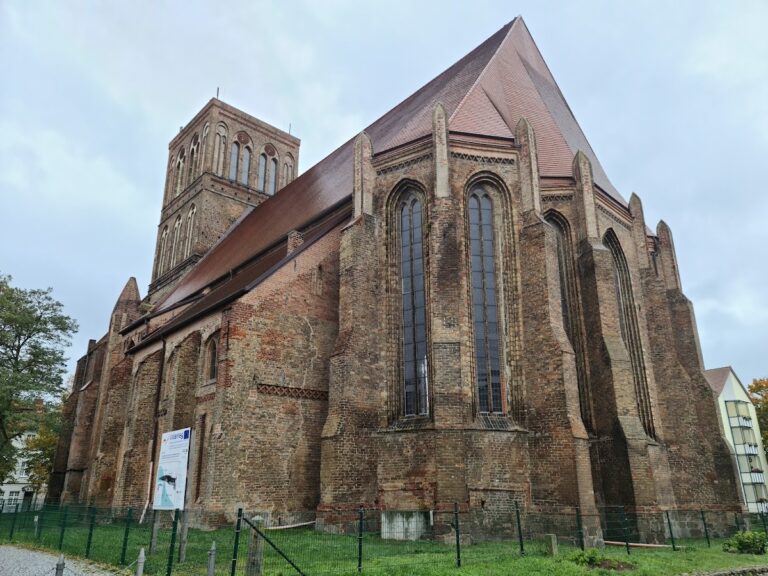
The monastery church survives as a ruin within the estate.
Lanes and lawns
Old paved roads run through the farmstead, bordered by avenue trees and maintained lawns.
Riverside and commemorative features
Stolpe Ferry Inn
The Stolpe Ferry Inn stands on the Peene and is more than 300 years old. It belongs to the estate and is among the oldest inns in Mecklenburg-Vorpommern. Its furnishings include a bench associated with Reuter, who reportedly wrote parts of his work there.
Fieldstone smithy
A fieldstone smithy with a covered entrance porch stands beside the Peene.
Grave crosses
Cast-iron grave crosses in Stolpe cemetery commemorate the inspector Knitschky and the estate housekeeper Caroline Neukirch.