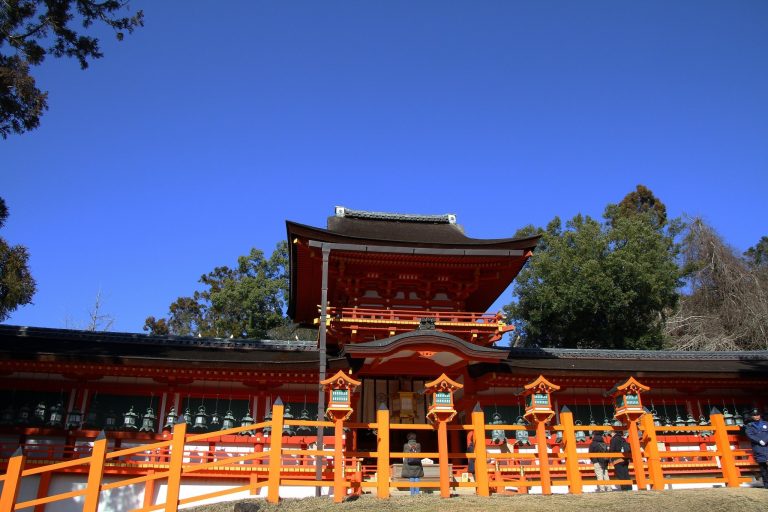
Shōryaku-ji Temple: Head Temple of Bodaisen Shingon in Nara


Site at a Glance
- Rating
- 4.2
- Popularity
- Low
- Country
- Japan
- Primary era
- Modern
- External website
- Open
- Eras represented
- Early Modern, Modern
- Civilizations
- Japanese, Tokugawa
- Site type
- Religious
- Remains
- Monastery
On this page15 sections
History
Shōryaku-ji Temple is a Shingon Buddhist temple in Nara, Japan, founded in 992 by Kenshun at the behest of Emperor Ichijō as an imperial prayer temple. Set in the hills southeast of Nara, the temple belongs to the Bodaisen Shingon tradition and serves as its head temple. Its formal name is Bodai-zan Ryūkajū-in Shōryaku-ji.
Foundation and early development
Kenshun, a monk and son of the powerful regent Fujiwara no Kaneie, established Shōryaku-ji during the reign of Emperor Ichijō, who ruled from 986 to 1011. The temple grew into a large religious complex whose main temple was accompanied by 86 subtemples, including Ho’on-in. The long stone walls along the approach preserve an indication of the complex’s former extent.
Shōryaku-ji occupied a mountainous precinct associated with Bodai Mountain, one of five mountains traditionally understood as part of a sacred landscape in the eastern hills of Nara. This landscape was interpreted as reflecting places connected with the Buddha’s austerities. The temple’s religious importance was also expressed through its institutions. Ho’on-in administered temple affairs as Kenshun’s affiliated temple, while two other affiliated temples served as centers for Pure Land Buddhist nembutsu practice, the devotional recitation of the Buddha’s name.
War, restoration, and Hossō leadership
In 1180, Taira no Shigehira, a military commander in the late twelfth-century conflicts, attacked Nara. The assault burned Shōryaku-ji and brought the confiscation of its estates. The temple later gained a new intellectual and institutional role through Shinen, a major Hossō Buddhist cleric associated with Daijō-in and Kōfuku-ji. In 1218, after spending about ten years helping restore war-damaged Kōfuku-ji, Shinen entered Shōryaku-ji as a retreat.
Known as the “Bodaisen Bishop” or “Bodaisen Residence,” Shinen revived the temple as a center for studying Hossō Buddhism. Hossō is a major Buddhist school concerned with consciousness and the nature of perception. After Shinen, successive heads of Daijō-in also held the position of monzeki of Shōgan-in. A monzeki was a temple led by a person of imperial, aristocratic, or related clerical lineage, and the institution could also bear that designation. Through this connection, Shōryaku-ji became the monzeki branch temple of Kōfuku-ji.
Muromachi prosperity and sake production
During the Muromachi period, Shōryaku-ji developed brewing methods that later formed foundations of modern refined-sake production. These methods included multiple-stage brewing, the preparation of a Bodai-moto starter, and pasteurization. The temple’s monastic sake was called bōshuzake, while highly regarded sake made by temples in Nara was known as Nanto morohaku. Shōryaku-ji is consequently traditionally regarded as the birthplace of refined sake production in Japan.
This period of development was interrupted in July 1506, when Akazawa Tomotsune, a retainer of Hosokawa Masamoto, burned the temple during Hosokawa’s invasion of Yamato Province. Shōryaku-ji was rebuilt afterward and eventually possessed 82 subtemples. Its temple income was reportedly about 1,000 koku, a historical unit used to measure rice-based land revenue.
Early modern decline and modern independence
In 1601, Shōryaku-ji held 300 koku of officially sealed land income. Its complex included a main hall, a three-story pagoda, a goma hall for fire rituals, Kannon and Jizō halls, an initiation hall, a bell tower, a sutra repository, a hall for prescribed sutra copying, a founder’s hall, two thirteen-story pagodas, a Maitreya hall, a shrine to the Six Deities, and other guardian shrines.
A fire in 1629 destroyed the temple’s buildings and pagodas. From the middle of the Edo period, Hossō influence gradually weakened, and Shōryaku-ji became a subsidiary temple of Ninnaji, a major Shingon institution. Another fire in 1836 destroyed many of the remaining buildings. The temple declined further during the Meiji-period movement that sought to suppress Buddhism and promote State Shinto.
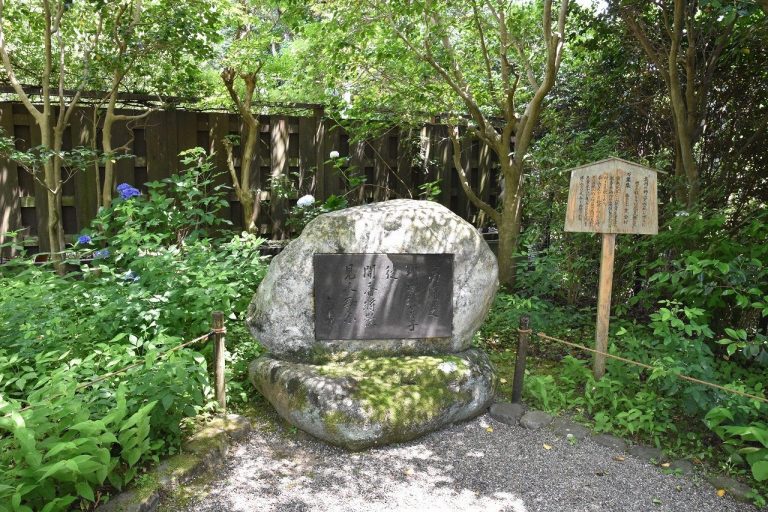
In 1967, Shōryaku-ji became independent from the Omuro branch of Shingon Buddhism and adopted its present status as the head temple of Bodaisen Shingon. It is traditionally called the “Village of Brocade” because of its autumn foliage. The Bodaisen River, whose clear water runs through the precinct, is associated with the traditional brewing of Bodaisen sake, and a monument on the grounds commemorates Shōryaku-ji’s place in the history of Japanese sake. The temple is also the 73rd site on the Northern Yamato Eighty-eight Sacred Sites pilgrimage circuit. Its historic buildings and objects include properties designated as Important Cultural Properties and as prefectural or municipal cultural properties, while its Japanese chinquapin forest is a prefectural natural monument.
Remains
Precinct and surviving buildings
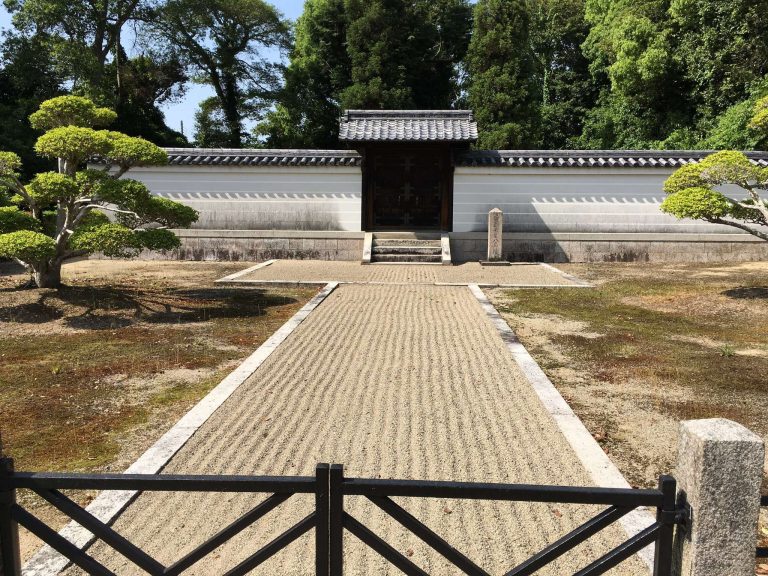
The temple occupies a mountainous precinct associated with Bodai Mountain, and the Bodaisen River passes through the grounds. Long stone walls along the approach relate to the earlier extent of the temple complex. The surviving buildings belong to different periods, reflecting repeated destruction and rebuilding across the site’s history.
Main hall and bell tower
The main hall dates from 1916, during the Taishō period. The bell tower was built in 1925. Together they represent the early twentieth-century rebuilding of principal elements of the temple compound after the fires and later decline.
Fukuju-in reception hall
The Fukuju-in reception hall and kitchen were rebuilt in 1681. The reception hall follows the sukiya style, an architectural tradition using restrained, informal materials and design influenced by tea houses.
Former temple complex
The historic compound included a Maitreya hall, lecture hall, thirteen-story pagoda, sutra repository, founder’s hall, subsidiary temples, and other halls and shrines. The larger group described for 1601 also included a three-story pagoda, goma hall, Kannon hall, Jizō hall, initiation hall, a hall for prescribed sutra copying, an additional thirteen-story pagoda, and guardian shrines. These structures formed part of the religious and administrative organization of the temple before the major fires.
Sacred images and cultural objects
Yakushi Nyorai
The principal image is a gilt-bronze seated figure of Yakushi Nyorai, the Buddha of healing and medicine. The image is 28.0 centimeters high and dates from the Asuka period. It is a hibutsu, a sacred image normally concealed from public view, and is displayed for limited periods in spring and autumn at the Ruriden treasure hall.
Paintings and sculptures
The temple’s associated cultural properties include a Kamakura-period painting of the Buddha’s nirvana, two Nanboku-chō-period scrolls depicting an Ise Mandala, and a Kamakura-period seated wooden sculpture of Kujaku Myōō. Kujaku Myōō is an esoteric Buddhist protective deity associated with the peacock and the overcoming of poison. Two Heian-period wooden standing bodhisattvas are traditionally said to have originally come from Daigōrin-ji. A Kamakura-period painting of Yakushi and the Twelve Heavenly Generals is kept on deposit at the Nara National Museum.
Manuscripts and archaeological material
Scroll 30 of an Ekottara Agama manuscript, a Nara-period Buddhist text known as the Zenkō-shuin-kyō, bears Zenkō’s red seal and is now kept at the Nara National Museum. The Daianji asset register, an Important Cultural Property, was formerly kept at Shōryaku-ji and is now held by the National Museum of Japanese History.
A Southern Song celadon bowl from the Longquan kilns was excavated within the precinct together with a tile bowl. The group is treated as archaeological material and provides a material connection between the temple grounds and objects preserved from its long history.
River and natural setting
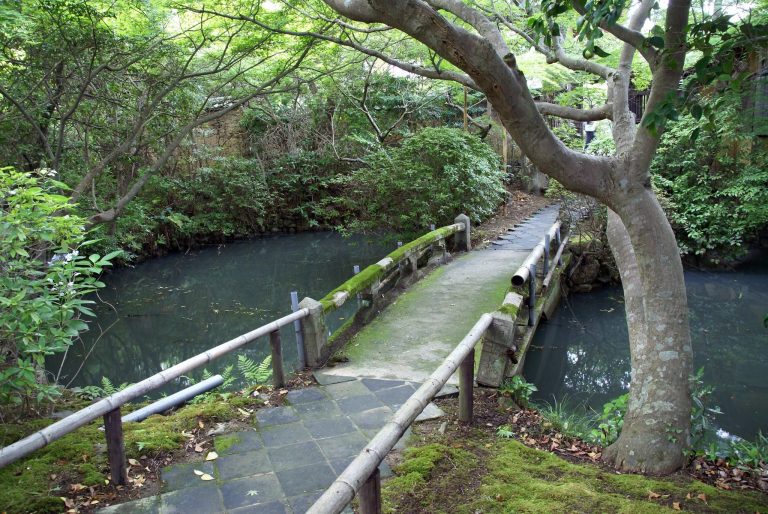
The clear water of the Bodaisen River, which flows through the precinct, was traditionally used to produce Bodaisen sake. The temple’s Japanese chinquapin forest is designated a prefectural natural monument. Its autumn foliage also explains the traditional name “Village of Brocade,” linking the natural setting with the temple’s established cultural identity.