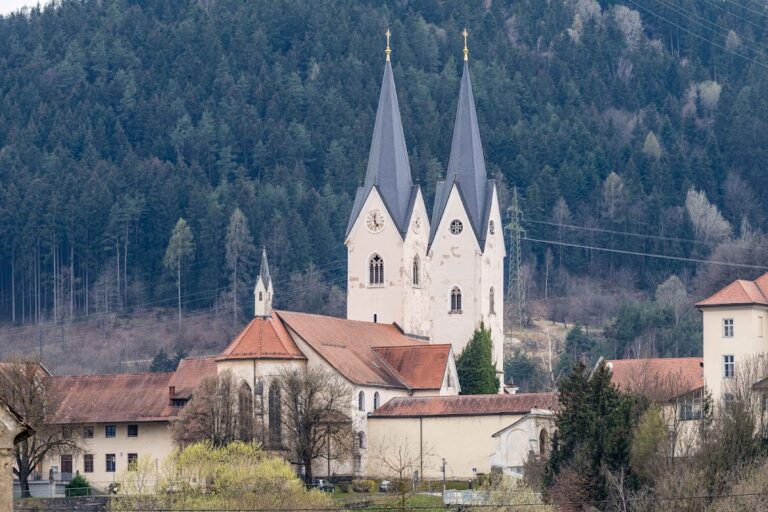
Schloss Waldenstein, Wolfsberg: A Medieval Castle and Reformation Center in Austria


Site at a Glance
- Rating
- 4.1
- Popularity
- Very Low
- Country
- Austria
- Primary era
- Medieval
- Eras represented
- Medieval, Early Modern
- Civilizations
- Holy Roman Empire
- Site type
- Military
- Remains
- Castle
On this page11 sections
History
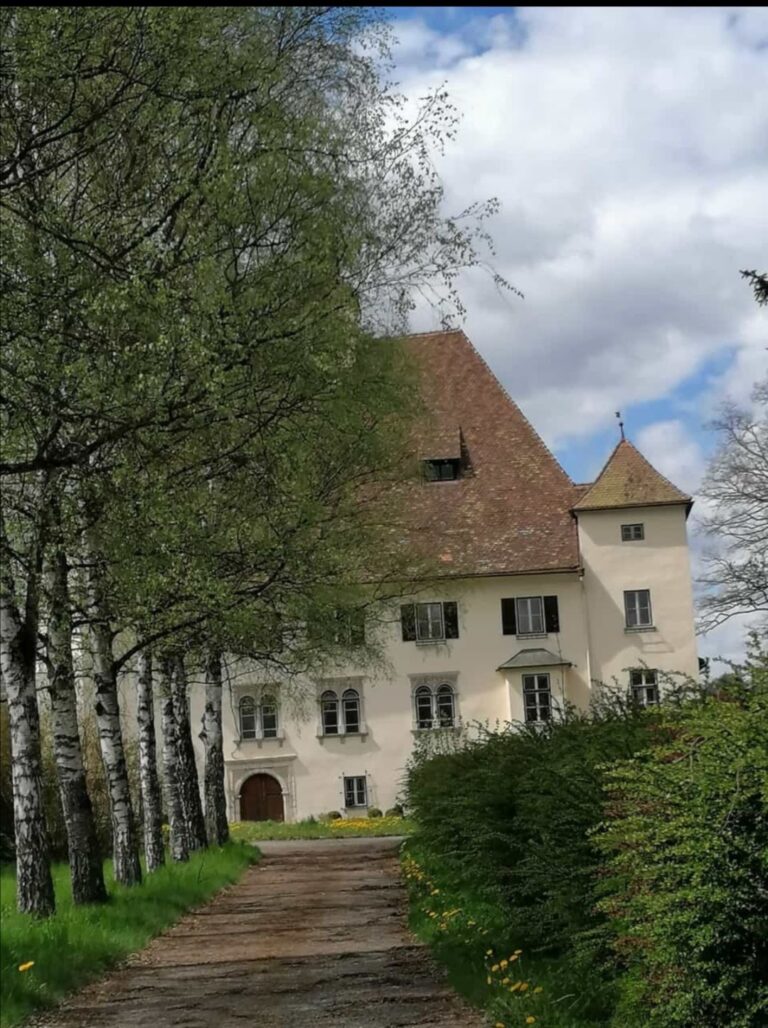
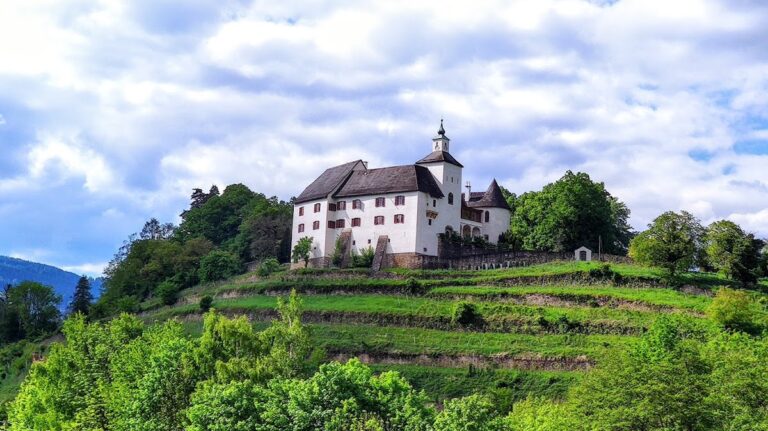
Schloss Waldenstein is a medieval castle in Austria, above the road to the Packsattel in the Waldenstein area of Wolfsberg. Built around 1150 on behalf of the Bishopric of Bamberg, an ecclesiastical principality whose bishops also exercised territorial rule, it developed from a Romanesque stronghold into a Gothic residence and later became associated with the Reformation and the mining industry of the Waldenstein valley.
Medieval lordship and conversion into a residence
From the twelfth through the seventeenth century, the Ungnad von Sonnegg family held Waldenstein as feudal lords and owners. During the fifteenth century, they transformed the earlier castle into a Gothic-style residence. The complex retained its defensive origins while gaining the larger residential buildings that shaped its later appearance.
The castle stood in a side valley of the Lavant Valley, in the cadastral community of Waldenstein. Its elevated position above the route to the Packsattel gave the lordship a commanding place within the surrounding valley landscape.
Waldenstein and the Reformation
In the sixteenth century, Waldenstein became a center of the Reformation, the movement that challenged the authority and practices of the Western Catholic Church and led to the formation of Protestant churches. Hans von Ungnad, a Carinthian nobleman and supporter of Protestant publishing, devoted much of his fortune to a printing press at Urach near Tübingen.
At Urach, the Protestant pastor Primož Trubar worked with Georg Dalmatin to translate Luther’s writings for circulation among Slovenian-speaking communities. Hans Ungnad enabled and ultimately financed this Protestant work among Slovenes. He left Carinthia for Winteritz in Bohemia in 1557 and died there in 1564.
After the Urach printing establishment closed, a press and its old Glagolitic, Cyrillic, and Latin type may have been brought to Waldenstein. Glagolitic and Cyrillic were historical writing systems, while Latin type used the alphabet common in Western European printing. The later whereabouts of the press and type are uncertain. A tradition holds that Napoleon’s soldiers, who occupied parts of the Lavant Valley in the early nineteenth century, later carried the Ungnad press away to Paris.
Changes of ownership and industrial connections
The last male member of the Ungnad family, Simon Ungnad, died in 1607. His granddaughter Margarethe-Elisabeth, Landgravine of Hesse, inherited the lordship. A landgravine was a female holder of a territory ranked comparably to a county or principality. Conflicts with the neighboring Bishopric of Bamberg continued, and she sold Waldenstein to the Bamberg bishop in 1637.
In 1672, the bishop sold the estate to Peter Philipp von Dernbach, his vicedom in Carinthia. A vicedom was a senior administrative representative of a territorial ruler or ecclesiastical lord. Count Rudolf Franz Erwein von Schönborn owned Waldenstein from 1700 to 1754 and brought the local hammer mill back into operation. This was a water-powered workshop where mechanically driven hammers processed metal, especially iron.
In 1803, Schönborn’s grandson Hugo Damian von Schönborn sold the property to Johann Michael Offner, an iron merchant from Wolfsberg. Friedrich Ludwig Westenholz held the lordship from 1842 to 1851. In 1851, Count Hugo Henckel von Donnersmarck acquired the castle and promoted the old mining operations in the Waldenstein valley.
Iron mica continues to be mined in the Waldenstein area, chiefly for high-quality metal and rust-protection paints. During the twentieth century, apartments in the castle housed employees of the local mining industry and their families.
Music, protection, and present condition
In 1835, the Wolfsberg musician Josef Ritter von Rainer-Harbach set a poem by Johann Thaurer Ritter von Gallenstein to music at Schloss Waldenstein. The song was officially designated the Carinthian homeland song in 1911.
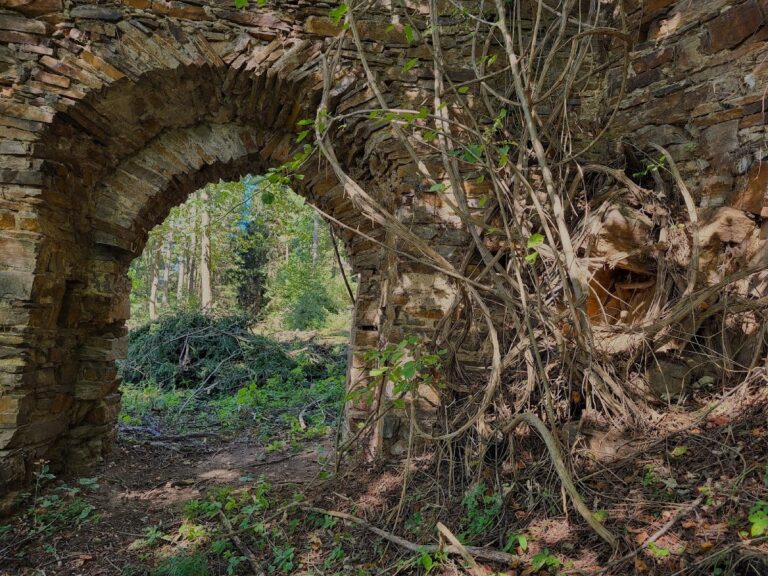
The castle is legally protected as a monument and is owned by Kärntner Montanindustrie GmbH. It is unoccupied and has increasingly deteriorated, leaving the surviving complex as a vulnerable record of medieval lordship, Protestant publishing, and the area’s industrial history.
Remains
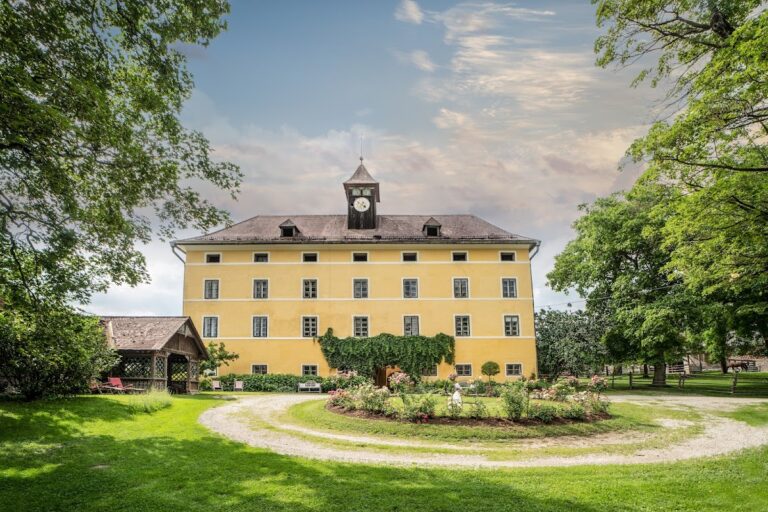
Schloss Waldenstein occupies an elevated site at about 760 metres above sea level, above the road to the Packsattel and above the iron-mica mining area operated by Kärntner Montanindustrie. The complex is organized around a nearly square inner courtyard. Its buildings combine a thirteenth-century Romanesque tower with three- and four-storey Gothic residential ranges added between the fourteenth and sixteenth centuries.
Fortified and residential buildings
Keep and Gothic ranges
The square keep, the castle’s principal fortified tower, dates from the thirteenth century. It is Romanesque and originally stood apart from the other buildings. Three- and four-storey Gothic residential buildings were later constructed around it between the fourteenth and sixteenth centuries, joining the tower to a more substantial residential complex.
Courtyard and Renaissance features
The inner courtyard measures approximately 115 square metres and contains a well. An open staircase rises from the courtyard to the upper storey, where a Renaissance arcade passage survives. The stairwell also contains Renaissance architectural features, linking the courtyard circulation system with the later residential phase of the castle.
Gates and prisons
The former main gate was positioned on the south side and protected by a drawbridge. The present entrance is through the eastern gate. The prisons were located beside this eastern entrance, placing a defensive and custodial area directly alongside the later access point.
Former chapel
The former castle chapel occupies the southeastern part of the complex. It has a Baroque tower and was dedicated to Mater Dolorosa, meaning “Sorrowful Mother,” a title for Mary associated with her grief during the Passion of Christ.