Pfarrhof Pack: A Former Castle Now Serving as a Parsonage
Site at a Glance
- Popularity
- Very Low
- Country
- Austria
- Primary era
- Early Modern
- Eras represented
- Early Modern, Modern
- Civilizations
- Duchy of Styria, Habsburg, Holy Roman Empire
- Site type
- Domestic
- Remains
- Castle
On this page9 sections
History
Medieval origins and ownership
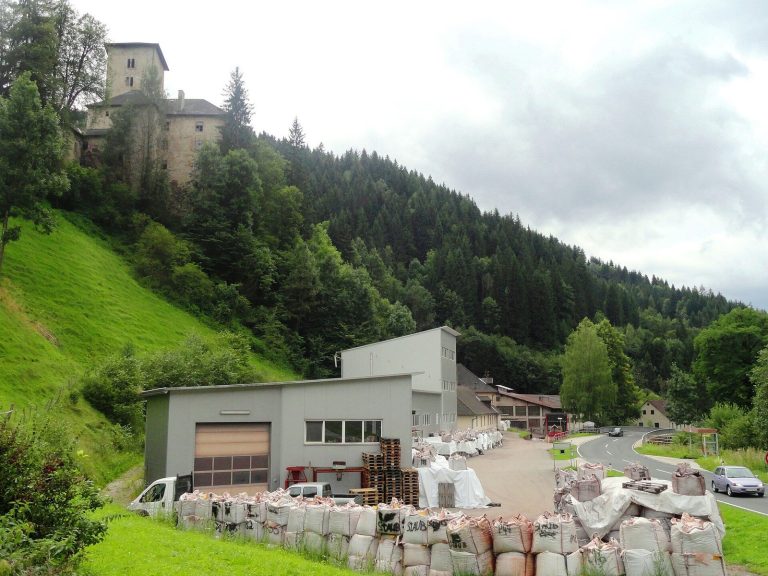
Pfarrhof Pack, formerly Schloss Pack, is a former castle now used as a parsonage in Pack, Austria. A defensive structure was established there in the 10th century to protect the road across the Packsattel. The present castle building dates to the beginning of the 16th century and follows Renaissance architecture, a European tradition drawing on classical forms.
Emperor Otto III granted the surrounding area, including the fortification, to the Eppensteiners. After their family died out, ownership passed to the Lords of Wildon and, after 1300, to the Lords of Walsee. The Walsee family incorporated the estate into the lordship of Krems, a territorial estate under a lord’s control.
Hartnit of Pettau acquired the fortification in 1362, when it was already known as Roseck. He later pledged it to Konrad Plankenwarter, who in turn pledged it to Otto of Stubenberg near the end of the 14th century. In 1403, Friedrich and Ulrich of Stubenberg bought the estate outright. Hermann, Count of Montfort, acquired it from Friedrich in 1420 and reunited it with Krems.
Changes in the 15th to 17th centuries
Turkish forces devastated the surrounding area in 1480, and the castle was also affected. By then, it had only light fortifications. In 1543, Franz von Ungnad of Waldenstein exchanged the Pack and Modriach estates with the Counts of Montfort for properties near Eggenfeld, where he sought charcoal for his ironworks. A committed Protestant, he later had to leave Styria.
Hans and Ludwig von Ungnad neglected the estate, and tax arrears led the Styrian Estates, the province’s corporate body with authority over taxation and property seizure, to take it. In 1584 they sold it to Baron Siegmund Friedrich von Herberstein, who again joined it to Krems, for the third time. Max Laymann was castle lord in 1629, followed by Salomon von Maillegg in 1634. The Counts of Saurau owned the estate from 1638 to 1846 and transferred it to their lordship of Ligist in 1750. The remaining fortifications were dismantled during the 17th century.
Parsonage and later use
Emperor Francis I of Austria dined at the castle in 1810 while passing through. The municipality of Pack acquired the property in 1870, and it has served as a parsonage since then. In the late 20th century, the Diocese of Graz-Seckau, a Catholic church jurisdiction, established a youth home in the north wing.
Remains
The castle structure
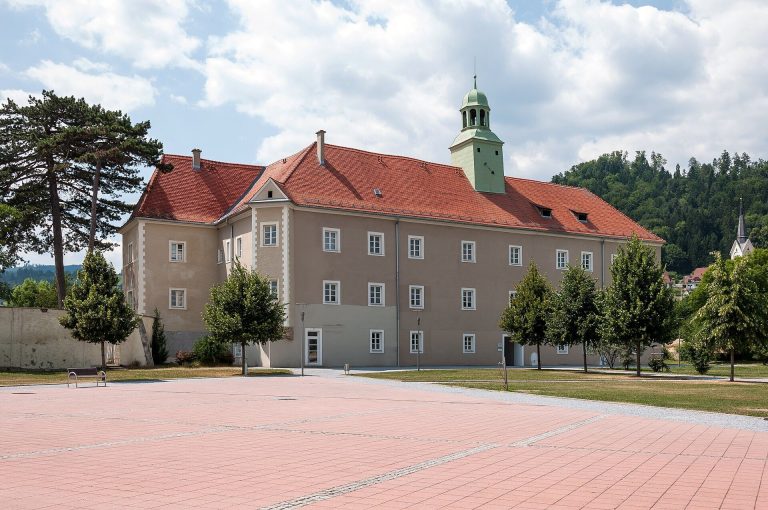
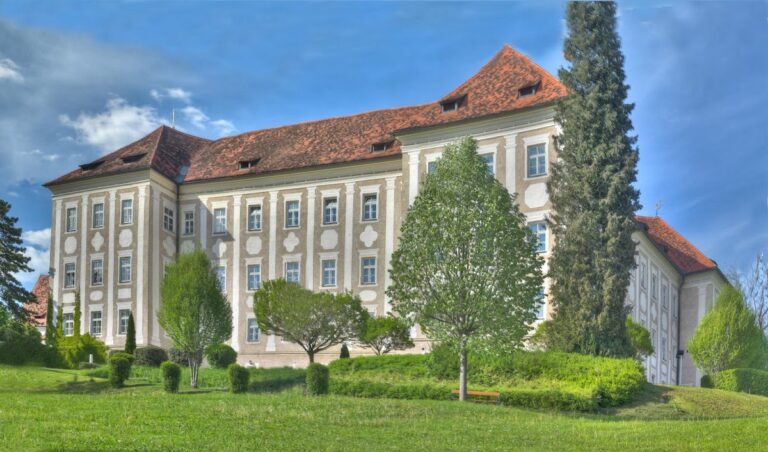
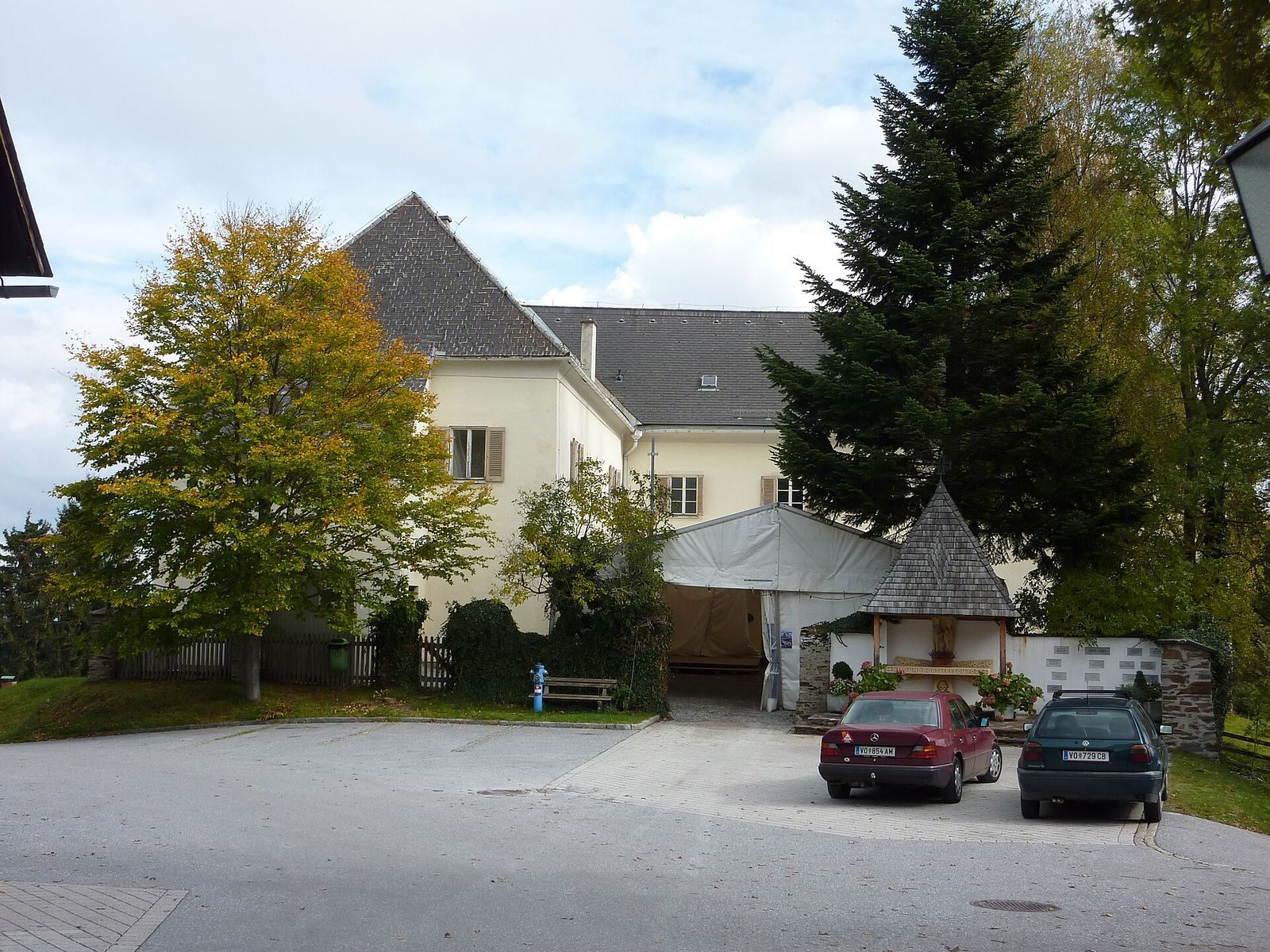
The complex is a massive, two-storey Renaissance building with a hook-shaped plan. Most of its exterior walls are plain. It stands beside Pack parish church in the eastern part of Pack, and the coats of arms attached to the building date from the 20th century.
North wing
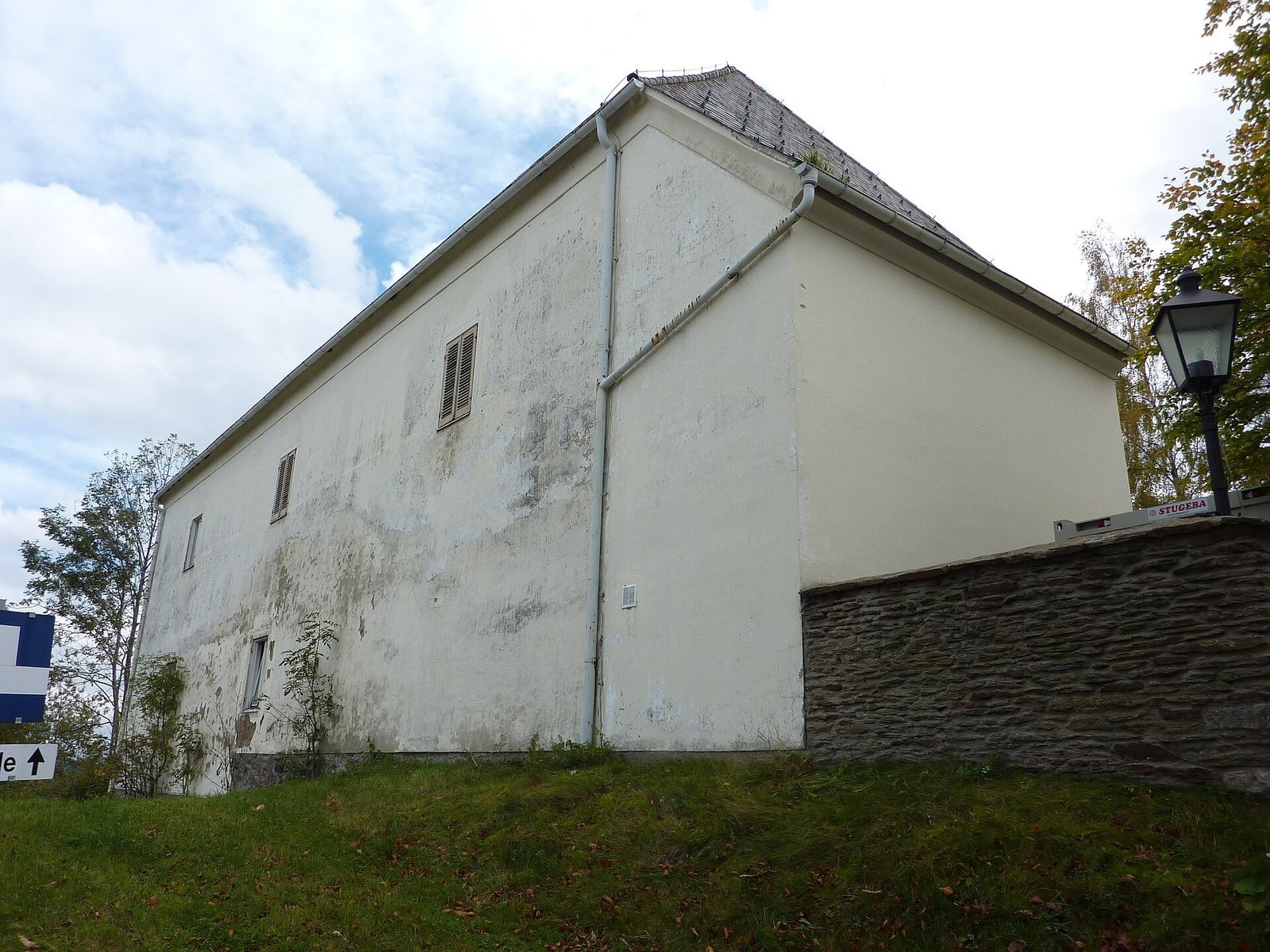
The north wing, known locally as the Old Tower, is the oldest part of the complex. Built on the site of the earlier fortification, it has walls about 1.3 metres thick and is partly set into the rock.
East wing
The east wing meets the north wing at a right angle and dates to the second half of the 16th century. It underwent several alterations. A fire damaged it in 1768, after which the wing had to be renewed.
Interior spaces
Many large rooms were divided into smaller spaces, and the original vaulted interiors were modernized. A hall with a vaulted ceiling in the northeastern part of the ground floor retains its original form.