Schloss Lichtengraben: A Renaissance Castle in Austria


Site at a Glance
- Rating
- 4.9
- Popularity
- Very Low
- Country
- Austria
- Primary era
- Early Modern
- External website
- Open
- Eras represented
- Early Modern, Modern
- Civilizations
- Habsburg, Holy Roman Empire
- Site type
- Domestic
- Remains
- Castle
On this page9 sections
History
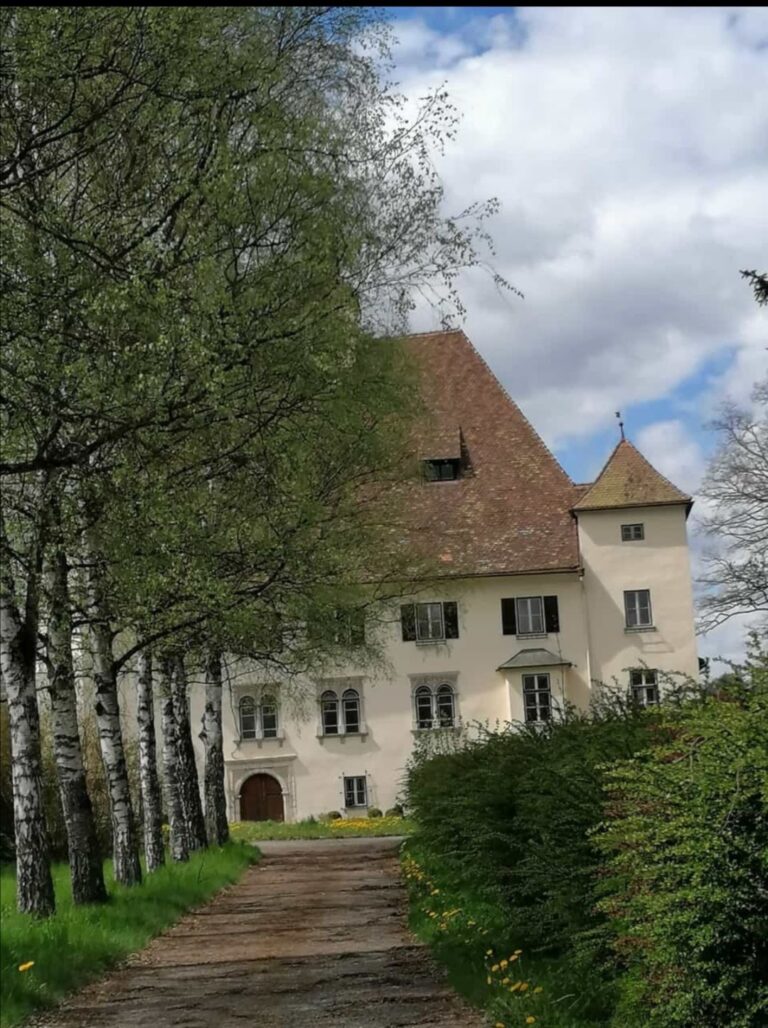
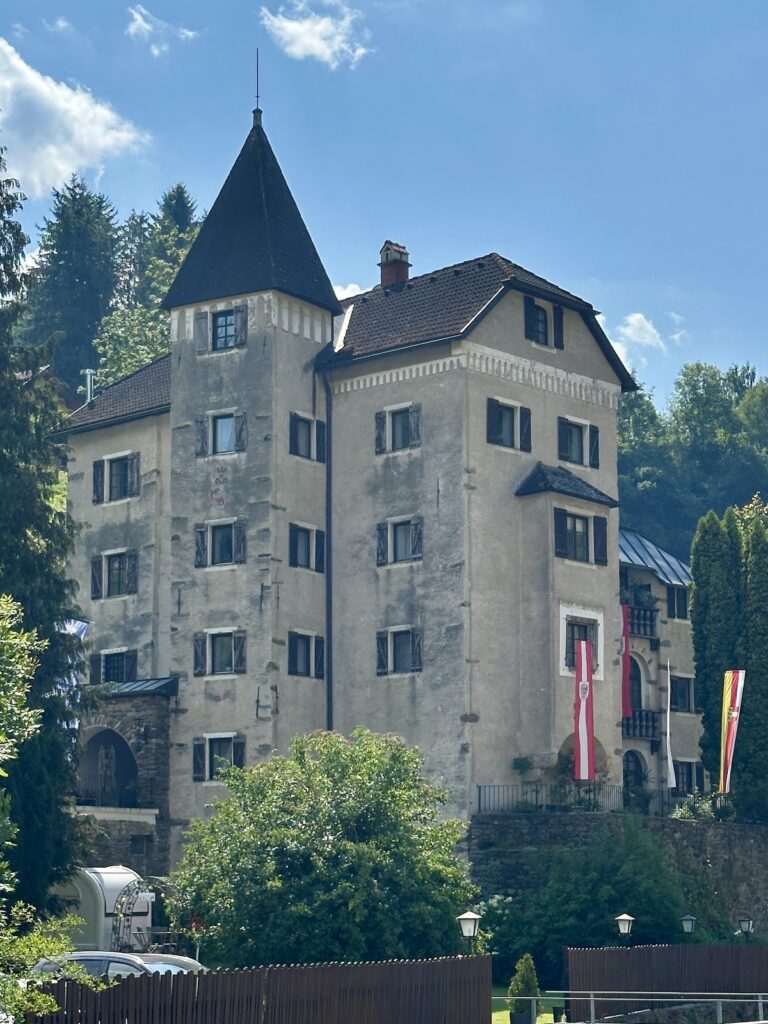
Schloss Lichtengraben is a Renaissance castle in Austria, in the hamlet of Lichtengraben near Bad St. Leonhard im Lavanttal. Siegmund von Pain commissioned it in the first half of the sixteenth century as a replacement for the abandoned Painhof, an earlier residence of the family. A marble relief dated 1544 probably records the completion of the new building.
The von Pain family
The von Pain family had found the Painhof inconvenient, and that residence had itself replaced the family’s ancestral Painburg. The family gained wealth through mining in Carinthia and also worked as merchants and financiers in mining and metal production. In 1564, Peter and Ehrenreich von Pain were recorded under the name Lichtengraben, following a noble practice of adopting a place name.
Siegmund von Pain later commissioned Schloss Wiesenau, built around 1579. The family’s fortunes changed in the seventeenth century. In 1615, Seyfried von Pain declared bankruptcy after unsuccessful investments. Parts of Schloss Lichtengraben passed to Melchior Putz von Kirchheimegg, master of the Carinthian mint, an institution responsible for producing coins. Hans Christoph von Pain, who died in 1652, was the last member of the family.
Later ownership and expansion
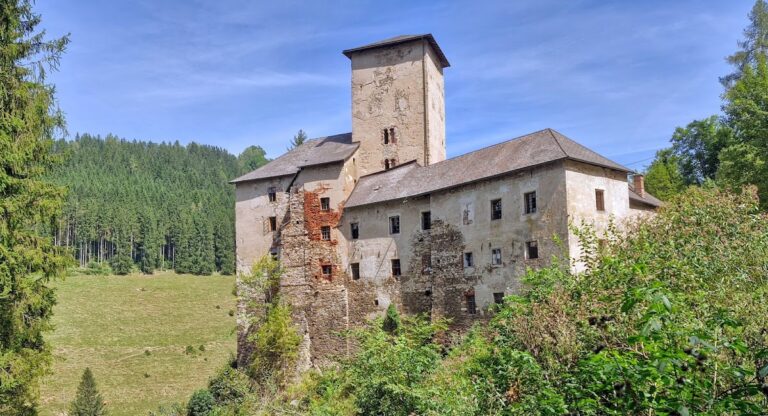
The castle then passed through several connected ownerships. Franz Josef Freiherr von Teuffenbach, a Freiherr being a title conventionally translated as baron, acquired it in 1711. The Teuffenbach family retained the property until 1839.
In that year, the castle passed to Eugen Ritter von Dickmann, an iron industrialist who commissioned major extensions. After 1870, it belonged first to the Hüttenberger Eisenwerksgesellschaft and later to the Alpine Montangesellschaft. Karl Neufeldt acquired the castle and estate in 1886. He was the royal Norwegian consul general, and the property remained with his family until the second half of the twentieth century.
Present ownership and protection
Since approximately the 1990s, Schloss Lichtengraben has belonged to the Rittler family. The property remains privately owned and in use, with an orchard and trout farm operated there and the residence rented for private celebrations. The Republic of Austria protects the castle as a monument under monument number 75701.
Remains
Schloss Lichtengraben is a square Renaissance building with three storeys arranged around a small inner courtyard, together with an attic storey that has been remodelled several times. Its otherwise plain facades are divided horizontally by bands between the floors. The southeast main facade has a clock turret in the roof zone, while a simple rusticated portal, using masonry treatment that emphasizes the roughness and joints of the blocks, leads into the courtyard.
Courtyard and associated features
Arcades and reliefs
The courtyard originally had three-storey arcades, rows of arches supported by columns or piers, on all four interior sides. An eighteenth-century remodelling closed the upper arcades with masonry, while the ground-floor arcades survived. These lower galleries contain polychrome glazing. Several round marble reliefs are set into the courtyard walls. Three show mermaids, and another carries the date 1544.
Entrance relief
A vaulted corbel or relief at the entrance shows two dagger-bearing men holding the head of a calf or another bovine animal. The feature probably came from the former Painhof, linking the later castle’s fabric with the earlier residence.
Staircase and former chapel
The staircase in the courtyard was added in 1920. The former chapel occupies the northeastern corner of the first floor. Narrow round-arched windows indicate its earlier religious function. The two-storey room was later converted for use as a library.
Nearby sites