Schloss Neubronn: A Historic Manor in Neu-Ulm, Germany
Visitor Information
Google Rating: 4.6
Popularity: Very Low
Country: Germany
Civilization: Early Modern
Site type: Domestic
Remains: Palace
History
Schloss Neubronn is situated in the municipality of Neu-Ulm, Germany. Its origins trace back to a strategically placed estate documented in the early 15th century within the territory influenced by the Austrian dominion of that era.
The earliest known mention of this site appears in the year 1403, when it was recorded as a fief under Austrian control. Several centuries later, between circa 1560 and 1575, the existing castle building took shape as a stately residence. It was constructed as a three-story manor for the Gienger family, merchants based in the nearby city of Ulm. The family retained ownership throughout the 17th century, cultivating the castle primarily as a countryside home rather than a defensive stronghold.
In the 20th century, ownership shifted; in 1957, Günther Haas took possession of the estate. Subsequently, the property came under the care of the Breyer heirs community. Today, Schloss Neubronn holds recognition as a protected historic structure within Bavaria, preserving its legacy as a notable example of a patrician country residence from the late Renaissance period.
Remains
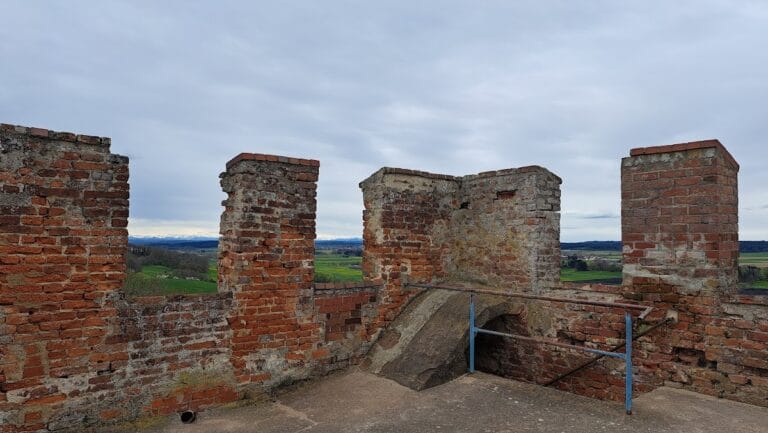
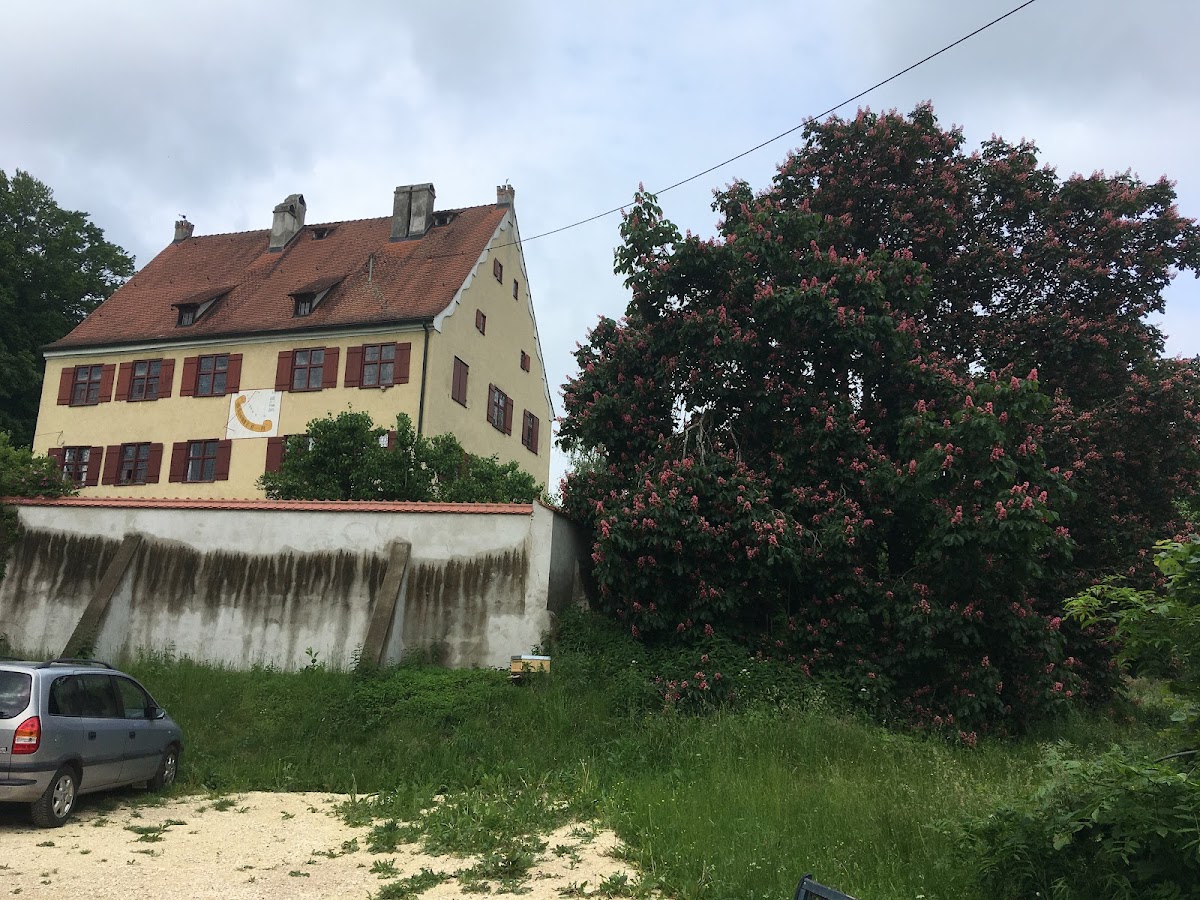
Schloss Neubronn presents as a sizable three-story residence distinguished by a saddle roof topped with wavy gables and small turrets positioned along the roof’s ridge. This design reflects its original purpose as a manor house crafted for comfortable living rather than fortification. The building’s masonry and form emphasize residential function within a predominantly flat landscape accented by surrounding hills and forests.
Surrounding the main structure is a garden wall that delineates the estate’s boundaries, complementing the castle and contributing to its historical ambiance. Within the grounds, a well stands as a functional feature historically providing water to the residents. Additionally, adjacent coach houses, known locally as Remisen, occupy the property, serving practical roles related to transportation and storage during the castle’s period of active use.
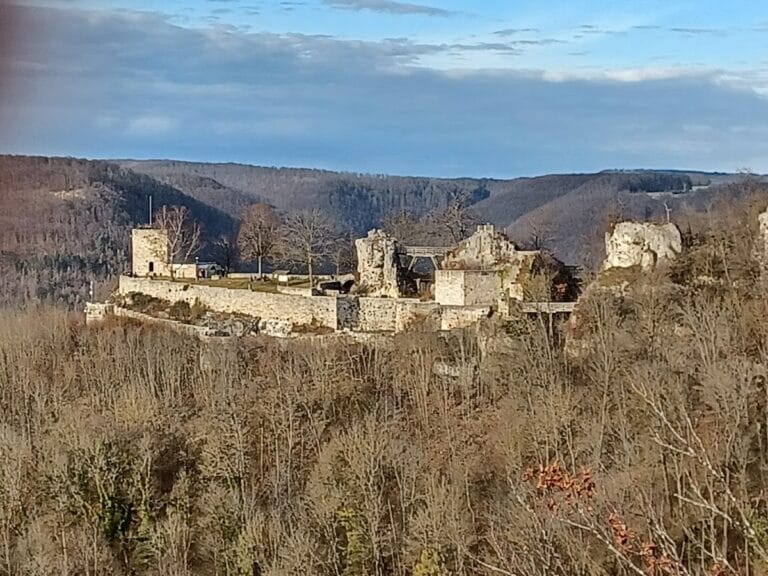
All these components—the castle building, garden wall, well, and coach houses—are officially registered as protected historic monuments under Bavarian heritage law, ensuring their preservation. Current evidence, including photographic documentation, attests to the estate’s well-maintained condition and its intact setting within its natural environment, maintaining a tangible connection to its past as a country residence.
Nearby sites