Burg Bühringen: A Medieval Spur Castle in Germany


Site at a Glance
- Rating
- 3.6
- Popularity
- Very Low
- Country
- Germany
- Primary era
- Medieval
- External website
- Open
- Eras represented
- Medieval
- Civilizations
- Holy Roman Empire
- Site type
- Military
- Remains
- Castle
On this page7 sections
History
Foundation under the Counts of Helfenstein
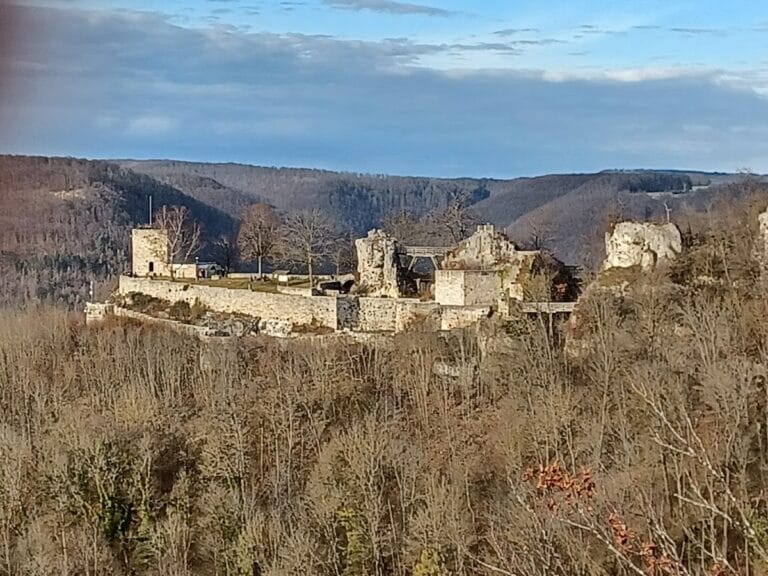
Burg Bühringen is a medieval hilltop castle in Germany, above Bad Überkingen in Baden-Württemberg. The Counts of Helfenstein built it around 1250 as the seat of their ministerials, medieval service nobles who carried out administrative, military, or court duties for a territorial lord. Among them were the knights Albrecht, Ulrich, and Heinrich of Überkingen, who first appear in records in 1258.
Helfenstein and Ulm ownership
In 1363, Hans von Obenhausen sold the castle, then called Burg Überkingen, together with other possessions to Count Ulrich of Helfenstein. It later became the retirement residence of Countess Maria of Helfenstein, Duchess of Bosnia, and widow of Count Ulrich. After her death in 1403, the castle was sold to the imperial city of Ulm. An imperial city was governed directly by the Holy Roman Emperor rather than by a local territorial lord, and Ulm placed a bailiff at the castle. This official administered the territory and exercised delegated judicial or administrative authority.
Destruction and later identification
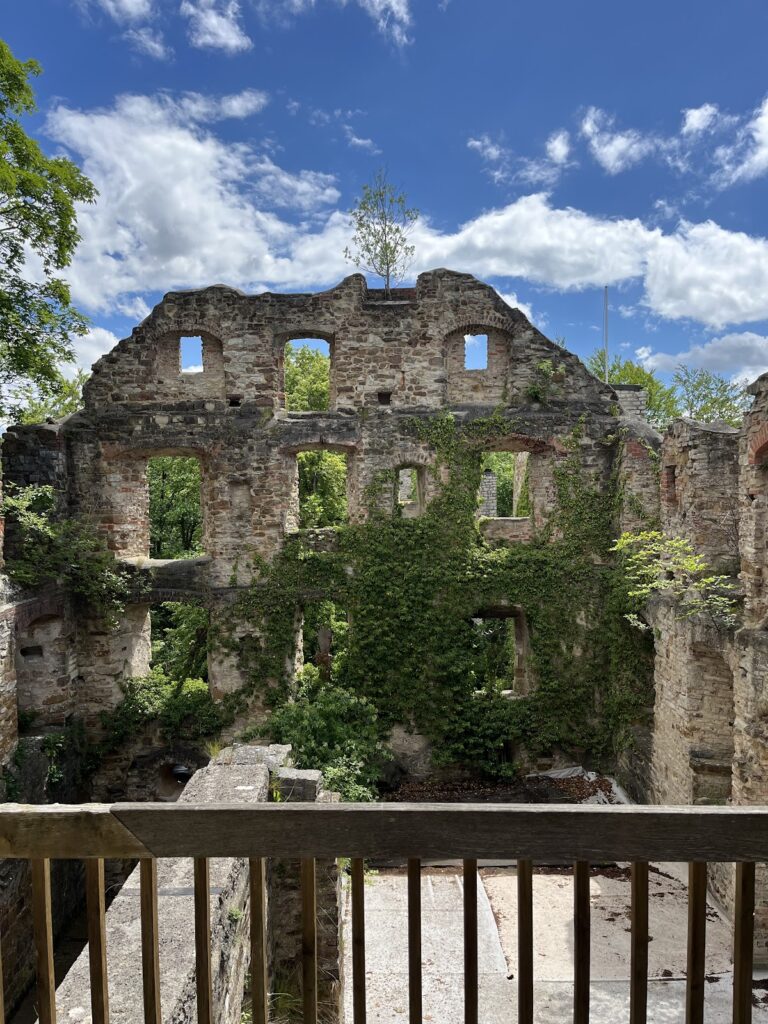
Burg Bühringen was burned during the German Peasants’ War in 1525, a widespread uprising against economic, social, and political pressures in the Holy Roman Empire. Citizens of Türkheim subsequently dismantled almost the entire castle. The name Burg Überkingen is therefore incorrect for this site. Burg Bühringen is its historically accurate designation.
Remains
Setting and defensive layout
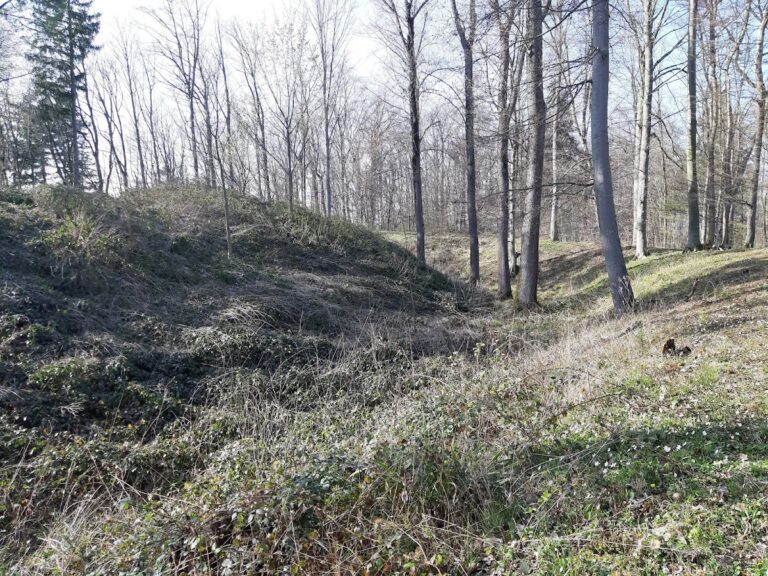
Burg Bühringen occupied a rocky promontory of the Burghalde at approximately 701 metres above sea level, above the confluence of the Rötelbach and the Fils near Bad Überkingen. Steep rock faces defended the castle on the valley side. Toward the plateau, the former castle area is marked by three clearly visible ditches and two ramparts. As a Burgstall, an archaeological site of a former castle whose buildings have largely disappeared, Burg Bühringen now survives mainly through its earthworks and foundations.
Ditches, ramparts, and building area
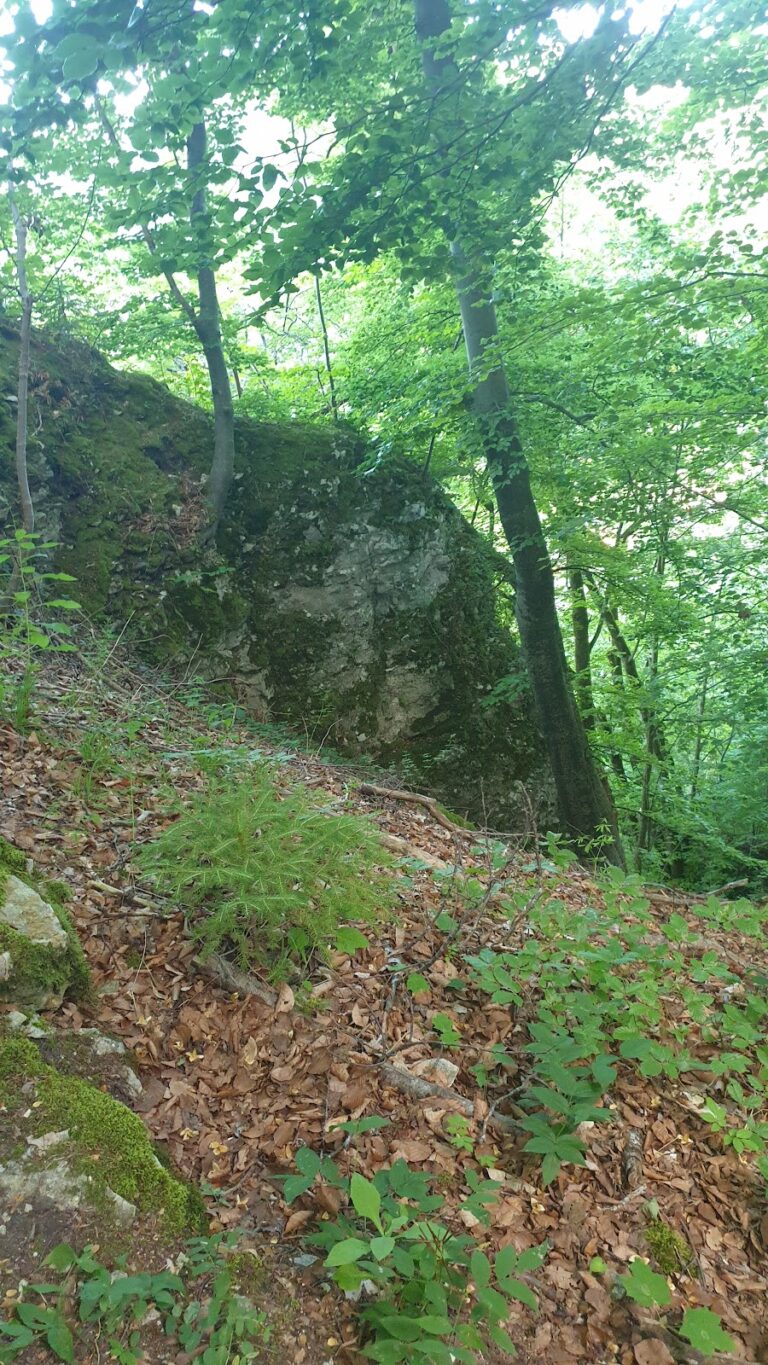
The neck ditch, a defensive cut across the landward approach to a spur castle, still exposes the foundations of the outer defensive walls. The surviving earthworks consist of an outer ditch, a first rampart, a wider middle ditch, and the beginning of an inner rampart. The inner ditch continues down the slope beside the castle rock. Two buildings probably stood inside the castle complex. A keep may have occupied a small secondary spur separated from the main area by another ditch, although this interpretation remains uncertain.