Schenkenberg Castle: A Medieval Fortress in Switzerland
Visitor Information
Google Rating: 4.8
Popularity: Low
Official Website: aargautourismus.ch
Country: Switzerland
Civilization: Early Modern, Medieval European
Site type: Military
Remains: Castle
History
Schenkenberg Castle ruin is located in the municipality of Thalheim in present-day Switzerland. It was built by the Habsburg dynasty during the early 13th century to protect their central holdings around their ancestral seat and the nearby town of Brugg.
The castle first appears in historical records from 1243, where a nobleman named H. de Schenkenberc is mentioned alongside the Habsburg counts Rudolf and Hartmann. Initially, the castle was held by the Schenken von Schenkenberg family, who served as vassals to the Habsburgs. Ownership shifted within various Habsburg supporters over the following decades. In 1282, Albrecht von Löwenstein-Schenkenberg, eldest son of Rudolf I of Habsburg, is documented as the lord of the castle.
After the Habsburgs suffered defeat at the Battle of Sempach in 1386, they faced financial strain and were forced to mortgage Schenkenberg Castle. Although the Swiss Confederates conquered the surrounding region of Aargau in 1415 following King Sigismund’s loss of favor, the Schenkenberg area remained under imperial protection for a few more years. In 1417, Sigismund placed the castle directly under his own safeguard.
In 1431, Margaret of Fridingen sold Schenkenberg Castle and its associated rights to Baron Thüring of Aarburg. Thüring later transferred ownership in 1451 to his son-in-law Hans von Baldegg and his brother Markwart. The Baldegg family maintained close ties to Austria, which earned them the animosity of the nearby city of Bern. This hostility culminated in 1460 when Bernese forces occupied the castle, drove out the Baldegg owners, and made Schenkenberg the seat of their appointed bailiff, or Landvogt, for the local jurisdiction.
The displaced Baldegg family sought to recover the castle, attempting both diplomatic negotiations and military action, even during the Swabian War of 1499. However, these efforts were unsuccessful. Around 1510, Hans von Baldegg died, reportedly from the plague.
Located near Bern’s northeastern border next to Vorderösterreich (Further Austria), the castle occupied a strategic position. While Bern fortified Schenkenberg after seizing it, the authorities allowed its general upkeep to decline over time. By the early 18th century, the castle had become dangerously dilapidated. In 1720, the Bernese council abandoned the fortress and moved the bailiff’s residence to nearby Wildenstein Castle.
Following its abandonment, local farmers quarried stone from the ruin. After political changes in 1798, the property came under the ownership of the Canton of Aargau. In 1837, an enigmatic individual known only as “Herr von Schenkenberg” purchased the site but soon disappeared from the records. A severe storm in 1917 caused the east wall to collapse, leading to the castle being declared ownerless. Subsequently, it was auctioned in 1918 and sold for a modest sum to the Aargau Historical Preservation Society. Since then, efforts have focused on conserving the ruin, now recognized as a nationally significant cultural monument under heritage protection.
Remains
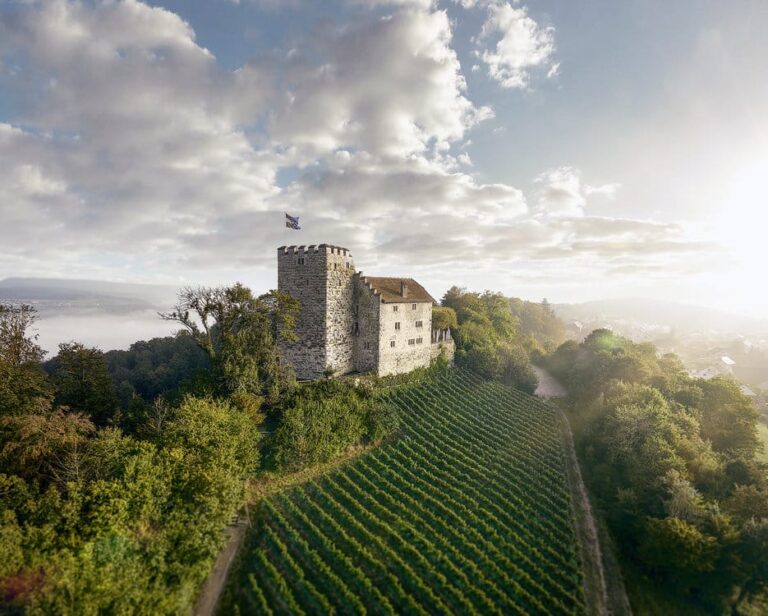
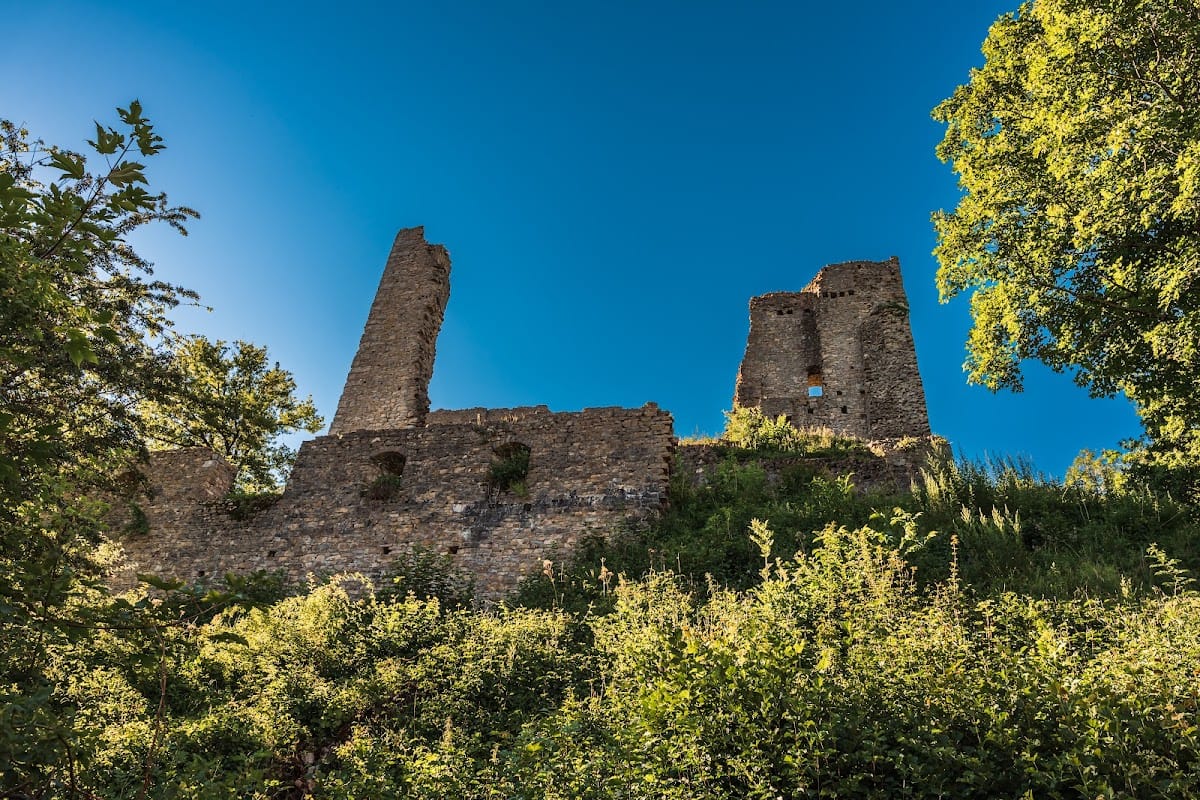
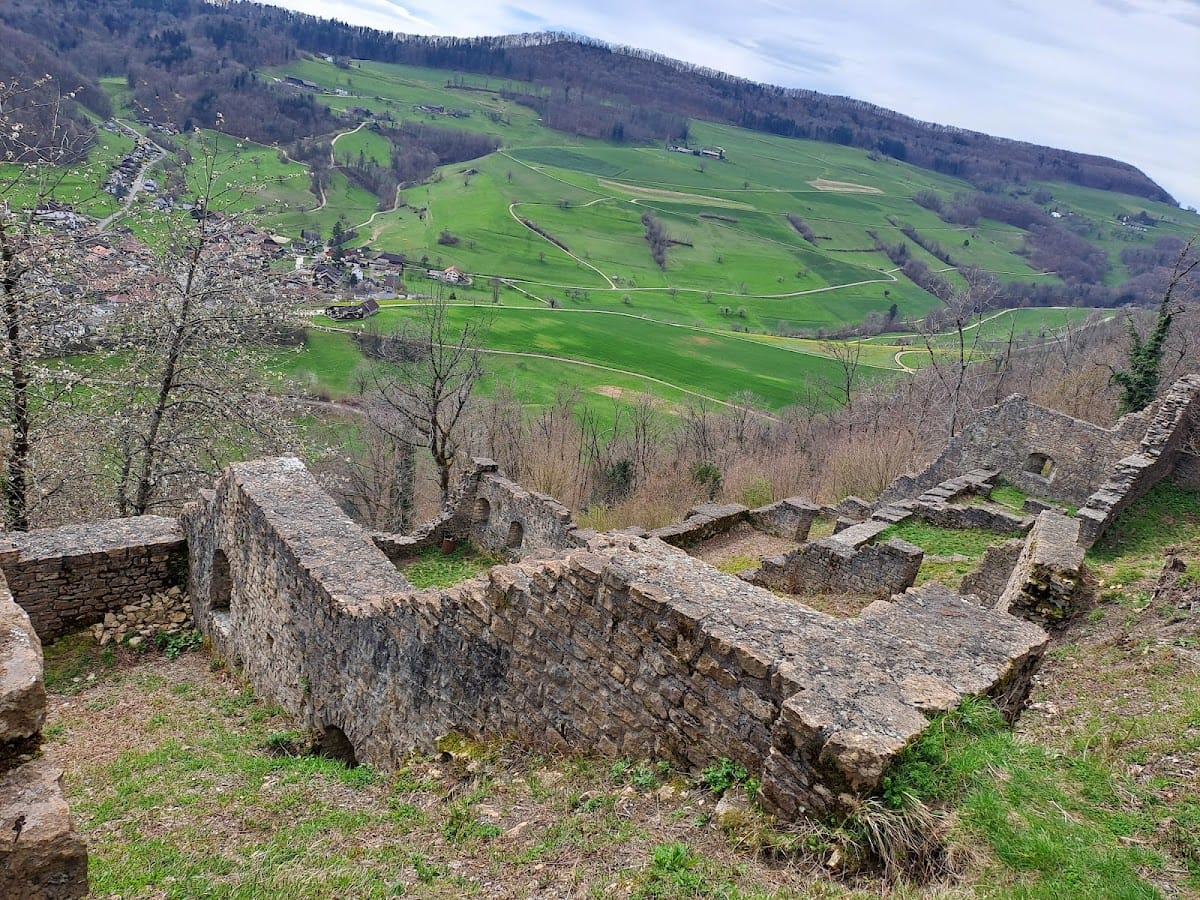
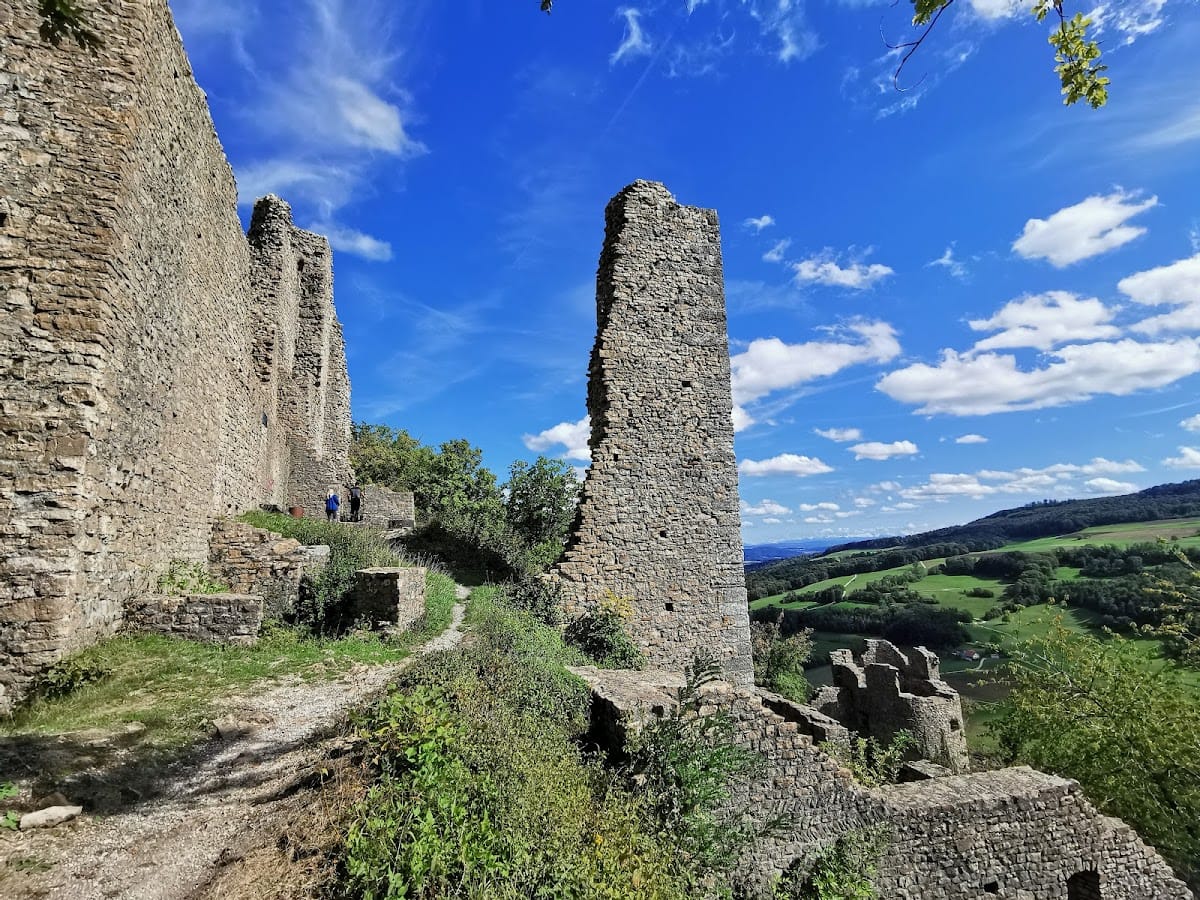
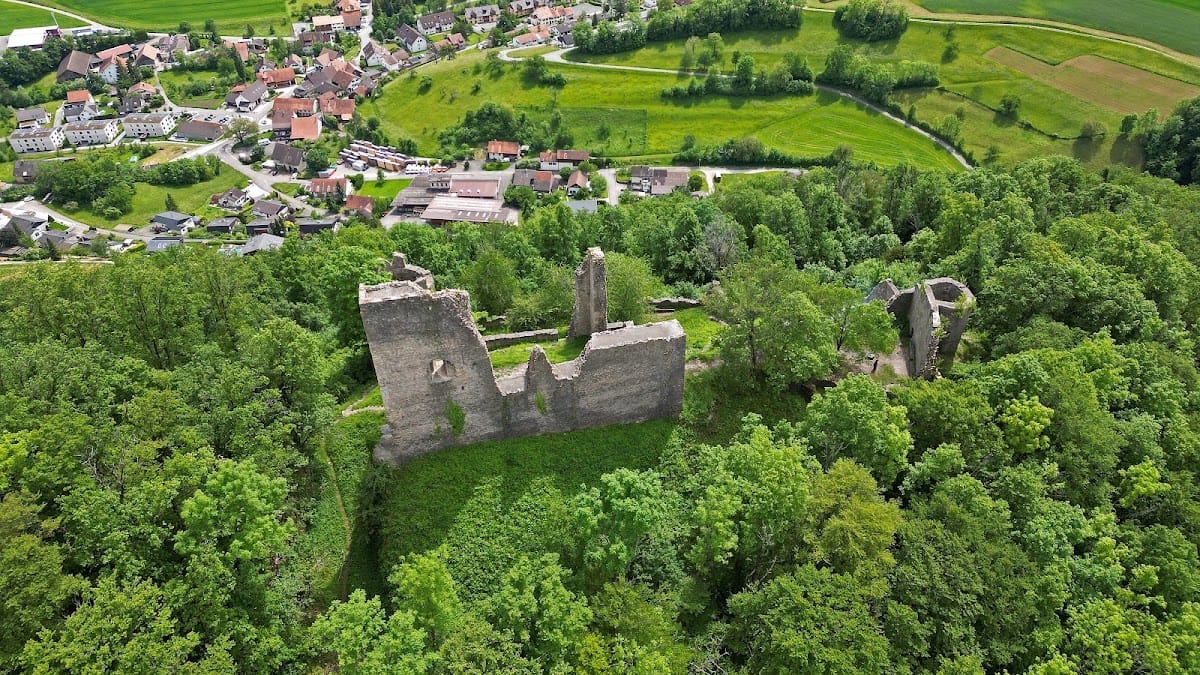
Schenkenberg Castle is a hilltop fortress perched on a 631-meter-high hill in the Jura Mountains, rising approximately 200 meters above the Schenkenberg valley. The castle complex evolved through several construction phases evident primarily from architectural surveys conducted in 2003, although no formal archaeological dig has taken place. Its layout developed around a main tower, known as a bergfried—a tall tower used mainly for defense and refuge—followed by the surrounding core castle (Kernburg) and, finally, an adjacent lower castle (Unterburg).
The main tower stands at the highest point of the site and anchors the northeastern corner of the core castle. West of this core lies the lower castle, which contained economic buildings and the gate complex guarding access. To the southwest of the lower castle and south of the core castle is the castle garden area, where the Geissturm, or Goat Tower, is situated at the southeastern corner. This tower marks the lowest point in the complex. The western limit of the site is defined by the powder tower (Pulverturm), which would have been used to store gunpowder and ammunition.
On the west side near the main tower, a strong shield wall with a semi-circular tower provided additional defense. Attached to the south side of this shield wall was the palas, the main residential hall of the castle. It did not extend fully to the round tower, and a stair tower was positioned between these structures to provide internal access. On the eastern side of the palas, a defensive wall known as a Streichwehr further protected the living quarters.
The lower castle is connected to the core castle by a staircase climbing along the southern slope of the western ridge. On the eastern side of the main tower, separated by a neck ditch—a deep defensive trench—there is an outwork called the Vorwerk, an additional fortified area offering protective advantage.
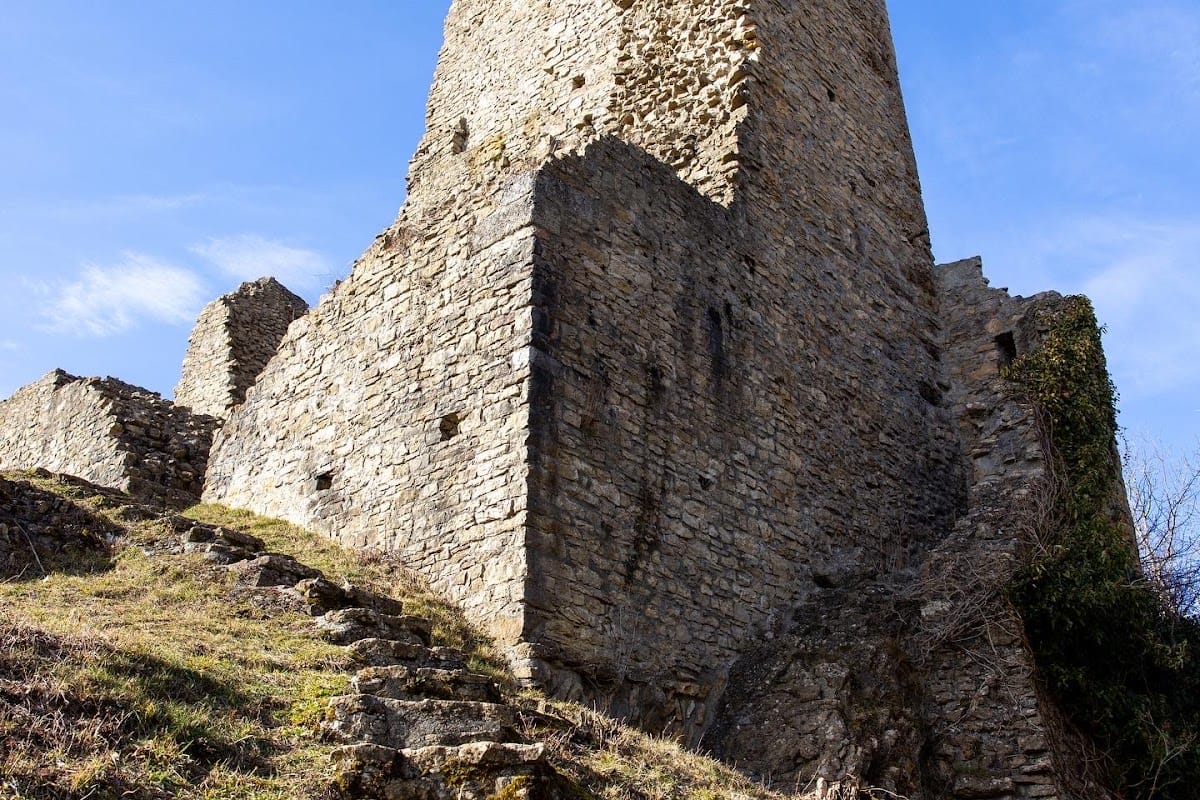
The main tower is the oldest surviving element of Schenkenberg Castle. It was enlarged twice and its top was altered twice: first adding battlements for archers or defenders, and later an artillery platform to mount cannons or other gunpowder weapons. The wooden beams used in the second heightening were dendrochronologically dated to between 1226 and 1233, confirming the castle’s early 13th-century origins.
The Geissturm was constructed around 1500 and subsequently raised by an additional story. During the heightening of the eastern curtain wall in 1622 or 1623, this tower received a high entrance on its top floor that opened onto the battlement walkway atop the wall, indicating its continued military function into the early modern period. Today, the ruins preserve these features as testimonials to the castle’s long evolution from medieval stronghold to an abandoned fortress.
Nearby sites