Vindonissa: A Roman Legionary Camp in Switzerland


Site at a Glance
- Rating
- 4.4
- Popularity
- Low
- Country
- Switzerland
- Primary era
- Classical
- External website
- Open
- Eras represented
- Iron Age, Classical
- Civilizations
- Celtic, Roman
- Site type
- Military
- Remains
- Camp
On this page19 sections
History
Vindonissa was a Roman legionary camp and associated civilian settlement in Switzerland, at modern Windisch on a plateau between the Aare and Reuss rivers. The Romans developed it in the early first century AD as a fortified military base controlling land and water routes, including the Aare waterway and roads toward Aventicum, Augusta Raurica, Turicum and Raetia. Its position later made it an important centre of Roman and post-Roman administration in the region.
Before the Roman Camp
The area had a long history before the legionary camp was built. Late Bronze Age cremation graves, dating from approximately 1000 to 800 BC, were found along the western edge of the Roman site. In the late Iron Age, the peninsula contained a Helvetian oppidum, a fortified settlement associated with Celtic communities. This settlement was probably established after the Helvetians were defeated at Bibracte in 58 BC.
The Helvetian settlement was defended by a wooden-and-earth wall about 350 metres long and a ditch as much as 7 metres deep. Roman control may have followed Julius Caesar’s conquest of the Helvetians in 58 BC, or it may have been established during the Alpine campaigns of Drusus and Tiberius in 15 BC. A small Roman guard post was built around 15 BC, apparently making use of the earlier ditches and ramparts.
The Legionary Camp
A Roman settlement and military camp developed during the early first century AD. The first substantial camp phase is associated with Legio XIII Gemina, after the Roman frontier was established on the Rhine in AD 14. The legion occupied Vindonissa until AD 44 or 45. During its tenure, the camp expanded westward around AD 21 and was enlarged and shifted toward the north and east around AD 30. Thermal baths were added during this period.
In AD 44 or 45, Legio XXI Rapax replaced Legio XIII Gemina and undertook major rebuilding in stone. Its work included barracks, baths and a military hospital. Legio XXI was later replaced by Legio XI Claudia after its actions in the Helvetian region during the disturbances of AD 68 and 69. Legio XI remained at Vindonissa until AD 101.
Under Emperor Domitian, Vindonissa became part of the province of Germania Superior. The Roman conquest of the Decumates region, the territory between the Upper Rhine, Upper Danube and Black Forest, moved the imperial frontier farther north and reduced the camp’s military importance. Emperor Trajan transferred Legio XI to the Danube in AD 101 while preparing for campaigns against the Dacians.
From Military Base to Regional Centre
Until the middle of the second century, Vindonissa remained under the administration of Legio VIII Augusta, whose main base was at Argentoratum, modern Strasbourg. Civilian occupation then spread into increasing portions of the former camp, while the vicus, the civilian settlement beside a Roman military base, continued to develop after the legionary withdrawal.
Vindonissa regained strategic importance after the Alamannic breach of the Upper Germanic-Raetian frontier in the mid-third century. The Romans abandoned the Decumates region, and the Rhine again became the imperial frontier. A new fortification, identified with the late Roman Castrum Vindonissense, was built in the decades around AD 300. It probably served both as a protected civilian settlement and as a military position. Its exact period of occupation remains uncertain, but it continued at least into the early fifth century and is mentioned as late as approximately AD 406.
The late Roman and post-Roman settlement remained a regional centre. Vindonissa was the seat of a Christian bishop approximately until AD 600, when the episcopal see was transferred to Constance. The bishops Bubulcus, recorded in 517, and Grammatius, recorded between AD 541 and 549, are known by name. A mint also operated there during the fifth and sixth centuries.
The Name and Written Evidence
The name Vindonissa appears in Roman inscriptions and may derive from the Celtic personal name Vindos or from the Celtic word for “white,” combined with the suffix -is(s)a. It may already have been the name of the earlier Helvetian settlement. Tacitus mentioned Vindonissa, and the place appears in the Itinerarium Antonini and the Tabula Peutingeriana, a Roman road map, around AD 300.
A panegyric written by Eumenius in AD 310 refers to Constantius I’s victory over the Alamanni near Vindonissa around AD 293. The Notitia Galliarum, compiled around AD 400, mentions the Castrum Vindonissense. Roman building and dedicatory inscriptions also name legionary commanders and the civilian community, the vicani Vindonissenses.
Rediscovery and Archaeology
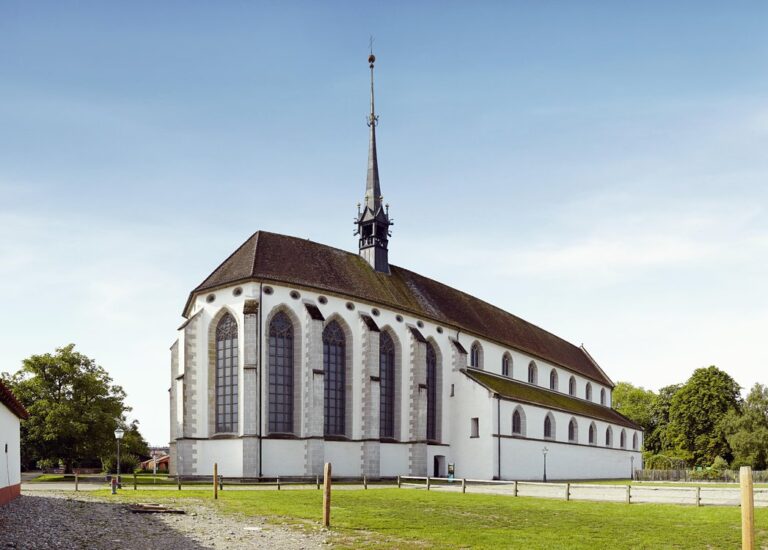
Roman finds came to light during the construction of Königsfelden Monastery between 1310 and 1330. From the sixteenth century, humanists and local historians connected the remains with references in ancient literature and published inscriptions and other discoveries. The amphitheater was described in 1577 and mapped as the ruins of an amphitheater in 1660.
Systematic archaeological investigation began in 1896 and 1897. The Antiquarian Society of Brugg and Environs, founded in 1897 by the prehistorian Jakob Heierli, initiated more focused research, with Samuel Heuberger as its first president. Excavation, analysis and publication continue under the Aargau Cantonal Archaeology Service, supported by the Vindonissa professorship at the University of Basel.
The discovery of the North Gate in 1905 established that Vindonissa had been a legionary camp rather than only a civilian settlement. The amphitheater has been owned by the Swiss Confederation since 1898. Although investigation is difficult where the modern town covers the ancient site, Vindonissa remains one of the most important Roman military archaeological sites north of the Alps. The camp remains protected as a Swiss heritage site of national significance.
Remains
Vindonissa occupied approximately 20 to 21 hectares in an irregular seven-sided plan. Its early defenses consisted of a wooden-and-earth wall about 1.8 kilometres long, wooden gates, low watchtowers and a double ditch. By about AD 72, these defenses had been replaced by a wall approximately 3.6 metres thick, substantial gates and watchtowers, with a single ditch. The civilian settlement lay mainly to the south and east, while the forum and amphitheater occupied the southwest.
Camp Defenses and Roads
West Gate
The West Gate, or porta principalis dextra, formed the camp’s main connection with the long-distance road network. Its foundations include two large octagonal side towers, probably about 20 metres high, flanking a central vehicle passage and a pedestrian passage on each side. The gate opened onto the via principalis, the principal east-west road inside the camp. This road continued toward the East Gate and crossed the north-south via praetoria.
Beyond the West Gate, the road led toward Aventicum and across the Bözberg to Augusta Raurica. It passed beneath the later Königsfelden Monastery and beneath the building at the beginning and end of the Legionary Trail.
North Gate
The North Gate, or porta decumana, stood at the northern edge of the Windisch plateau above the steep slope leading to the Aare. It controlled river traffic and also served as the route by which refuse was removed from the camp. The plateau overlooked the Aare’s passage through the Jura and lay near the confluence of the Aare, Reuss and Limmat.
Waste thrown below the North Gate formed a mound approximately 200 metres wide and 18 metres high over an estimated 70 to 75 years. Continuously damp, airless conditions preserved thousands of objects, especially leather and wood. Among the finds are fragments of approximately 600 wooden writing tablets.
Military and Residential Buildings
Stone Camp
The stone phase associated with Legio XXI Rapax included barracks, thermal baths and a valetudinarium, a Roman military hospital. Ramparts and ditches surrounded the camp. A reconstructed barracks at the site includes reconstructed contubernia, the shared accommodation units in which legionary soldiers lived and worked.
Peristyle House
The eastern part of the camp contained a large Flavian-period peristyle house, a residence arranged around an interior courtyard surrounded by a colonnade. It was probably occupied by a high-ranking officer of Legio XI. A later alteration created an unusually well-preserved Mediterranean-style kitchen with a large raised hearth.
Kitchen finds indicate food preparation for a sizeable household. Ceramics, amphorae and biological remains point to the consumption of meat, game, fish, olive oil, wine, fish sauces and oysters.
Amphitheater and Water Supply
Amphitheater
The amphitheater is the oldest known Roman amphitheater in Switzerland. Legio XIII first built it in wood, but after a fire Legio XXI replaced it with the surviving stone structure. The oval arena measures 64 by 52 metres, and its surrounding seating area, or cavea, held approximately 11,000 spectators.
Public spectacles included gladiatorial combats and animal hunts, known in Roman practice as munera and venationes. Exotic animals were also displayed. A camel-foot bone found at Vindonissa may relate to such performances.
Water Conduits
Two Roman water conduits from the first century AD are known at Vindonissa. One runs approximately 2.4 kilometres from Hausen to Vindonissa and still supplies the fountain at Königsfelden.
Other Archaeological Areas
The wider settlement included sanctuaries, a harbor, four cemeteries, a mansio, or official roadside lodging facility, a pottery quarter, a legionary kitchen, a forum, baths, barracks, the South Gate and a late antique cesspit. These features belonged to the military camp, its civilian surroundings and the later settlement that occupied parts of the former fortress.
Cemeteries and Burials
A cemetery excavated in 2012 contained human bones, remnants of funerary monuments, glass and bronze ornaments, pottery vessels and small unguentaria, vessels used for perfumes, oils or ointments. These burial areas provide material evidence for the people associated with Vindonissa and its surrounding settlement.
Lamp Deposit
In 2016, a Roman clay pot discovered outside the fort contained 22 oil lamps. Each lamp had a copper as, a small Roman coin, placed on it. The coins were minted in AD 66 or 67. The lamps bore varied motifs, including Luna, a defeated gladiator, a lion, a peacock and an erotic scene. The purpose of the deposit and its exact ritual meaning remain uncertain.
Finds from Vindonissa, including objects from the refuse mound and excavated cemeteries, are displayed at the Vindonissa Museum in nearby Brugg. At the original site, the Legionary Trail links excavation areas and presents evidence for Roman daily life. The reconstructed barracks and two reconstructed contubernia were built from excavation plans with authentic tools.