Santa Maria della Neve: Church in Schio’s Former Castle
Site at a Glance
- Popularity
- Low
- Country
- Italy
- Primary era
- Medieval
- Eras represented
- Medieval, Early Modern, Modern
- Civilizations
- Duchy of Milan, Holy Roman Empire, Italian, Venetian
- Site type
- Military
- Remains
- Castle
On this page11 sections
History
Santa Maria della Neve is a church within the former castle grounds on a hill in central Schio, Italy. It originated in the late 14th century and was rebuilt in the 18th, linking the town’s religious history to a castle that may have much earlier origins.
Early origins and medieval rule
The earliest castle at Schio may date to the Iron Age, when iron became widely used for tools and weapons. It may have been built by the Euganei or the Veneti, ancient peoples associated with northeastern Italy. Investigations by Girolamo Barettoni in 1784, Carlo Letter in 1890–91, and Guido Cibin in 1914, 1915, and 1919 suggest this early history.
In the medieval period, the castle belonged to the Maltraversi, a noble family and the counts of Vicenza. Their rule continued, apart from a period associated with Ezzelino III da Romano, a powerful 13th-century lord in northeastern Italy, until 1311. The Paduans damaged the castle in 1314. It later passed through the Nogarola family to the Scaligeri, Verona’s ruling dynasty. In 1382 it came under the Visconti, the ruling house of Milan, and Count Giorgio Cavalli strengthened it. Venetian control followed.
Dismantling and demolition
When Schio submitted to Venice in 1406, the act noted that the castle needed maintenance, but repairs were not made. Venice dismantled it in 1412, six years after taking control of the area. One possible reason was Vicenza’s wish to keep Schio under its authority. The town was governed by a vicar appointed by Vicenza, while Schio sought podestaria status, meaning rule by a chief magistrate appointed directly by Venice. The castle’s proximity to the borders of the Empire may also have influenced the decision. Schio’s community was entrusted with managing the nearby fortress at Pievebelvicino.
Schio petitioned Venice to restore the castle in 1477, 1487, and 1508. Meanwhile, disused parts of the structure were gradually taken for building materials. During the War of the League of Cambrai, an early-16th-century conflict involving a coalition formed against Venice, the community sometimes aligned itself with imperial interests, partly in an effort to escape Vicenza’s control. The castle was not strengthened. In 1514 Venice ordered its final demolition. Venetian commander Bartolomeo d’Alviano had arranged for the destruction of the castles at Schio and Pievebelvicino, and the order also followed the community’s refusal to recognize Gaetano Repeta, Vicenza’s appointed vicar.
Church and later uses
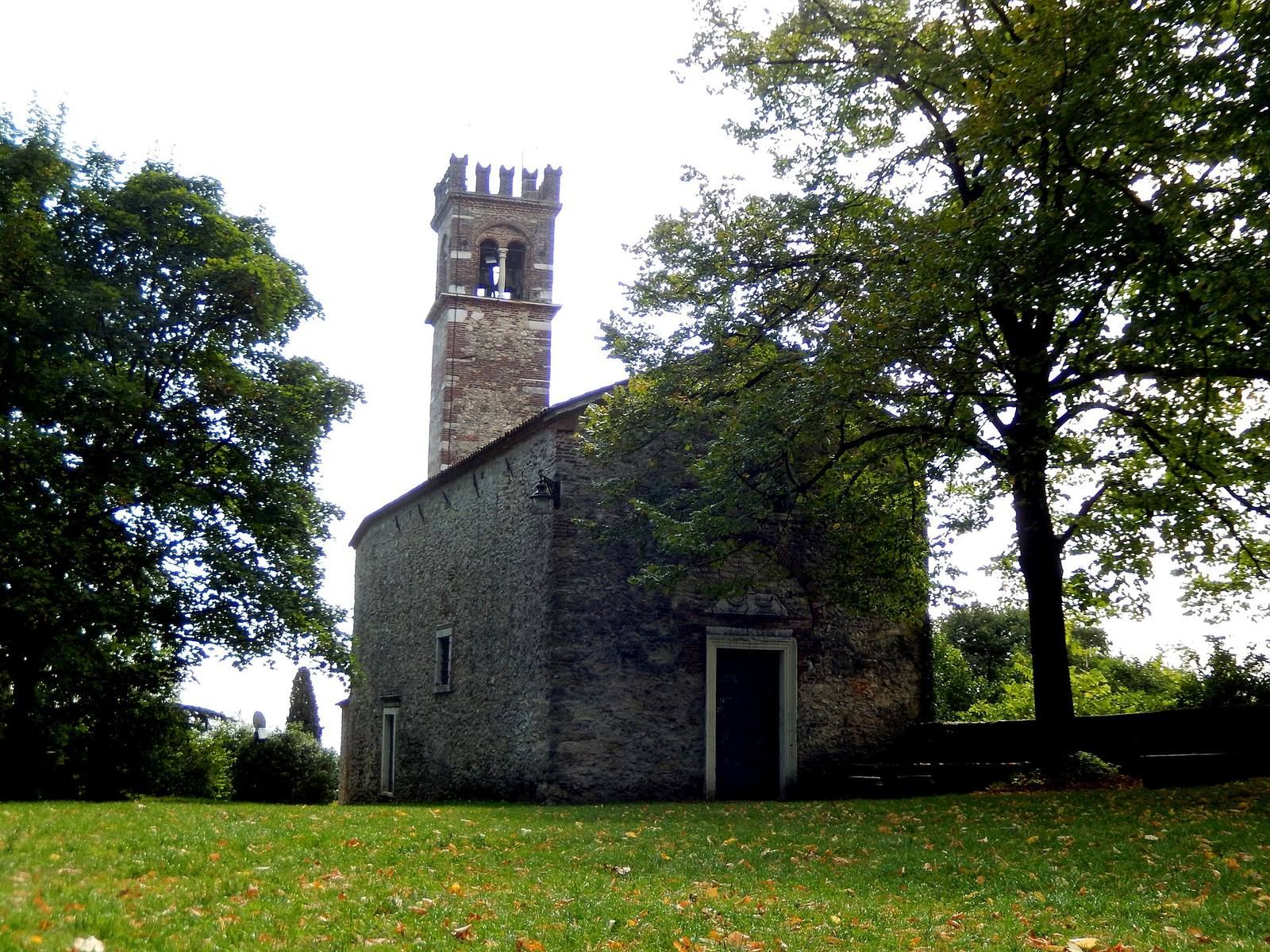
Santa Maria della Neve began in the final years of the 14th century and was rebuilt in the 18th century. During that century it served as the seat of a confraternity, a lay religious association. After the confraternity was suppressed, the church closed for worship and was deconsecrated in 1810. The municipality acquired it in 1828. French and Austrian forces later used it as barracks, and it now houses a photography club.
Later evidence and reuse
Two paintings by Francesco Verla preserve views of the castle. One, dated 1512, is held in the church of San Francesco; the other, whose date is uncertain, is at a Canossian convent. The paintings may not show the castle’s original appearance faithfully, since the structure had already deteriorated. Comparisons with Cibin’s early-20th-century surveys have nevertheless identified substantial correspondences between the painted views and the structures shown.
An air-raid shelter was cut beneath the castle hill in the 1940s. Between 2008 and 2010, it was cleared of debris and restored for aging local wine and cheese, a use made possible by its favorable internal microclimate.
Remains
Surviving structures and grounds
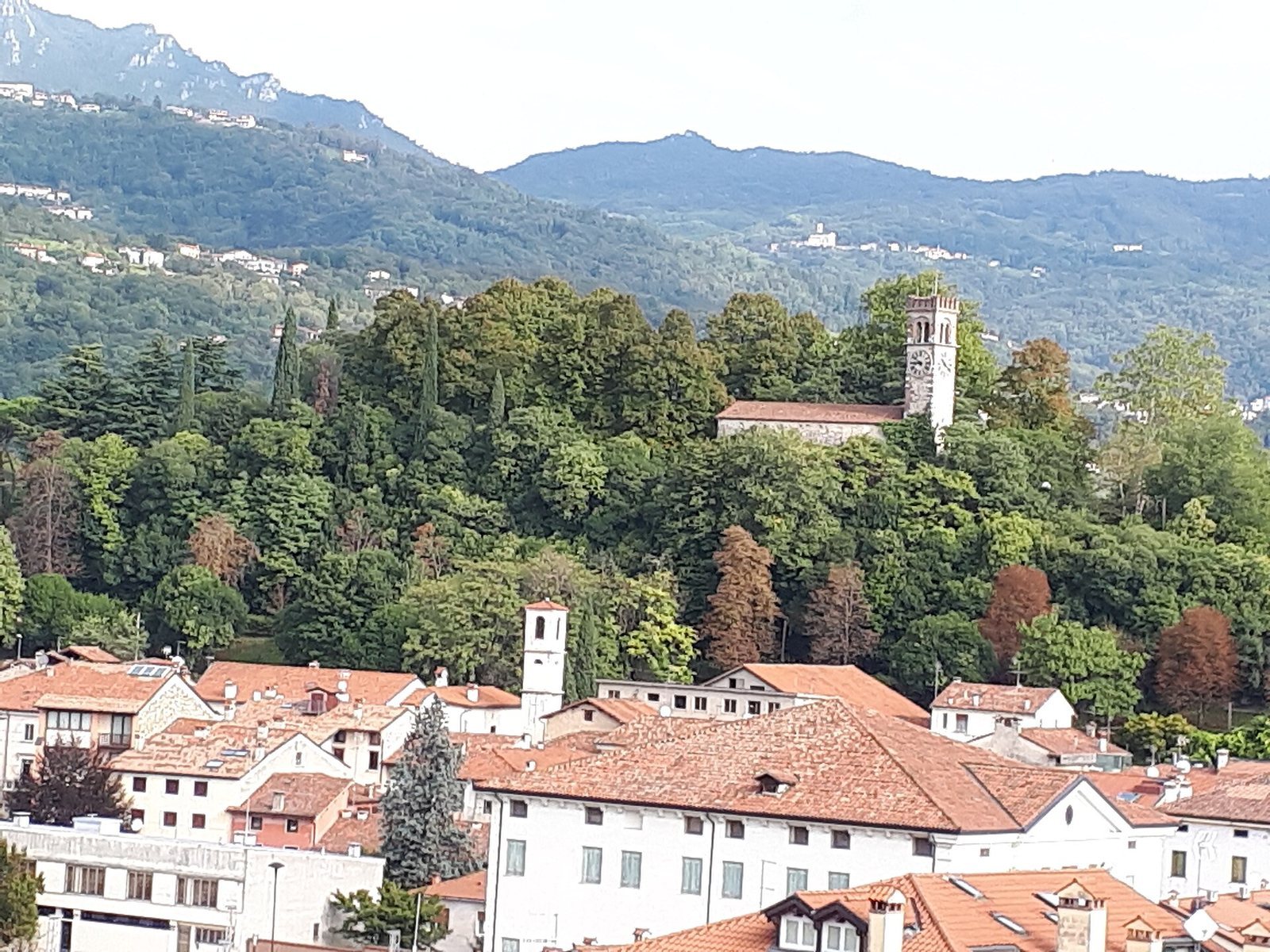
The church and castle remains occupy a small hill in central Schio, now a public park. The surviving ground includes a levelled area and the bases of two vanished towers. The church is built of stone and exposed brick, with a gabled front, while its incorporated tower preserves part of the former castle.
Church
The church’s front has a white-stone portal frame beneath an arched opening, also framed in stone. A small window and a door pierce the left side, and windows are set into the right. At the apse, the rounded sanctuary end, a lower section has an arched window and is flanked by the tower. Inside, shallow wall columns line the walls; the floor is two-tone marble, and decorative plasterwork covers the ceiling.
Bell tower
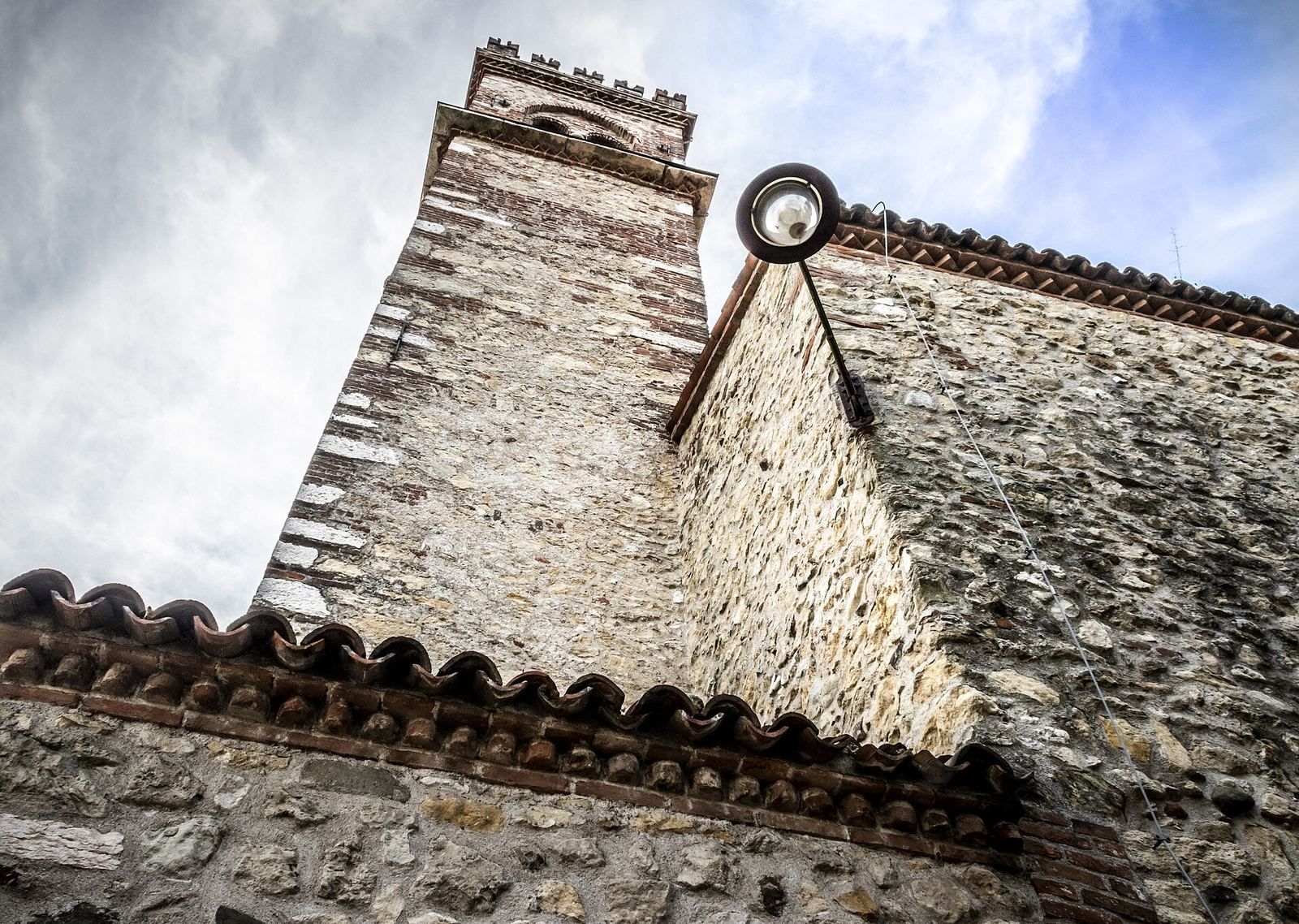
Integrated into the church, the tower is the surviving remnant of a castle tower. Its square base rises to a bell chamber with a paired window, and its top has alternating raised blocks and gaps. Clock faces sit below the bell chamber on the tower’s two most visible sides. The clock was installed in 1900, and the tower is also regarded as Schio’s civic tower.
Castle grounds and guard post
The open ground retains the levelled area and the bases of two former towers. Guard posts once stood outside the castle along its approach routes; at least one survives, converted into a private dwelling.
Air-raid shelter
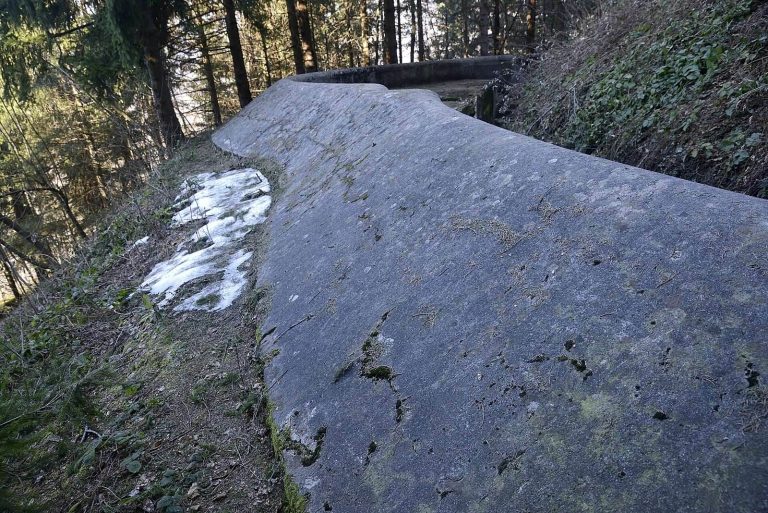
Beneath the hill, the shelter is cut into rock and reinforced with concrete. It has two entrances, extends for about 100 metres, and covers approximately 500 square metres internally.