San Pier Gattolino: A Catholic Church in Florence
Site at a Glance
- Popularity
- Medium
- Country
- Italy
- Primary era
- Early Modern
- Eras represented
- Medieval, Early Modern, Modern
- Civilizations
- French, Grand Duchy of Tuscany, Holy Roman Empire
- Site type
- Religious
- Remains
- Church
On this page11 sections
History
San Pier Gattolino is a Catholic church in Florence, Italy, known by 1050 as San Pietro Gattuario. Rebuilt in the late sixteenth and early seventeenth centuries, it has Renaissance and Baroque features. The church served pilgrims and gave its name to Florence’s southern gate and the road now called Via Romana.
Early church and its names
The present name developed through popular alteration of the earlier San Pietro Gattuario. “Gattolino” may refer to a supposed founder, Pietro Gattuario, who was said to ferry people across the Arno, or to the white poplar thought to have grown widely in the area. The church was also called San Serumido, after Ser Umido Grazzini, a secondhand-goods dealer who later helped finance its rebuilding.
A small hospital attached to the church received pilgrims travelling through the area. The church’s name was also given to Florence’s southern city gate, which later became known as Porta Romana, and to the road now called Via Romana. During the siege of Florence, clergy from San Salvatore took refuge at the church after their convent outside the gate was destroyed. They established a new monastery around it.
The painter Domenico Veneziano, who taught Piero della Francesca, was buried at the church on 15 May 1461. Filippo Neri, later canonized as a saint, was born in the parish and baptized there. The painter Giovanni da San Giovanni was also buried at the church, though his remains were later moved to San Felice in Piazza.
Demolition and rebuilding
Between 1545 and 1547, Florence demolished the church and monastery to construct defensive bastions, projecting structures built into a fortification, within the city walls. Cosimo I de’ Medici, duke of Florence, ordered the works in anticipation of war with Siena. Once the threat had passed, the last fortifications were removed, and the church was rebuilt between the late sixteenth and early seventeenth centuries.
Former parishioners raised money for the reconstruction. Ser Umido Grazzini made a substantial contribution, helping to establish the church’s other name, San Serumido. The rebuilt church became the parish in which Filippo Neri was born and baptized. Its adjacent oratory of the Blessed Sacrament housed a devotional association dedicated to the Assumption of Mary.
Later work and continuing use
Further work took place in the eighteenth century and again in the early nineteenth century. The church was restored in 1908, 1926, and 1952. It remains a Catholic place of worship of the Roman rite within the Archdiocese of Florence.
Remains
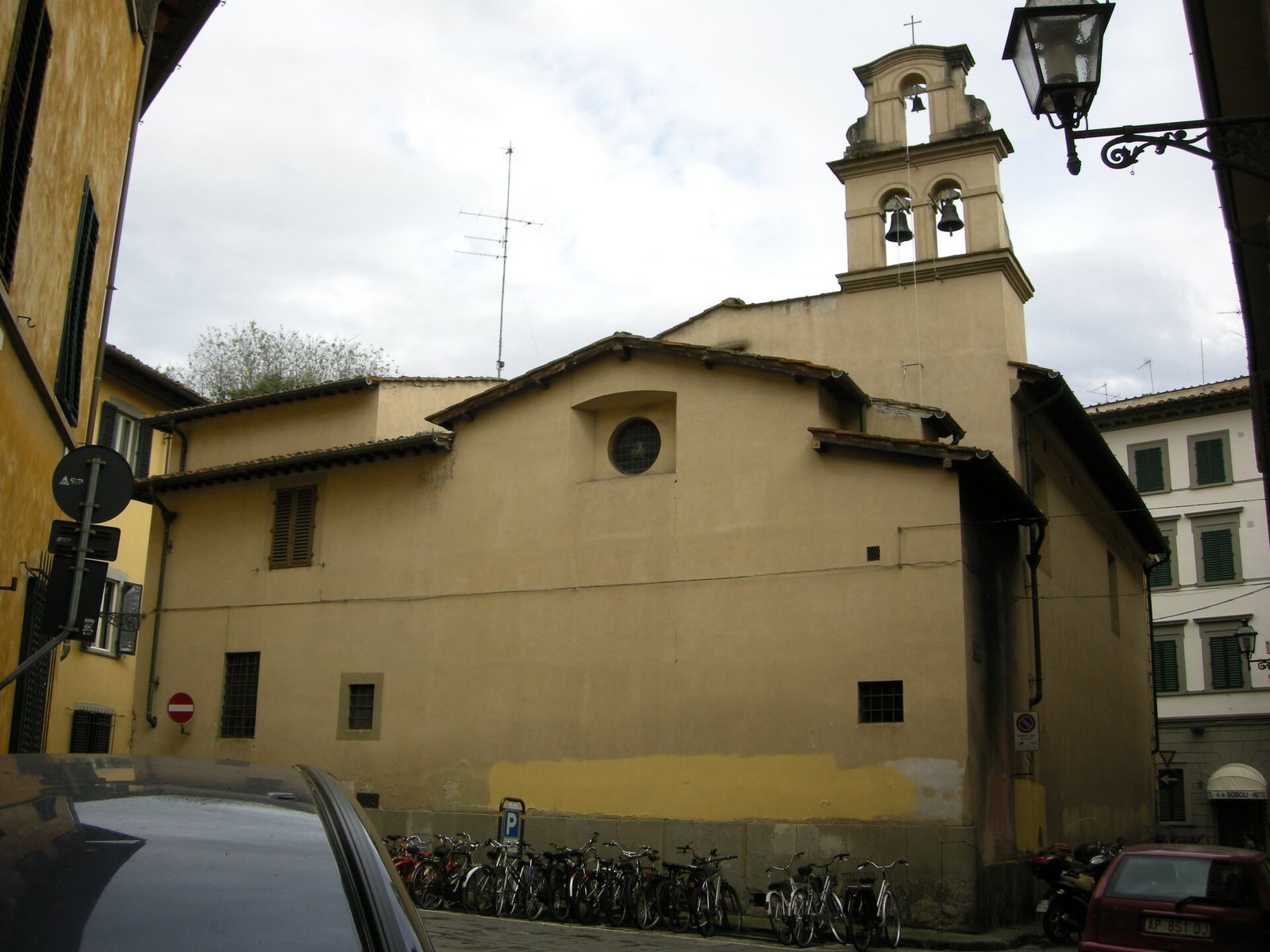
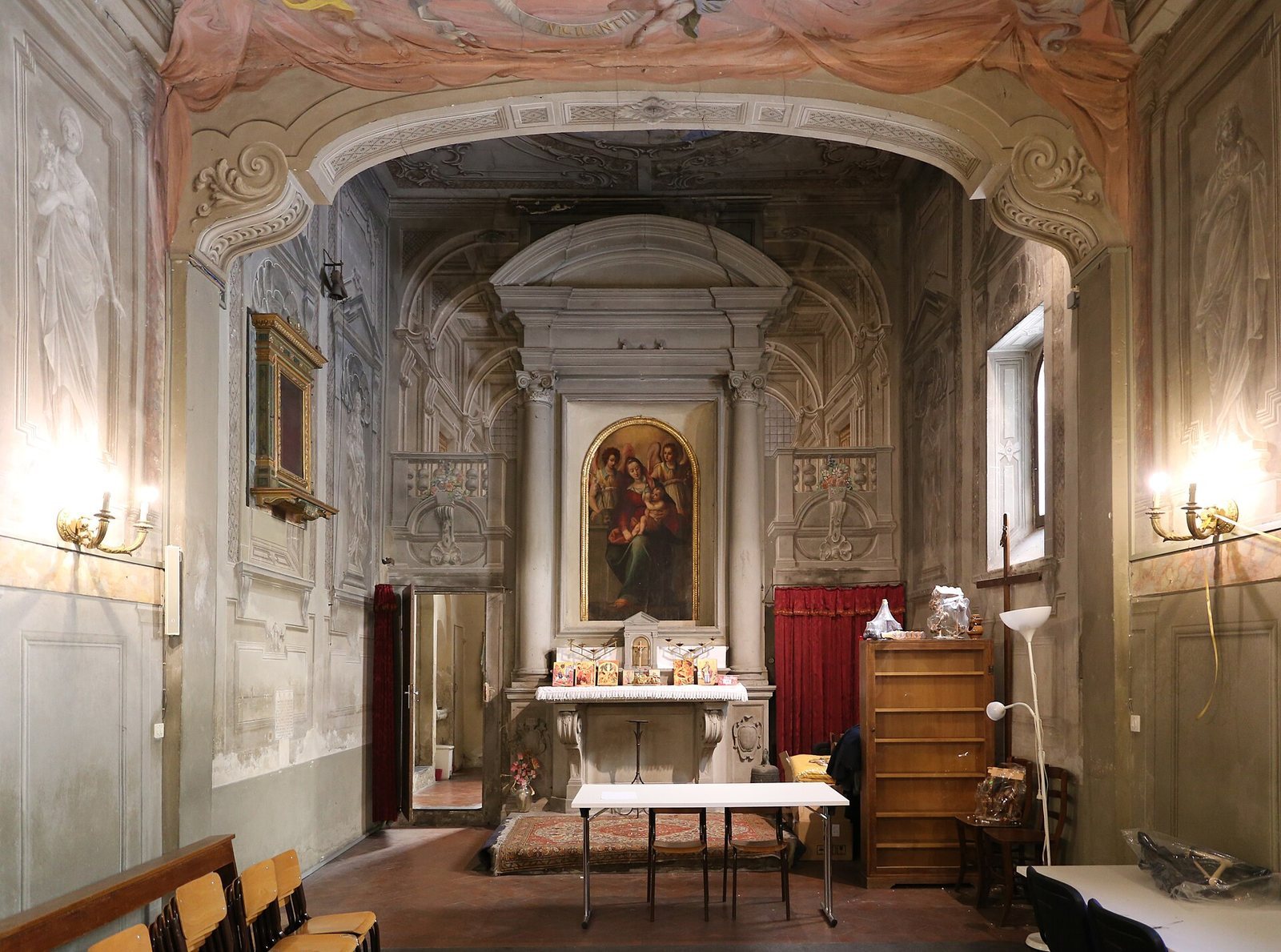
The church has a restrained exterior and interior, with a single rectangular nave and a choir covered by a barrel vault, a continuous semicircular ceiling. Beside it stands the separate oratory of the Blessed Sacrament, with its own façade. The church’s Renaissance and Baroque features include later painted decoration and furnishings from several periods.
The church
Facade and interior
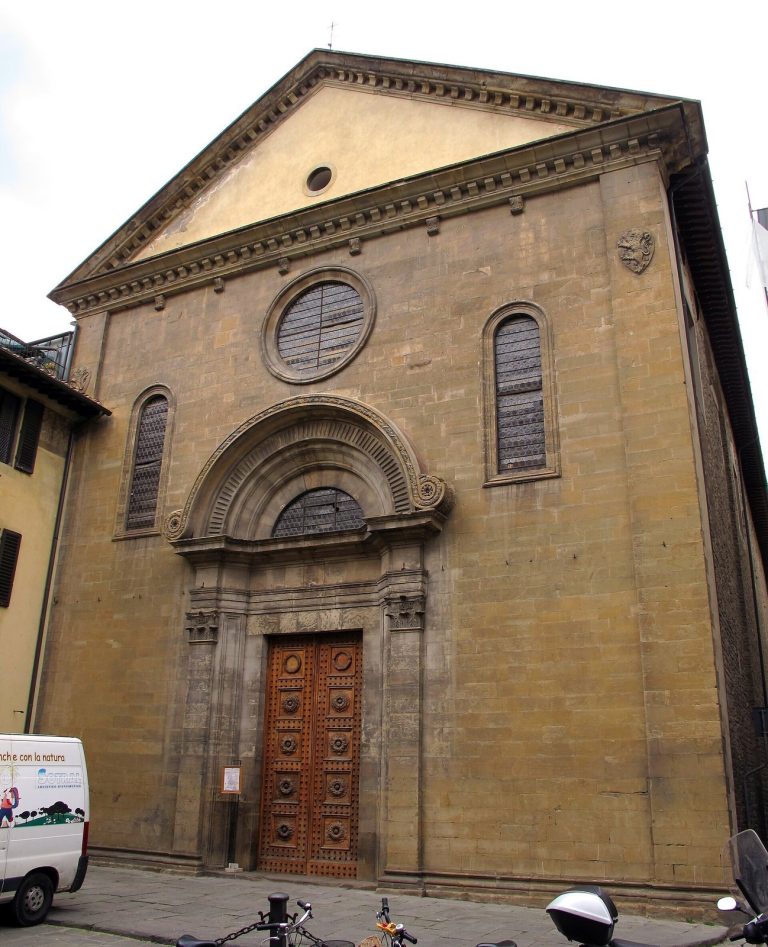
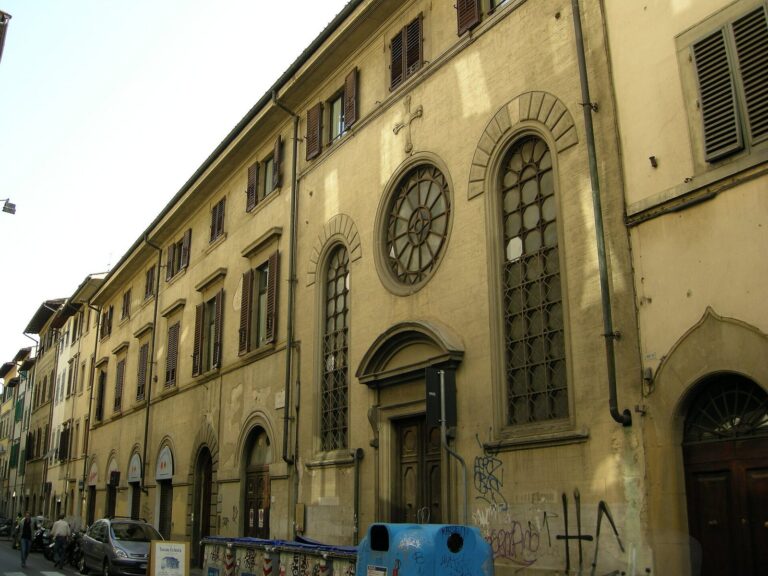
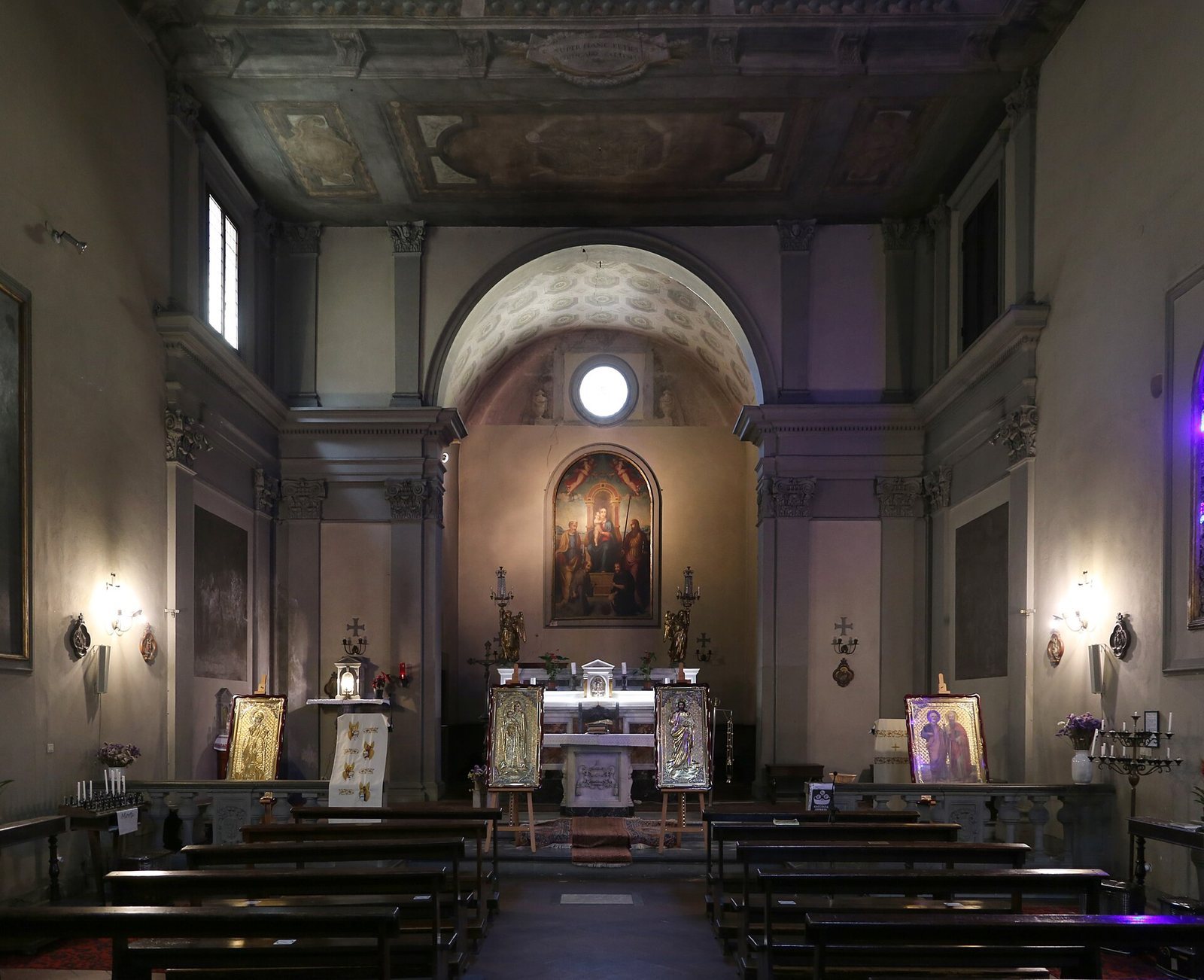
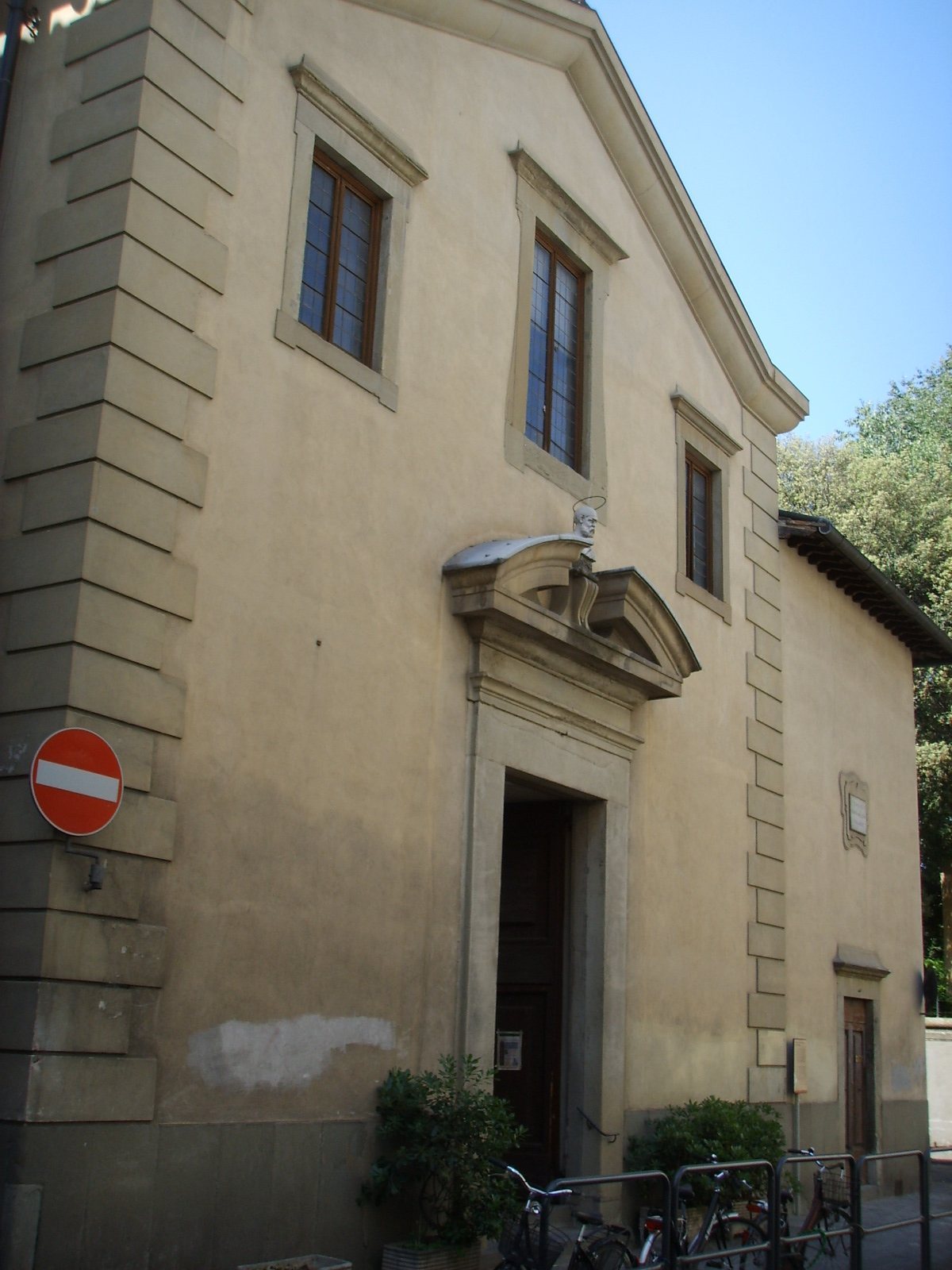
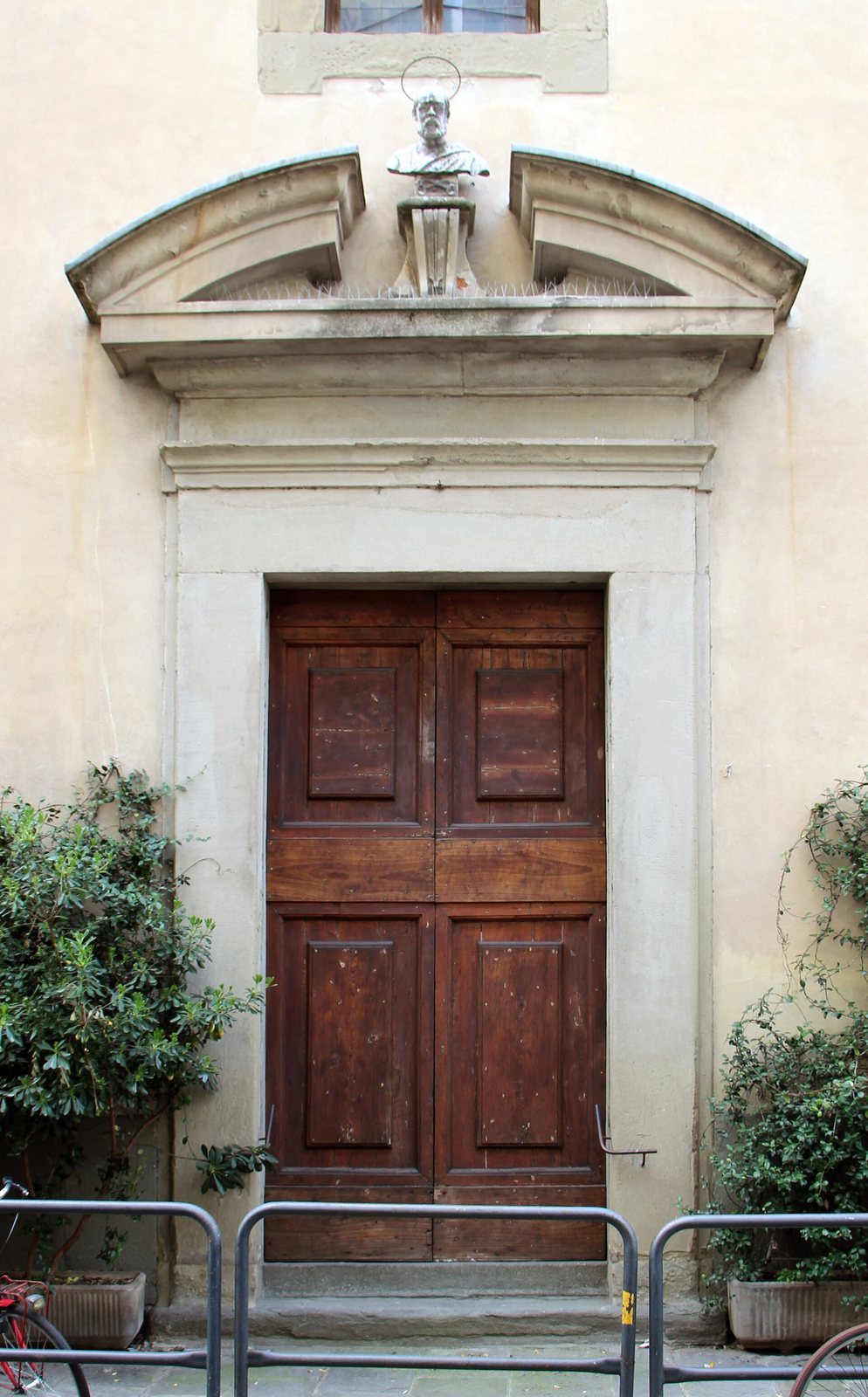
The church façade has a gabled outline, one entrance, and three windows in its upper section. A bust of Saint Peter sits within the broken pediment above the portal, a pediment with a gap in its upper outline. Inside, the rectangular nave leads to the choir. Eighteenth-century stone cornices, pilasters (shallow rectangular wall projections), and Corinthian capitals (ornate tops of columns or pilasters) decorate the choir. Terracotta covers the floor of the nave, while the choir has white and gray marble tiles.
Ceiling and earlier painted decoration
A fresco of the Glory of Saint Peter, painted by Domenico del Podestà in 1809, decorates the church’s false ceiling. Domenico Castagnoli added painted architectural framing that creates an illusion of built structure. Earlier painted decoration survives near the entrance and on both sides of the choir.
Altars and paintings
The main altar holds a panel of the Madonna Enthroned with Child and Saints, attributed to the anonymous sixteenth-century painter known as the Master of Serumido. He also produced religious panels for smaller churches in Florence’s Oltrarno district. On the right is Giovanni Bilivert’s Annunciation, beside the entrance to the oratory. An altar on the left wall holds Antonio Soderini’s The Death of Saint Joseph, dated 1722. The same wall has a fifteenth-century wooden crucifix and a twentieth-century oil painting of the Sacred Heart.
Piero di Cosimo’s altarpiece
Around 1510–1515, the Bucetti family commissioned Piero di Cosimo to paint the Mystical Marriage of Saint Catherine and Saints for the church. After the building was demolished, the work was moved to San Frediano and later disassembled. The altarpiece is now in a private collection in Florence.
Oratory of the Blessed Sacrament
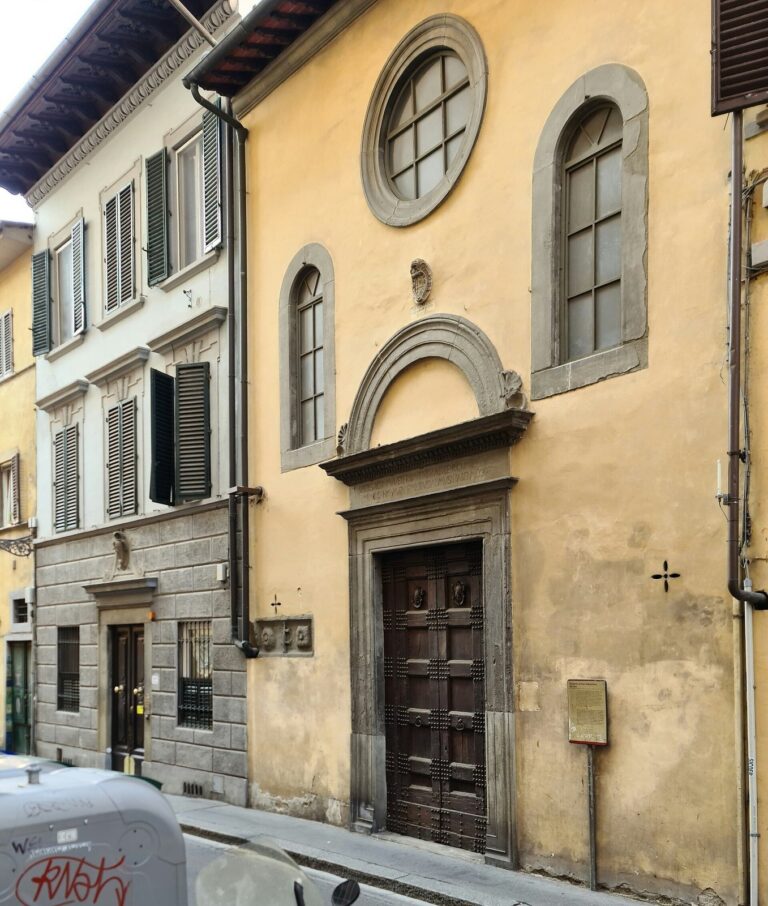
The oratory’s façade stands beside the church’s own. Its vaulted ceiling carries a fresco cycle painted between the late eighteenth and early nineteenth centuries. An altar holds Alessandro Fei, called Barbiere’s, Madonna and Child, dated 1568.