San Francesco: A Franciscan Church in Modena, Italy
Site at a Glance
- Popularity
- Medium
- Country
- Italy
- Primary era
- Medieval
- Eras represented
- Medieval, Early Modern, Modern
- Civilizations
- Holy Roman Empire, Italian
- Site type
- Religious
- Remains
- Church
On this page11 sections
History
San Francesco is a Roman Catholic church in Modena, Italy, dedicated to Francis of Assisi. Its origins lie in a Franciscan complex established within the city walls in 1244, and its construction extended from the thirteenth century into later periods. Franciscan friars, members of the religious order inspired by Francis, had been in Modena since 1221, during his lifetime.
Foundation and medieval construction
The friars’ first church and convent stood outside the walls at Lentesone, a marshy area prone to flooding, toward Baggiovara. Concern about the unhealthy setting prompted their move in 1244 to a place known as the field of grass, inside the city. They built a church and convent there, dedicating the church to Francis, who had been canonized in 1228. The church was still unfinished in 1296, and work on the friars’ dormitory was underway in 1318. The complex was altered over time, and the church was partly rebuilt in 1445.
Damage and changing use
An earthquake on 5 June 1501, centered at Castelvetro di Modena, severely damaged the church and its bell tower. Restoration began in 1535. Further work on the monastic complex took place during the eighteenth century. In 1774, the Duke of Modena reduced the city’s parishes to five and expelled the Franciscans; San Francesco was assigned to the parish of San Giorgio.
Napoleon Bonaparte abolished that parish in 1798. The church was then deconsecrated and used to house French soldiers, who burned its wooden sacred furnishings. In 1807, the Belleardi family’s sixteenth-century terracotta funerary monument, made by Antonio Begarelli, was smashed with hammers. Later, 440 fragments were recovered. The building also served as a stable, warehouse, barracks, and animal enclosure.
Restoration and renewed worship
In 1826, Duke Francesco IV commissioned architect Gusmano Soli to restore the church in a thirteenth-century style. It reopened for worship in 1829 and was returned to the Franciscans. Carlo Barbieri carried out another restoration from 1886 to 1888, reshaping the church in the Neo-Gothic style, a nineteenth-century revival of medieval Gothic forms. The church was reconsecrated and reopened for worship in 1901. San Francesco belongs to the Archdiocese of Modena-Nonantola, a Roman Catholic jurisdiction headed by an archbishop.
Remains
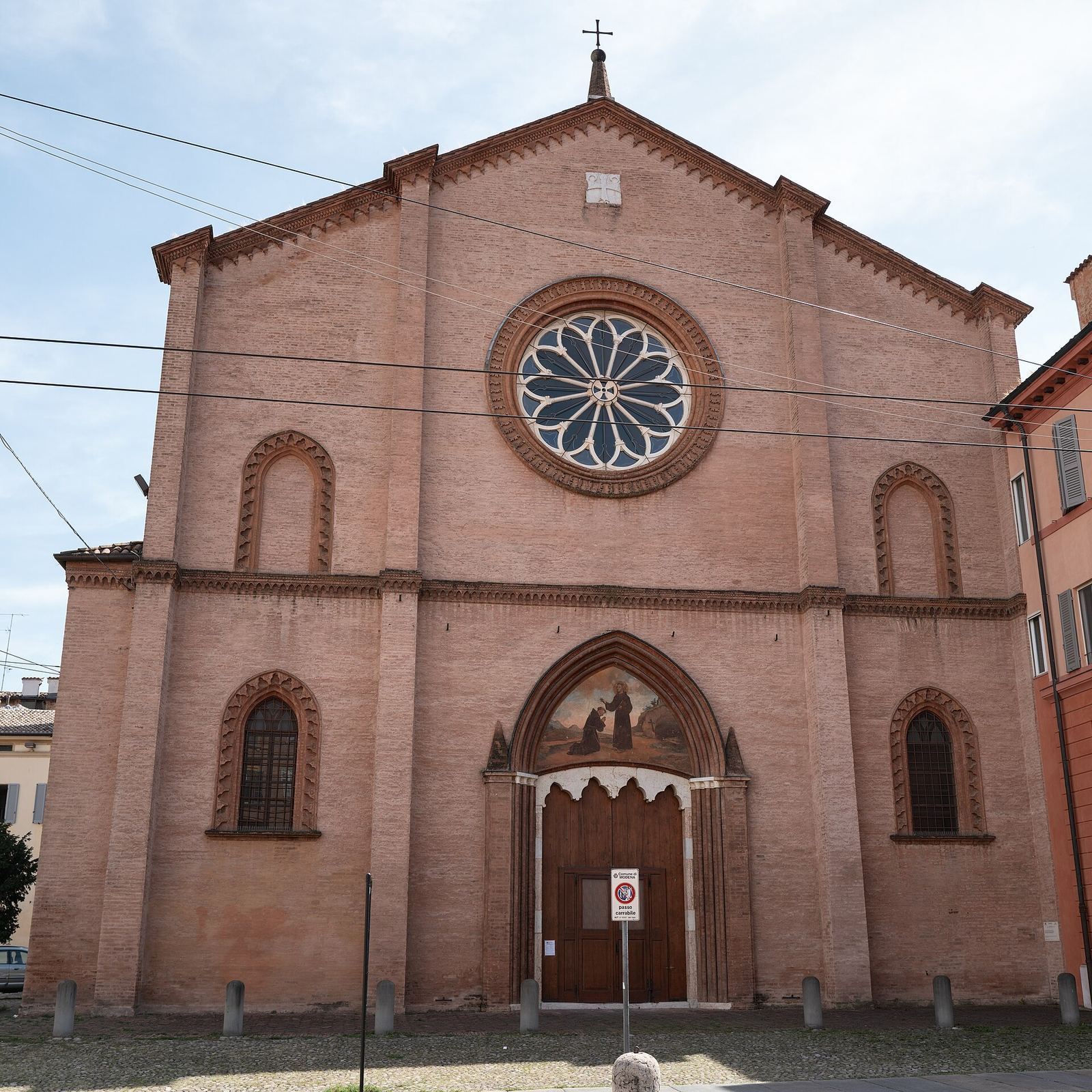
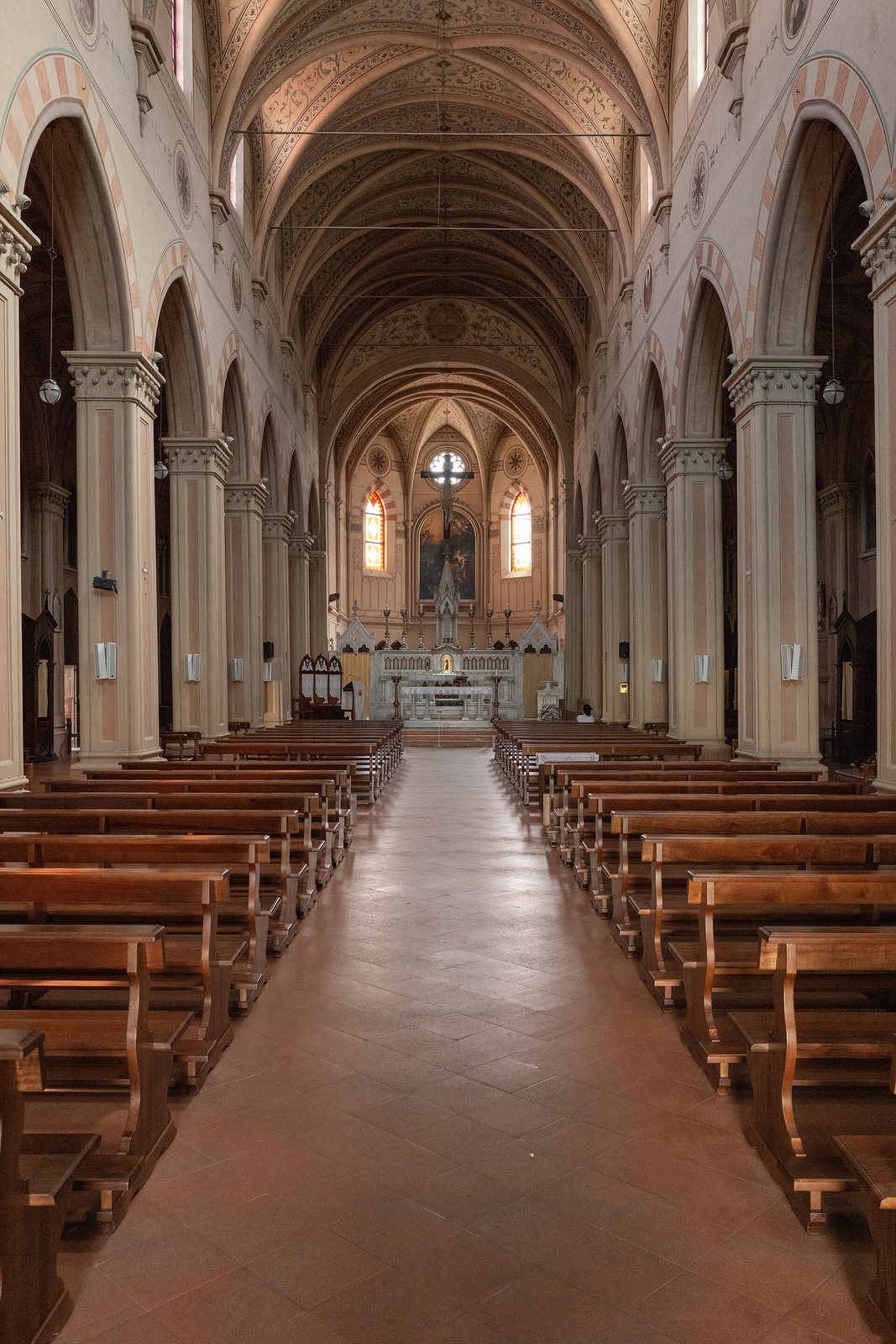
The church combines a restrained Gothic exterior of brick with a three-aisled interior that has undergone substantial alteration. Its features include a large circular window, a rebuilt bell tower, artworks, organs, and a fountain in a small square outside.
Exterior and bell tower
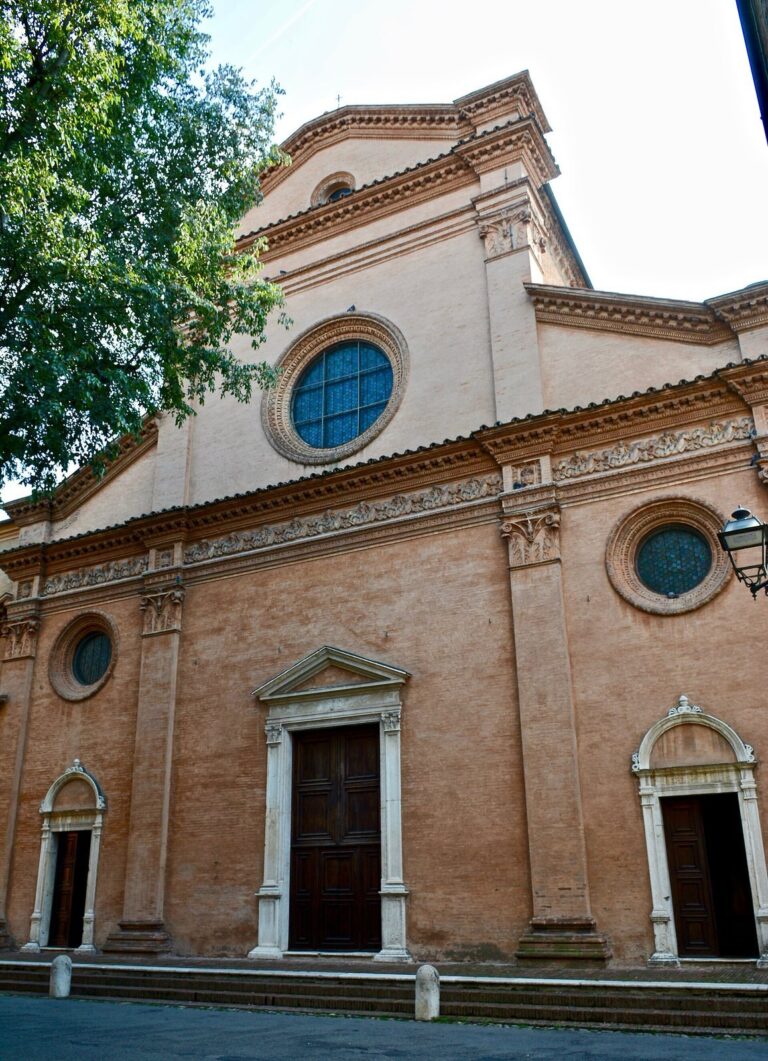
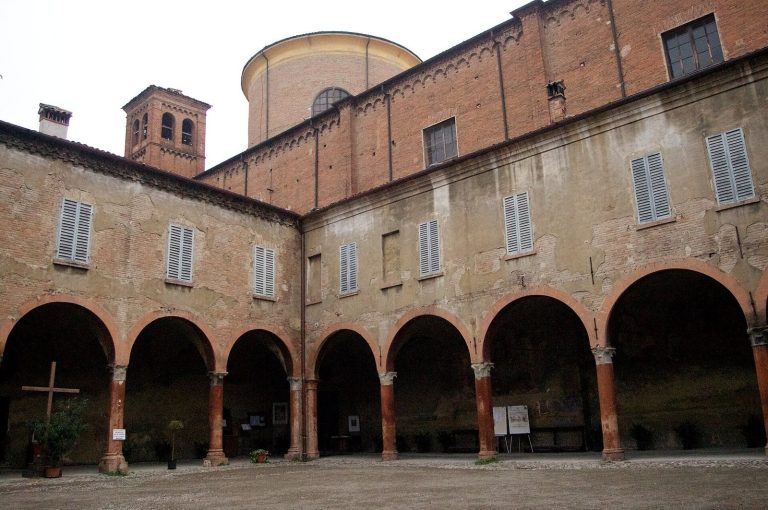
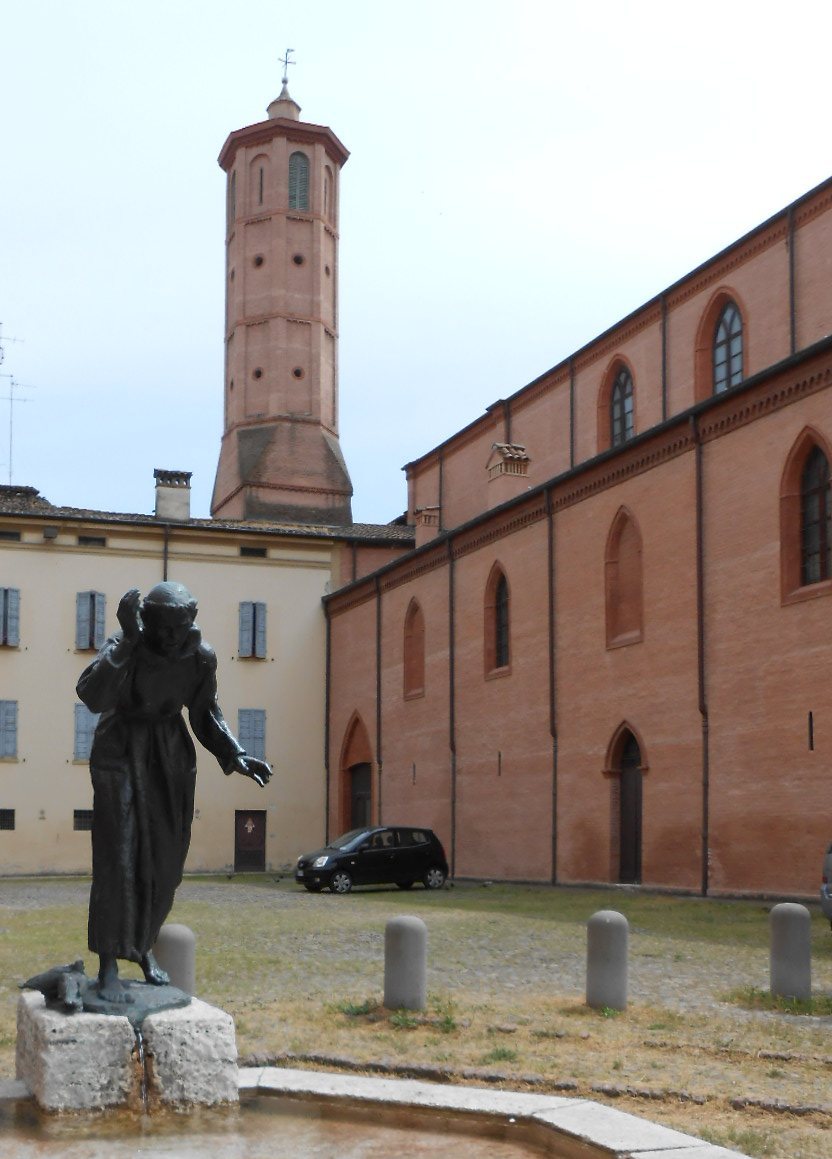
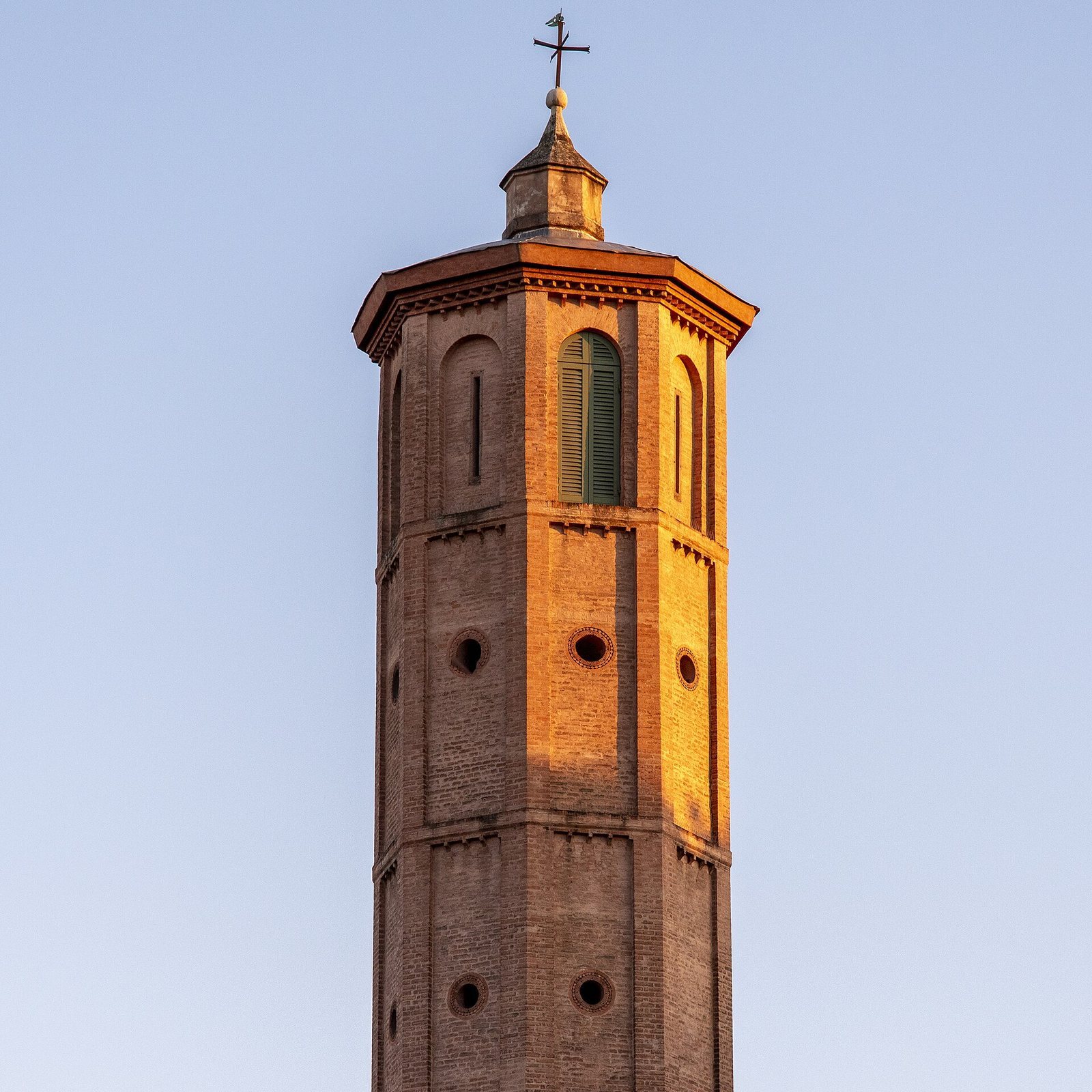
The brick façade has a large rose window, a circular window, and the church’s north side is also Gothic in style. The bell tower was rebuilt in the sixteenth century with an octagonal base and a spire. The spire was demolished in the early nineteenth century because it was considered unsafe.
Interior and organ
The interior has three aisles. In the sixteenth-century reconstruction, the side chapels were removed, the choir was moved into the apse, a recess at the end of the church behind the altar, and much of the earlier painted decoration was covered, including paintings on the columns. During those works, the organ was moved from the north wall to the south wall and almost entirely remade by Giovanni Cipri of Ferrara. In the restoration of 1826 to 1829, an organ made by Giuseppe and Paolo Benedetti was installed in a large wooden loft on the inner face of the entrance wall.
Sculpture and memorials
Deposition from the Cross
At the end of the left aisle, in the left apse, stands Antonio Begarelli’s terracotta Deposition from the Cross, a group of thirteen statues made in 1531.
Painting and commemorative monument
In the choir of the nave, an oil painting by Adeodato Malatesta depicts Francis receiving the stigmata, wounds resembling those associated with Christ’s crucifixion. A monument sculpted by Luigi Mainoni in 1840 commemorates the waning of a cholera epidemic in Modena.
Square fountain
In a small square outside the church, a fountain carries a statue of Francis sculpted by Giuseppe Graziosi in 1938.