Sagunto Castle: A Historic Fortress in Spain
Visitor Information
Google Rating: 4.2
Popularity: Medium
Country: Spain
Civilization: Early Modern, Medieval European, Medieval Islamic, Modern, Roman
Site type: Military
Remains: Castle
History
Sagunto Castle is located on a hilltop in the municipality of Sagunt, Spain. Its origins date back more than two thousand years, initially established by the Iberian civilization before becoming a key Roman settlement.
The site was originally called Arse by the Iberians. Around the mid-1st century BC, it became the Roman municipium Saguntinum. The settlement gained prominence during the Second Punic War when it was attacked by the Carthaginian general Hannibal in 219 BC, an event that ignited the war between Rome and Carthage. The Romans reclaimed the city five years later in 214 BC. In the following centuries, between approximately 175 and 100 BC, the Romans constructed significant public buildings, including a temple (or capitolium) and a substantial water cistern, which later became part of an imperial forum established in the 1st century AD.
Under Muslim control, the fortress was known as Murbĩtar or Morvedre, serving as a critical stronghold for defending the regions of Catalonia and Valencia. Most of the outer walls and the Albacar section of the castle were built during this Islamic period. The castle witnessed several exchanges of control, including a period of occupation by the famous warrior El Cid from 1098 to 1102. Christian forces permanently secured the castle under King Jaume I in 1238.
Despite Christian garrisoning in the mid-13th century, the local population remained largely Muslim for some time. By 1328, a Jewish community had developed near the castle walls, as evidenced by the establishment of a Jewish cemetery. In the 14th century, King Peter IV of Aragon undertook efforts to reinforce the fortifications, but the castle continued to be contested, notably falling to King Peter of Castile in 1363 following a siege.
In 1562, King Philip II commissioned engineer Juan Bautista Antonelli to upgrade the castle’s defenses, resulting in a division of the fortress into seven distinct plazas aimed at improving military organization. During the War of Spanish Succession in the early 18th century, control of the castle briefly shifted to the Archduke of Austria but was soon restored to the Bourbon King Philip V.
The castle remained strategically important into the 19th century. In 1811, during the Peninsular War against Napoleonic France, Brigadier Andriani led a defense against French forces under General Suchet. Although the fortress ultimately fell to the French, the victors repaired and strengthened its defenses under the watch of the defeated commander.
Archaeological interest in Sagunto Castle began in the early 20th century, with detailed excavations carried out in 1932 by Manuel González Simancas, focusing on its Roman foundations. Additional digs in 1975 and 1992 uncovered further Roman and medieval structures, shedding light on the castle’s complex history layered across millennia.
Remains
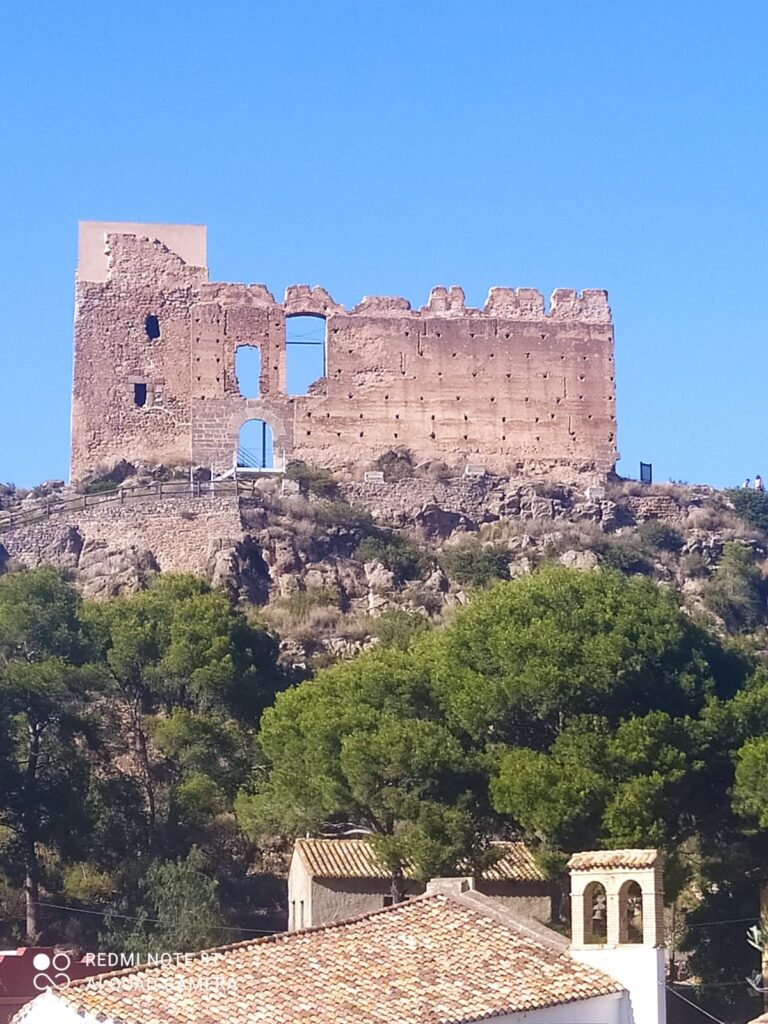
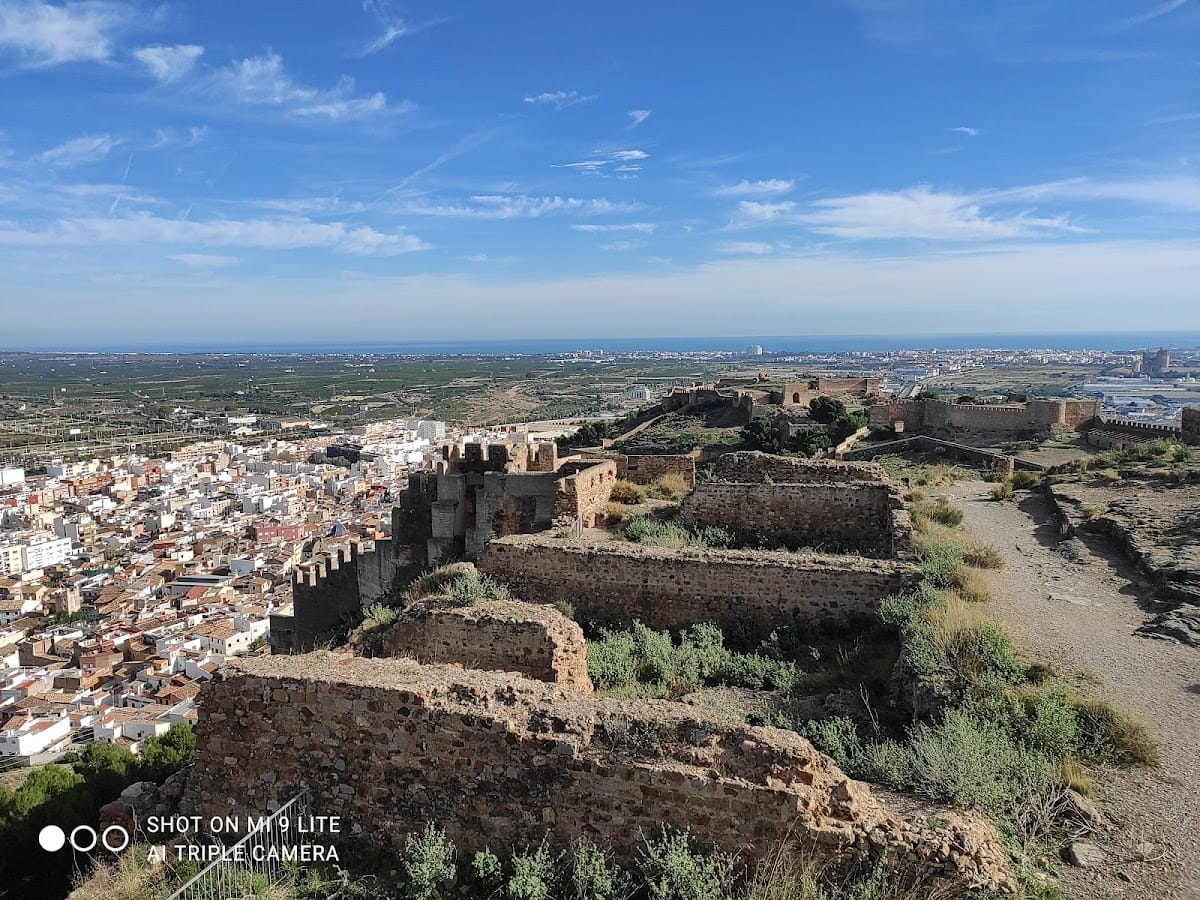
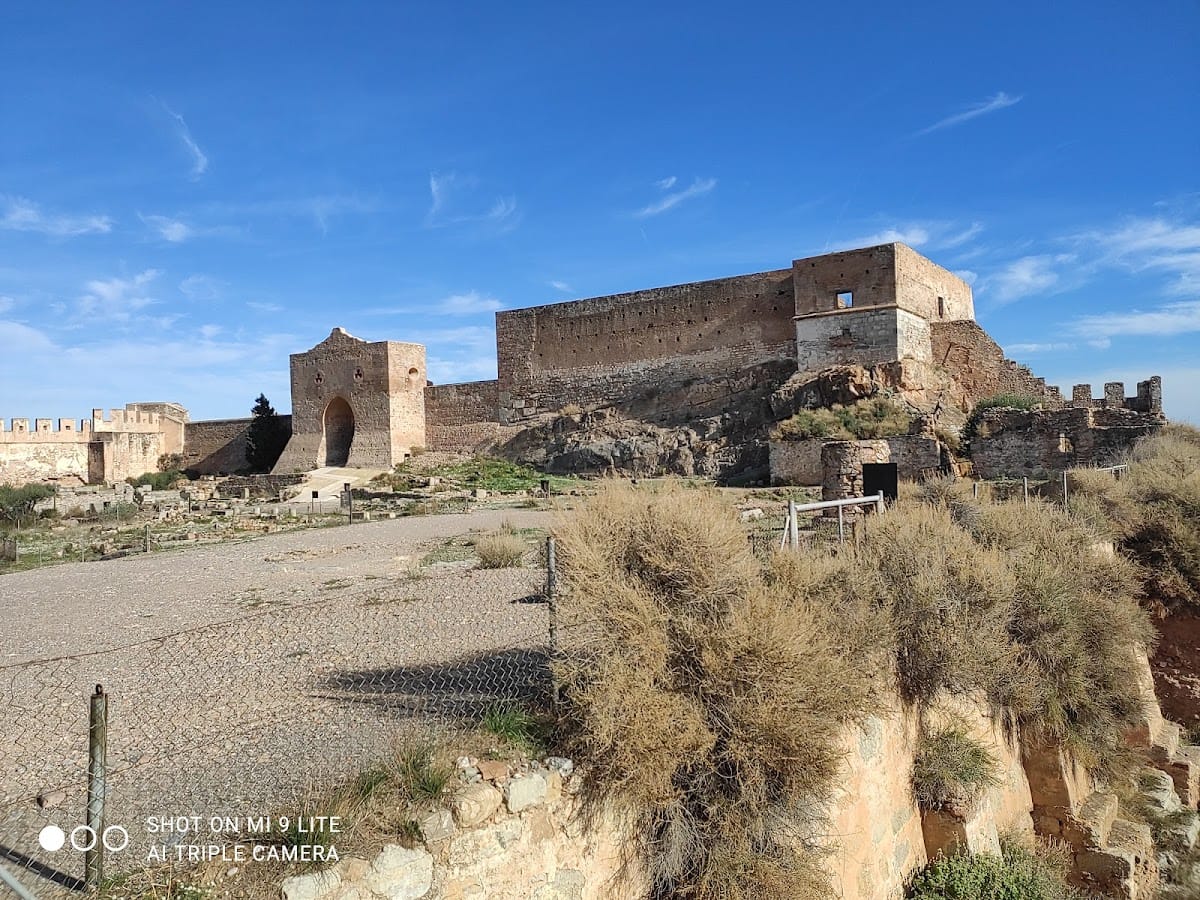
Sagunto Castle crowns a flat-topped hill rising 172 meters above sea level, forming the final elevation of the Sierra Calderona, where it oversees the Mediterranean coast and the town below. The fortress is enclosed by extensive defensive walls stretching roughly 800 meters and divided internally into seven main plazas, each serving different military functions. These plazas include the Plaza de Armas, Plaza de Almenara, and Plaza de San Fernando, among others, illustrating a planned design for coordinated defense.
The primary curtain wall enveloping the castle was constructed during the Islamic period, descending from the hilltop to join the town’s outer fortifications. Over the centuries, this outer wall was adapted and reinforced with Gothic and Renaissance additions during Christian rule and later modifications in the Peninsular War. Many of the towers and bastions visible today were rebuilt or consolidated in the 18th century, reflecting ongoing strategic importance.
Near the center of the fortress sits the Plaza del Refectorio, the smallest of the plazas, positioned on a raised platform crowned by the Reina Gobernadora battery. This enclosure features vaulted arcades on its eastern side, formerly serving as refectories, or dining halls. On other sides, the plaza is flanked by sections of the curtain wall to the south, a ruined double wall and a Roman tower to the west, and a fortified wall to the north, all linked through corridors connecting to major areas like the Plaza de Armas and Plaza de San Fernando.
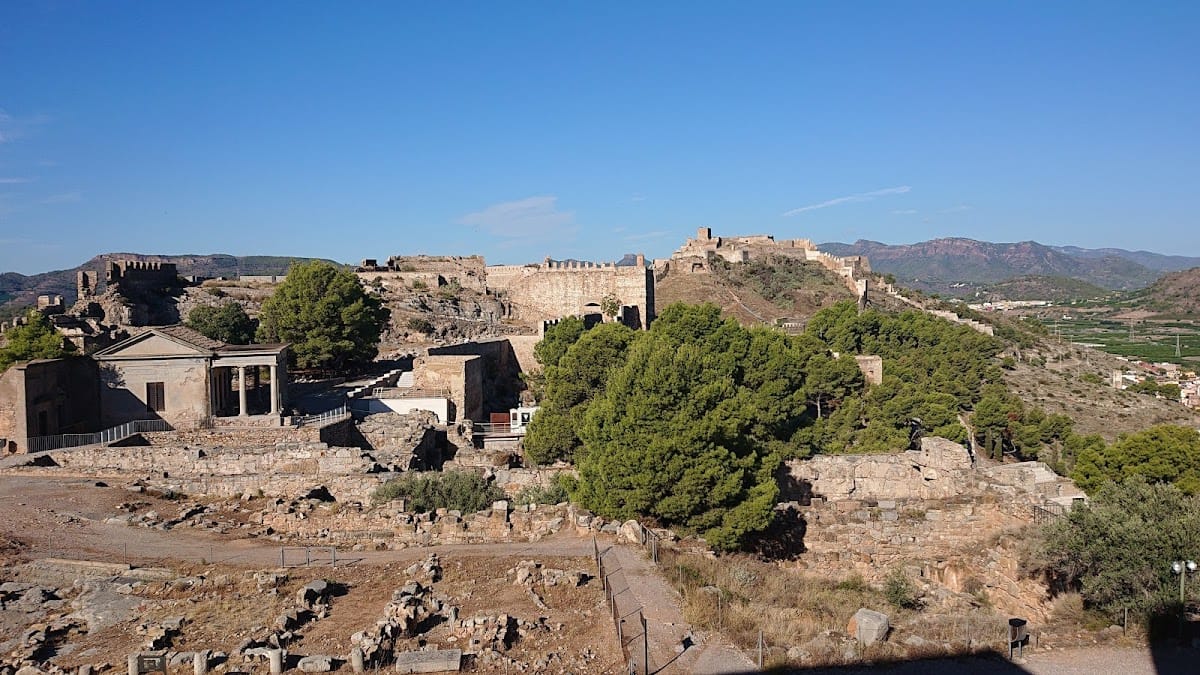
Roman remains are particularly well-preserved on the hilltop. The foundations of the Roman forum, a public square measuring approximately 60 by 36.5 meters, occupy the highest point. On the west side of the forum lies the basilica, a large rectangular hall 60 by 20 meters in size, while a row of tabernae, or shops, borders the eastern edge. To the south of the forum, a well-maintained cistern once provided water storage, and the base of a temple or capitolium, roughly 14 by 12 meters, stands on the northern side. Nearby, on the forum’s northeast, lies a complex building potentially identified as the curia (a council house) or a temple dedicated to Augustus; it features two large parallel chambers, indicative of important administrative or religious use.
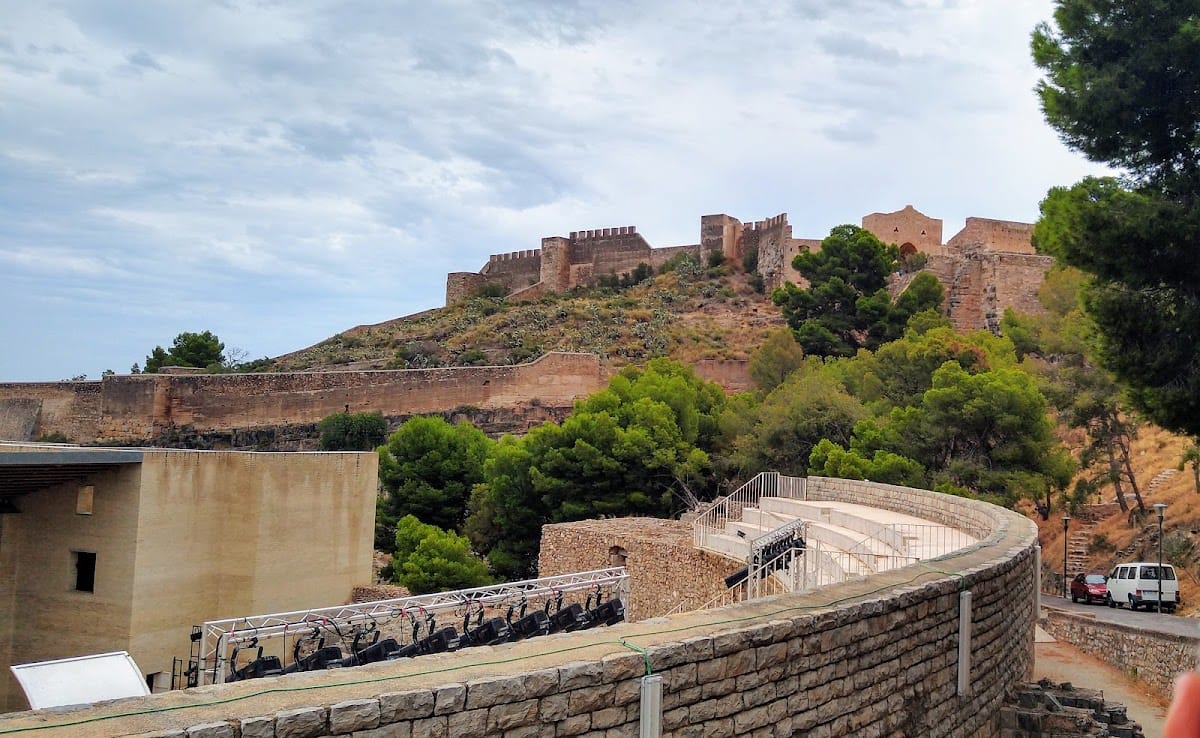
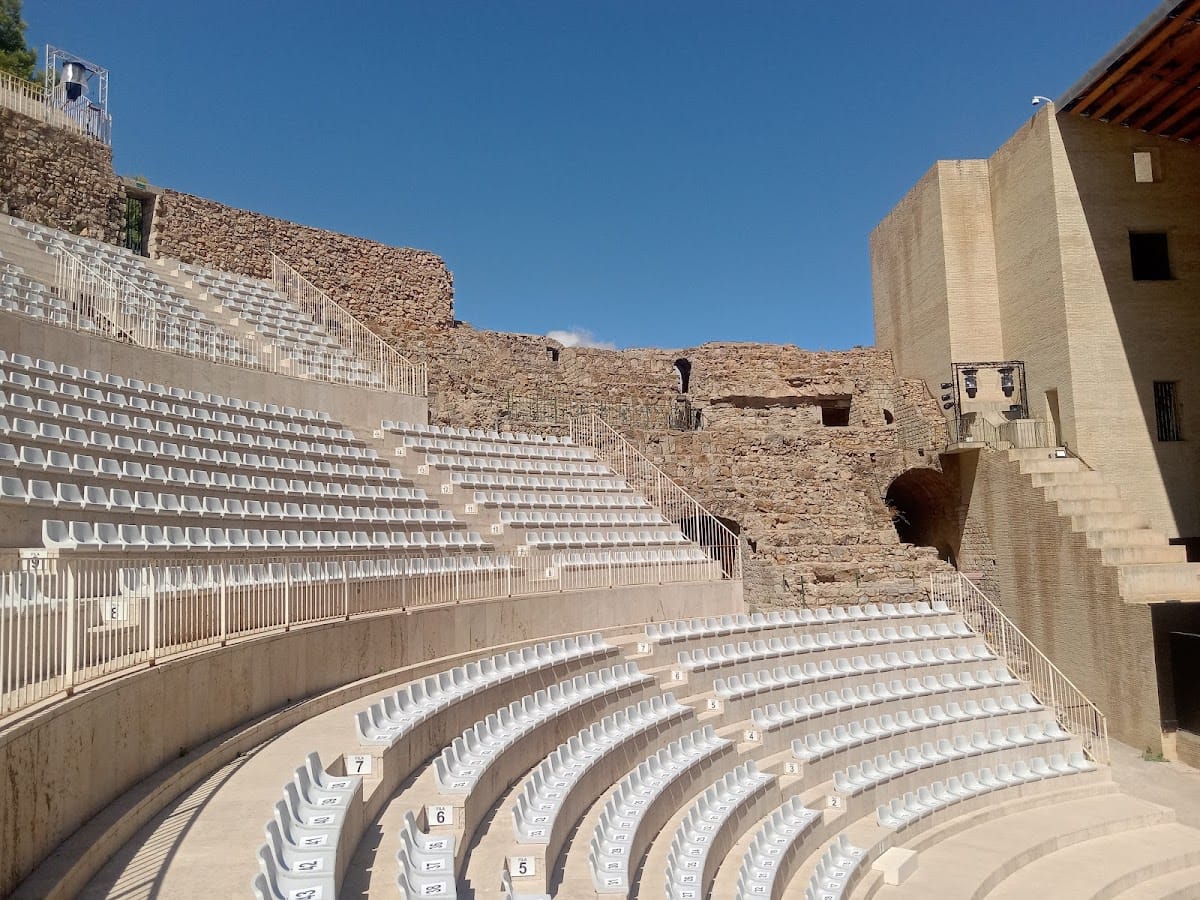
Down the northwestern slope about 50 meters from the forum, remains of a Roman theatre remain visible, highlighting the cultural life of the ancient city. On the eastern side of the castle, substantial Iberian defensive walls have survived, dating back to the early 4th century BC. These walls once enclosed a larger area than the current castle footprint, showcasing the site’s extensive prehistoric origins.
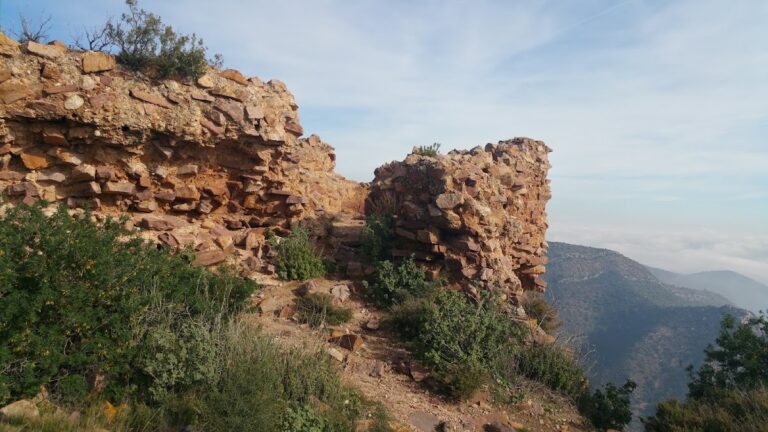
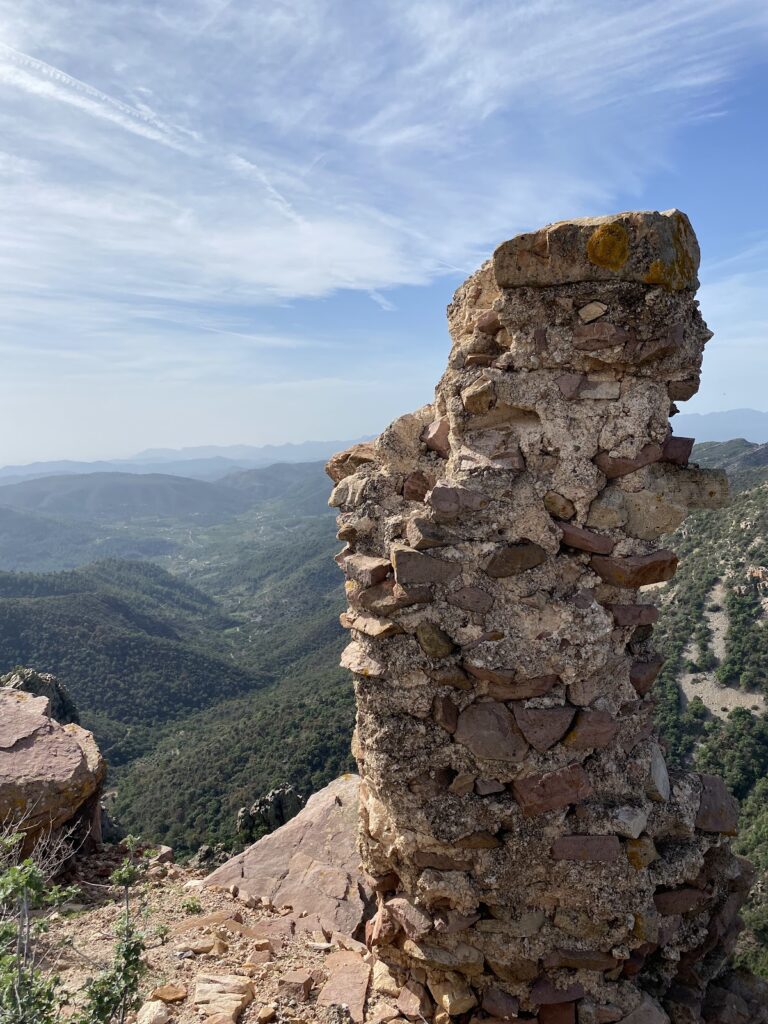
Excavations in 1992 revealed a Roman tower on the castle’s northern flank, dating from the early 2nd century BC. This tower was later overlain by medieval fortifications and further strengthened with walls from the Napoleonic period, illustrating the castle’s continuous military adaptation. Construction techniques across the site include layers of adobe—sun-dried mud bricks—interspersed with small stones packed between large masonry blocks, reflecting a fusion of building methods over time.
Overall, Sagunto Castle’s walls and plazas embody a complex palimpsest, where elements from Iberian, Roman, Muslim, Christian medieval, and Napoleonic periods coexist, each leaving visible marks on the fortress’s structure that testify to its long and varied history.
Nearby sites