Rocca di Monte Battaglia: A Historic Lombard Fortress in Casola Valsenio, Italy
Visitor Information
Google Rating: 4.7
Popularity: Low
Country: Italy
Civilization: Medieval European
Site type: Military
Remains: Castle
History
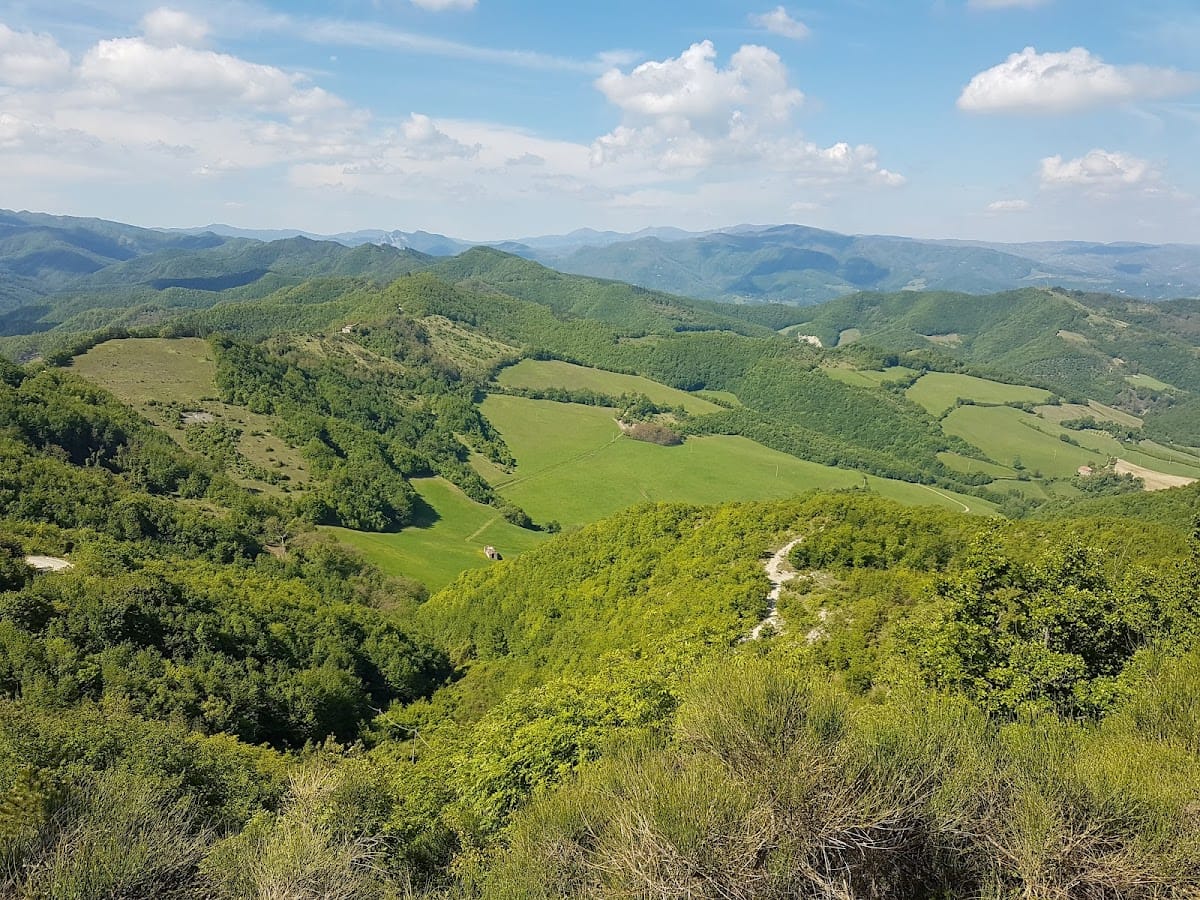
The Rocca di Monte Battaglia is perched on a hilltop in Casola Valsenio, Italy, and was originally constructed by the Lombards as a defensive tower. Its strategic location at 715 meters above sea level placed it along a border ridge between Lombard lands and the Byzantine Exarchate of Ravenna during the 7th and 8th centuries, serving as an early medieval fortification controlling the Senio and Santerno river valleys.
The earliest documented reference to the site appears in 1154, where it was called “Castrum de Monte de Battalla,” under the jurisdiction of the city of Imola. In the late 14th century, the fortress changed hands and fortunes repeatedly. By 1390, the Senate of Bologna, which then owned the site, ordered the complete destruction of the fortress. This task was executed by Ugolino di Boccadiferro along with a force of 500 laborers. However, the fortress was swiftly rebuilt within two years when ownership passed to the Alidosi family. Later, it came under the control of Guidantonio Manfredi of Faenza and his son Taddeo, lords of Imola. Faced with attempts to seize the fortress by Taddeo’s uncle, Astrorgio, the site was briefly captured through deception in 1462 but was soon recovered.
In the centuries that followed, the Rocca di Monte Battaglia continued its role as a military stronghold. Ownership moved to Girolamo Riario and subsequently to Caterina Sforza, the lady of Imola. Around 1494, a significant defensive addition was made: a bastion on the north side, constructed by the master builder known as Bruchello. The fortress later came under Cesare Borgia’s control in 1502. Within a few years, it briefly fell under Venetian rule before being transferred to the Papal States in 1505, with Imola maintaining a permanent castellan to oversee it. This period also saw visits by important figures such as Pope Julius II in 1506.
Advancements in military technology and warfare methods during the 16th century diminished the fortress’s strategic relevance, and by 1601, Imola struggled to assign a castellan for its upkeep. The fortress saw a brief religious chapter when a Franciscan hermitage was established within its walls. By 1640, the authorities mandated Casola Valsenio’s responsibility to maintain an armed guard at the site, permitting the partial demolition of the fortress as a result. This led to gradual decay, although a 1757 decree prohibited removal of stones and remnants, reflecting some concern for preserving the ruins.
Following the unification of Italy in the 19th century, the ruins became a haven for brigands, frequently former smugglers who operated in the borderlands between the Papal States and the Grand Duchy of Tuscany. By the late 19th and early 20th centuries, peasant families occupied parts of the ruins, with the last of these residents leaving the site by 1942.
During World War II, the Rocca di Monte Battaglia was the scene of fierce combat from late September to mid-October 1944. Italian partisan fighters from the 36th Garibaldi Brigade and American soldiers of the 350th Regiment, part of the 88th Infantry Division known as the “Blue Devils,” fought against German troops in a struggle that was key to the Allied push through the Gothic Line. The conflict resulted in heavy casualties exceeding 2,000 and caused significant damage to the ruins; only the tower’s stump and one wall pillar survived the artillery bombardment, though the pillar collapsed shortly after the war.
In the post-war era, the site transformed into a symbol of resistance and liberation. Memorial plaques and monuments were set up beginning in 1950 to honor partisan fighters, Allied soldiers, and even fallen German soldiers. Notably, it holds the distinction of being the only location in Italy and Europe with a German memorial plaque dedicated primarily to all members of the armed forces. Archaeological excavations conducted in 1982 uncovered artifacts dating to the 15th and 16th centuries, including painted ceramic plates, brooches, glazed pots, weapon tips, and counterfeit coins. These finds indicate that a secret mint may have operated on the site during a period between approximately 1510 and 1530, when the fortress was temporarily abandoned.
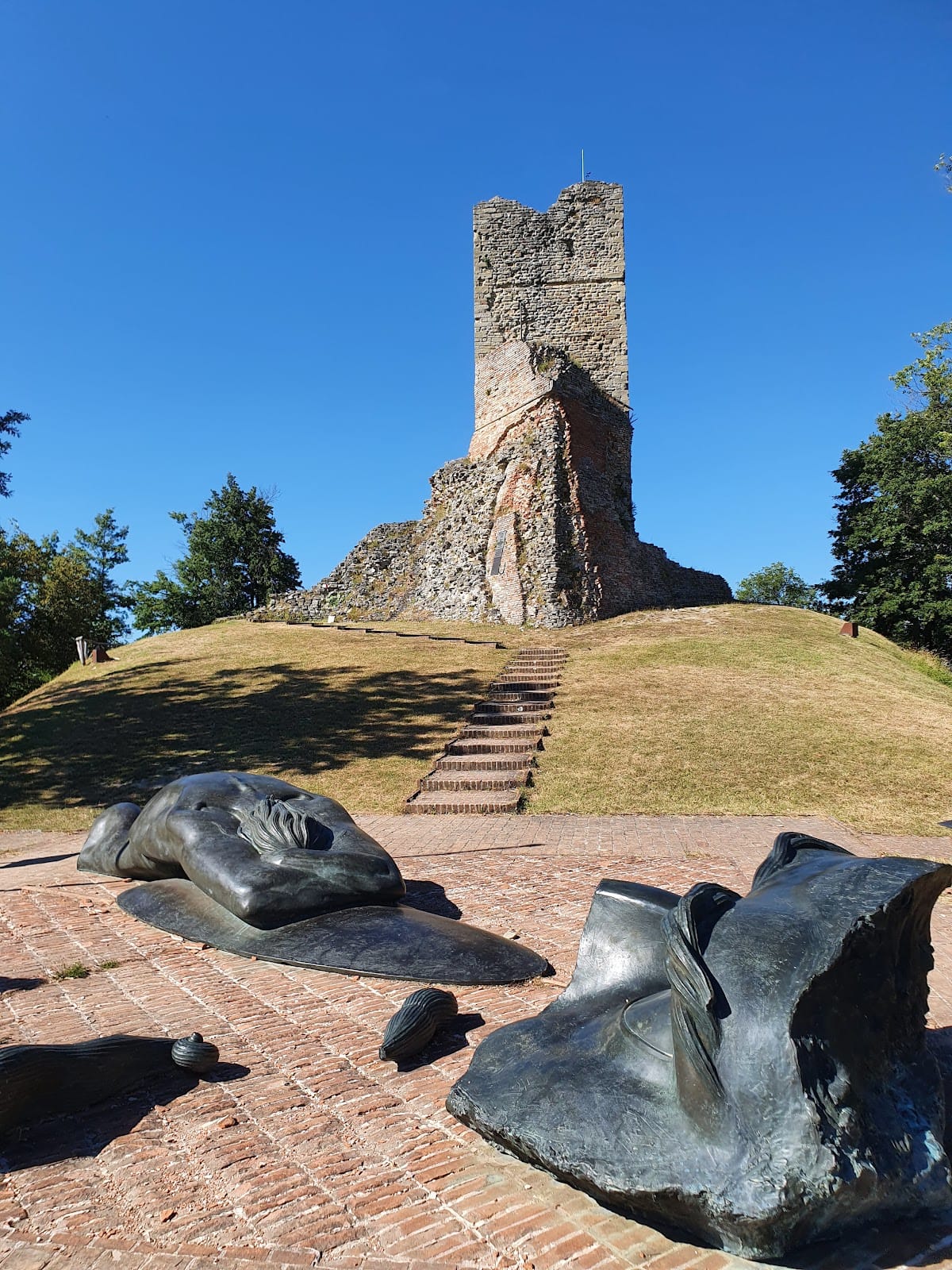
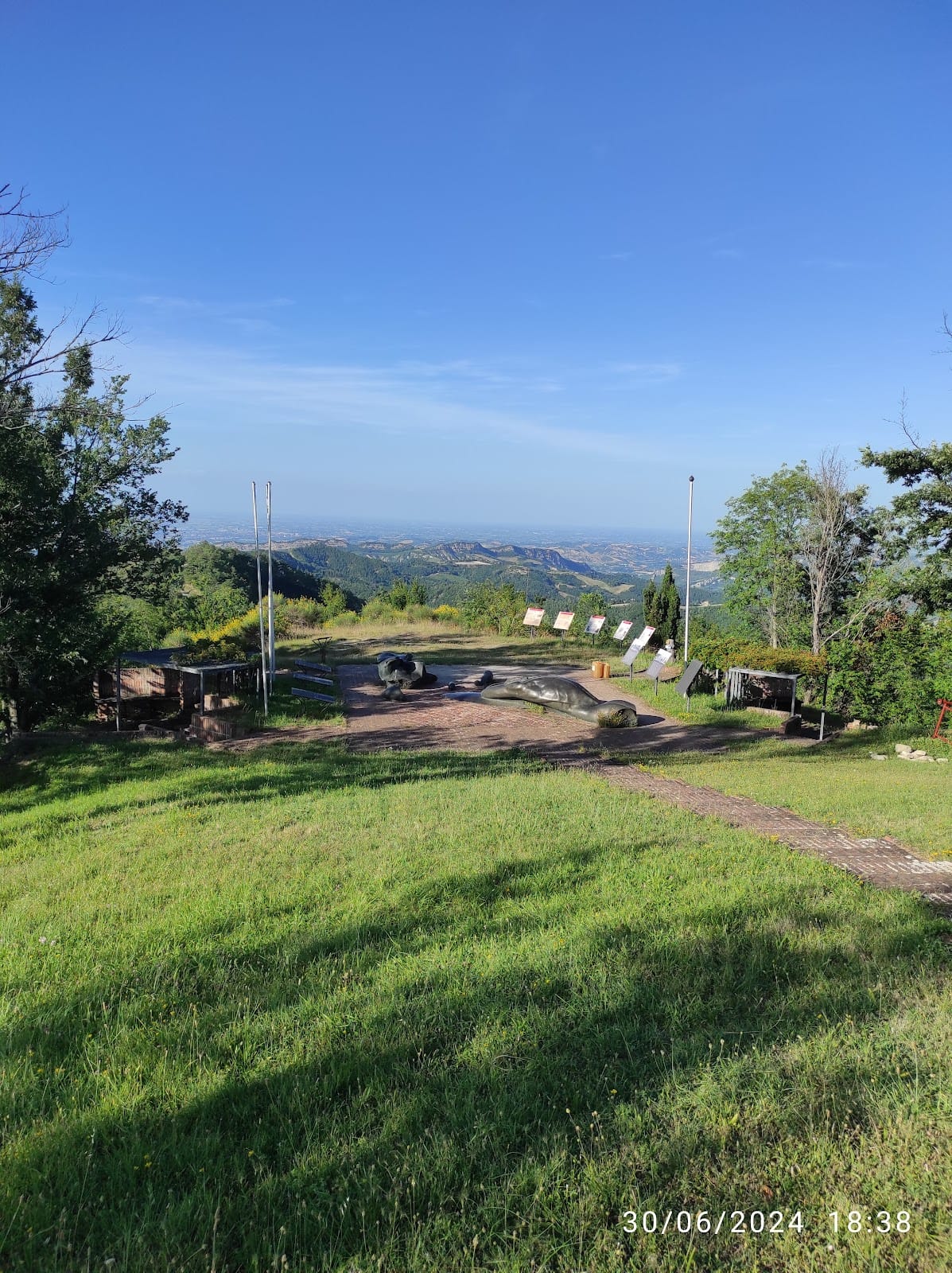
Restoration efforts took place in the 1980s and again in the early 2000s, spearheaded by local authorities. The continued preservation work included structural consolidation and installation of commemorative art, such as a bronze monument created by Aldo Rontini in 1988. This sculpture represents the biblical story of David and Goliath, symbolizing the enduring struggle for freedom and peace connected to the site’s history.
Remains
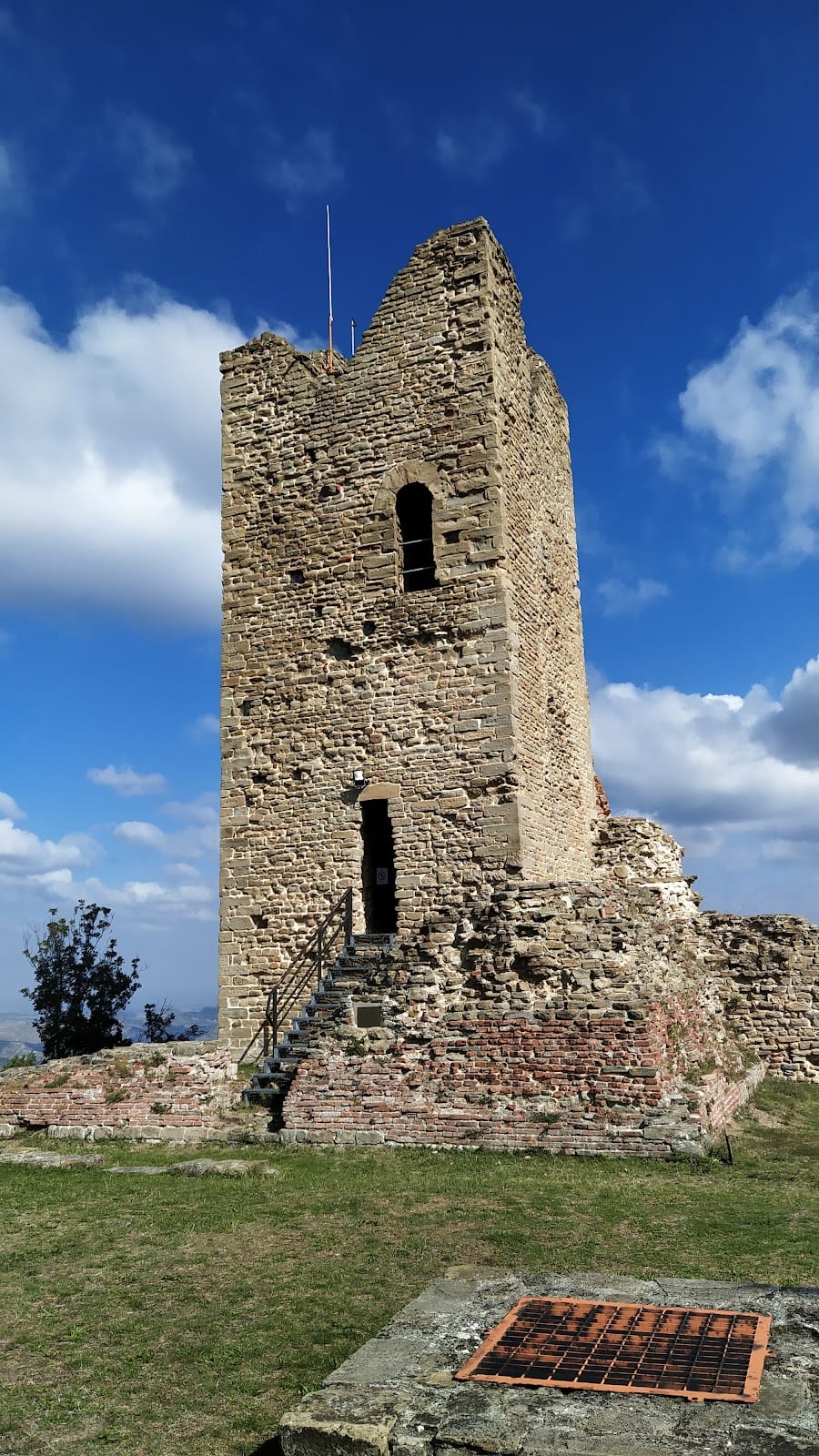
The ruins of Rocca di Monte Battaglia predominantly consist of the remains of the original Lombard defensive tower and a northern bastion constructed in the late 15th century. The tower stump represents the core of the early medieval fortification, made of durable masonry typical of the period and situated to command sweeping views over the surrounding valleys. Restoration efforts in the late 20th century stabilized and partially rebuilt the enclosing curtain walls that once surrounded the fortress, helping to preserve the site’s footprint.
The bastion on the north side, built in 1494 under the supervision of the master builder Bruchello, is still largely extant and directly adjoins the tower ruins. This feature illustrates the adaptation of the fortress to the evolving demands of military architecture in the Renaissance, providing improved artillery defenses. The bastion’s masonry exhibits the sturdy construction methods of the era and has survived better than much of the original complex.
Inside the tower, reconstruction included the installation of wooden flooring during restoration phases between 1985 and 1987. Masonry repairs addressed weathered and damaged stonework, ensuring the structural integrity of the remaining walls. Further conservation work was carried out in 2007–2008, continuing the efforts to maintain the site for posterity.
Excavations revealed a collection of 15th and 16th-century artifacts including painted majolica ceramic plates and brooches, glazed pottery fragments, lance and crossbow bolts, and counterfeit coins. These finds suggest that a clandestine mint operated at the fortress during a time it was temporarily unoccupied or lightly defended, roughly between 1510 and 1530. The discovery of weapon parts also reflects the site’s ongoing military significance during this era.
Near the ruins, a bronze monument by sculptor Aldo Rontini was installed in 1988. This artwork depicts the biblical encounter between David and Goliath, symbolizing resistance and peace. It serves as a prominent modern addition that honors the site’s historical role in local and European struggles.
Today, visitors recognize the remains as a layered record of centuries of conflict, occupation, and cultural shifts. The surviving structures stand as enduring witnesses to the site’s strategic importance from Lombard times through Renaissance warfare and into the tumult of the 20th century.
Nearby sites