Castello Villanova: A Medieval-Style Castle in Barberino di Mugello
Site at a Glance
- Rating
- 4.5
- Popularity
- Very Low
- Country
- Italy
- Primary era
- Medieval
- External website
- Open
- Eras represented
- Medieval
- Civilizations
- Republic of Florence
- Site type
- Domestic
- Remains
- Castle
On this page8 sections
History
Ubaldini possession and medieval community
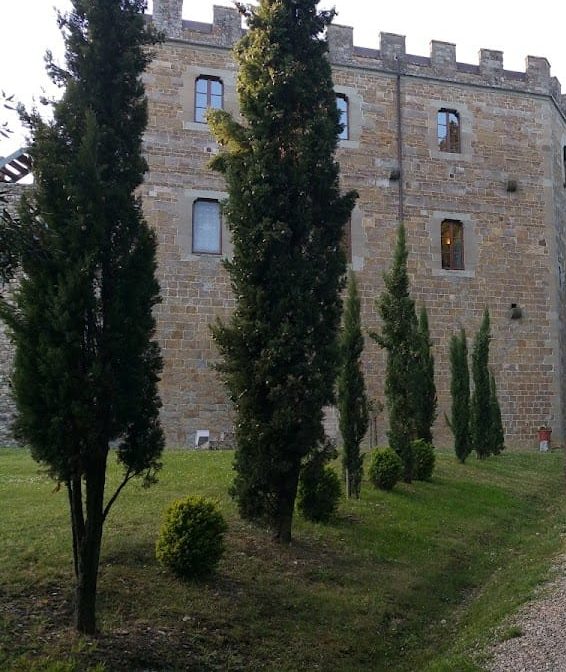
Castello Villanova is a medieval-style castle in Italy, in Barberino di Mugello, rebuilt in the nineteenth century over part of an earlier fortified settlement. Around 1250, the site belonged to the noble Ubaldini family and was known as the possession of the Ubaldini of Villanova. It later passed to the Bettini family, a branch of the Ubaldini.
The medieval settlement included the church of San Jacopo, meaning Saint James, and a religious confraternity, a lay association formed around shared devotional and charitable activities. Their presence indicates that Villanova served a community of some importance. San Jacopo was rebuilt in 1334 under the patronage of the noble Cattani family.
Community and church administration
Villanova also had a place in local administration. The 1563 statute of the Barberino di Mugello district records that one councillor of the Barberino di Mugello Council came from the community. The council regulated the community’s economic transactions.
In 1565, the archbishop of Florence, a senior bishop with authority over an archdiocese, annexed San Jacopo to the church of Santa Maria a Colle Barucci in the ecclesiastical district of San Giovanni a Petrojo. An ecclesiastical district was a territorial unit within church administration.
Integration into Villa Le Maschere
In 1611, Marquis Ottavio Gerini purchased the church and castle. A marquis was a hereditary rank of European nobility traditionally below a duke and above a count. Gerini incorporated Villanova into the estate and park of Villa Le Maschere, described as one of the largest country villas in the Mugello.
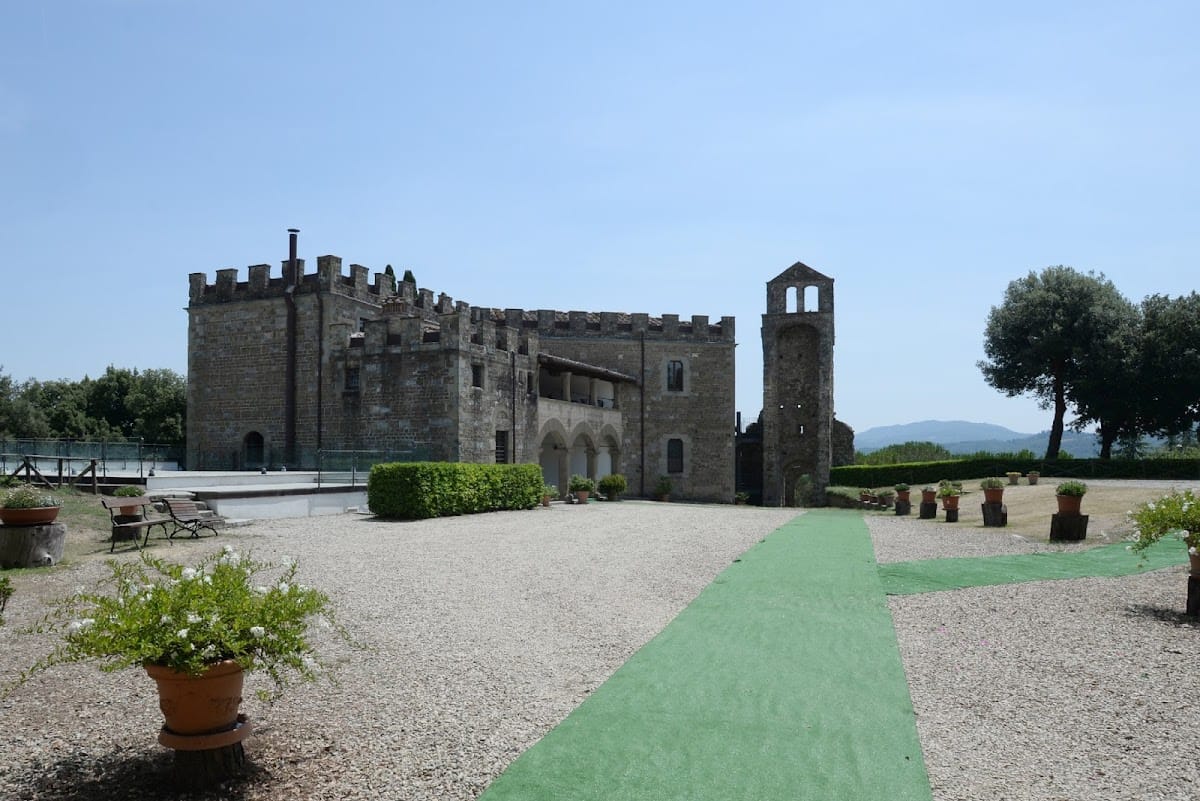
The present castle was probably built during the nineteenth century over part of the earlier ruins. Carlo Gerini reconstructed it in a medieval architectural style and adapted it for use as a school and convent. The tower, gate, and staircase received their first restoration in 1990, an intervention intended to prevent further deterioration and probable loss. The castle and park later became the subject of a redevelopment plan for use as a restaurant and venue for ceremonies and banquets, and the property is listed as a hotel-restaurant.
Remains
Earlier fortified settlement
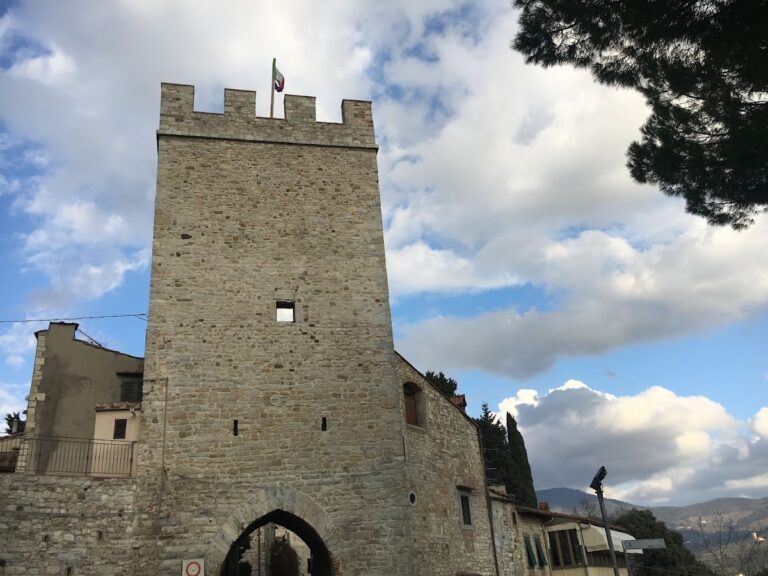
The earlier settlement was represented in a survey made between 1582 and 1586 as a small circuit of walls. Its entrance had a gate surmounted by a tower, and an additional building stood within the fortified enclosure. The church of San Jacopo and a religious confraternity formed part of this medieval complex, placing religious and communal functions inside the defended settlement.
Church of San Jacopo
San Jacopo is the associated church rebuilt in 1334 under Cattani family patronage. It stood within the castle’s former estate and remained connected to Villanova’s ecclesiastical history after its incorporation in 1565 into Santa Maria a Colle Barucci in the district of San Giovanni a Petrojo.
Nineteenth-century castle and restored elements
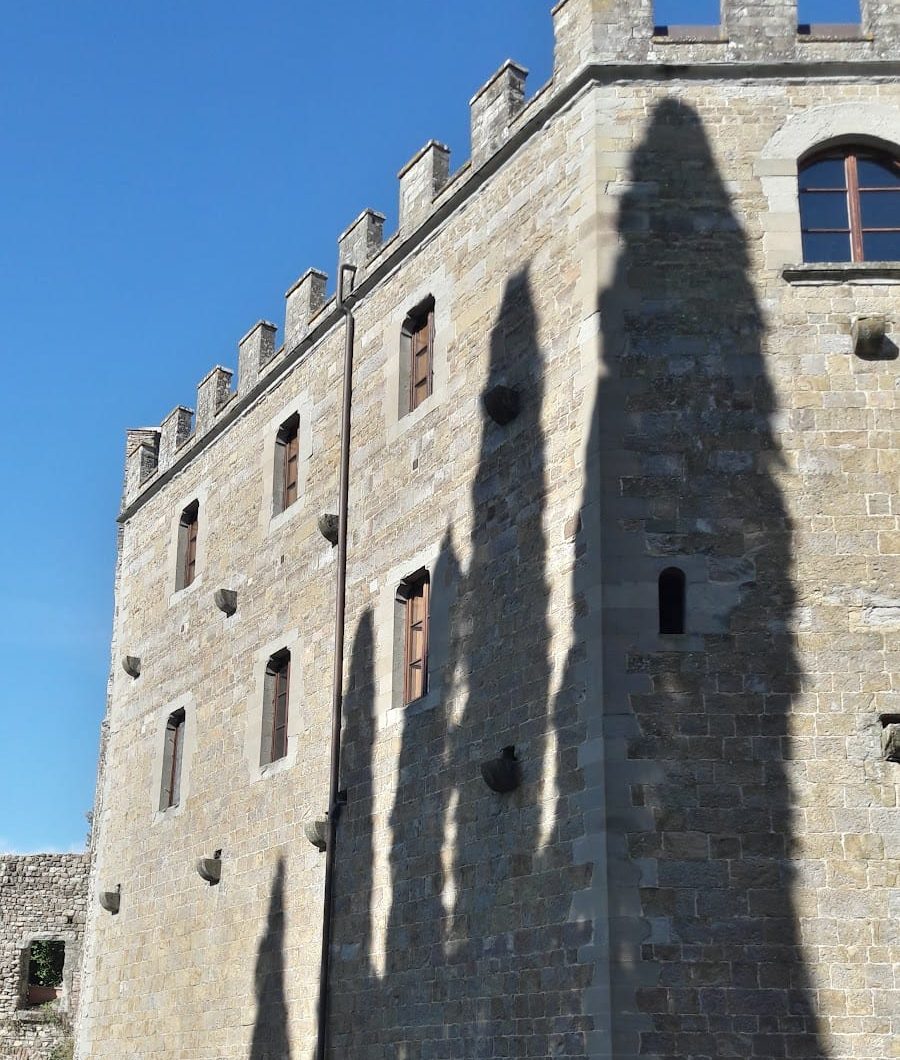
The surviving castle occupies part of the earlier ruins and presents a medieval architectural style created during its nineteenth-century reconstruction. Its restored elements include the tower, the gate, and the staircase. The castle forms part of the setting of the Villa Le Maschere estate and park, linking the reconstructed building with the earlier fortified settlement and the later country-villa landscape.