Rivieren Castle: A Medieval Feudal Estate in Ganshoren, Belgium
Visitor Information
Google Rating: 4.2
Popularity: Low
Official Website: www.chateaurivieren.be
Country: Belgium
Civilization: Early Modern, Medieval European, Modern
Site type: Military
Remains: Castle
History
Rivieren Castle is situated in Ganshoren, northwest of Brussels, Belgium. Its origins trace back to the 12th or 13th century, built during the medieval period by the lords of Rivieren d’Aerschot. The castle’s name reflects this noble family, who established the estate as a feudal stronghold in the region.
In 1638, the estate was elevated to the status of a barony, marking its growing importance. Later, in 1659, François II de Kinschot, who served as Treasurer General of the Spanish Netherlands and finance minister to Archdukes Albert and Isabella, raised the domain to a county known as Saint-Pierre Jette. Under his ownership, the castle transitioned from a defensive fortress to a pleasure estate, reflecting changing tastes and functions.
The property passed to Gérard-François de Villegas, François II de Kinschot’s grandson, who inherited the entire estate. During the 18th century, the castle fell into neglect and appeared nearly ruined. However, in the 19th century, Ulric, Count de Villegas de Saint-Pierre Jette, undertook significant renovations to restore the property.
The castle endured several fires, causing damage that required restoration efforts in the early 20th century. Elisabeth de Botmiliau, widow of Albert de Villegas, was the last resident châtelaine until her death in 1977. Afterward, the estate was sold to a Swiss company that restored it for use as a venue for events and seminars.
In 1983, the castle and its surrounding 10-hectare park, now known as Parc Albert I, were officially designated as protected heritage sites. This recognition highlighted the castle as the only remaining medieval feudal-style structure within the Brussels-Capital Region. Since 1998, the castle has not been regularly open to the public but is occasionally accessible during special heritage events.
Remains
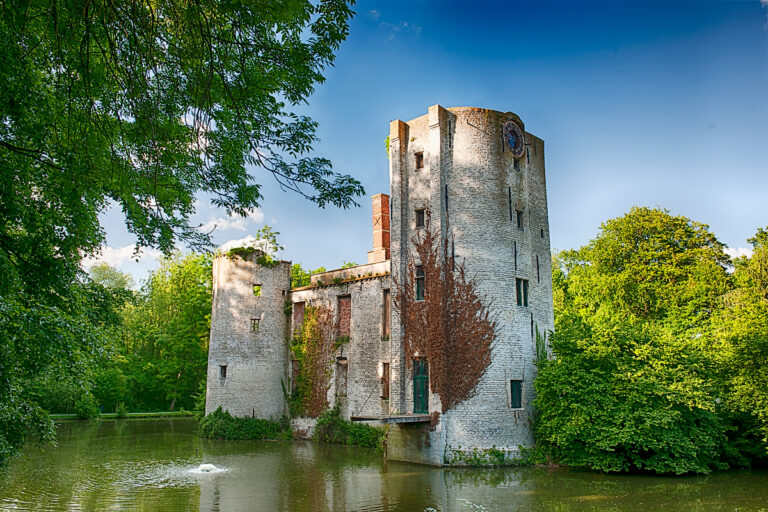
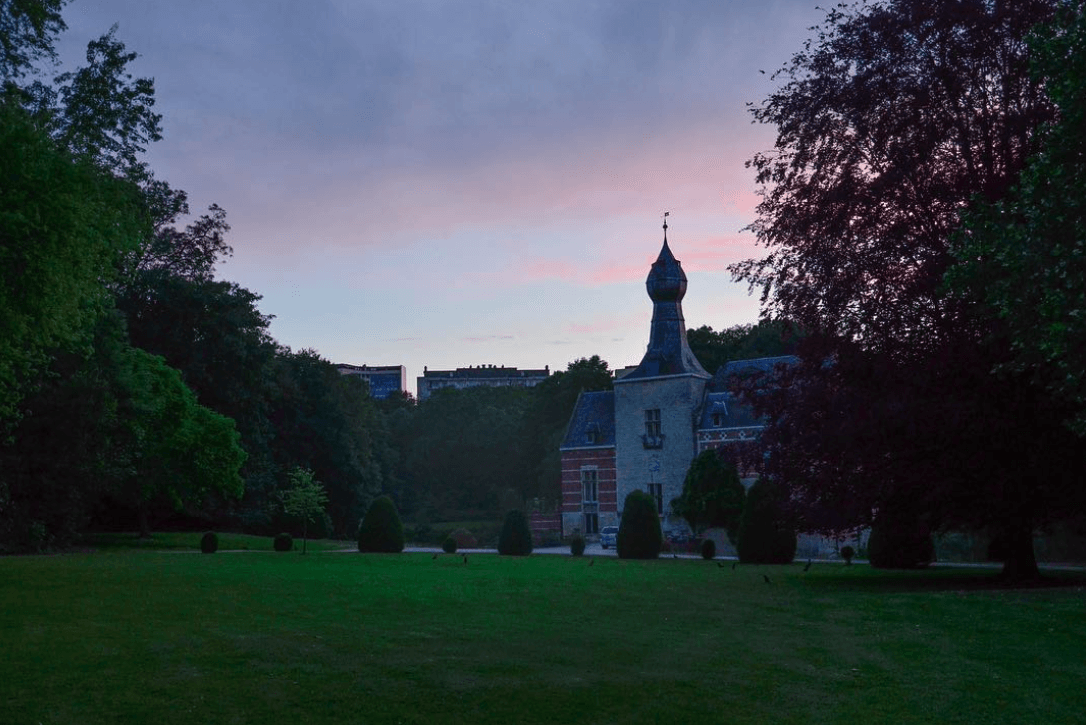
The castle complex centers around a 13th-century square donjon, or fortified tower, built entirely of stone. This tower is the sole surviving element of the original medieval fortress and represents the earliest phase of construction on the site.
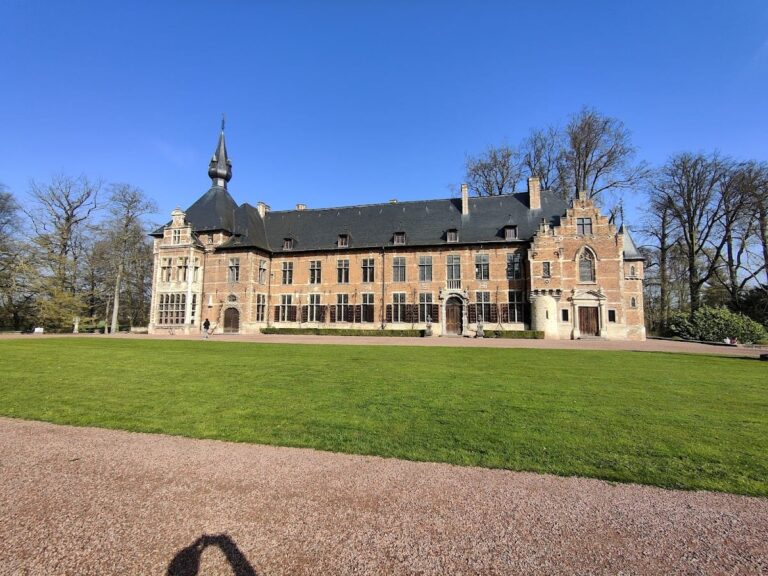
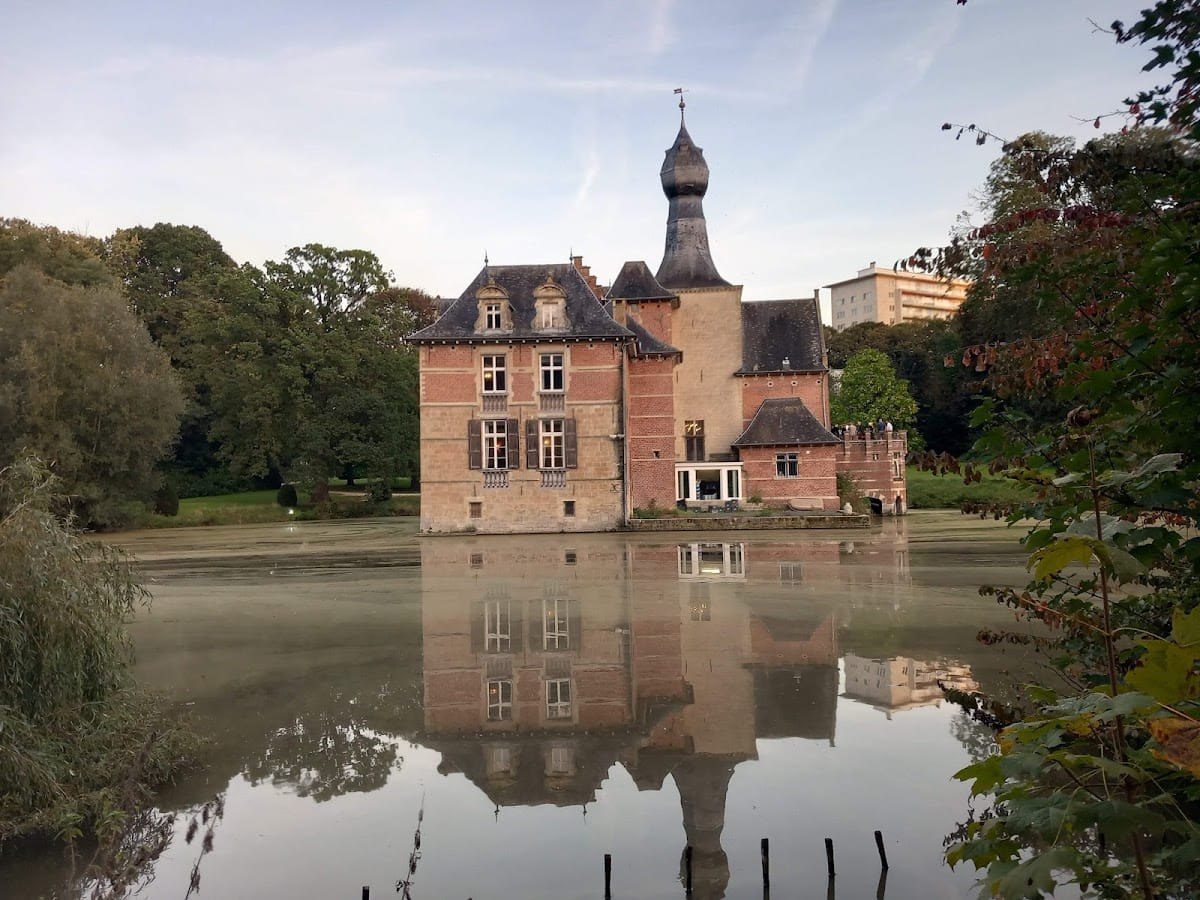
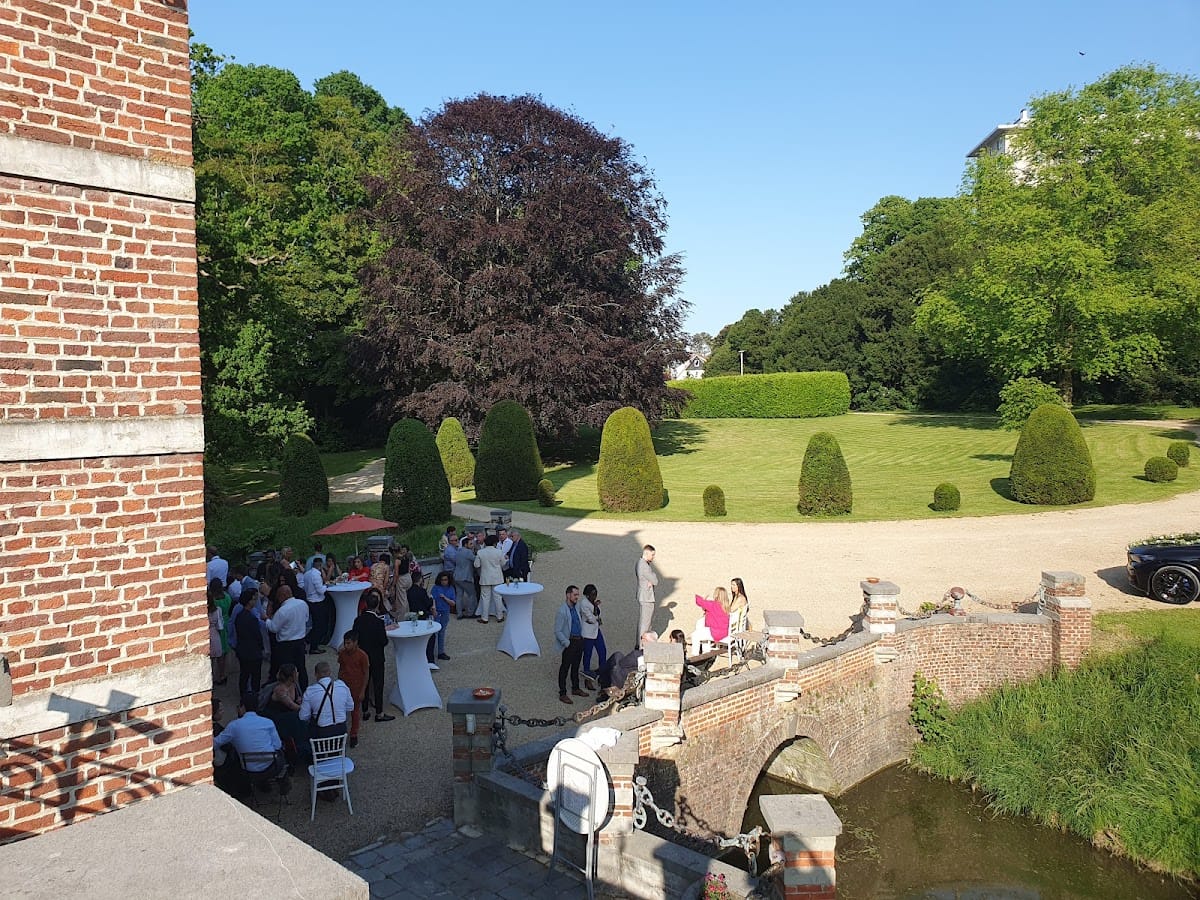
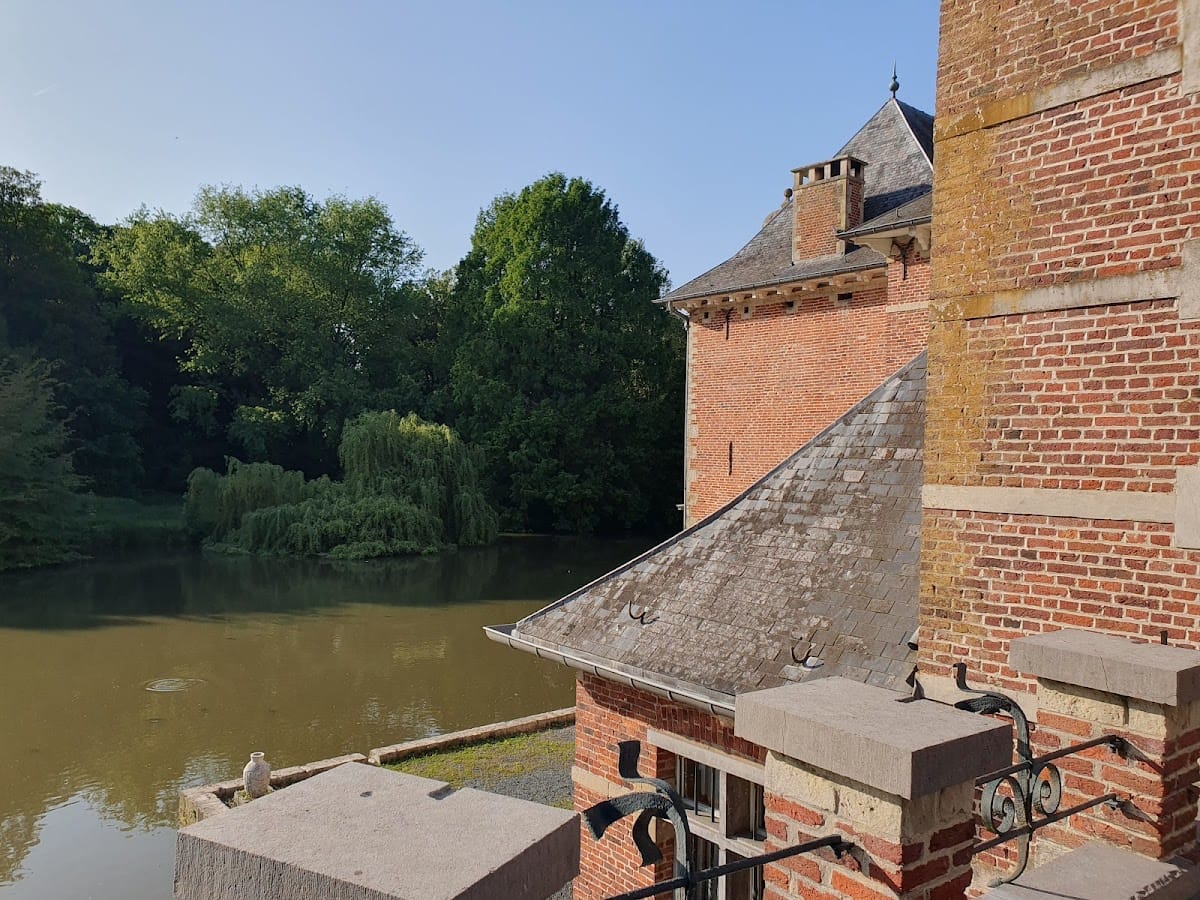
Later additions to the castle, dating from the 15th to the 19th centuries, are primarily constructed of brick. These sections are marked by stone bands and quoins—cornerstones that visually separate different parts of the building—indicating various phases of expansion and renovation.
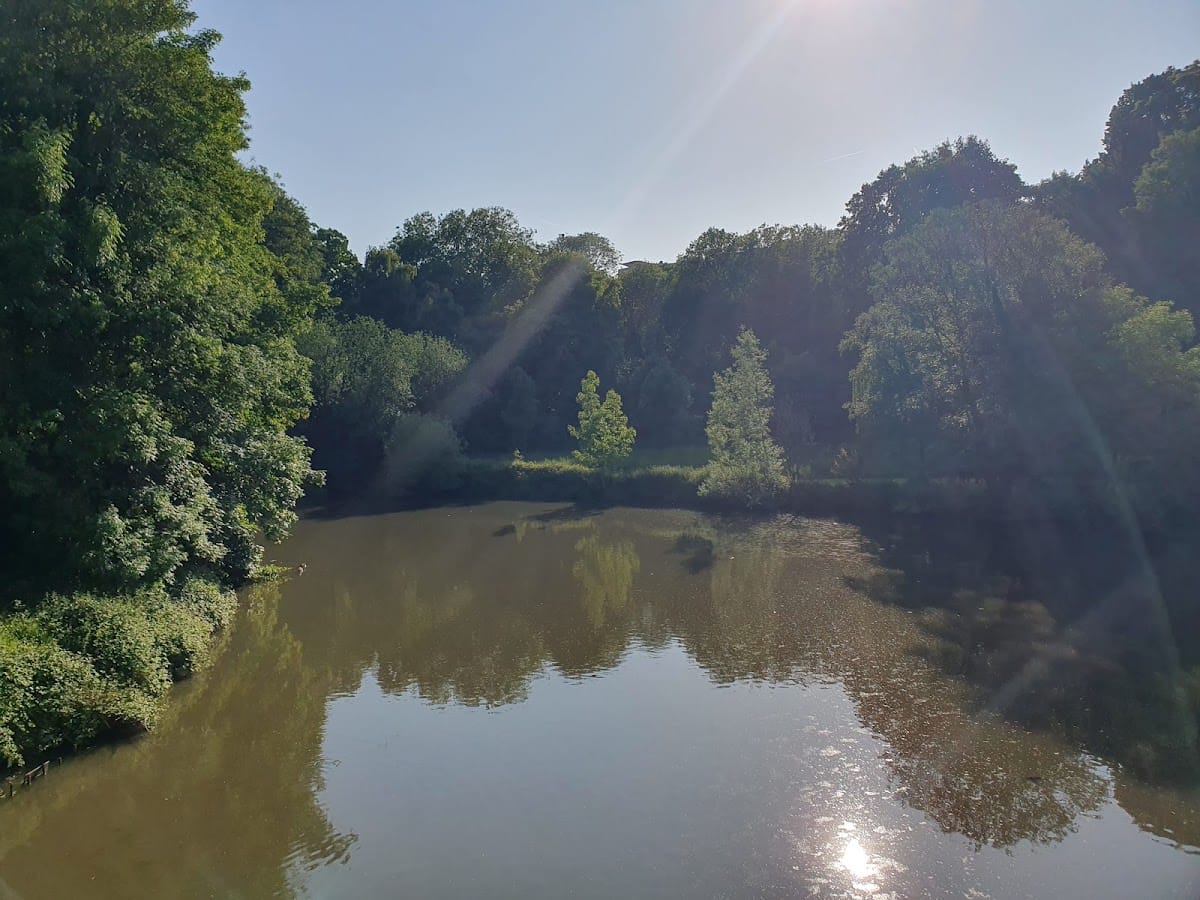
Surrounding the castle is a pond, a remnant of the original medieval moats that once provided defense. The estate formerly featured a drawbridge, which has since been removed, altering the original access to the castle.
The entire property lies within a 10-hectare park called Parc Albert I. This landscaped area includes several protected trees and was restored in the late 20th century to complement the castle’s historic character.
The castle stands approximately 40 meters above sea level. Its preservation is in good condition due to multiple restoration campaigns, especially following fire damage in the early 1900s and extensive renovations by the Swiss owners after 1977.
Today, the site is occasionally used for cultural and social events, reflecting its evolution from a medieval fortress to a leisure and representative estate.
Nearby sites