Groot-Bijgaarden Castle: A Moated Flemish Renaissance Castle

Site at a Glance
- Rating
- 4.5
- Popularity
- Medium
- Country
- Belgium
- Primary era
- Early Modern
- External website
- Open
- Eras represented
- Medieval, Early Modern
- Civilizations
- Duchy of Brabant, Holy Roman Empire
- Site type
- Military
- Remains
- Castle
On this page12 sections
History
Groot-Bijgaarden Castle is a 12th-century castle in Dilbeek, Belgium, developed from a medieval fortification into a moated residence in the Flemish Renaissance style. The domain came from St. Bavo’s Abbey to Amelricus, also called Almaric, de Bigard, the first known lord of Bigard, who appears in records in 1110.
The lords of Bijgaarden
Amelricus’s successor, Arnulfus III, probably commissioned the first castle in the early 12th century. It was a motte castle, a fortified site built around a raised artificial mound, defensive ditches, and a strongpoint. The castle protected the southern lands of the lords of Bijgaarden, who also held a second domain and castle at Kobbegem.
The Bijgaarden family ended in the early 14th century through marriages involving Floris and Katharina van Bijgaarden, followed by Katharina’s marriage to Willem II Veele, known as Rongman. Their children divided the possessions in 1347, after which the lordship passed to another house.
Medieval and early modern upheavals
Willem IV Rongman, lord of Bijgaard and an alderman of Brussels, the city’s governing magistrate, in 1418, became captain of Brussels under Philip the Good. His task was to suppress the crafts rebellion of 1421 and 1422. He swore the oath in April 1422 and received the Hôtel Ostrevant on the Place de la Monnaie. John IV, Duke of Brabant, dismissed him on 21 December 1423. Willem then returned the city-gate keys, his appointment deed, and the grant deed for the building to the city magistrate.
Willem Estor acquired the castle and lordship of Bijgaard in 1486. A member of an old Brussels family and an alderman in 1475, he bore the Berthout coat of arms. His grandson Jan Estor and Jan’s mother, Margriete van Baenst, became interested in Protestantism under the influence of their confidant Antonio de Laymant.
Authorities began scrutinizing Jan and Margriete in spring 1546. At Christmas, a dispute over improper conduct in the parish church led bailiff Guillaume le Tourneur, an official who enforced authority and administered justice, to besiege them in the castle with 30 soldiers. After 36 hours, the keep caught fire and both surrendered. They were executed in January 1548 in the courtyard of Vilvoorde Castle, and their possessions were confiscated.
Gaspard II Schetz, a financier and lord of Grobbendonk, bought Groot-Bijgaarden on 14 February 1549 for 17,800 pounds. Six years later, he sold it to Laurens Longin of Lembeek.
The Booischot transformation
Count Ferdinand van Booischot acquired the castle in 1634 and reshaped it over the next 15 years into much of its present form. The work included a chapel added in 1640. In the 18th century, the property passed to his great-granddaughter Helena van Booischot, who married Charles Ferdinand, Count of Königsegg-Rothenfels and interim regent of the Netherlands. For their marriage, Empress Maria Theresa elevated the lordship to a marquisate, a territorial lordship held by a marquis or marquise, under the name Booischot. After Charles Ferdinand, the property was gradually divided.
Restoration and protection
By 1902, Groot-Bijgaarden Castle was severely dilapidated. Raymond Pelgrims de Bigard then began a restoration lasting approximately 30 years, and his descendants continued the work. The castle is associated with the Pelgrims de Bigard family, identified as its current owner, while Xavier Pelgrims de Bigard is identified as its resident.
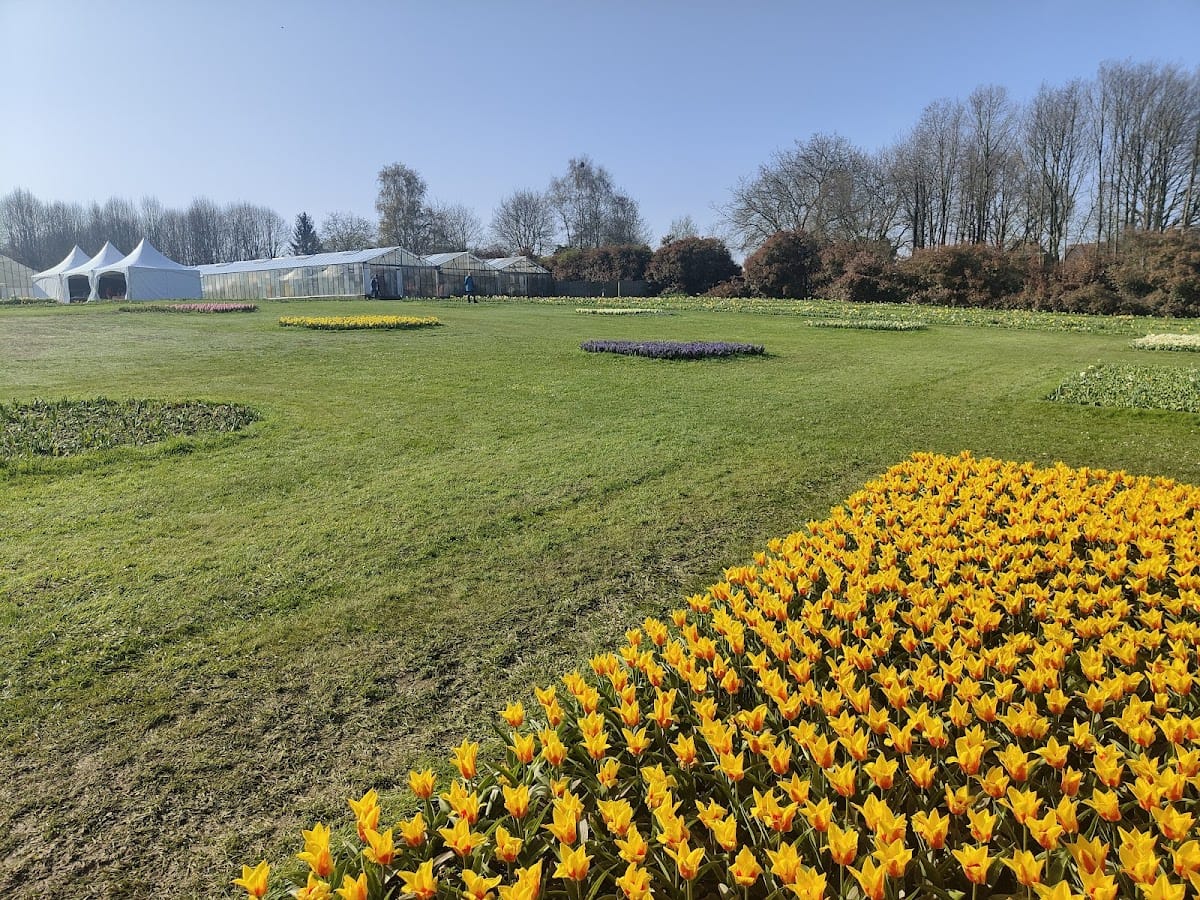
The castle was protected as a monument on 8 March 1940, and its park was classified on 20 October 1947. It is also listed as a protected monument in the Flemish heritage inventory. Since 2003, the park has hosted an annual international flower exhibition centered on tulips.
Remains
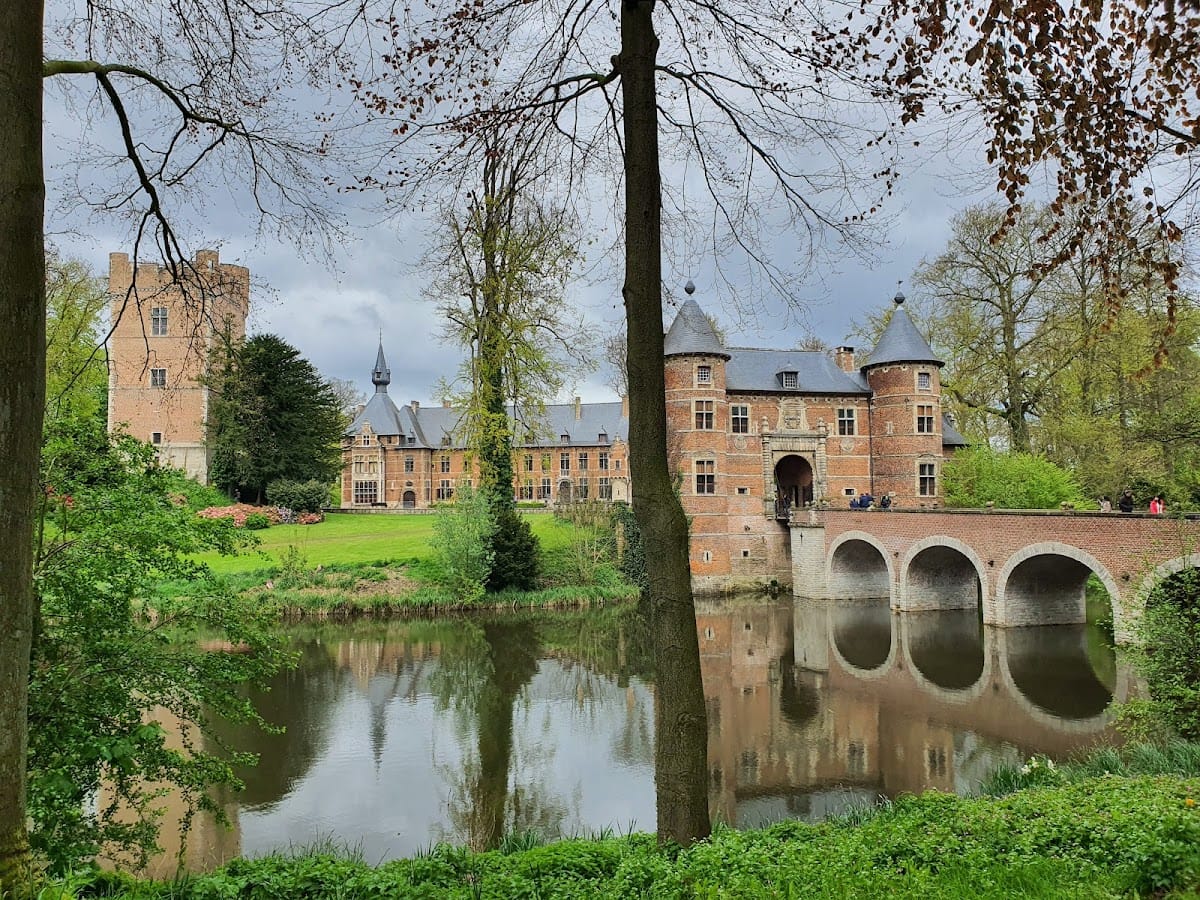
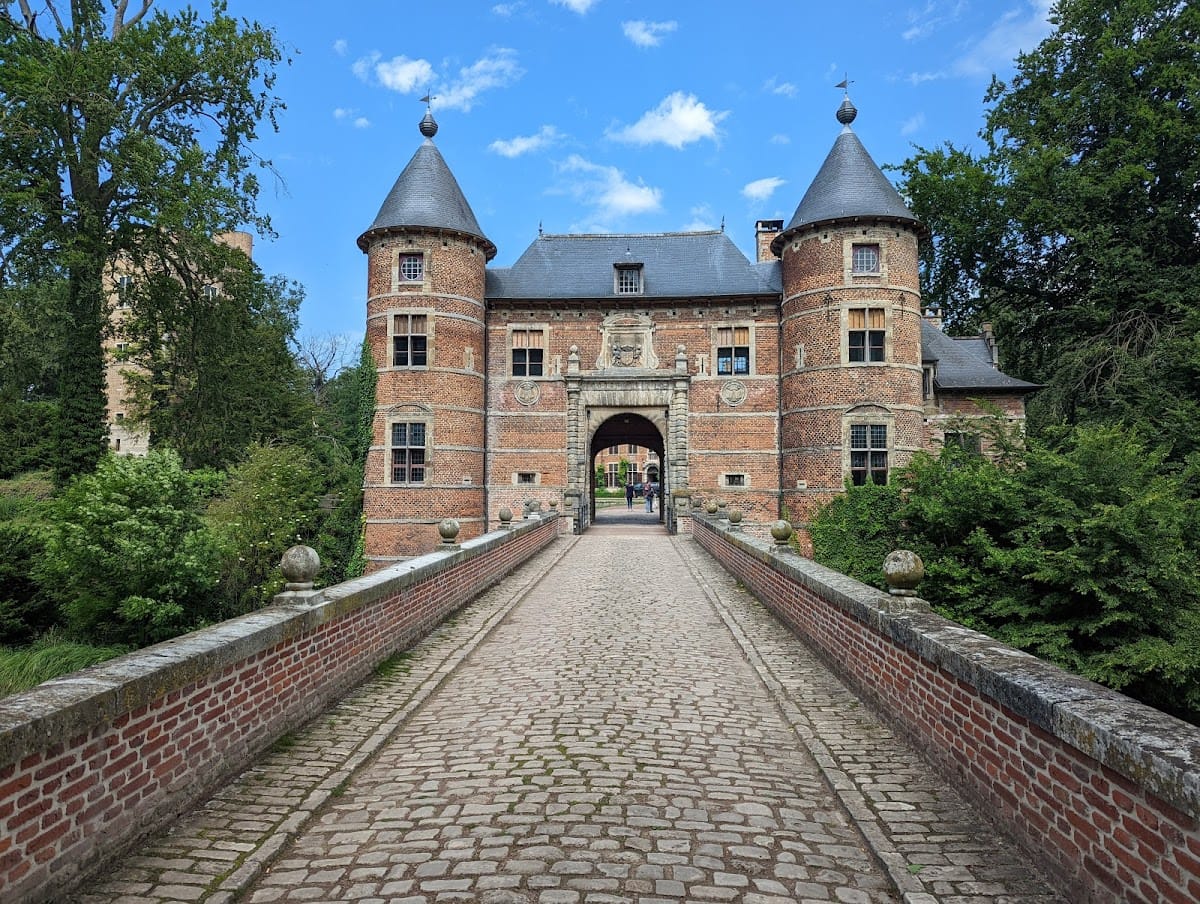
Groot-Bijgaarden Castle is a moated castle built of brick and sandstone in the Flemish Renaissance style, which combines Renaissance forms with local brick construction and northern European details. A broad water-filled moat surrounds the buildings. Access crosses a five-arched bridge leading to the drawbridge, while two 17th-century heraldic lion sculptures mark the bridge’s head.
Castle buildings and defenses
Gatehouse and keep
The central section of the entrance gatehouse dates from the 14th century. To its left stands a four-storey keep, the castle’s principal fortified tower, built in 1347 and rising approximately 30 metres. Together, these elements preserve the defensive core around which the later residence developed.
Residential building
The main residential building has a one-storey body of pink brick. Its mullioned windows are framed by white-stone entablatures, and the roof is covered with blue slate. These materials and details form part of the castle’s Flemish Renaissance appearance.
Chapel and park
Chapel
The chapel was attached to the castle’s right wing in 1640. Inside are two obits, commemorative memorials recording deaths and intended to support remembrance and prayers. One commemorates Ferdinand de Booischot and is dated 1649. The other commemorates Charles Ferdinand of Königsegg-Rothenfels and bears the inscription “Vienna, 19 December 1759.”
Park
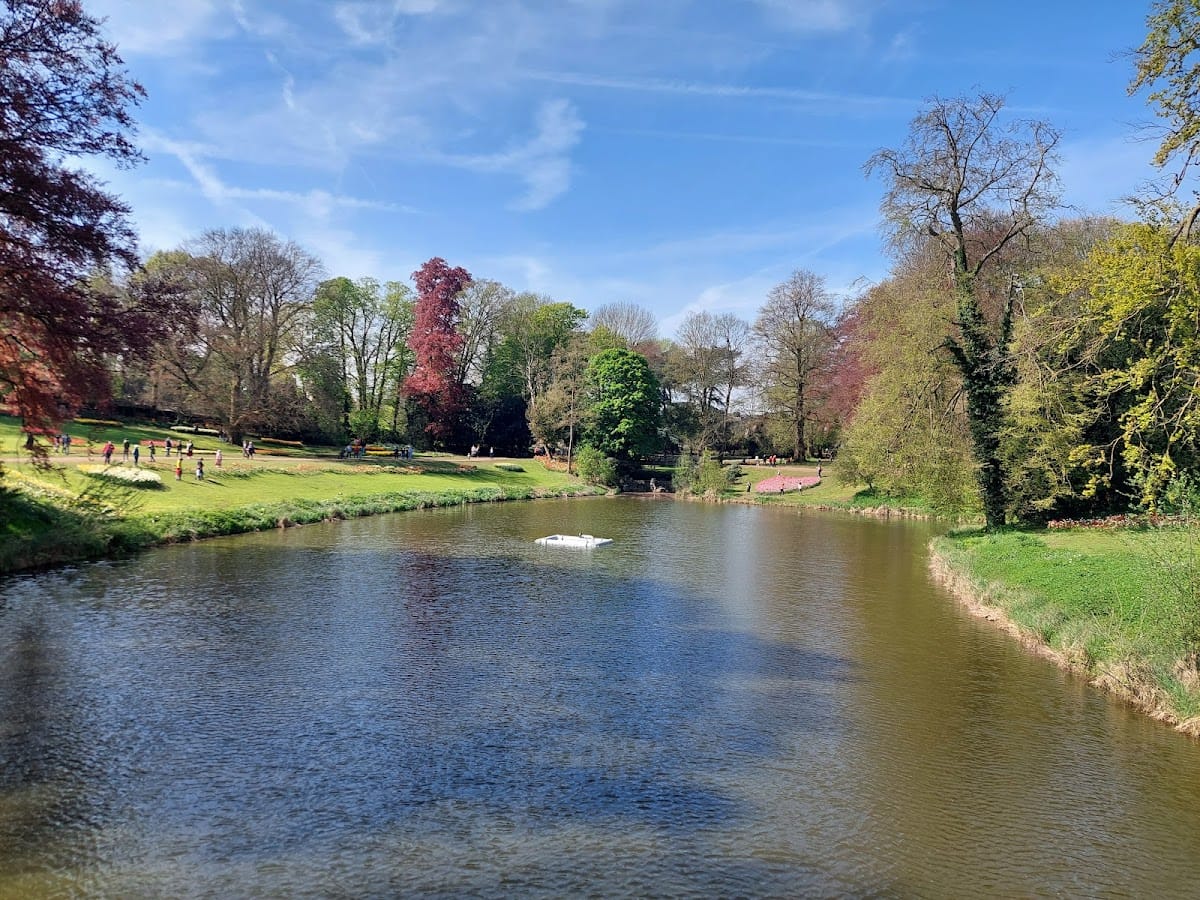
Garden architect Louis Fuchs laid out the 14-hectare park beside the castle at the beginning of the 20th century. Its tulip exhibition includes more than 300 varieties, among them early, mid-season, and late tulips, as well as Triumph, botanical, lily-flowered, viridiflora, parrot, and multiflora types. More than one million bulbs are planted, including numbered new varieties awaiting formal names.