Protaton: The Main Church of Karyes on Mount Athos
Site at a Glance
- Popularity
- Medium
- Country
- Greece
- Primary era
- Medieval
- Eras represented
- Medieval
- Civilizations
- Byzantine
- Site type
- Religious
- Remains
- Church
On this page13 sections
History
Foundation and Athonite leadership
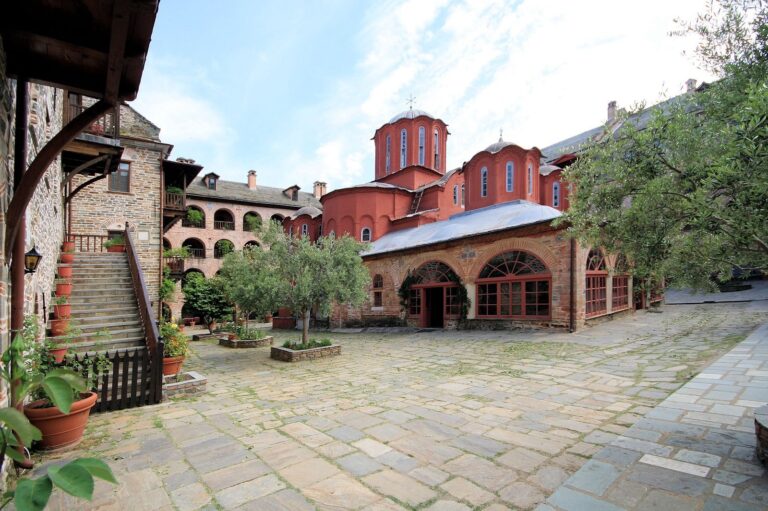
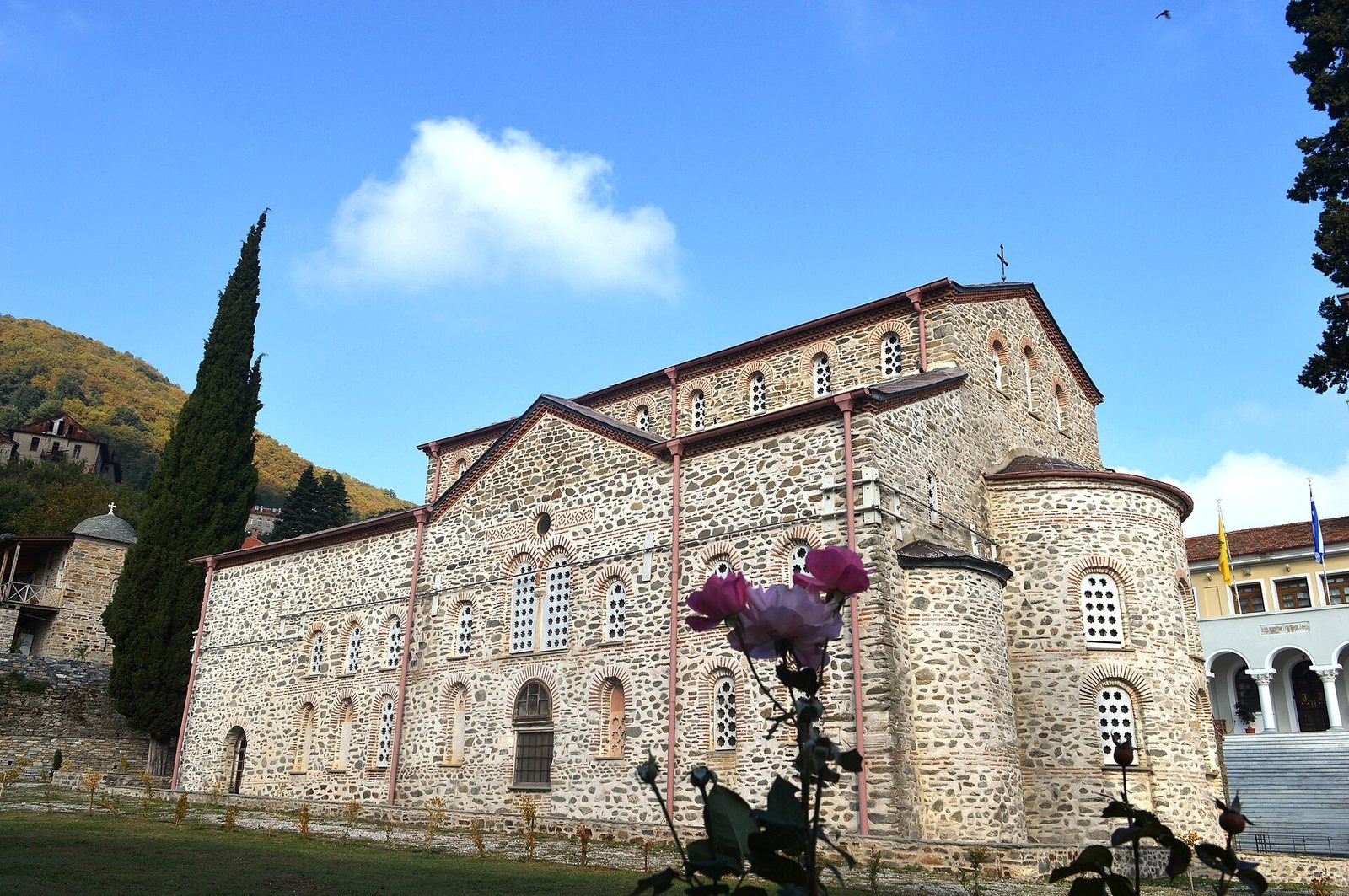
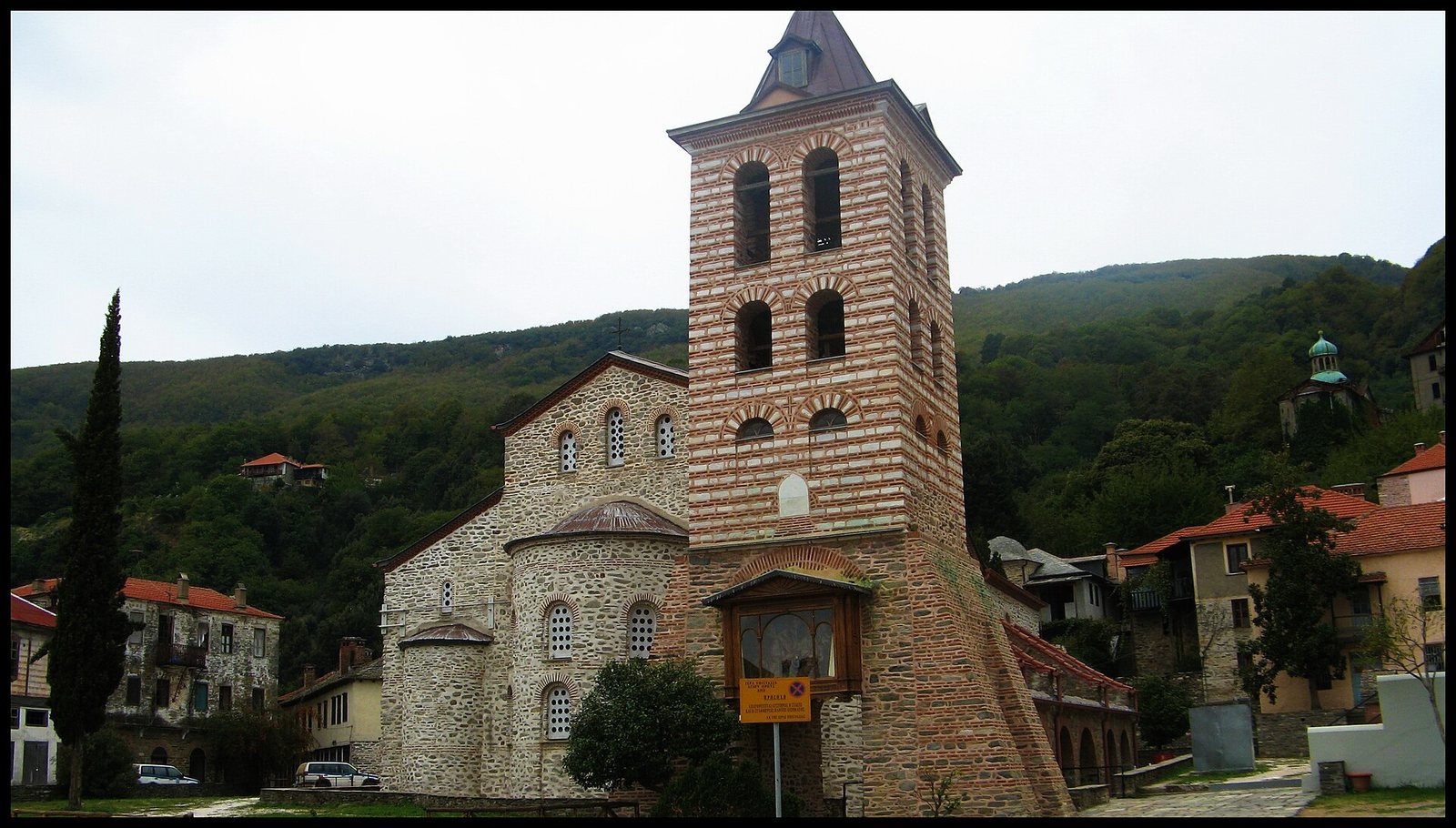
The Protaton, also known as the Church of the Dormition of the Theotokos, is the main church of Karyes, Greece, the administrative center of Mount Athos, an autonomous monastic territory. It serves as the ecclesiastical seat of the Protos, the senior monastic leader, and the seat of the Protaton, the community’s governing body. Dedicated to the Dormition of the Theotokos, a title for Mary as the mother of Jesus, the church commemorates her death; its feast is celebrated on August 15. It belongs to the Eastern Orthodox Church under the Ecumenical Patriarchate, the historic patriarchal see of Constantinople.
Tradition attributes the church’s foundation in AD 335 to Constantine the Great, a Roman emperor, although Athonite monasticism had not yet developed. The original church form is dated to the early tenth century, before the Great Lavra, a major monastery on Mount Athos, was completed in 963. Repairs and renovation followed during the tenth century, including an important repair before the middle of that century under Athanasius the Athonite. Later repairs and reconstructions also shaped the church. Protaton is the oldest katholikon, or principal monastery church, on Mount Athos and the peninsula’s oldest cathedral.
Medieval development
The church’s wall paintings were probably made during one of the patriarchates of Athanasius I of Constantinople, either in 1289–1293 or 1305–1310. They belong to the period when Protaton served as a major religious and administrative center for the Athonite community.
Remains
Church plan and interior
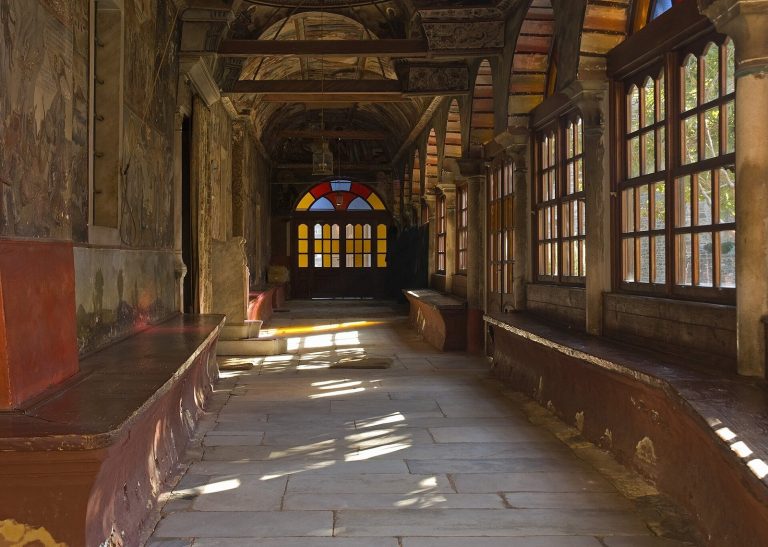
Protaton is a three-aisled basilica, with a central nave flanked by two side aisles and a transept crossing the main axis. Monumental frescoes cover the walls in four overlapping zones. Full-length ancestors, prophets, and military saints occupy the upper and lower bands. The two wider middle bands present Gospel episodes and scenes from the life of the Virgin without dividing lines, with evangelists placed among them. Athonite saints feature mainly in the altar area. Two large icon stands before the sanctuary bear enthroned images of the Virgin and Christ.
Frescoes and painted images
The frescoes are regarded as a major achievement of Athonite painting. An eighteenth-century painting manual, the Hermeneia, associated with Dionysius of Fourna, attributes them to Manuel Panselinos of Thessaloniki. Their style has been compared with the Church of St Demetrius and the Chapel of St Euthymius in Thessaloniki.
Christ Pantocrator and Theodore Tyron
A fresco pairs Christ Pantocrator, an image of Christ as ruler of all, with St Theodore Tyron. The image of Christ is regarded as one of the most imposing and important depictions of him from its period.
Military saints
In a paired image, St Mercury stands on the left and Artemius of Antioch on the right. Artemius holds a sword, bow, and shield and wears a Scythian helmet associated with his homeland. His short beard indicates youth, while his rich clothing marks high rank. His face resembles Christ’s, a likeness noted by Dionysius of Fourna in the Hermeneia. In the image of Demetrius of Thessaloniki, the curve of the saint’s head and the treatment of his hair became models for later icons. His angled spear and the arrows in his other hand also became a standard way to depict him. The fresco of the Great Martyr Eustathius presents him as an authoritative and self-controlled general; his armor and the spear in his right hand identify him as a military figure.
John the Baptist and Christ Anapeson
The image of John the Baptist is a key work of the Macedonian School, a tradition of Byzantine painting, and influenced later icons of the saint. A fresco of Christ Anapeson, or the Sleeping Christ, is thought to be the earliest known depiction of this subject within that school. The later painter Theophanes the Cretan repeated and developed the theme.
The Presentation of the Virgin and Photina
The fresco of the Presentation of the Virgin gives the scene a lively, realistic, and emotional treatment. Women at the center are prominent secondary figures, and the composition is unusually bold for its time. The image of Photina, identified in Christian tradition with the Samaritan woman in the Gospel of John, emphasizes her grace in contrast with the austere forms of the saints, hermits, and monks depicted by Panselinos.
Icons, relics, and records
Icons and relics
The church is especially associated with the Axion Estin icon of the Virgin, whose name means ‘It is truly meet’ after a hymn. It is also noted for its icons, paintings, and relics. Two icons depicting the Assembly of Athonite Saints were painted by Makarios Galatistis in 1849 and 1859. Another icon, from 1770, shows Constantine the Great with bishops who attended the First Ecumenical Council at Nicaea in AD 325. They hold the Nicene Creed, the statement of Christian belief associated with that council.
Manuscripts and historical documents
Protaton preserves important manuscripts and historical documents, including Mount Athos’s typika, formal monastic rules or charters setting out institutional regulations and practice.