Palau-castell de Betxí: A Historic Fortified Residence in Spain
Visitor Information
Google Rating: 4.2
Popularity: Low
Official Website: www.betxi.es
Country: Spain
Civilization: Early Modern, Medieval European
Site type: Domestic
Remains: Palace
History
The Palau-castell de Betxí is located in the municipality of Betxí, Spain. This fortified residence was built during the late 16th century by Christian inhabitants, on the site of an earlier medieval fortress that dates back to at least the mid-14th century. The palace served as the home for local nobility, integrating both defensive and residential functions.
During the medieval period, the location hosted a fortress featuring a tower, which was part of the defensive system of the area. Archaeological evidence reveals that the site had importance even earlier, with remains associated with an Islamic necropolis dating between the 11th and 13th centuries, indicating the presence of Muslim communities prior to the Christian reconquest.
In the 16th century, the fortress was transformed into a more comfortable and luxurious palace that combined Gothic elements with the emerging Renaissance architectural styles of the time. This renovation coincided with a period when local noble families sought to display their status through impressive urban residences. Over subsequent centuries, the building underwent various modifications by different owners, which in some cases altered or diminished the original Renaissance characteristics.
By the 19th century, the palace had remained largely intact, but later changes and new constructions attached to the original structure led to deterioration. Recognizing its historical and cultural value, authorities declared the building a Cultural Heritage Site in 1997. After acquisition by the Betxí town council in 2003, efforts included the demolition of adjacent corrals in 2007, which uncovered one of the building’s original corner towers, shedding light on its medieval military past.
Remains
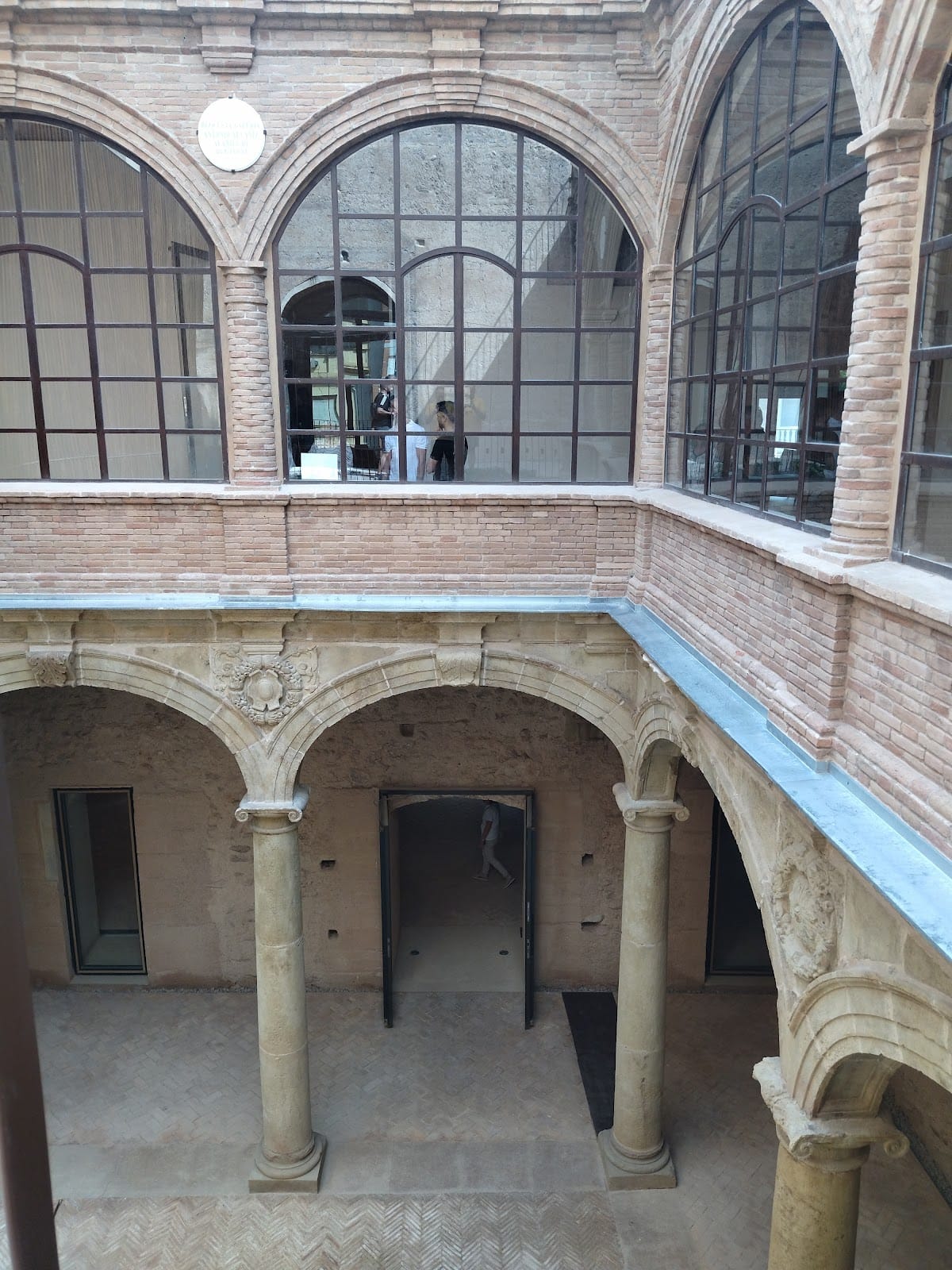
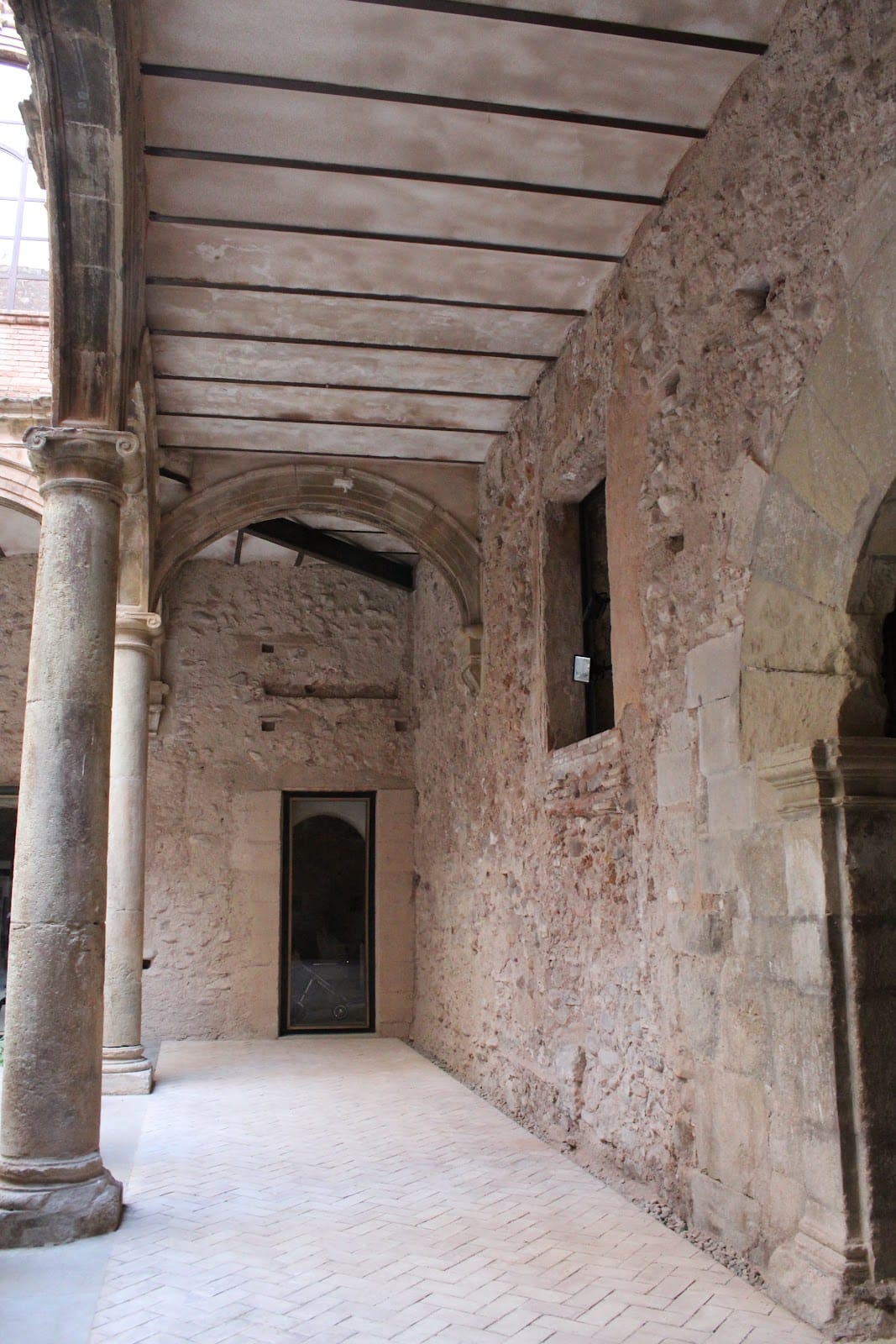
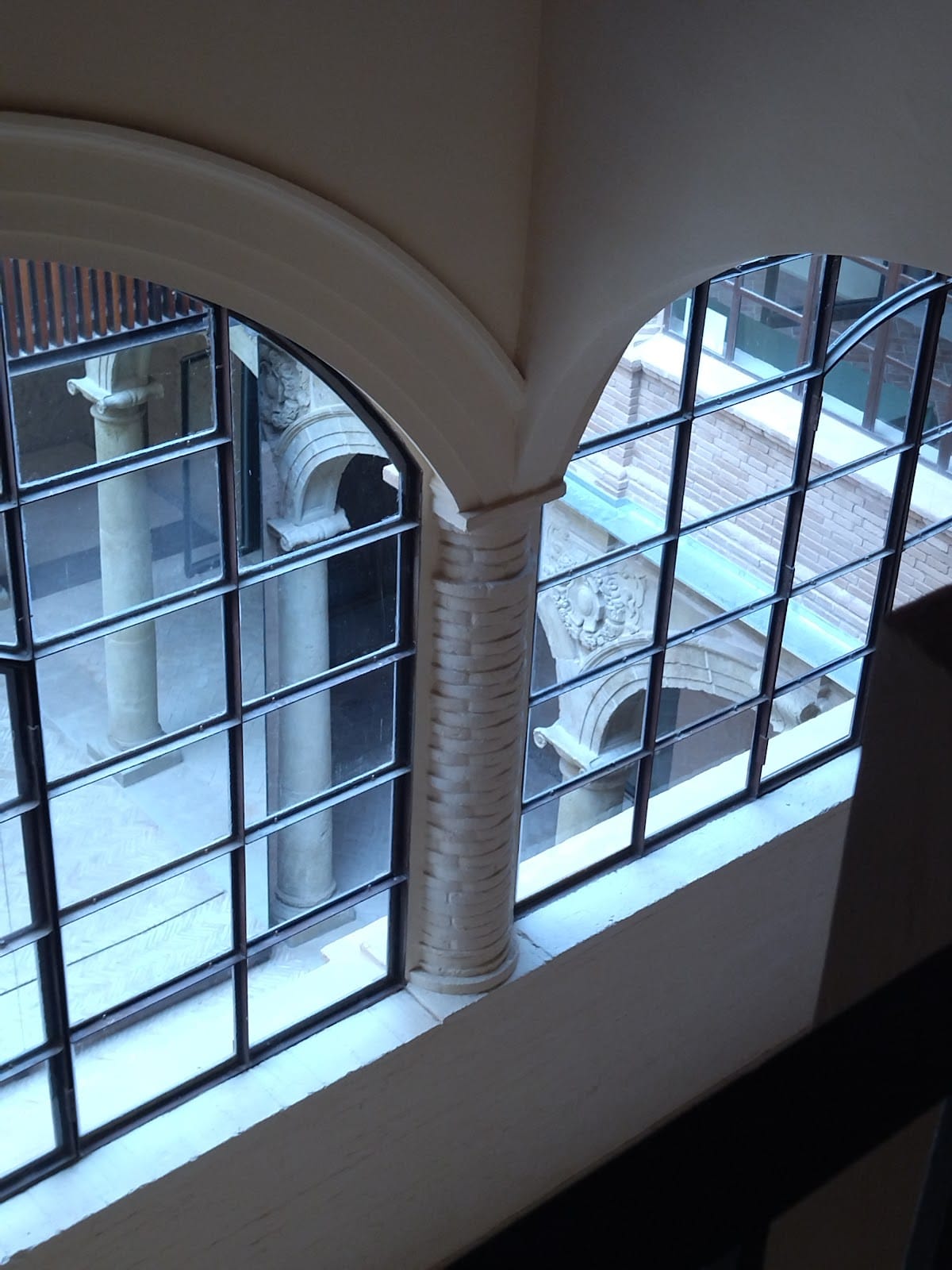
The Palau-castell de Betxí is built around a rectangular plan that centers on a courtyard characteristic of Renaissance architecture. The courtyard is surrounded by arches known as carpanel arches—arches with a slightly flattened, curved shape—which rest on Ionic columns, a style that originated in classical Greek architecture and was revived during the Renaissance. Each side of the courtyard is framed by three arches on the long walls and two wider ones on the short sides, decorated with heraldic shields and medallions set in the spandrels, the triangular spaces between the arch curve and rectangular frame. Inscriptions in Renaissance style adorn the apexes of the arches, and the central keystones are emphasized as part of the decorative scheme.
The oldest construction within the complex is a rectangular hall aligned north to south, vaulted with bricks arranged in a barrel shape, a continuous semicircular ceiling. This hall includes a pointed arch passage that connects it to the main courtyard and the building’s principal entrance.
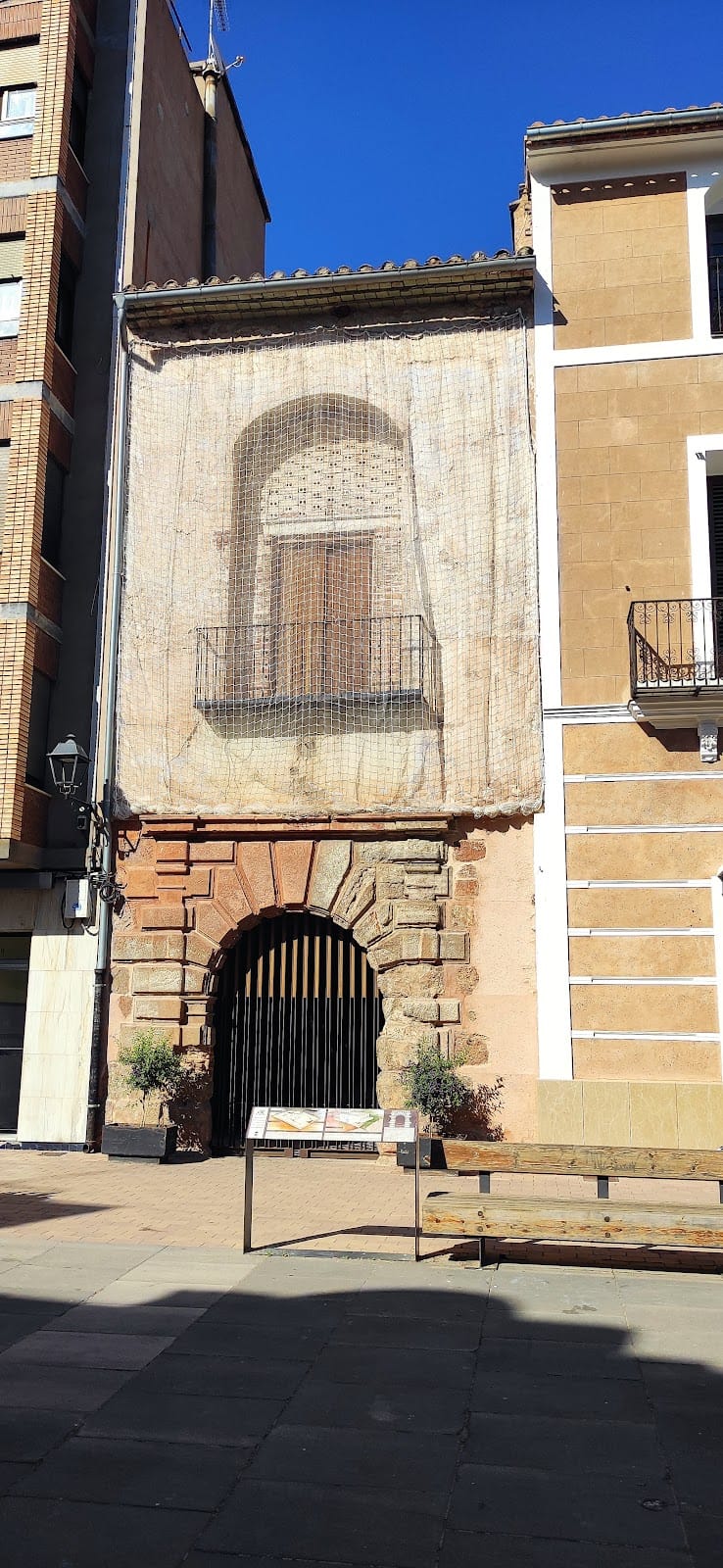
Externally, the palace retains a notable entrance crafted in a rustic, rusticated manner—stone blocks deliberately left with rough surfaces to provide texture. The doorway is framed by a wide semicircular arch made of large wedge-shaped stones called voussoirs and flanked by Tuscan pilasters, which are flat, rectangular columns featuring a simple style enhanced here with irregular stone drums. This portal reflects the architectural influence of Sebastiano Serlio, an Italian Renaissance architect whose treatises influenced Valencian architecture during the 1560s, distinguishing it from other common models such as the Farnese Palace portal.
Originally, the fortress included a defensive moat and four corner towers. Archaeological work has revealed that only two rear towers partially survive at ground level, resting on sloped ashlar masonry blocks—carefully cut and dressed stones—with a projecting molding that signifies the base line. The towers on the front façade remain only as foundation traces uncovered during recent excavations.
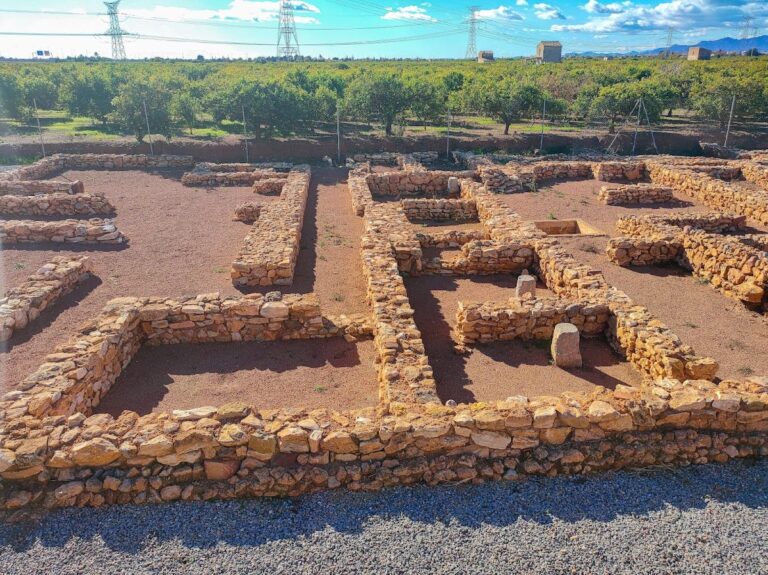
Excavations carried out in 2008 brought to light the stone foundations of an earlier medieval tower from the 14th century beneath the palace’s current structure. Moreover, these investigations uncovered human skeletal remains believed to belong to an Islamic burial ground that existed in the area during the 11th to 13th centuries, indicating the site’s complex historical layering from Muslim to Christian periods.
These features collectively reveal a site that has evolved from a medieval defensive fortress to a noble Renaissance residence, with archaeological remains providing insight into its origins and various historical phases.
Nearby sites