Palacio de los Capitanes Generales: Spanish Colonial Government Palace in Havana
Site at a Glance
- Rating
- 4.5
- Popularity
- Low
- Country
- Cuba
- Primary era
- Early Modern
- Eras represented
- Early Modern
- Civilizations
- Spanish
- Site type
- Civic
- Remains
- Palace
On this page16 sections
History
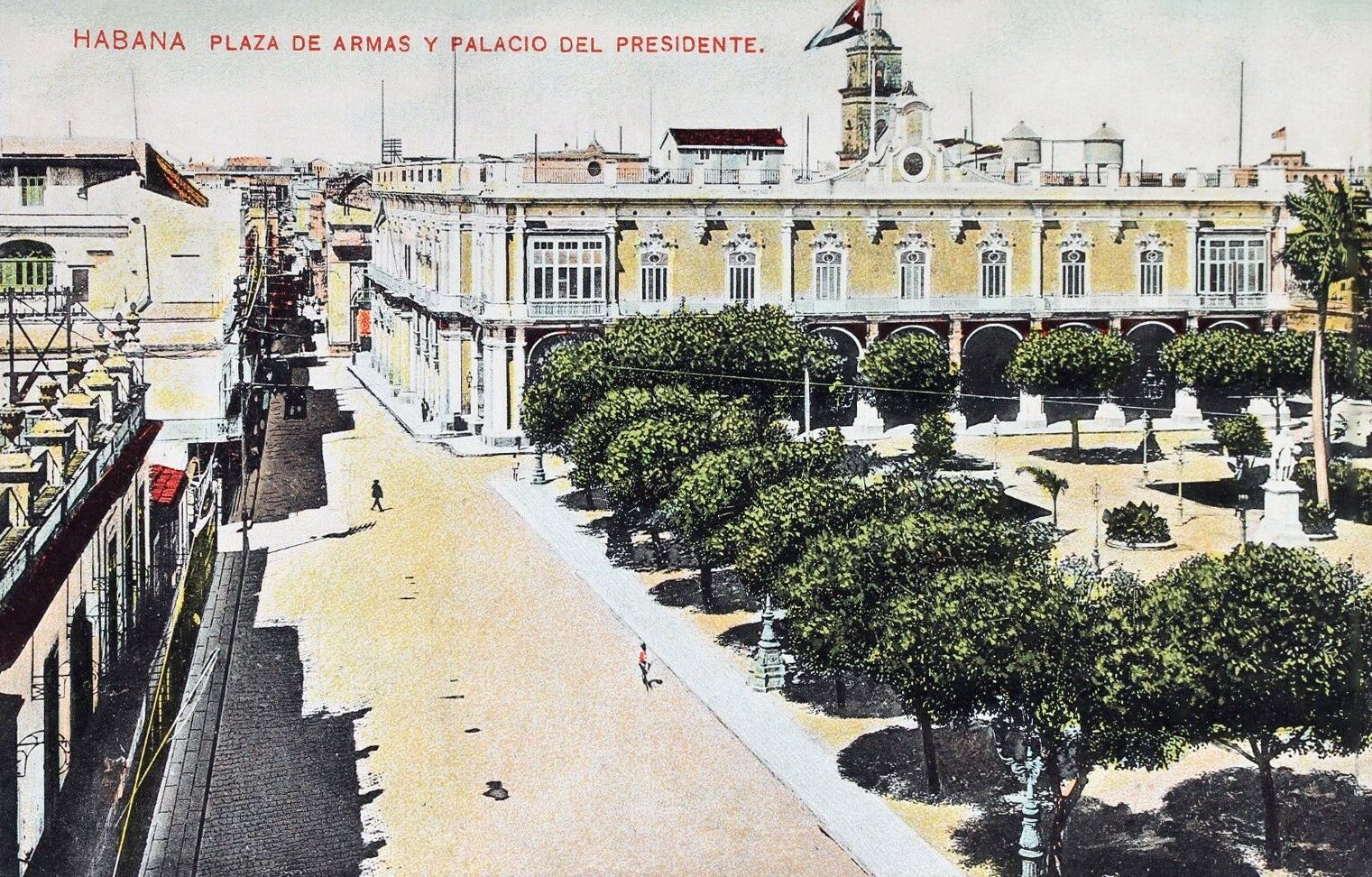
The Palacio de los Capitanes Generales is a Spanish colonial government palace in Havana, Cuba, built in the Cuban Baroque style between 1776 and 1792. Standing on the eastern side of the Plaza de Armas, Havana’s historic principal square, it served as the official residence of the Spanish governors, known as Captains General, and now houses the Museum of the City of Havana.
From parish church to governor’s palace
The site had been occupied since the sixteenth century by Havana’s original main parish church, a predecessor of the present cathedral. The church suffered severe damage in 1741 when the ship Santa Bárbara exploded in Havana Bay. It was later demolished, and the parish moved to the Plazuela de la Ciénaga, where Havana Cathedral was eventually built.
On 28 January 1773, Governor Felipe de Fonsdeviela y Ondeano, Marquis of La Torre, proposed clearing the former church, redesigning the Plaza de Armas, and constructing a palace along its eastern side. The project was intended to reflect the growing grandeur of Havana and to correspond with the Royal Post Office on the northern side of the square, a building later known as the Palacio del Segundo Cabo.
Construction began in 1776 under the direction of the Cuban engineer and architect Antonio Fernández de Trebejos y Zaldívar. Materials came from several parts of the Spanish and Mediterranean worlds. Bricks were imported from Málaga, wrought-iron grilles from Bilbao, and marble from Genoa. Enslaved laborers carried out the work, which advanced slowly. Governor Luis de las Casas y Aragorri occupied the palace in 1791, and construction was completed in 1792.
Colonial administration and changing government
During the colonial period, the palace combined residential, governmental, and custodial functions. It contained the Captain General’s residence, administrative offices, the city council, and a public prison. The council moved there after a hurricane badly damaged its original offices in Plaza San Francisco in 1768. The prison occupied the west wing until it closed in 1834, while other parts of the building accommodated municipal offices, commercial spaces, and the Society of Economic Friends of the Country, an Enlightenment-era civic institution devoted to economic, educational, and cultural improvement.
The last Spanish colonial governor left the palace in 1898, when Cuba became independent under the Treaty of Paris. From 1899 to 1902, the building housed the United States military governors. It then served as the presidential palace of the Cuban Republic from 1902 until 1920. After the presidency moved to the building now occupied by the Museum of the Revolution, the former palace returned to use as Havana’s city-council offices.
Museum and preservation center
The municipal authorities moved elsewhere in 1967, and the Museum of the City of Havana was established in the palace that same year. Its first exhibition rooms opened in 1968 after restoration. The museum was created to preserve and present Cuba’s historical and cultural heritage, and its interpretation extends from the colonial period through the twentieth century. More than 40 permanent exhibition rooms contain furniture, documents, weapons, carriages, artworks, and objects connected with Cuba’s political and social life. Former palace rooms recreate colonial domestic and administrative interiors.
The building also houses the Office of the City Historian, associated with the historian and preservation leader Eusebio Leal, whose work has supported the restoration of Old Havana. The palace forms part of the UNESCO World Heritage property Old Havana and its Fortification System, designated in 1982, and is recognized as a national monument.
The surrounding Calle Tacón takes its name from Miguel Tacón y Rosique, Captain General of Cuba from 1834 to 1838. Urban works carried out during his administration included improvements around the palace. In 1841, part of the street received wooden-block paving as a technical experiment intended partly to reduce the noise of carriage traffic. The paving was later preserved locally and rediscovered during restoration work in Havana’s historic center in the second half of the twentieth century.
Remains
The Palacio de los Capitanes Generales is a thick-walled square building organized around an open central courtyard. Its Cuban Baroque design combines Spanish planning traditions with local limestone, arcades, and a courtyard arrangement suited to Havana’s urban and tropical conditions. The principal façade faces the Plaza de Armas and extends along Calle Tacón, while galleries with arches run along all four sides of the courtyard.
Façades, courtyard, and street paving
Plaza de Armas façade
The main façade has an arcade supported by columns, with paving made from china pelona, a named Cuban paving material. The upper storey is faced with local limestone containing numerous embedded marine fossils. Full-length windows fitted with stained glass have small balconies aligned with the tops of the columns, giving the façade a regular relationship between its openings and arcade below.
Central courtyard
The interior is arranged around a leafy open courtyard. Arched galleries enclose all four sides, linking the palace’s rooms and providing the central organizing space of the building. A statue of Christopher Columbus, the late-fifteenth-century European navigator whose voyages initiated sustained Spanish expansion in the Americas, was installed in the courtyard in 1862. Decorative elements elsewhere in the courtyard and palace include sculptures made from Carrara marble, a high-quality white stone quarried in Italy.
Wooden-block paving
The part of Calle Tacón between Obispo and O’Reilly streets retains wooden-block paving. The material was used as an alternative to conventional stone, but its cost and limited durability prevented widespread adoption. Its survival preserves a nineteenth-century experiment in the street environment around the palace.
Rooms, monuments, and collections
Residential and administrative interiors
The upper floor originally contained the Captain General’s residential rooms, while other areas held offices, municipal dependencies, commercial spaces, and the prison. Much of the governor’s original furniture and decoration survives in the upper-floor rooms. The ground floor and mezzanine contain artworks and historical artefacts from Havana’s past, and the former domestic and administrative spaces are used to present period interiors.
La Giraldilla
La Giraldilla, a statue that became a symbol of Havana, stands at the foot of the stairs leading to the mezzanine. It originally stood on the tower of the nearby Castillo de la Real Fuerza. A separate museum room preserves the original statue.
Cenotaph and Parish Room
The palace displays the Cenotaph, a memorial monument whose subject’s remains are buried elsewhere or are not present at the monument. Described as Cuba’s oldest colonial monument, it was removed from Havana’s former main parish church and is now presented in a lower-floor room devoted to the church’s memory. This area is associated with the Parish Room among the palace’s named exhibition spaces.
Espada Cemetery relics
Another room contains relics from Espada Cemetery, Havana’s first cemetery, founded by Juan José Díaz de Espada in 1806. The collection includes the tomb of the French artist Jean Baptiste Vermay, preserving material connected with the cemetery within the former palace.
State and military collections
The Hall of Heroic Cuba contains objects associated with the wars of independence and nationally important flags, including the flag of Carlos Manuel de Céspedes, the Cuban independence leader known as the Father of the Homeland. The Flag Room similarly brings together ensigns connected with those conflicts. The palace also displays original stone baths shaped like nautilus shells and a nineteenth-century fire engine manufactured in London.
Ceremonial and artistic rooms
The Throne Room is a ceremonial chamber inspired by European models such as the Royal Palace of Madrid. The Hall of Mirrors contains period mirrors and furniture, while the Heraldry Room presents aristocratic symbols and historical documentation. The Giraldilla Room is devoted to the statue and its history, and the Pinacotheca, a gallery devoted primarily to paintings, contains works by Cuban artists from different periods.