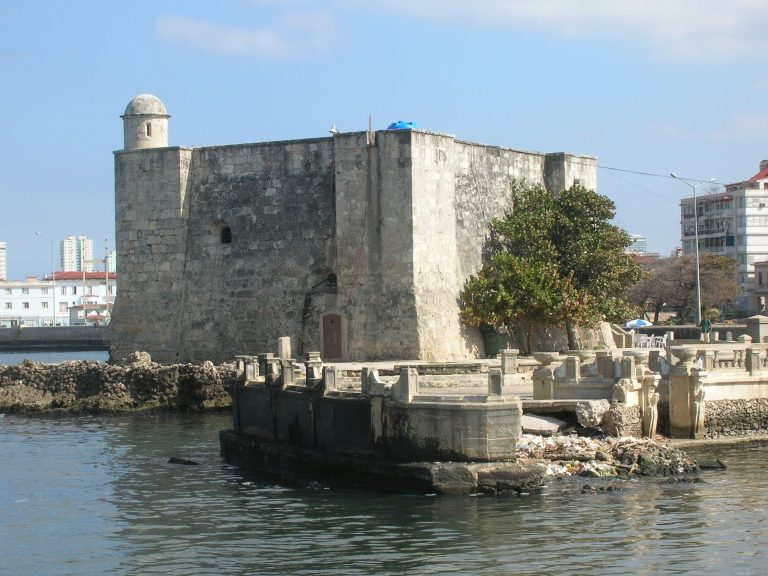
Castillo de la Real Fuerza: Havana’s Sixteenth-Century Bastion Fort
Site at a Glance
- Rating
- 4.5
- Popularity
- Low
- Country
- Cuba
- Primary era
- Early Modern
- Eras represented
- Early Modern
- Civilizations
- Spanish
- Site type
- Military
- Remains
- Fort
On this page9 sections
History
Castillo de la Real Fuerza is a sixteenth-century Spanish bastion fort in Havana, Cuba, built between 1558 and 1577 in the early colonial period. It replaced the Fuerza Vieja, an earlier fort badly damaged by the French privateer Jacques de Sores in 1555. The castle is regarded as the oldest surviving stone fort in the Americas and the oldest surviving colonial fortress on the continent.
Construction of the Fuerza Nueva
The replacement fort was initially known as the Fuerza Nueva. Bartolomé Sánchez, an engineer appointed by Philip II of Spain, directed its construction. Ironwork began in 1558, the first stones were laid in 1562, and the building was completed in 1577. Work was slowed by the relocation of local residents and by disputes between Sánchez and the Governor of Havana. Enslaved people and French prisoners supplied most of the labor.
The fort was intended to protect Havana from pirates and other enemies of the Spanish Crown. Its position, however, lay too far inside the bay and too distant from the harbor entrance to function effectively as the city’s principal defensive bulwark. Juan de Tejeda therefore adopted it as the residence of the Governor of Havana. Governor Francisco Carreño later ordered an upper story for barracks and a munitions store, although the completed structure was considered too small for practical military use. Subsequent governors made further alterations.
War, alteration, and changing uses
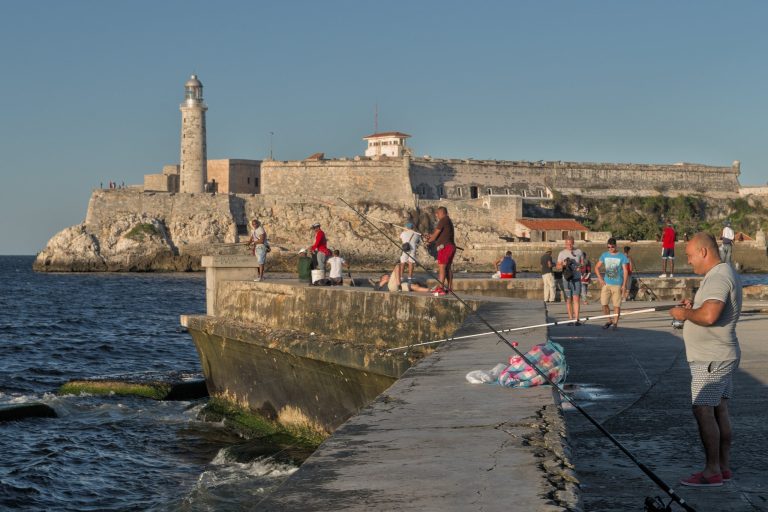
During the British siege and capture of Havana in 1762, Castillo de la Real Fuerza resisted British artillery. Together with Castillo de los Tres Reyes Magos del Morro, commonly called El Morro, the historic fortress guarding the entrance to Havana’s harbor, it was one of the city’s principal defensive positions before the Spanish capitulation.
Part of the fortress façade was demolished in 1851 so that O’Reilly Street could reach the docks. The alteration also prevented the fort from overshadowing El Templete, a building completed in 1828. After the Spanish governor left Cuba in 1898 during the Spanish-American War, the fort stood unoccupied. The National Archive moved into the building in 1899, followed by the National Library in 1938. Both institutions left in 1957 for a purpose-built facility near Plaza de la Revolución.
Preservation and museum history
After the Cuban Revolution of 1959, the building housed the offices of the National Commission of Monuments and the Centre of Preservation, Restoration, and Museology. It also briefly operated as a Museum of Arms, but its internal conditions were unsuitable for preserving the displays. In 1977, the four-hundredth anniversary of its completion, the fort reopened as a museum of Cuban contemporary and international art. It became the National Museum of Cuban Ceramics in 1990, and that museum closed in 2007.
The building reopened in 2010 as Cuba’s maritime museum, presenting the country’s maritime history from the pre-Columbian period through the eighteenth century. Since 1982, Castillo de la Real Fuerza has formed part of the UNESCO World Heritage property Old Havana and its Fortifications. UNESCO, the United Nations Educational, Scientific and Cultural Organization, uses World Heritage designation to recognize cultural or natural sites considered to possess outstanding universal value.
A continuing tradition connects the figure of La Giraldilla with Isabel de Bobadilla, Cuba’s first female governor, who served from 1539 to 1543. Her husband, Hernando de Soto, left on an expedition to Florida, and the story says that she watched the northern horizon for his return without knowing that he had died.
Remains
Fortifications and watchtower
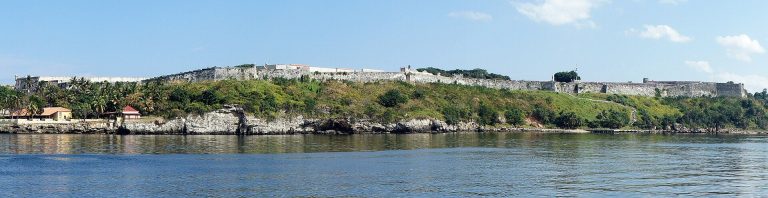
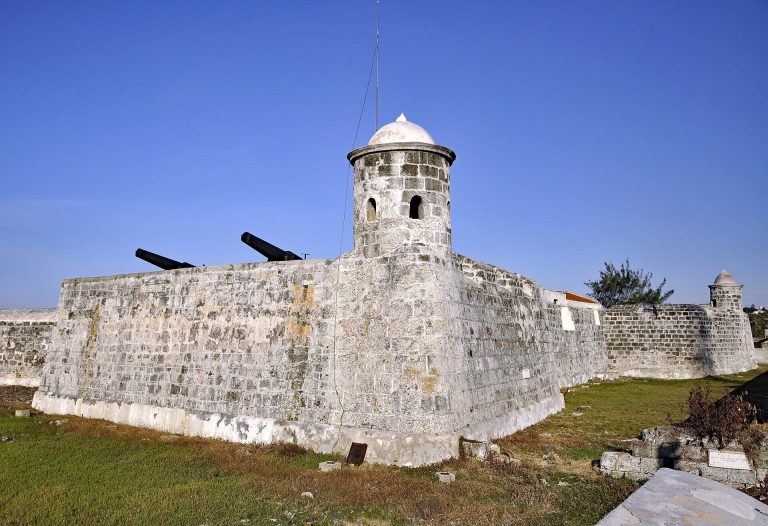
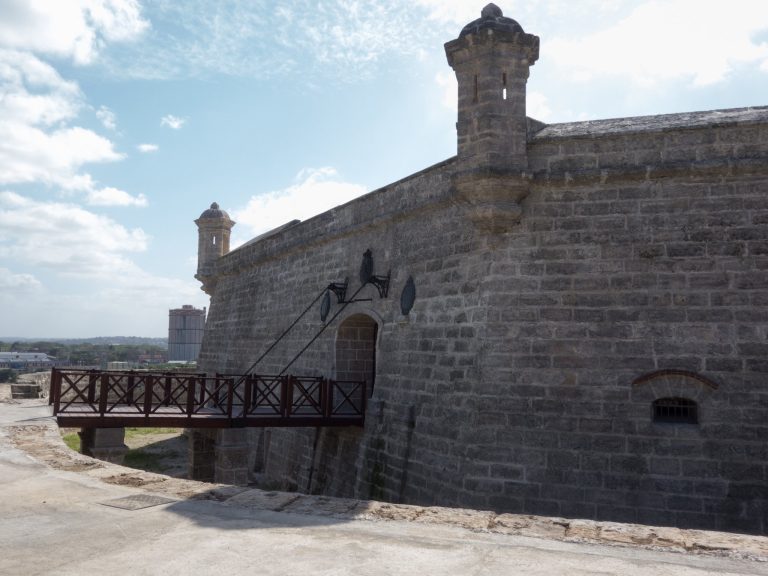
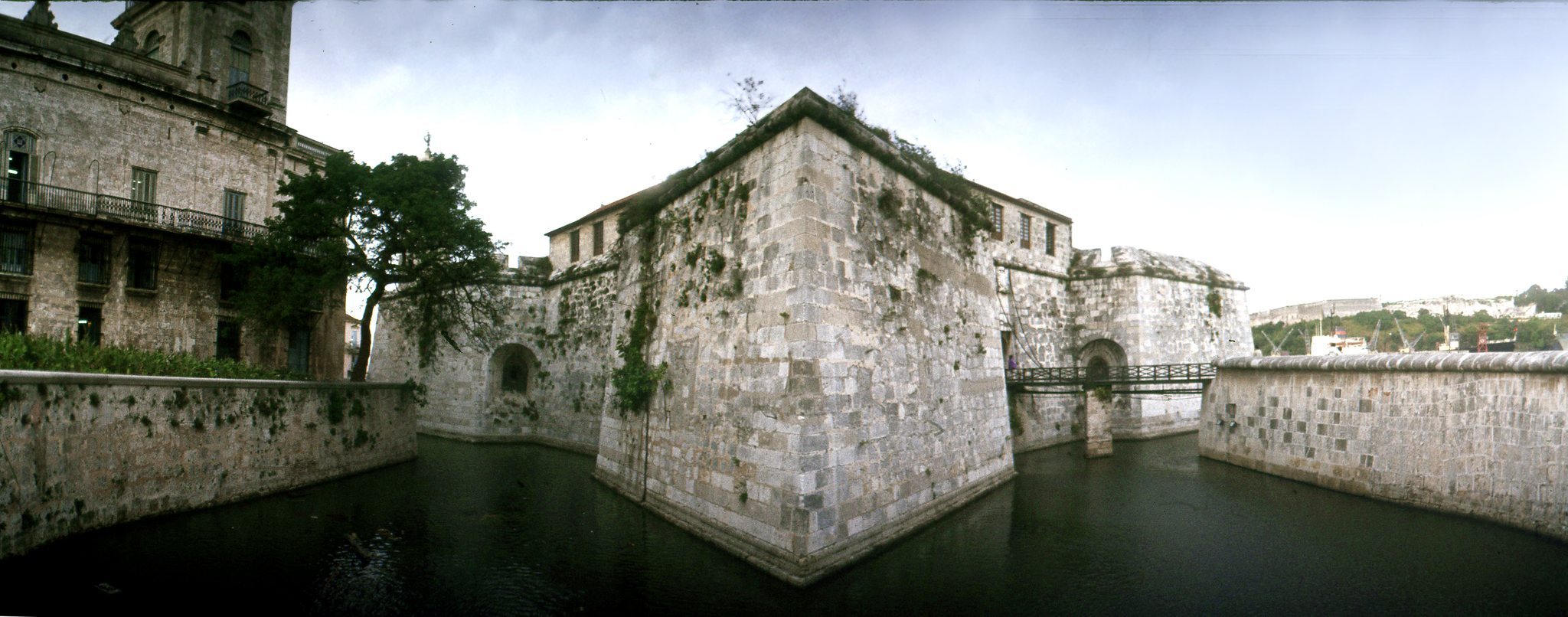
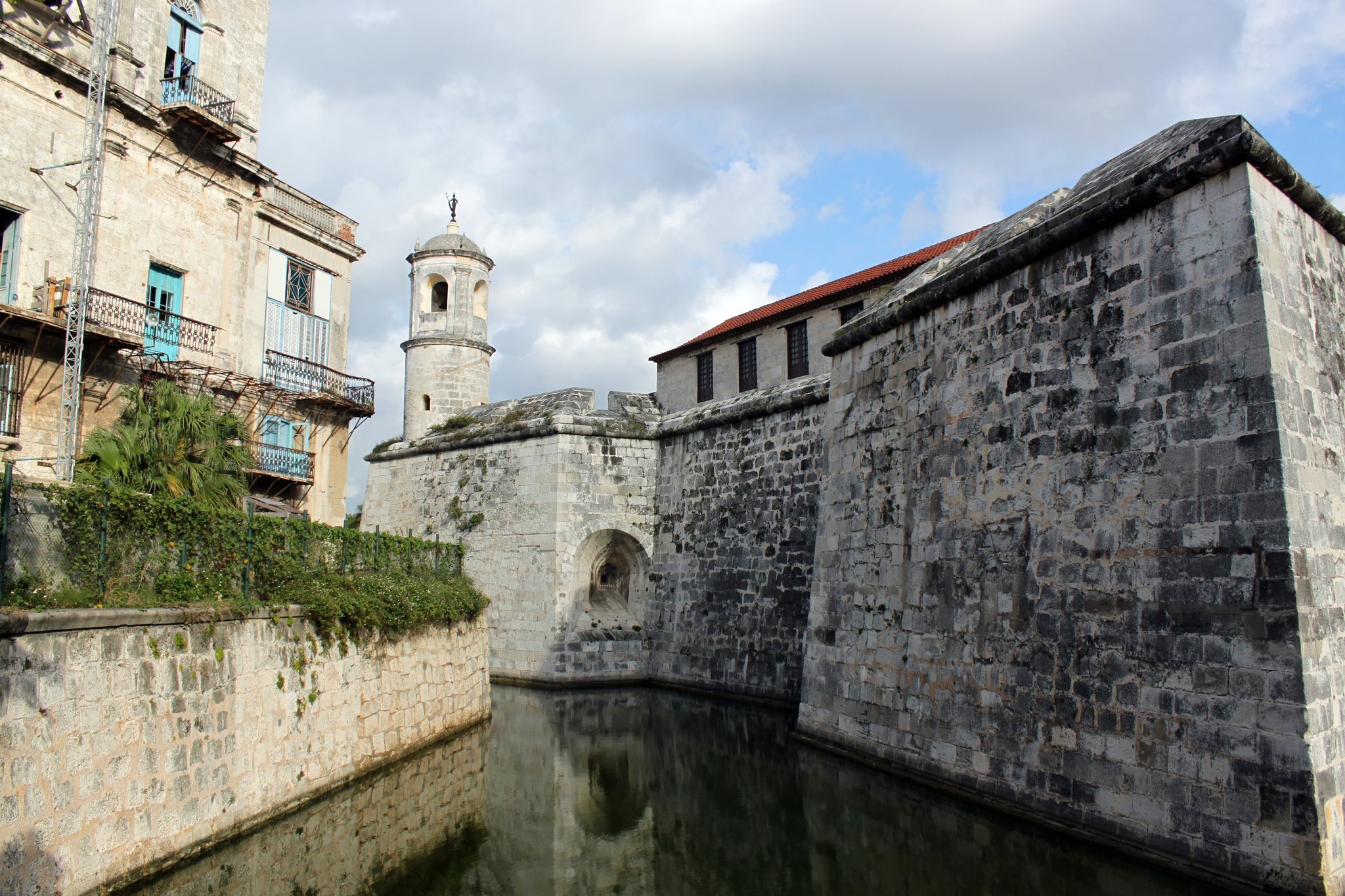
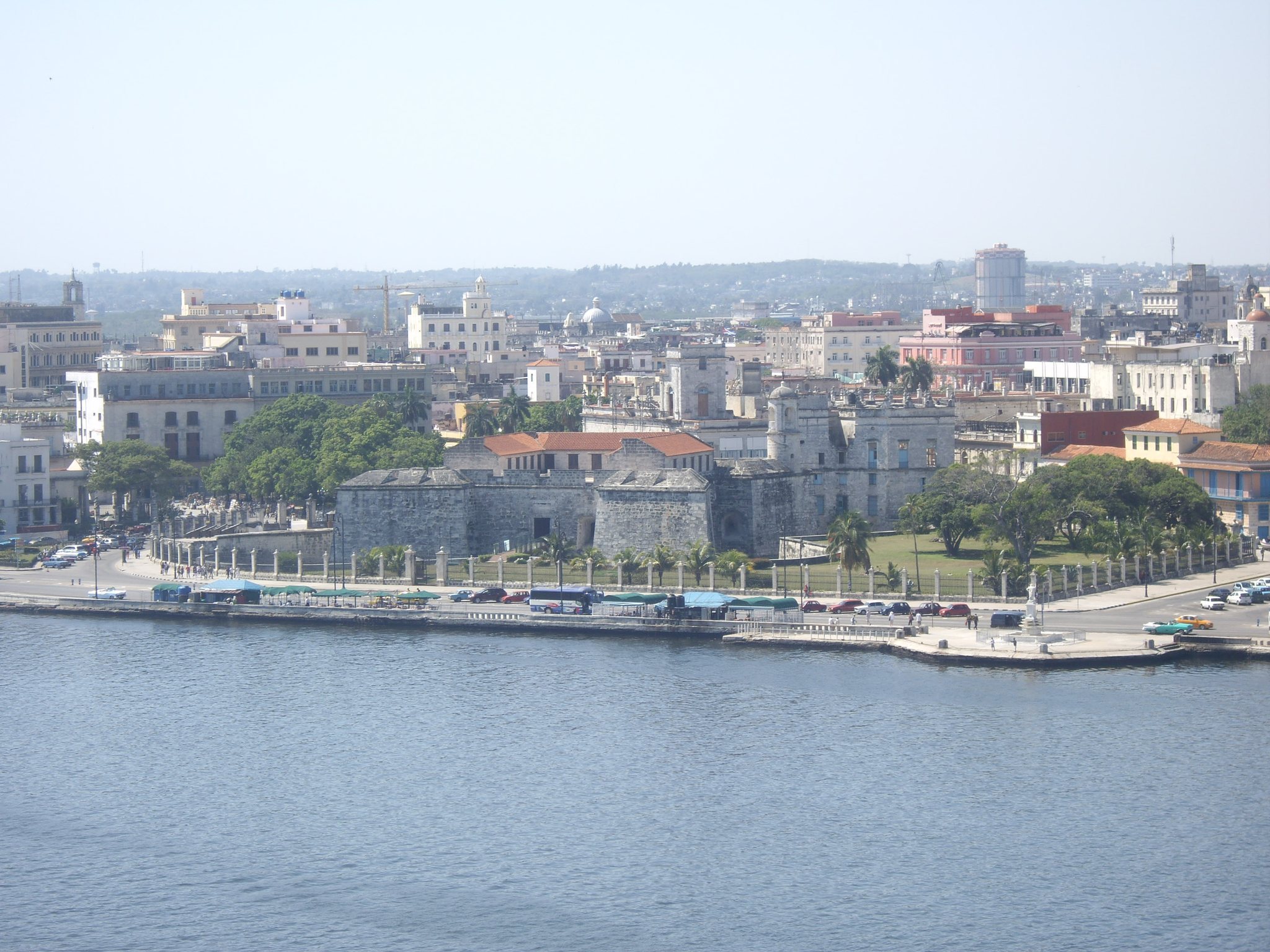
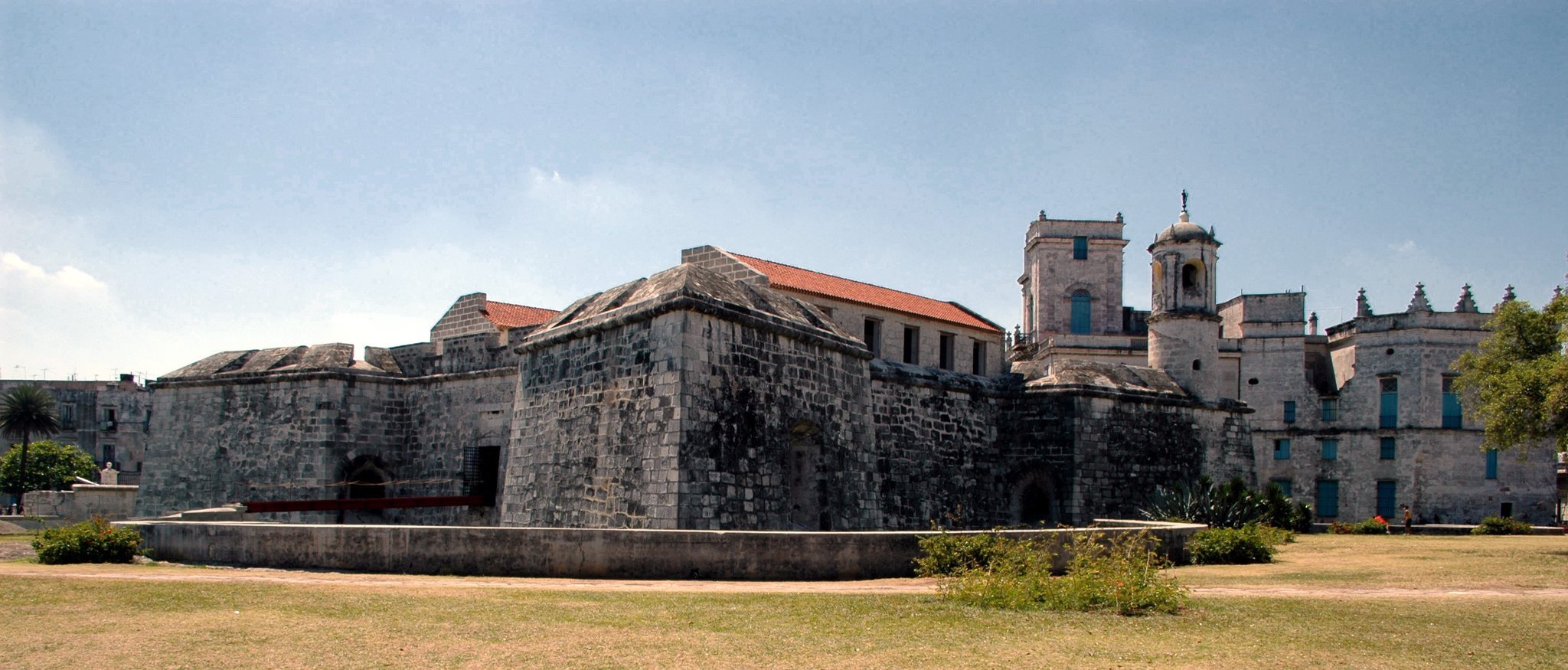
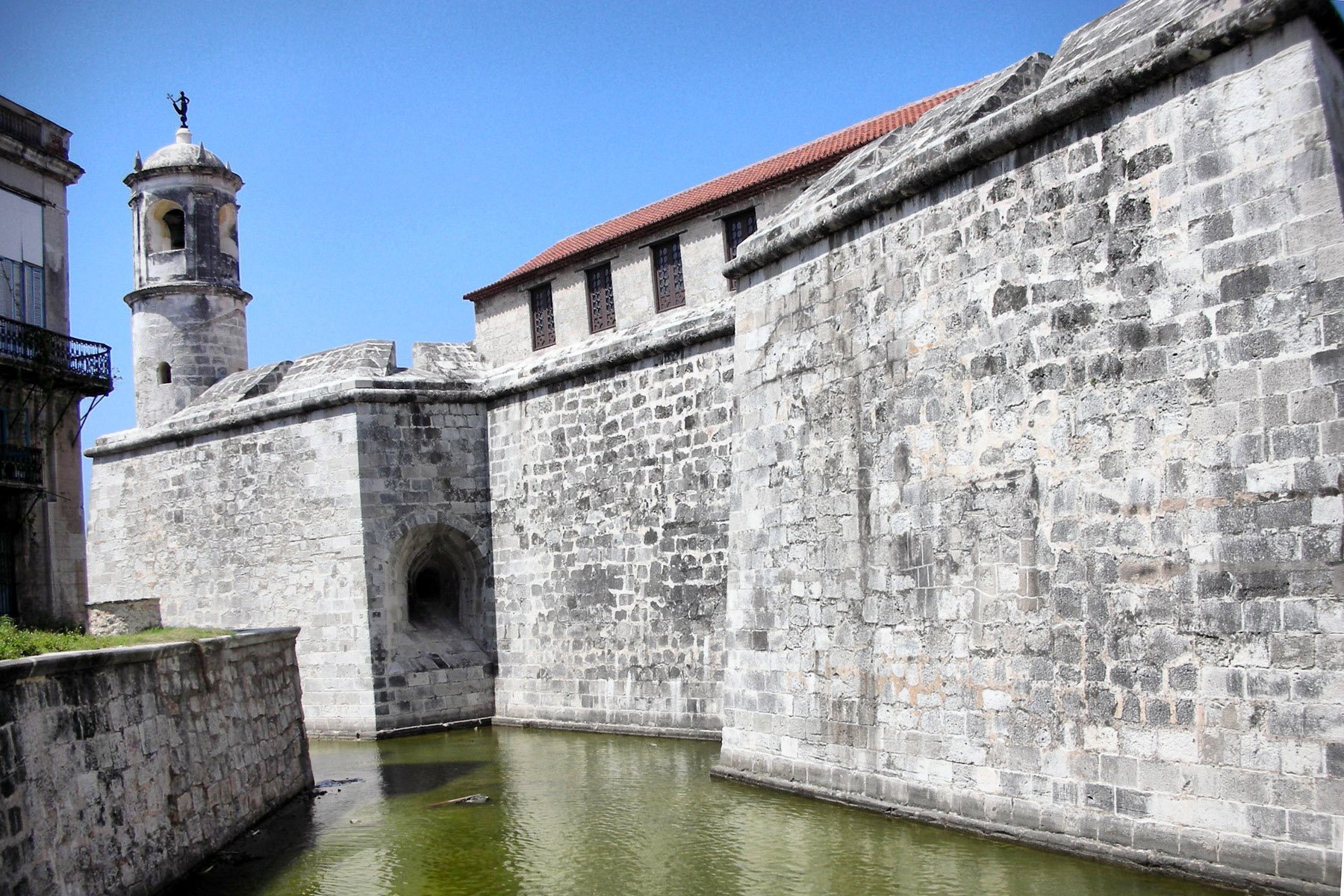
Castillo de la Real Fuerza stands on the western side of Havana’s harbor, set back from the harbor entrance and bordering the Plaza de Armas. It is a load-bearing masonry structure built mainly from limestone quarried near Havana. The bastion fort has thick sloping walls, a moat, and a drawbridge leading to the entrance. Its projecting angular bastions allowed defenders to cover the walls and approaches with overlapping fire. An upper story, later incorporated into the building, served as barracks and a munitions store. The surviving structure also bears the effects of the 1851 removal of part of its façade.
In 1634, Juan Vitrián de Viamonte added a watchtower topped by a bronze weather vane called La Giraldilla. The figure, made by the Havana artist Gerónimo Martín Pinzón, was modeled on the statue crowning the Giralda, the bell tower of Seville Cathedral. The weather vane is dated 1632 and depicts a woman surveying the northern horizon. It has become a symbol of Havana.
The original La Giraldilla is preserved in the City Museum, housed in the Palacio de los Capitanes Generales on the Plaza de Armas. The figure now standing on the fort’s tower is a later copy. La Giraldilla is a weather-vane statue, meaning that it turns with the wind to indicate its direction.
Maritime museum collections
Ship models and naval history
The museum’s main floor contains a four-metre model of the Santísima Trinidad, accompanied by an interactive display about life aboard an eighteenth-century ship-of-the-line, a large sailing warship designed to fight in the line of battle. The original vessel was launched in Havana Bay on 2 March 1769. It carried 140 cannons on four gun decks and was one of four Cuban-built ships present at the Battle of Trafalgar in 1805.
The museum also presents the Royal Shipyard of Havana, which built nearly 200 ships for the Spanish Crown. Further historic and contemporary ship models connected with Cuba are displayed on the second level, which also provides views toward the harbor and the city skyline.
Navigation and underwater archaeology
The lower level contains ancient navigational instruments, underwater archaeological artifacts, and colonial-period gold and silver. Together with the ship models and maritime displays, these collections trace Cuba’s seafaring history from the pre-Columbian period through the eighteenth century.