Torre Abbey: A Medieval Monastery and Art Gallery
Site at a Glance
- Rating
- 4.5
- Popularity
- Medium
- Country
- United Kingdom
- Primary era
- Medieval
- External website
- Open
- Eras represented
- Medieval, Early Modern, Modern
- Civilizations
- British, English
- Site type
- Religious
- Remains
- Monastery
On this page11 sections
History
Torre Abbey is a former medieval monastery and art gallery in Torquay, United Kingdom, founded in 1196 by six Premonstratensian canons from Welbeck Abbey in Nottinghamshire. The Premonstratensians were a Catholic order whose members lived in religious communities under a rule. William Brewer, lord of the manor of Torre, provided the land for the foundation.
Medieval monastery
The abbey’s land revenues had made it the wealthiest Premonstratensian house in England by 1536. Its prosperity was also connected with the development of Torquay’s harbor. The monastery remained in religious use until 1539, when the canons surrendered it to commissioners acting for Henry VIII during the Dissolution of the Monasteries, the king’s process of suppressing England’s monasteries and transferring or confiscating their property.
The dissolution brought extensive demolition. Much of the church and the east range was destroyed, while valuable materials and objects, including the lead roofing, were removed. Sir Hugh I Pollard obtained a 21-year lease of the site and its demesne immediately afterward. In 1543, he acquired the freehold from John St Leger, who had received it from the Crown in exchange for land and a cash payment.
Country house and Cary ownership
In 1598, the surviving south and west ranges were converted into a house for Thomas Ridgeway. After several changes of ownership, the property passed to the Cary family in 1662. The Carys retained it until 1930, expanding and remodeling the former monastery during their ownership. Substantial alterations took place in the Georgian period, the era of the Hanoverian kings from 1714 to 1830, followed by further rebuilding in the nineteenth century.
The Cary family’s Catholic affiliation did not prevent its members, as major landowners, from exercising considerable influence over the development of the surrounding region. Admiral John Jervis, 1st Earl of St Vincent, lived at the abbey in 1800 and 1801 while commanding the Channel Fleet, because illness prevented him from remaining with the fleet.
Municipal and cultural use
Commander Henry Cary sold the mansion and grounds to Torquay Borough Council in 1930, although the family retained the surrounding estate and the nominal lordship of the manor of Tor Mohun. The building then became a municipal art gallery. It also contained the mayor’s parlour and was used by the Royal Air Force during the Second World War.
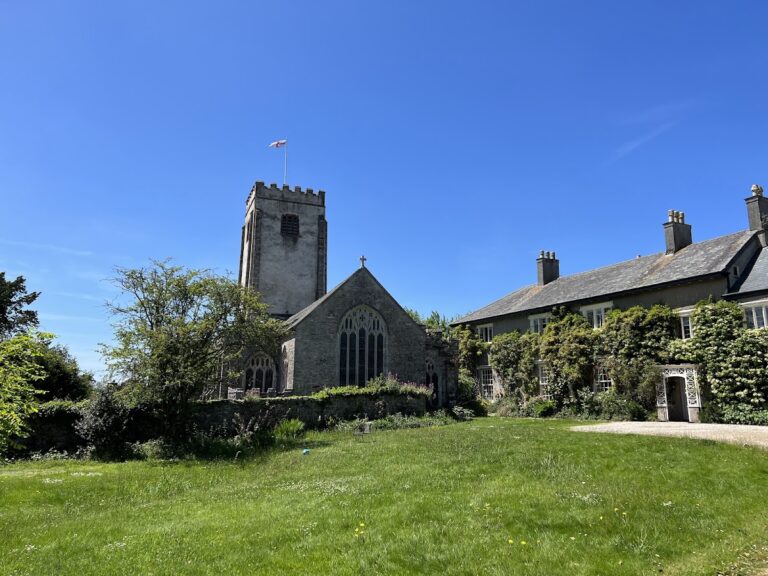
Torre Abbey is owned and managed by Torbay Council. A major refurbishment supported by the Heritage Lottery Fund, English Heritage, and the Friends of Torre Abbey led to its reopening in July 2008. The main abbey comprises two Grade I listed buildings, and monuments to members of the Cary family survive in St Saviour’s Church.
Remains
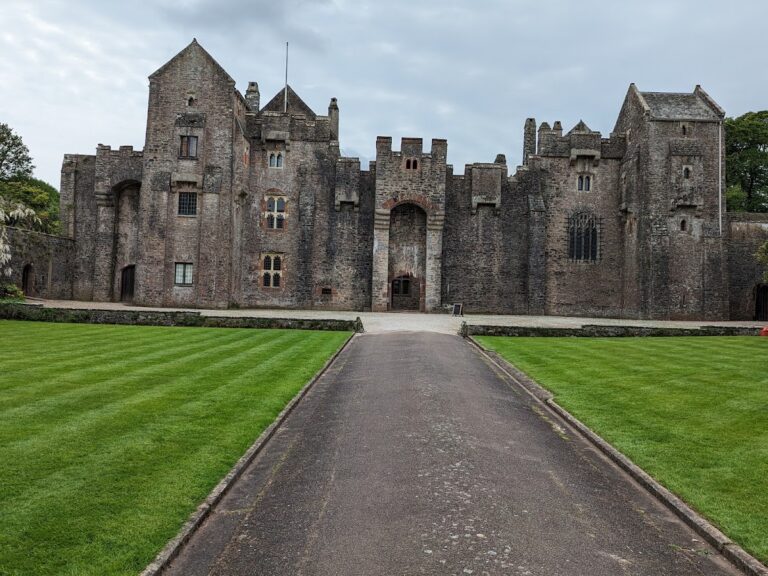
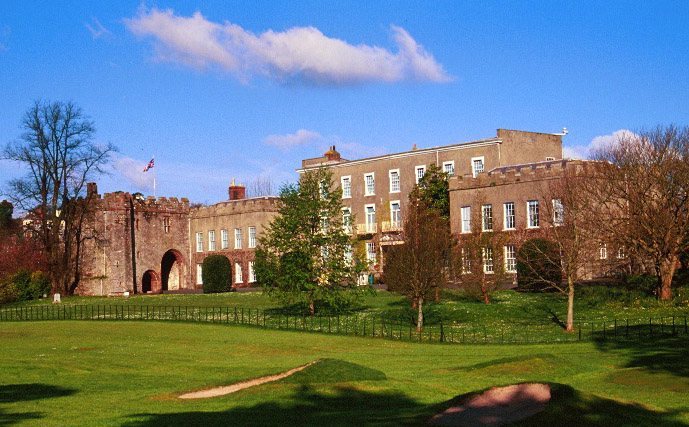
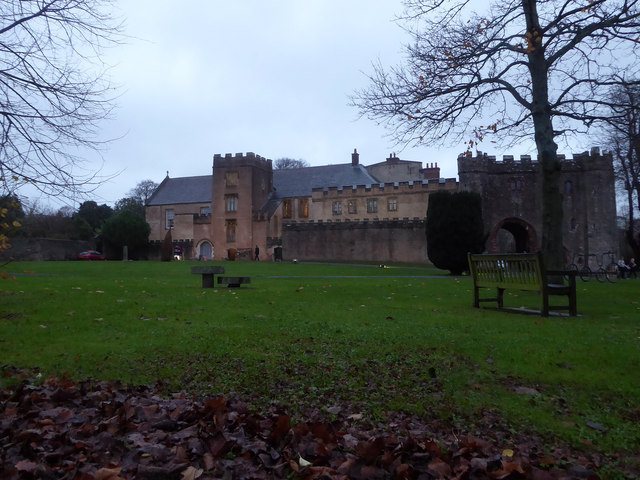
Torre Abbey combines surviving medieval monastic buildings with Georgian rooms, nineteenth-century alterations, formal gardens, and collections of art and historical objects. The church is largely ruinous, while the west and south sides of the cloisters remain standing. The complex is regarded as the best-preserved medieval monastery in Devon and Cornwall.
Medieval buildings
Church and cloisters
The church forms the most visibly fragmentary part of the medieval complex, following the demolition that took place after the monastery was surrendered in 1539. Sections of the cloisters remain on the west and south sides, preserving part of the monastery’s original arrangement. The surviving ranges were later incorporated into the house created for Thomas Ridgeway in 1598.
Gatehouse and chapel
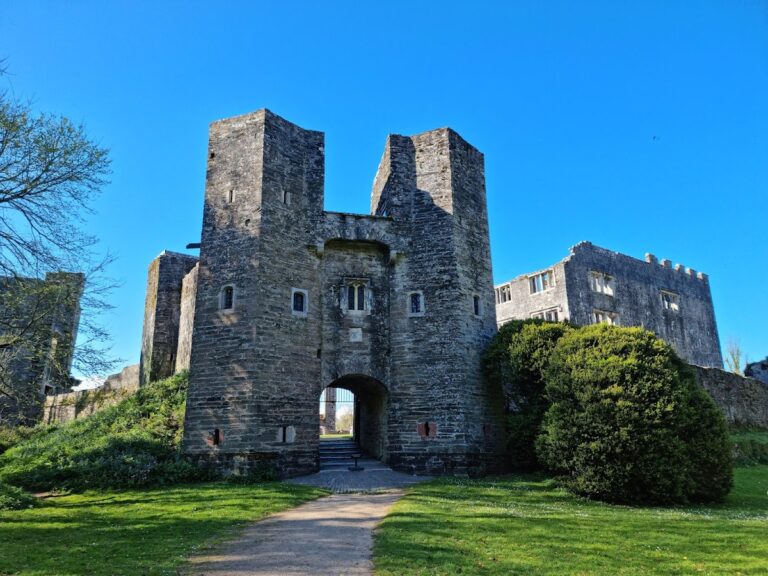
The gatehouse dates from around 1380. Above its chapel, formerly used as the guest hall, is a fifteenth-century barrel vault. These elements preserve evidence of the abbey’s medieval arrangements for entry and hospitality.
Spanish Barn
The tithe barn was built with the abbey in the early thirteenth century. It is known as the Spanish Barn because 397 prisoners of war from the Spanish Armada were held there for fourteen days in 1588. The building therefore retains a physical connection with both the abbey’s medieval agricultural organization and a major sixteenth-century conflict.
Later buildings and landscape
Extensive alterations in the Georgian style were carried out around 1740, and much of this work remains intact. The Cary family undertook additional rebuilding in the nineteenth century, including the construction of a small brewery. Formal gardens survive in Abbey Park and Meadows. St Michael’s Chapel, on the summit of Chapel Hill in Torquay, may also have belonged to Torre Abbey.
Collections and exhibitions
The abbey houses Devon’s third-largest art collection, with permanent displays emphasizing nineteenth-century paintings. These include works by William Blake and Pre-Raphaelite works by Edward Burne-Jones and William Holman Hunt. The Pre-Raphaelites were a nineteenth-century British movement associated with detailed representation, vivid color, and subjects drawn from literature, history, and religion. The collection includes Burne-Jones’s The Planets series of cartoons and Hunt’s The Children’s Holiday.
Torre Abbey also holds the largest surviving collection of works by the Victorian sculptor Frederick Thrupp, including the contents of his studio. Contemporary-art exhibitions have included Antony Gormley’s Field for the British Isles in 2009 and Damien Hirst’s Mother and Child, Divided in 2010. The annual Torre Abbey Contemporary Open presents artists from South West England.
The collections further include an original manuscript collection associated with Agatha Christie, the English novelist known especially for detective fiction, together with her chair and Remington typewriter.