San Salvador de la Punta Fortress: Havana’s Bay-Entrance Defense
Site at a Glance
- Rating
- 4.6
- Popularity
- Low
- Country
- Cuba
- Primary era
- Early Modern
- Eras represented
- Early Modern, Modern
- Civilizations
- Spanish
- Site type
- Military
- Remains
- Fort
On this page14 sections
History
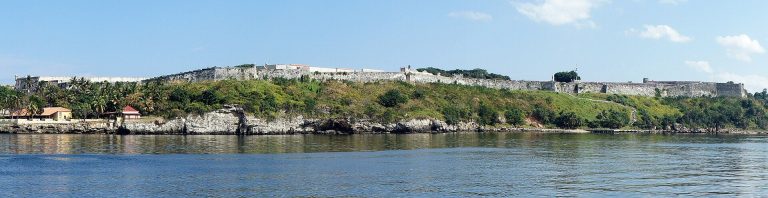
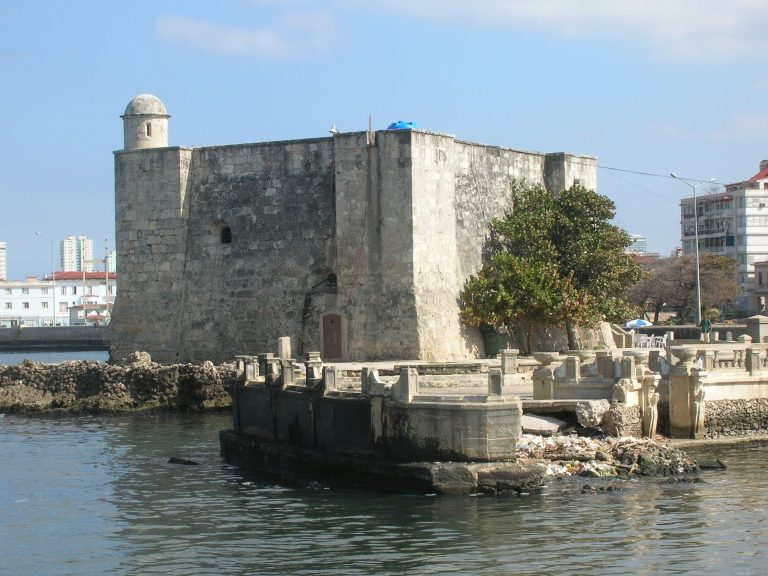
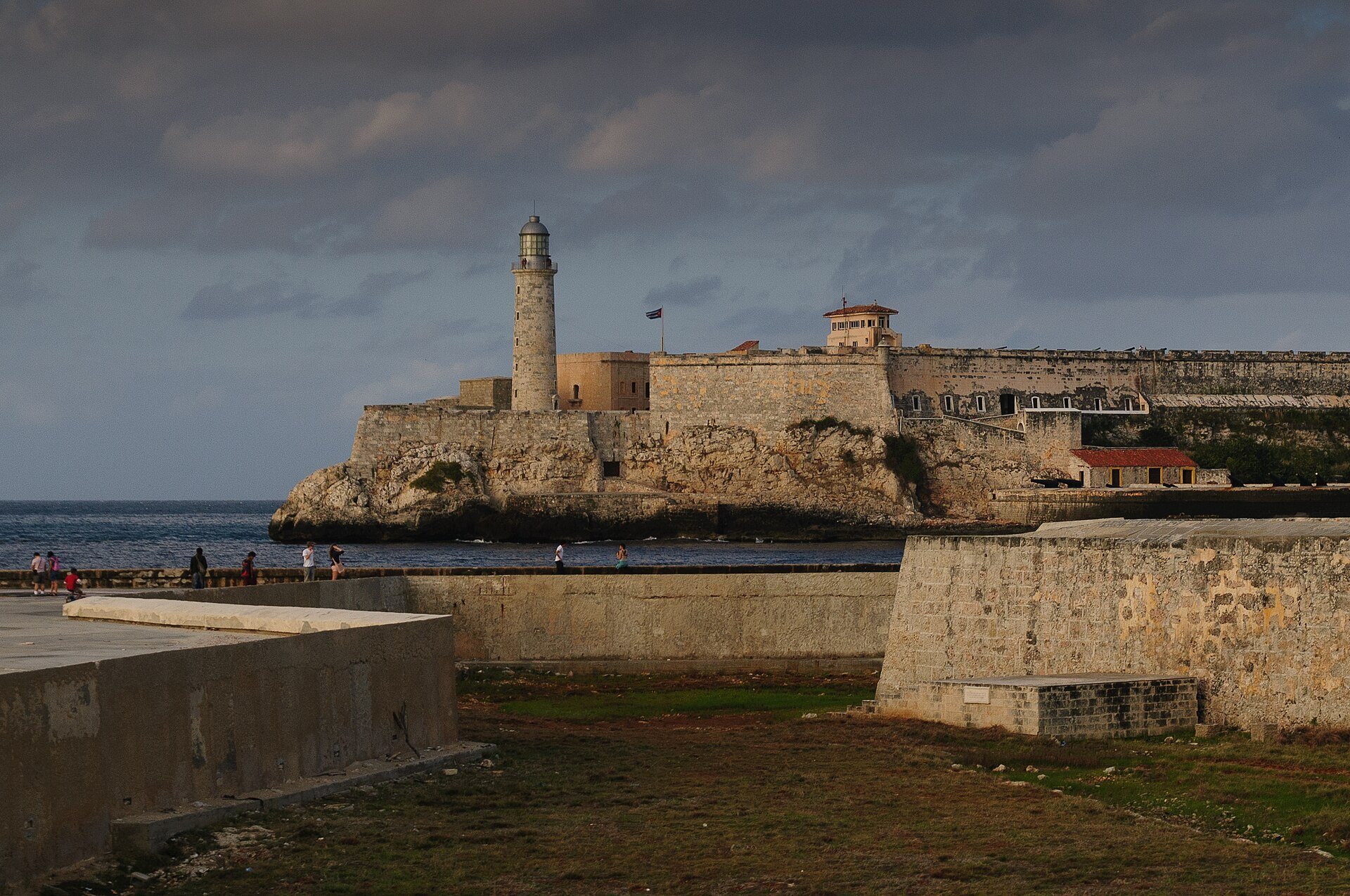
San Salvador de la Punta Fortress is a late sixteenth-century Renaissance fortress in Havana, Cuba, built by Spanish authorities to defend the entrance to Havana Bay. It stands on the western side of the access channel opposite Castillo de los Tres Reyes Magos del Morro, protecting the city from attacks by pirates and corsairs.
Foundation and Early Construction
A lookout post occupied the site by 1559. In 1582, Philip II, king of Spain from 1556 to 1598, ordered a strengthened defensive system centered on Havana during a period of repeated attacks on Spain’s American possessions. Juan de Tejeda, a Spanish colonial governor experienced in military fortification, was appointed to oversee the work and brought the Italian military engineer Giovanni Battista Antonelli to Cuba.
Construction at La Punta began around 1590 but advanced slowly because materials and suitable labor were difficult to obtain. A hurricane badly damaged the fortress in 1595, partly because its walls were too thin. The walls were then rebuilt with greater solidity. By 1602, continuing delays had led to a reduction of the original design. The fortress was converted into a keep, a strongly defended central refuge or strongpoint, intended to accommodate about ten to twelve artillery pieces. It was later dismantled until only three bastions remained.
Control of the Channel
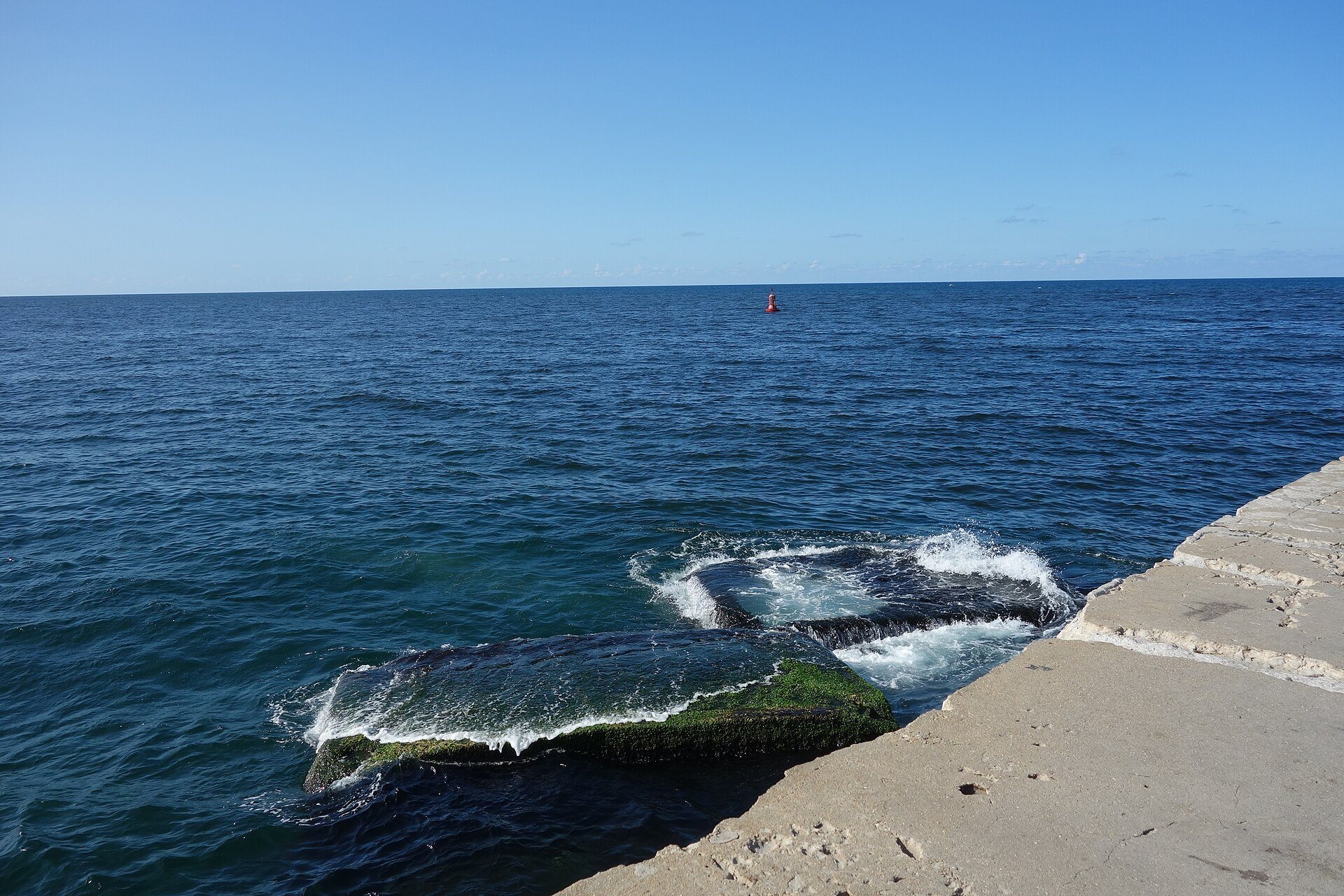
From 1630, a heavy copper chain was stretched between La Punta and El Morro to block the entrance channel to Havana Bay. During the British invasion of 1762, the fortress’s curtains, the fortified walls linking its bastions, and its bastions were destroyed. Afterward, a replacement chain was installed. Heavy wooden beams supported it, and its ends were attached to guns at La Punta and El Morro.
Spanish control was restored, and the defensive system was repaired and enlarged. Additional artillery positions were created at La Punta, including four esplanades, level open areas used to position guns, during the nineteenth century. In 1851, Spanish authorities executed most of the prisoners held at La Punta, including Narciso López, a Venezuelan adventurer and filibuster whose failed expedition sought to liberate Cuba from Spanish rule.
Military and Modern Institutional Uses
During the twentieth century, La Punta continued to serve military purposes. It was the seat of the Navy General Staff from 1915 to 1953 and a naval post from 1953 to 1959. After 1959, it became a militia school, and during the 1970s it housed the Cuban Institute of Hydrography.
In 1982, Havana’s historic center and its system of fortifications, including La Punta, were inscribed on the UNESCO World Heritage List. UNESCO, the United Nations Educational, Scientific and Cultural Organization, maintains this list for cultural and natural sites considered to have outstanding universal value.
During the late 1990s, an intervention directed by the Office of the Historian of Havana restored original elements and recovered original spaces. Archaeological work also rescued objects for exhibition when the fortress opened as a museum in the early 2000s. The coastal setting later exposed the building and its collections to severe weather and corrosive agents, causing damage and eventually forcing the facility to close.
Remains
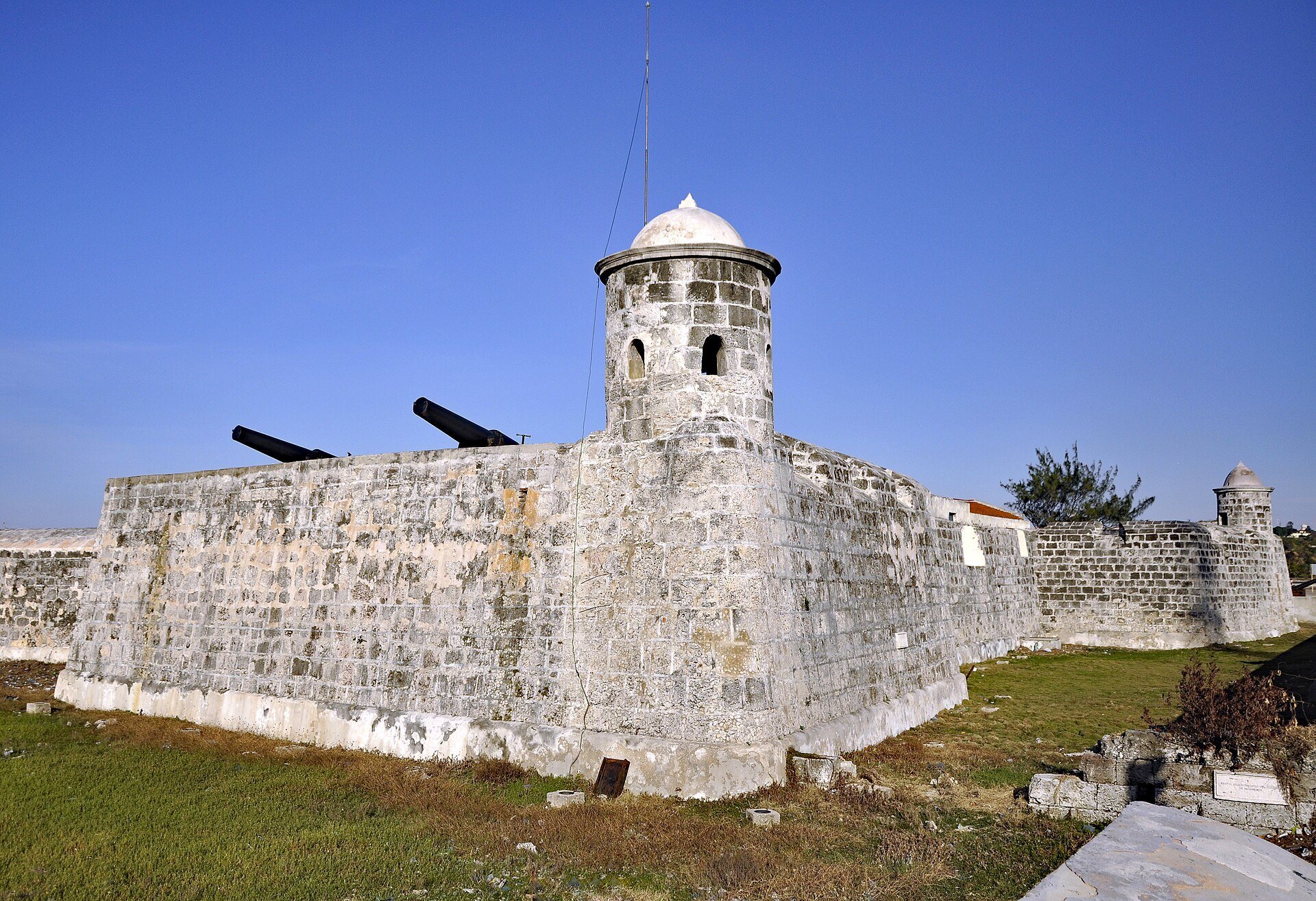
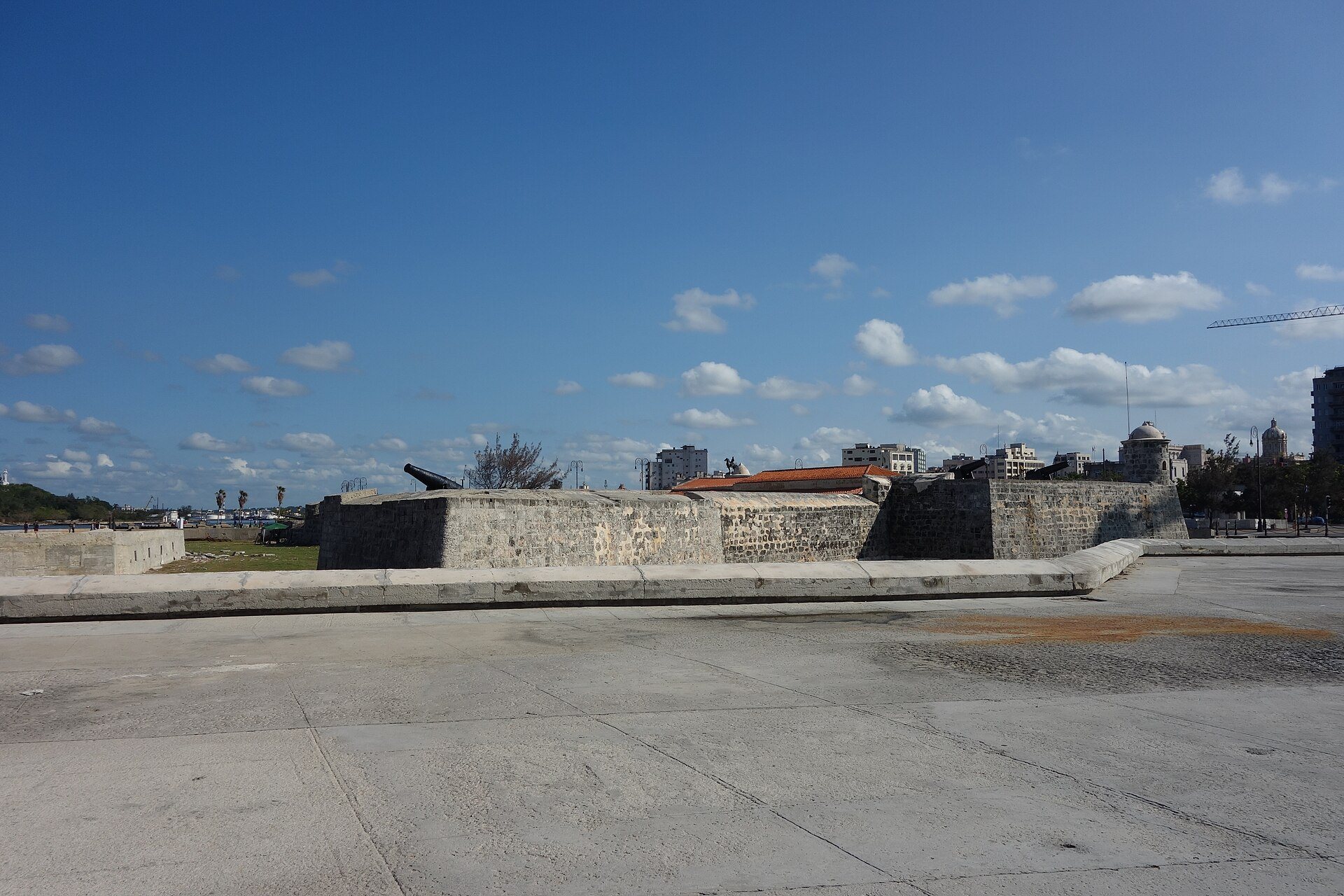
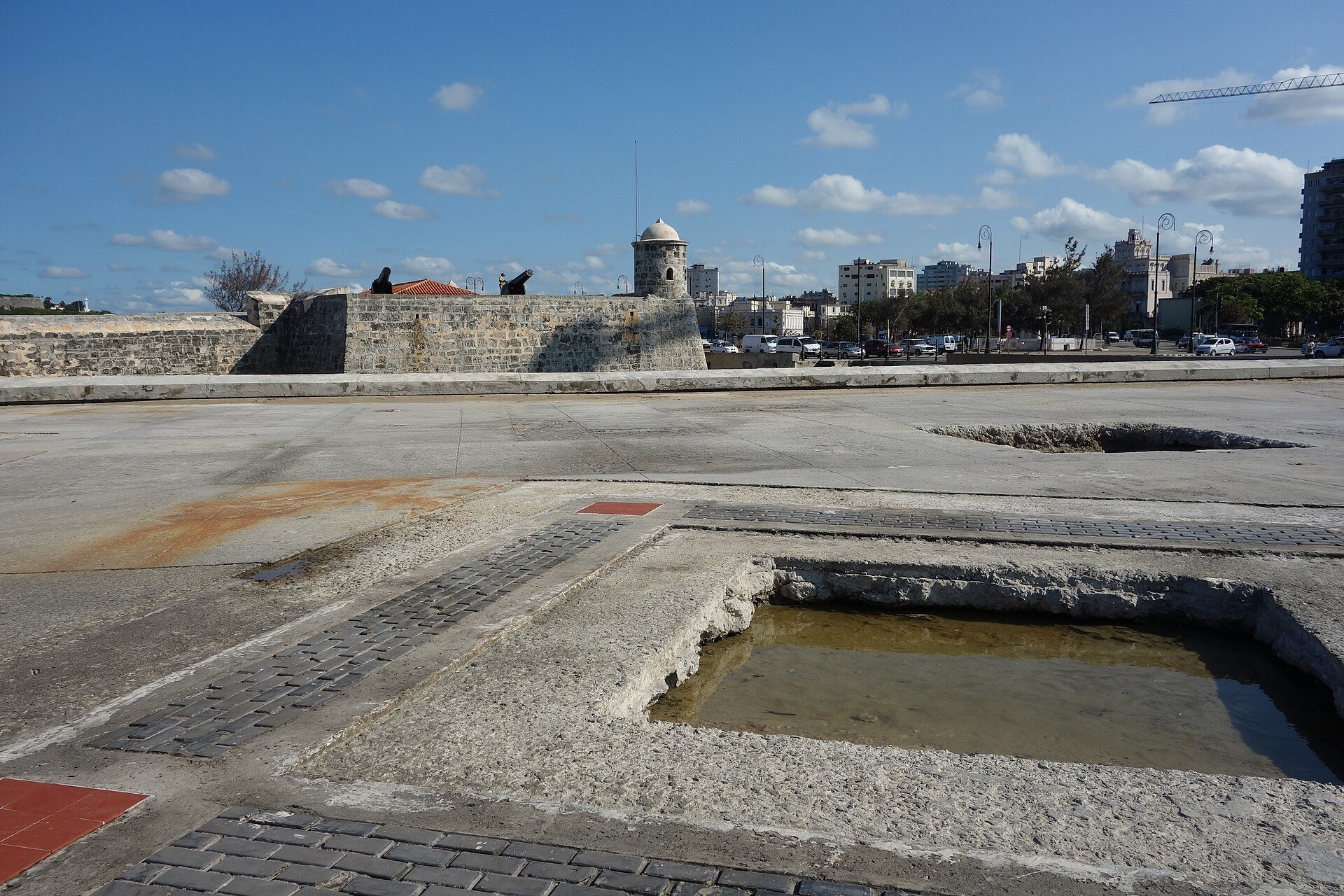
The surviving fortress has an irregular trapezoidal plan shaped by the coastal terrain. It is built from cut stone blocks laid in ashlar masonry, with broad, sloping walls rising about 15 feet and measuring approximately 10 to 12 feet thick. A 20-foot terreplein, the level platform behind a fortified parapet used for moving and deploying artillery, forms part of the defensive structure. The fortress has a floor area of approximately 3,247.50 square meters, while its grounds cover about 23,102.58 square meters.
Defensive Plan
Bastions and Semibastions
The fortress has three principal bastions, projecting sections of wall that allowed defenders to fire along the faces of adjoining walls. Antonelli and Quintanilla face the land, while Tejeda faces the sea. Two semibastions, San Vicente and San Lorenzo, extend toward the reefs. After reconstruction by Cristóbal de Rodas, the plan was organized as a quadrilateral with a bastion at each corner and regular flanks. San Lorenzo and Tejeda faced the sea, while Antonelli and Quintanilla faced the land.
Curtains and Moat
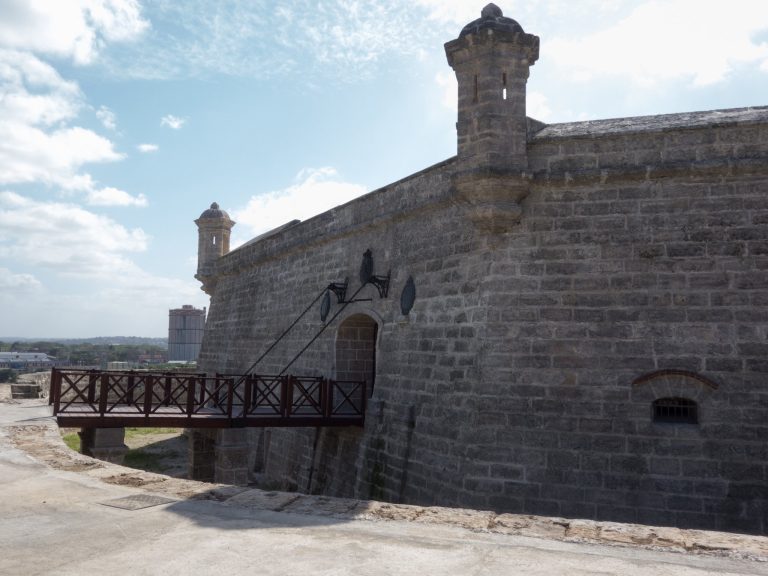
The intermediate curtains were approximately 40 varas long, and the seaward curtain between Tejeda and San Lorenzo projected farther into the site. A shallow moat cut into the coastal rock surrounded the fortress. Its main entrance has a lintelled design with rusticated stonework, a masonry treatment that emphasizes the blocks through pronounced joints and roughened surfaces.
Interior Arrangements
Entrance and Garrison Rooms
A guardhouse stands to the left of the main entrance and leads toward the parade ground. It gives access to several rooms, including an elongated chamber covered by a strong stone vault with ventilation openings. This chamber may have served as a gunpowder store. A ramp from the entrance area leads to the terreplein. The fortress also contained accommodation for roughly 60 men, or in some descriptions 60 to 70, together with an officers’ pavilion, a commander’s residence, a kitchen, a cistern, an artillery store with five pieces, dungeons, and a chapel.
Upper Level and Artillery Platform
The second level contains a space covered by a wooden roof with clay tiles. It served as accommodation for the garrison during peacetime. Around the outer edge of the terreplein, a parapet with embrasures, openings through which firearms or artillery could be operated, formed the upper defensive boundary.
Water Supply and Channel Defense
Water Systems
Channels brought water into the fortress from Havana through the Zanja Real, the historic water-conveyance channel serving the city. Running water was also supplied from La Chorrera, a named water source associated with the fortress. These systems supported the garrison within the enclosed coastal stronghold.
Chain Across Havana Bay
Fragments of the later chain used to obstruct the channel between La Punta and El Morro survive. The chain formed part of the fortress’s wider defensive arrangement, extending its protection beyond the walls to the entrance of Havana Bay.