San Carlos de la Cabaña Fortress: Havana’s Spanish Bastioned Defense
Site at a Glance
- Rating
- 4.6
- Popularity
- Medium
- Country
- Cuba
- Primary era
- Early Modern
- Eras represented
- Early Modern
- Civilizations
- Spanish
- Site type
- Military
- Remains
- Fort
On this page11 sections
History
San Carlos de la Cabaña Fortress, commonly called La Cabaña, is an eighteenth-century Spanish Baroque fortress in Havana, Cuba. Built between 1763 and 1774 after the British capture of Havana, it strengthened the city’s landward defenses and became an important part of Havana’s colonial military system.
Construction after the British capture
British forces captured Havana in 1762, exposing the vulnerability of the city’s defenses on the landward side of El Morro, Havana’s major colonial fortress at the harbor entrance. In response, Carlos III, the Bourbon king of Spain whose reign included major military reforms across the empire, ordered a new fortress for the eastern heights above Havana Bay.
Construction began in 1763 under Colonel Silvestre Abarca y Aznar, also known as Brigadier Don Silvestre Abarca, and continued until completion in 1774. About 4,000 enslaved people taken from Mexico were employed on the project, which cost an estimated 14 million pesos. When completed, La Cabaña was the second-largest colonial military installation in the New World, after the fortifications of San Felipe de Barajas at Cartagena, and the largest Spanish fort in the Americas.
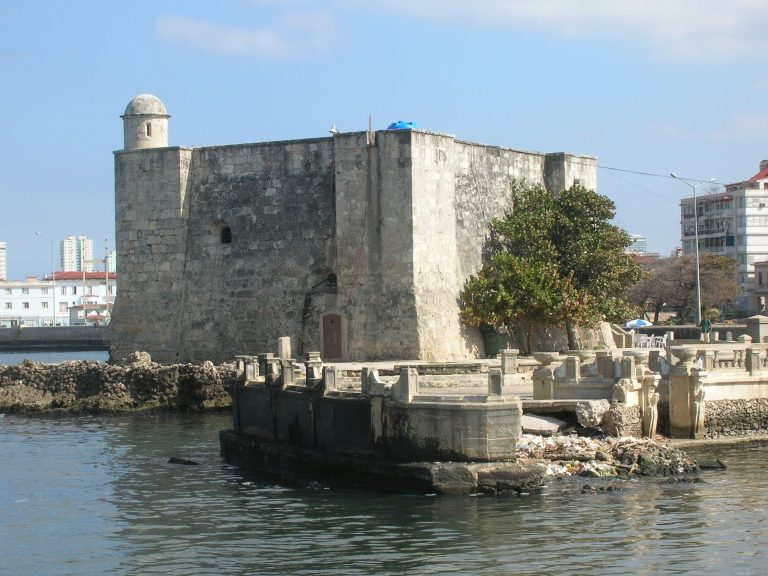
La Cabaña joined El Morro, La Punta, and the Castillo de la Real Fuerza in protecting Havana’s harbor and city from enemy or pirate attack. Elite Spanish army units were stationed there, and Spanish forces occupied the fortress from its construction until Spain’s defeat in the Spanish-American War in 1898.
Spanish rule, imprisonment, and independence
United States forces occupied La Cabaña from 1899 to 1902. After the Republic of Cuba was established on May 20, 1902, Cuban forces took over the complex, which also continued to function as a prison. During Cuba’s nineteenth-century struggles for independence from Spain, political prisoners including José Martí, the Cuban writer and leading independence figure, were held there.
Executions took place in the Laurels Moat and at the San Agustín Terrace. The Cuban poet Juan Clemente Zenea, associated with separatist ideas, was executed at the terrace in 1871 for his political views.
Revolutionary occupation and prison history
Revolutionary forces led by Fidel Castro seized La Cabaña without resistance in January 1959. Ernesto “Che” Guevara, an Argentine-born revolutionary and principal leader of the Cuban Revolution, occupied the fortress on January 3 and established his headquarters in the former residence of the Spanish military governor. He served as prison commander and chief investigator until June 12, 1959.
Guevara supervised revolutionary tribunals and reviewed appeals involving people accused of supporting Fulgencio Batista, belonging to Batista’s secret police, or committing war crimes. The fortress prison held political detainees, and firing-squad executions took place there. Estimates for executions under Guevara’s jurisdiction range from 55 to 105, while 176 executions took place at La Cabaña prison in 1959. By the end of January that year, about 100 Batista supporters had been executed.
The tribunals consisted of two or three army officers, a legal assessor, and a respected local citizen. La Cabaña remained associated with political imprisonment after Guevara’s command, and hundreds of executions took place there during 1959 and 1960. On March 16, 1960, 110 prisoners were stripped and held in the prison yard for more than three hours while soldiers and militiamen looted their belongings. Protests that followed injured 60 people, under the command of Captain Herman Marks.
Further violence followed during the early 1960s. Eduardo Navarro Vitón was killed while attempting to escape on April 18, 1961, and a militiaman killed Rene Santana after Santana prayed in support of the Bay of Pigs invasion, the failed 1961 attempt by Cuban exiles supported by the United States to overthrow Castro’s government. La Cabaña was also associated with executions connected to the August 30, 1962 massacre of Cuban dissidents accused of plotting against Castro’s government. Executions resumed there on May 30, 1963, with Ricardo Olmedo Moreno, and continued through later years.
People executed at La Cabaña included Jesús Sosa Blanco on February 18, 1959; William Alexander Morgan and Jesús Carreras Zayas on March 11, 1961; Humberto Sorí Marín and Manuel Puig Miyar on April 20, 1961; Julio Emilio Carretero on June 22, 1964; and Nelson Rodríguez Leyva in 1971.
Restoration and continuing use
La Cabaña has retained a military function while also becoming a prison, museum, and cultural complex. It currently serves as a base for Cuba’s Revolutionary Armed Forces, the state military organization established after the 1959 revolution. Repairs began in 1986, and public access followed in 1991 as part of the Morro-Cabaña Historical Military Park.
The fortress forms part of the Old Havana and its Fortification System World Heritage Site, a UNESCO designation covering Havana’s historic urban core and principal colonial defenses, inscribed in 1982.
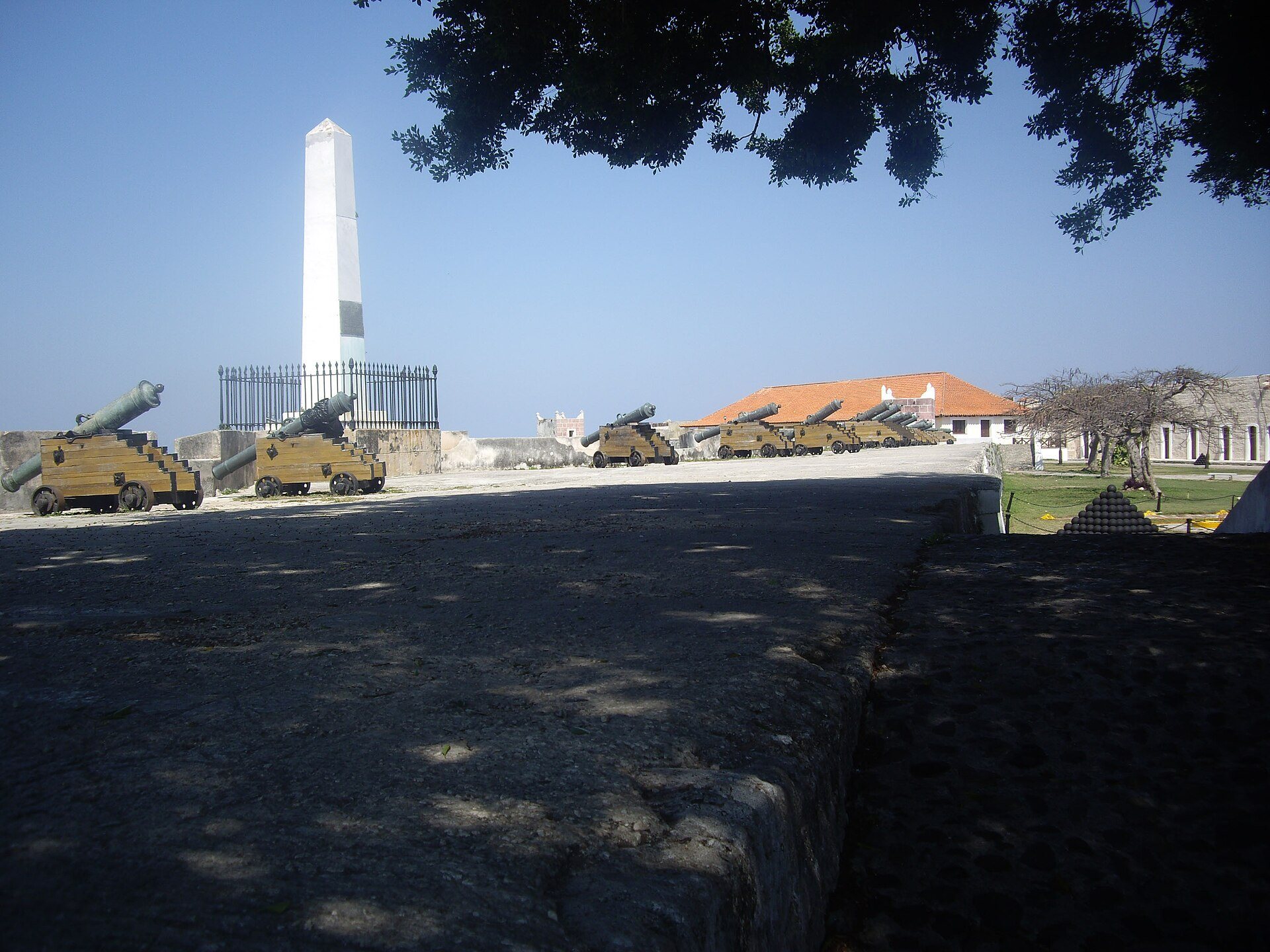
The daily Nine O’Clock Cannon Shot began as a warning that Havana’s gates were opening or closing and that the chain across the harbor entrance was being raised or lowered. After La Cabaña was completed in 1774, the fortress took over the signal. Since the first United States intervention in Cuba, the ceremony has used a single shot at 9 p.m. It was suspended during the Second World War and later restored, with its present form established after restoration work in the 1980s.
Remains
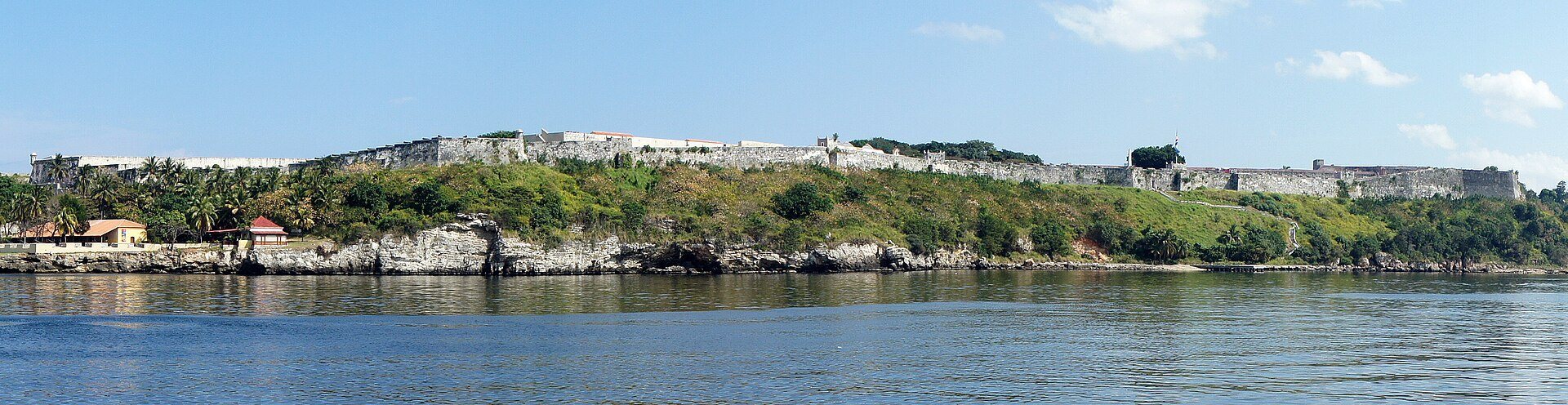
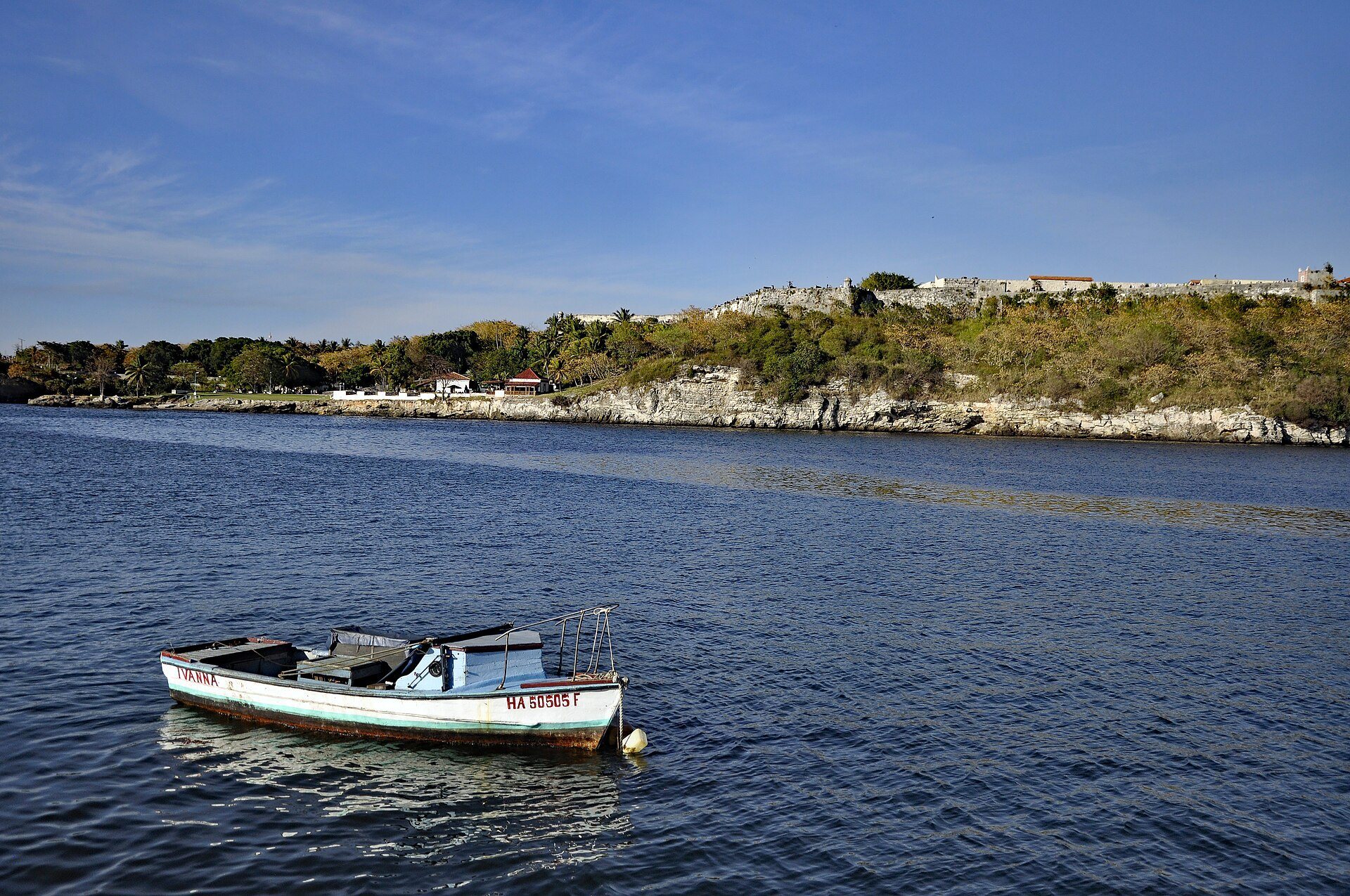
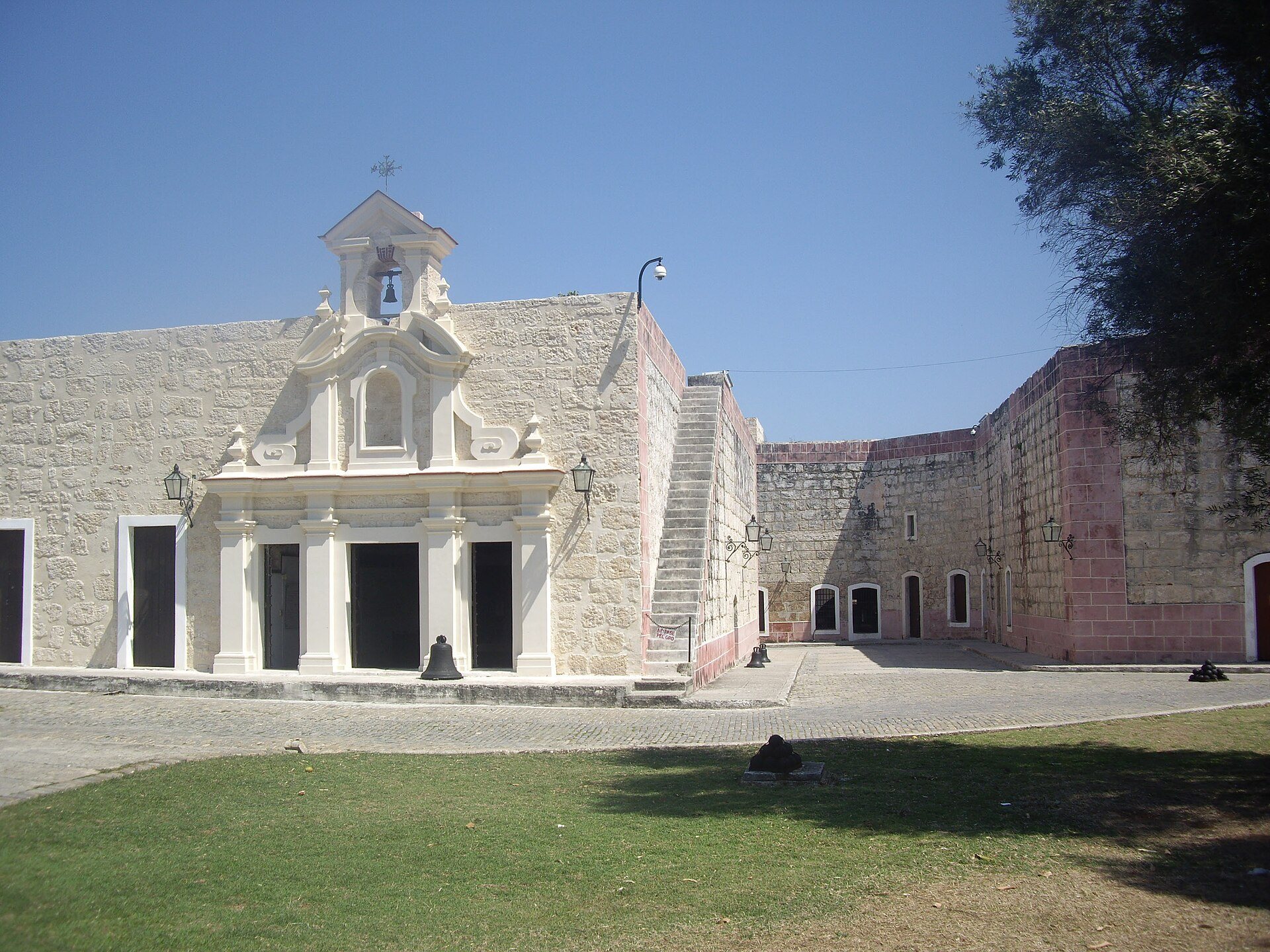
La Cabaña is an eighteenth-century bastioned fortress on a hill approximately 60 meters above the surrounding area, on the eastern side of the entrance to Havana Bay and directly adjoining El Morro. Its Baroque complex covers about 10 hectares, extends roughly 700 meters from end to end, and measures about 240 meters across.
Fortifications and defensive layout
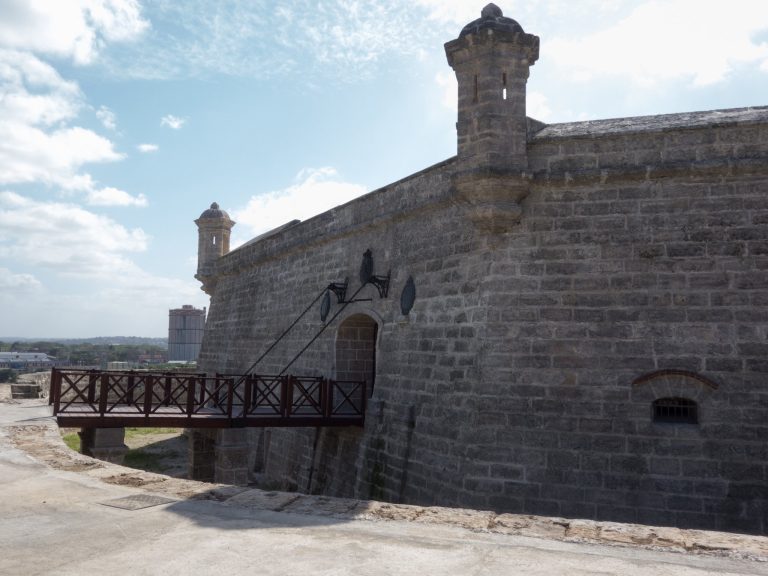
The fortress has a polygonal plan formed from load-bearing masonry and natural stone. Its defensive system includes bastions, ravelins, moats, a covered way, terraces, barracks, warehouses, cisterns, drawbridges, and artillery positions. Bastions and ravelins are projecting defensive works that allowed artillery to cover the walls and approaches, while the covered way provided a protected passage along the outer side of the fortification.
Natural-stone defensive walls extend for more than 700 meters around the complex. The layout reflects changes in eighteenth-century military engineering prompted by the increasing power of artillery. The San Ambrosio Bastion and San Agustín Terrace remain among the named defensive features of the fortress. Soviet nuclear missiles from the Cuban Missile Crisis are displayed at both locations.
Buildings and museum collections
Che’s Command Headquarters
The former residence of the Spanish military governor became Ernesto “Che” Guevara’s headquarters in 1959. Known as Che’s Command Headquarters, the building is now a museum. Guevara’s office has been preserved, and the displays include personal objects such as his weapons, glasses, and camera, together with documents and testimonies concerning his role in the Cuban Revolution.
Church and military museums
A church stands on the fortress parade ground. Other museum facilities present the history of La Cabaña and its military setting through photographs, old writings, weapons, ammunition, and other military-historical objects. The complex’s exhibitions combine the fortress’s Spanish colonial history with its later revolutionary and military associations.
Cannon-shot ceremony
The Nine O’Clock Cannon Shot continues as a ritualized use of the fortress’s artillery setting. Soldiers wearing eighteenth-century-style uniforms take part in the ceremony, which includes artillerymen, a lantern lighter, a standard-bearer, and a drum bearer. The sequence culminates in the firing of the cannon at 9 p.m.