Shishmanovo kale: An Ancient and Medieval Episcopal Center in Bulgaria
Site at a Glance
- Rating
- 3.6
- Popularity
- Very Low
- Country
- Bulgaria
- Primary era
- Medieval
- Eras represented
- Classical, Medieval
- Civilizations
- Byzantine, Roman, Second Bulgarian Empire, Thracian
- Site type
- City
On this page13 sections
History
Shishmanovo kale is an ancient and medieval fortified city and episcopal center near Samokov in Bulgaria, situated on a height above the village of Dospey. Known traditionally as Old Samokov, the settlement developed through Roman, Late Antique, and medieval phases before it was destroyed by the Turks at the end of the fourteenth century.
Ancient and Late Antique Settlement
The earliest occupation belongs to Romanized Thracians and Goths. Three principal ancient phases can be distinguished: from the mid-first to the early third century, from the late fourth century, when the fortifications were built and occupation became most active, and from the fifth to the end of the sixth century. During Late Antiquity, the period of transition from the Roman world to the early medieval world, the settlement had a Roman garrison. This may have been an independent unit or part of the Cohors II Lucensium, stationed at Germanea near present-day Sapareva Banya.
The final Late Antique phase contains evidence of burning associated with barbarian invasions in the sixth and seventh centuries. The fortress remained in use during the seventh and eighth centuries. Between 789 and 809, the Proto-Bulgarians captured fortresses in the surrounding area, after which much of the population gradually moved to flatter ground on the eastern bank of the Iskar River.
Medieval Fortified City
Use of the fortress continued into the twelfth century, when pottery from surface layers was produced. From the twelfth to the fourteenth centuries, Shishmanovo kale formed part of the Second Bulgarian Empire, the medieval Bulgarian state that lasted until the Ottoman conquest. It functioned as a fortified city with a suburb, a citadel, and other urban buildings. A large church from this period, traditionally called Petrova Church, stood in the lower part of the medieval complex and reflects the strength of Christian religious life in the Samokov region.
The site was destroyed by the Turks at the end of the fourteenth century. Local tradition identifies the hill as the battlefield of Tsar Ivan Shishman’s last fight with the Turks and as his burial place. This identification remains uncertain, since the person who died in battle near the site in 1388 may instead have been Ivan Asen V Shishman, Ivan Shishman’s brother.
Rediscovery and Investigation
Shishmanovo kale was among the first archaeological locations discussed in Bulgarian newspapers and journals. Konstantin Fotinov described it in a nineteenth-century geographical work, while the Bulgarian Revival-era writers Ivan Bogorov and Efrem Karanov also wrote about it. Other manuscripts produced before Bulgarian Liberation mention the site as well.
Systematic excavations began in mid-July 2004 through work by the Archaeological Institute of the Bulgarian Academy of Sciences and the Samokov History Museum, directed by Veselin Hadzhiangelov. The surveyed area covered 50 decares, a unit equal to one-tenth of a hectare, while the archaeological site occupied approximately 25 to 30 decares. After three years of research, about 10 percent of the site had been excavated. Ethnological research directed by Konstantin Rangochev gathered local stories and traditions linking the hill with Ivan Shishman’s final battle, death, burial, and a supposed hidden treasury and crown in a nearby cave. One legend says that the beheaded tsar continued fighting and that his head rolled seven times down the hill, creating seven springs called the Tsar’s Wells. Shishmanovo kale is designated an archaeological site of national importance.
Remains
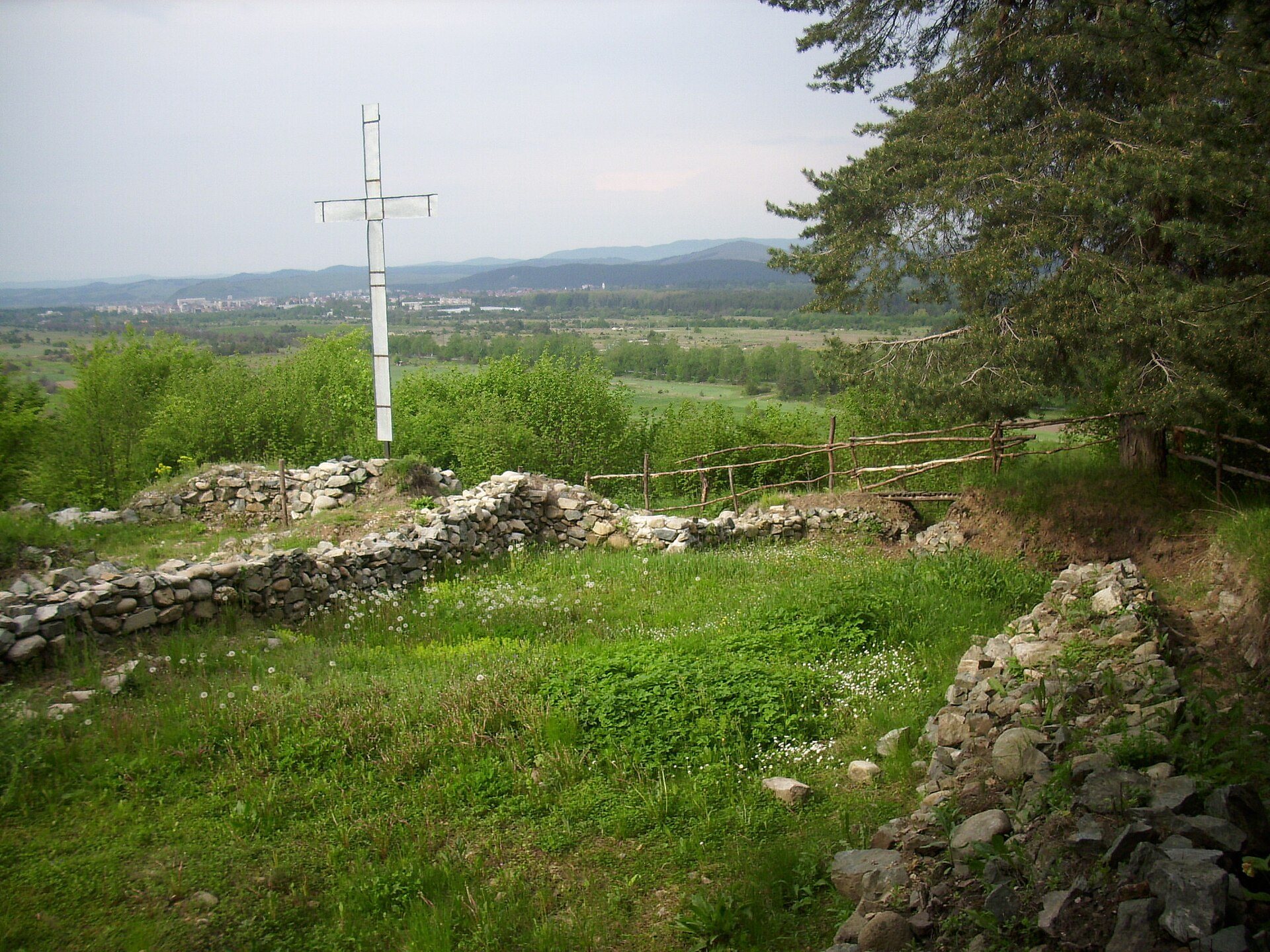
The settlement occupies a strategically placed height in the foothills of the Dospey Mountain, on Shishman Peak above Dospey. Its position overlooks the Samokov Plain and mountain routes. The urban area comprised a suburb, a principal walled city, and a citadel. Excavated remains include sections of defensive walls, a gate, two buildings near the gate, and another enclosure on the highest terrace.
Fortifications and Urban Areas
City Walls and Gate
The medieval complex preserves two defensive walls, parts of additional buildings, a citadel tower, and the suburb. The excavated gate and the two nearby buildings form part of the principal fortified area. On the highest terrace, a partly preserved enclosure contains the remains of a tower that probably served as the residence of the fortress’s kastrophylax, a military official responsible for guarding or administering a fortress, and as the medieval castle of its ruler.
Workshops and Finds
Areas around the churches included service spaces and workshops. Ceramic and pottery production is represented by workshop remains and manufacturing debris. An ironworking workshop contained an ore-smelting furnace, slag, melted residues, and numerous iron blanks. Other finds include coins, scale weights, many weights from vertical looms, arrows, ornaments, tools, pottery, weapons, and architectural material. The Samokov Museum recorded 900 new inventory units from the excavations.
Early Christian Churches
Monastic Basilica
Two Early Christian basilicas, churches with a long central space and side aisles, stood on opposite hills and date from the fifth to the sixth centuries. One formed part of a monastic complex beside the fortification wall. Both churches were destroyed during the barbarian invasions of the sixth and seventh centuries.
Northwestern Basilica
The second basilica stood outside the fortification on the northwestern hill. Its apse, the rounded or polygonal end of a church, contains a synthronon, a stepped stone bench for the bishop and clergy. A throne was also found inside the church. These features indicate that a bishop officiated there and probably lived at the site, supporting the identification of Shishmanovo kale as an episcopal center.
Petrova Church
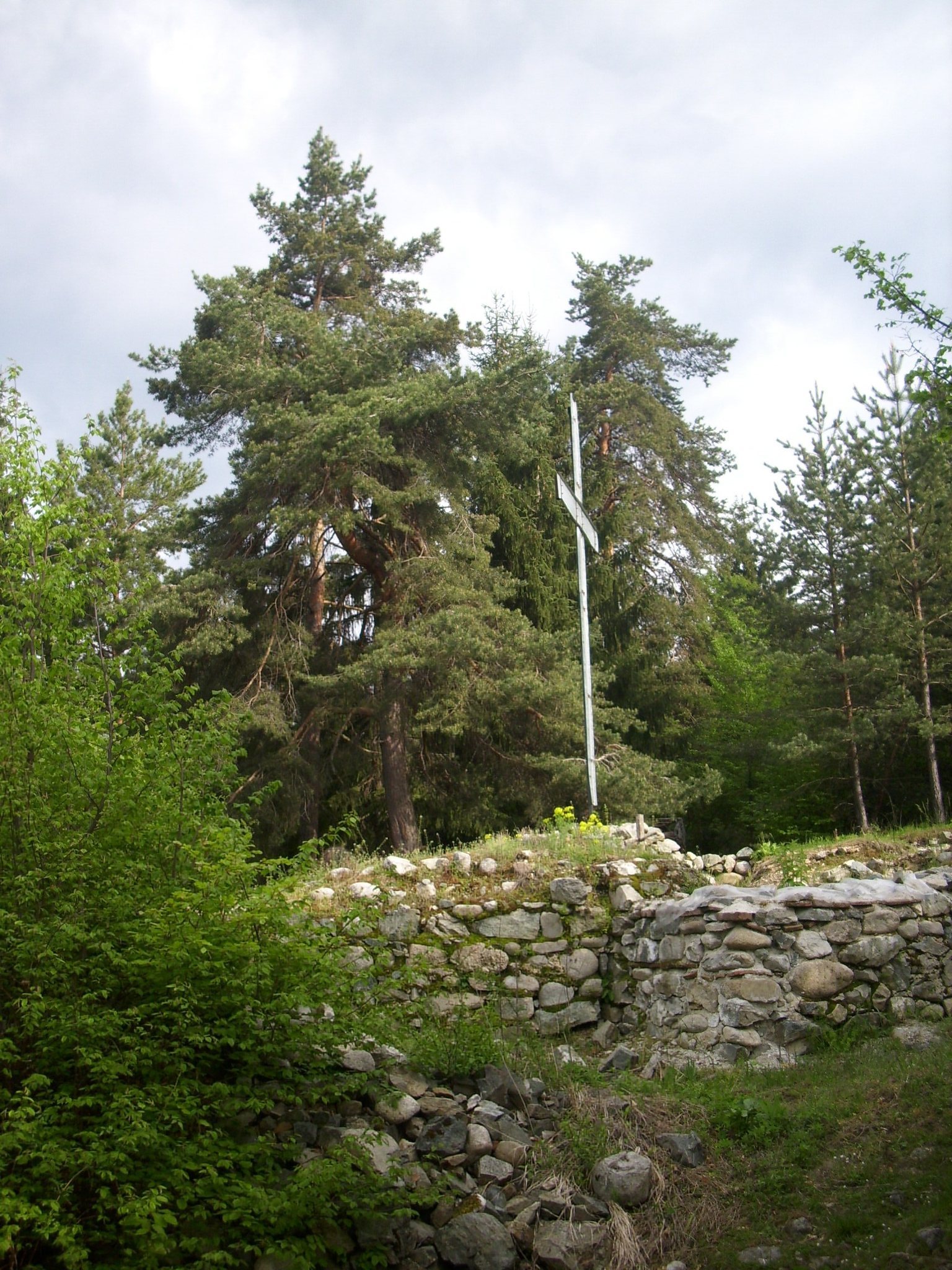
The lower part of the medieval complex contains the partially excavated large church traditionally known as Petrova Church. Dating from the twelfth to the fourteenth centuries, it formed part of the fortified city’s Christian landscape. A cross now stands on the hill as a symbol of Bulgarian faith.
Earlier Occupation
The earliest settlement horizon is represented by coins, pottery, and a notable bronze applique showing Medusa the Gorgon, the figure from Greek mythology traditionally portrayed with snakes for hair. These objects provide material evidence for the ancient phase of occupation before the later fortifications and Christian buildings shaped the hilltop complex.