Morro Castle: Havana’s Spanish Colonial Harbor Fortress
Site at a Glance
- Rating
- 4.6
- Popularity
- Medium
- Country
- Cuba
- Primary era
- Early Modern
- Eras represented
- Early Modern, Modern
- Civilizations
- Spanish
- Site type
- Military
- Remains
- Fort
On this page12 sections
History
Morro Castle is a Spanish colonial fortress in Havana, Cuba, built to protect the entrance to Havana harbor from pirates, privateers, and other invaders. Its design was prepared in 1585 by the Italian military engineer Battista Antonelli, also known as Juan Bautista Antonelli, and construction began in the late sixteenth century. The fortress became part of Havana’s principal defensive system and guarded the harbor’s narrow entrance together with Castillo San Salvador de la Punta.
Construction and Spanish harbor defense
Work progressed slowly because of financial difficulties and disputes between the island’s governors and Antonelli. The main construction was completed during the governorship of Don Pedro Valdés, between 1600 and 1607. Troop quarters, ammunition stores, and water tanks probably followed around 1610, completing the facilities needed for a permanent garrison.
A chain or boom defense, meaning a barrier stretched across a waterway to obstruct ships, linked the defenses at the harbor entrance. Morro Castle remained Havana’s principal harbor defense until La Cabaña became operational in 1774.
The British siege of 1762
Morro Castle was captured during the Siege of Havana in 1762, an episode in the Seven Years’ War, the global conflict fought mainly between 1756 and 1763. Spain entered the war against Britain in 1762, bringing the conflict to Havana. British forces landed at Cojímar and attacked the fortress from the landward side after occupying the heights of La Cabaña, which had been left undefended.
The British built batteries and breastworks on La Cabaña Hill, about 7 meters higher than Morro Castle, and bombarded the fortress. Luis Vicente de Velasco, the Spanish naval officer commanding the garrison, directed repairs and counterattacks. On 30 July 1762, British troops detonated a mine beneath the right bastion and seized it. Velasco was mortally wounded in the fighting and died in Havana the following day.
The fall of Morro Castle allowed British artillery to fire on Havana and contributed directly to the city’s surrender on 13 August 1762. Havana remained under British occupation until the Treaty of Paris returned it to Spain in 1763.
Rebuilding and later roles
The fortress was heavily damaged during its capture and was rebuilt in 1763 under the direction of the military engineers Silvestre Abarca and Agustín Crame. The reconstruction added the Tejeda and Austria bastions, a deep well, covered ways, reservoirs, barracks, dungeons, and warehouses. A covered way is a protected route outside a fortress. La Cabaña was constructed after the British occupation to prevent another landward attack on Morro Castle, which continued to serve as a principal harbor defense until the newer fortress became operational.
Morro Castle forms part of the Old Havana World Heritage Site, inscribed in 1982 for its historical importance in the European conquest of the New World and for its distinctive architectural character. The fortress formerly housed a school for lighthouse keepers. It later contained a lighthouse exhibition and a small underwater-archeology exhibition, while a harbor master’s office continues to occupy part of the complex.
A nightly cannon firing at 9 p.m., known as El Cañonazo de las 9, preserves a colonial practice that signaled the closing of Havana’s city gates. During the government of Fidel Castro, the Cuban poet and novelist Reinaldo Arenas was imprisoned in the fortress because of his criticism of the government.
The fortress has also appeared in artistic and literary works. Morro Castle is shown in John Singleton Copley’s painting Watson and the Shark from 1778, and it appears in the films The Ghost Breakers from 1940 and The Big Boodle from 1957. José Antonio Echeverría used it as a setting in his historical novel Antonelli, published in 1839.
Remains
Plan and defensive works
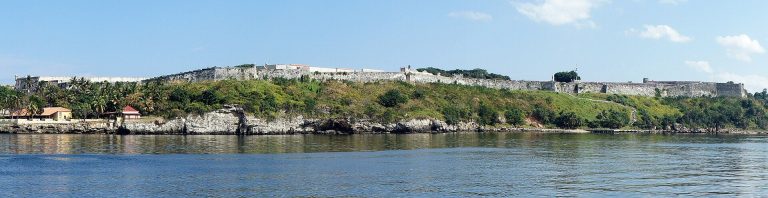
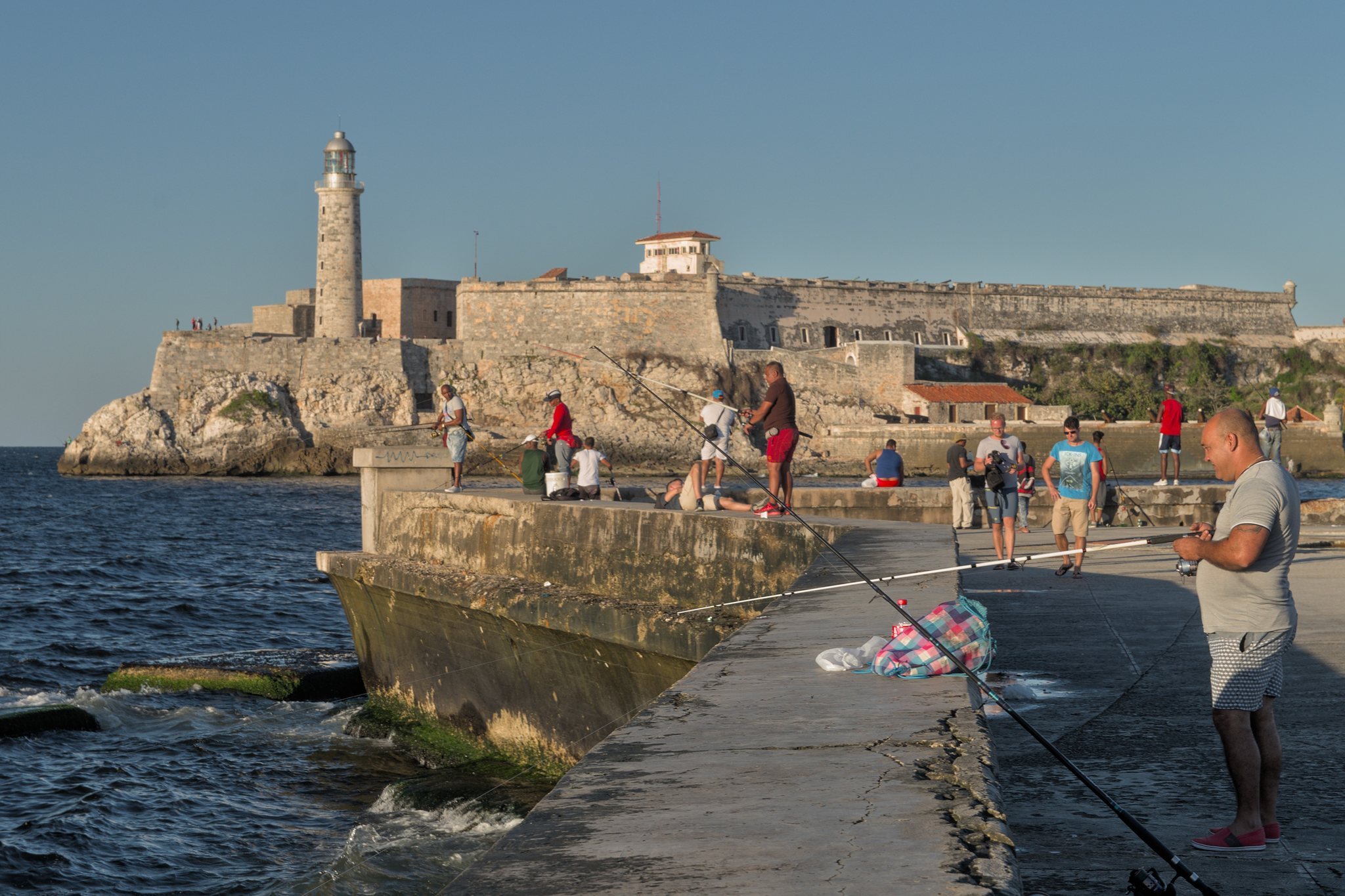
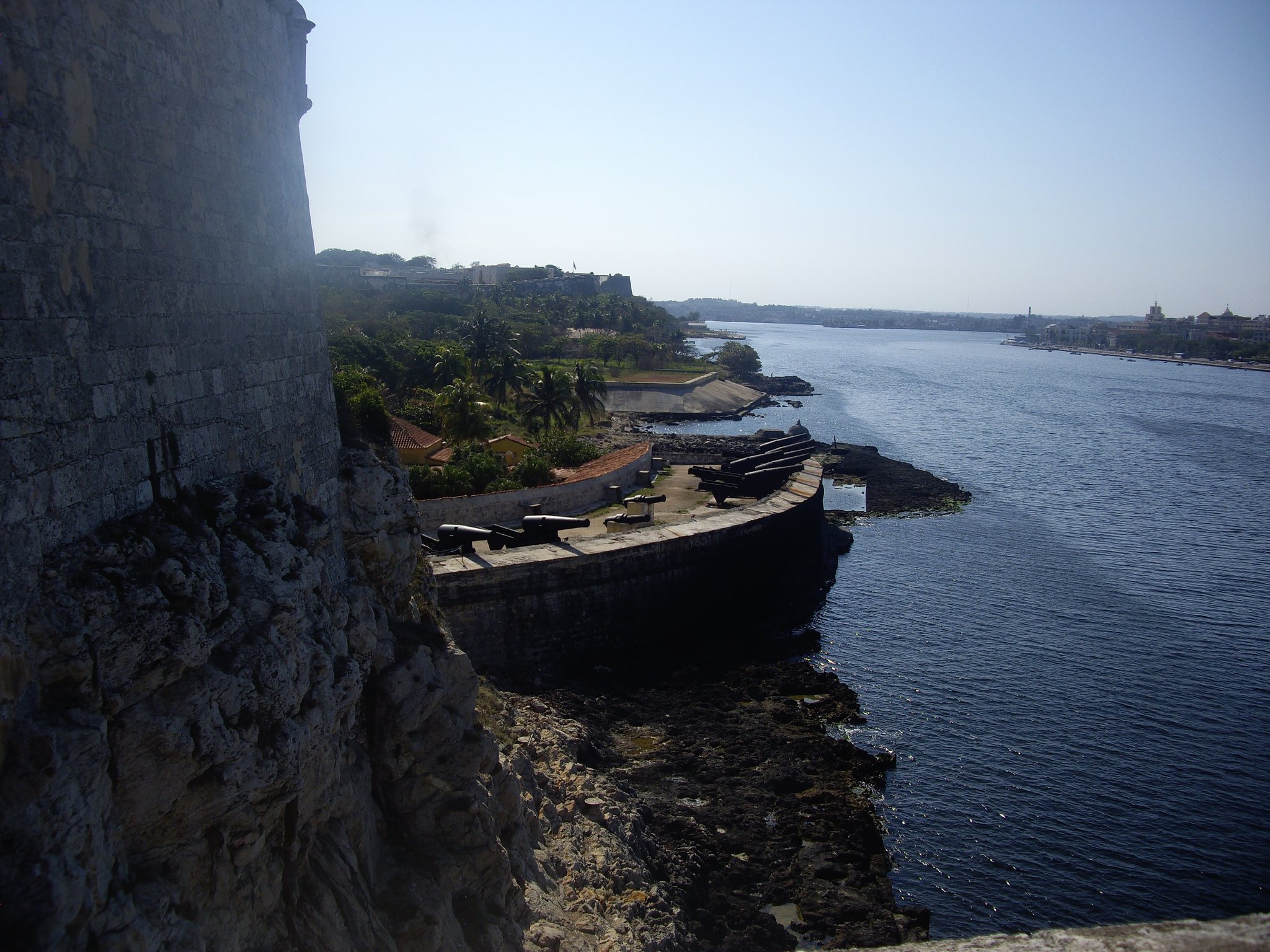
Morro Castle occupies a rocky promontory on the side of Havana harbor opposite Old Havana. The word morro refers to a prominent rock, height, or headland visible from the sea and useful as a navigational landmark. The fortress follows an irregular polygonal plan that conforms closely to the cliff. It stands on a steep rock approximately 20 meters high and ends in a sharp angle at the mouth of Havana Bay, toward the Florida Strait.
Seaward bastion and lighthouse
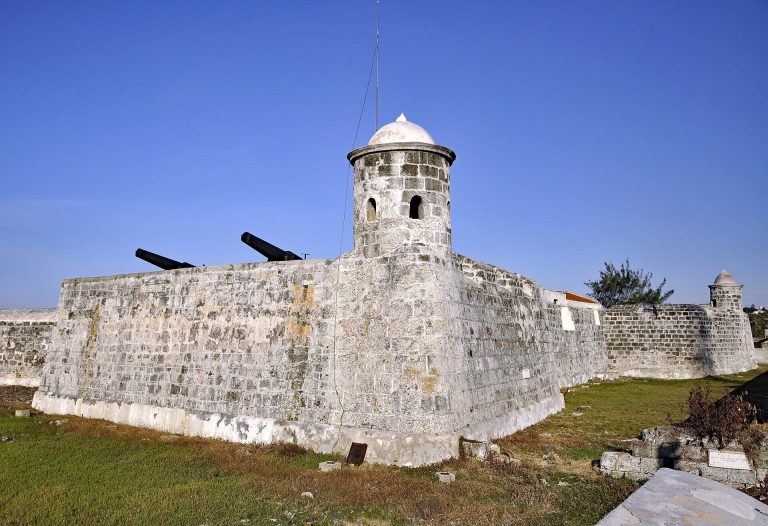
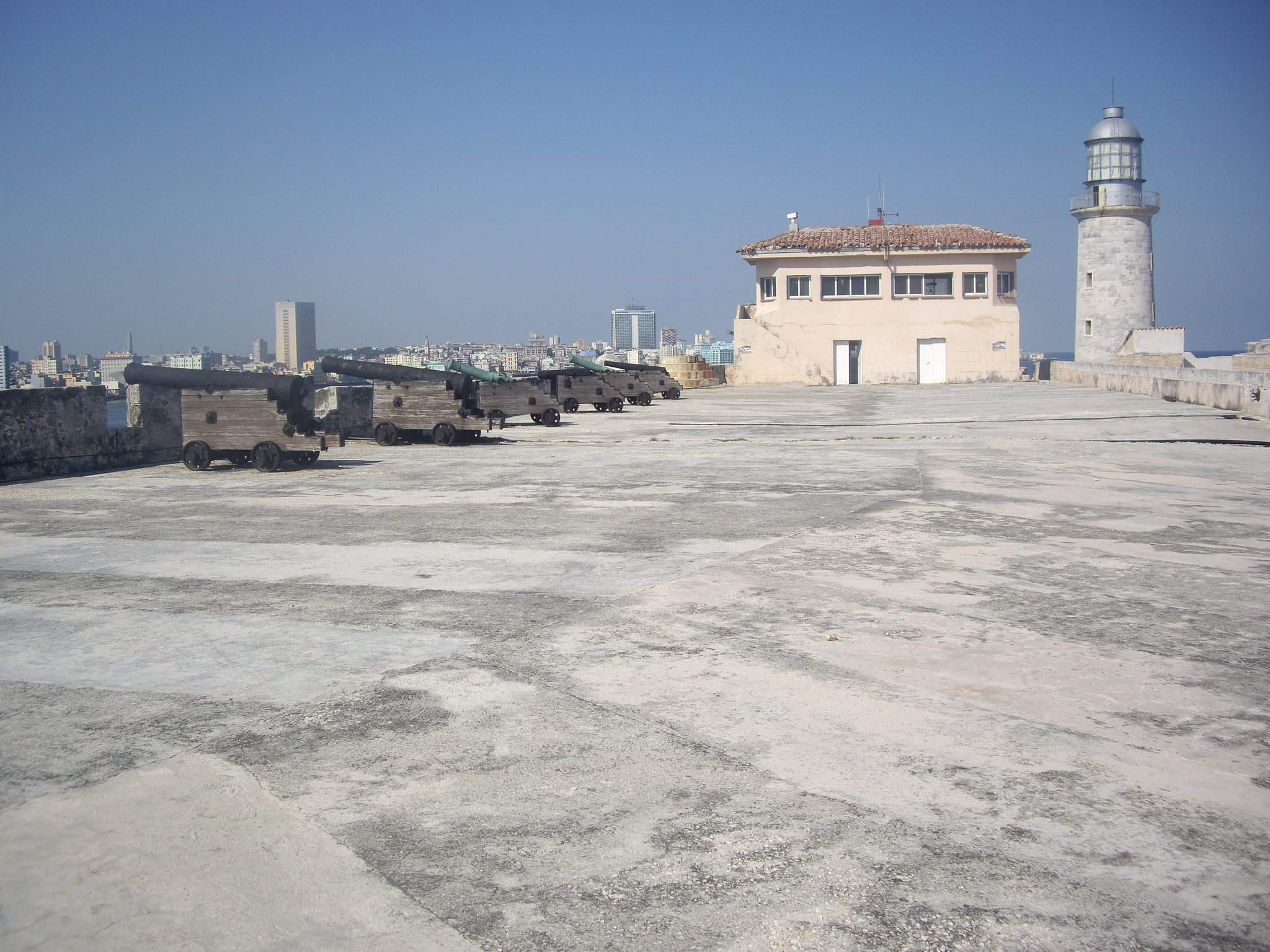
A semicircular bastion at the seaward point carries the lighthouse. Firing positions extend for approximately 150 meters along both sides of the fortress before reaching the landward rear section, where two bastions are connected by a deep moat. A small turret at the end of the wall overlooks the sea and rocks about 20 meters below.
Walls, moat, and interior passages
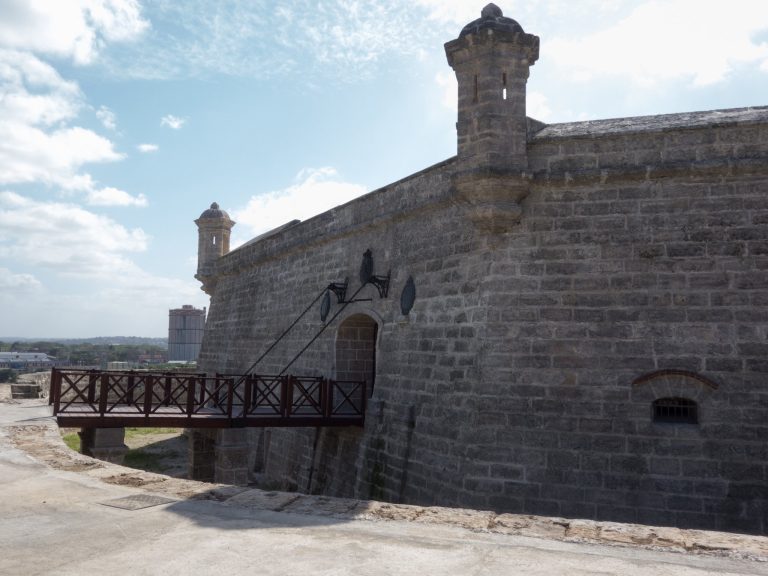
The fortress is built of masonry and includes central barracks rising to four stories. An interconnected system of interior passages is joined by several entrance and connecting gates. The surviving defensive fabric also includes old latrines with a chute leading into the sea, two sets of doors, and a drawbridge mechanism. The walls are well preserved, while the cannon surrounding the fortress are severely rusted.
Reconstructed facilities
The post-siege rebuilding adapted the fortress to its irregular terrain. Its surviving facilities include the deep well, covered way, reservoirs, barracks, dungeons, and warehouses added during the 1763 reconstruction. On the lower level facing the harbor are the kitchens known as Los Doce Apóstoles and La Pastora.
Memorials and artillery
Between two powder magazines in the northeastern bastion stands a small memorial and a plaque commemorating the British siege of 1762. Opposite the moat is a later artillery area containing guns and cannon known as La Batería de Velasco.
Lighthouse tower
The original lighthouse tower was about 10 meters high and first served as a lighthouse in 1764. It was demolished in the mid-nineteenth century and replaced by a tower approximately 5 meters in diameter and about 30 meters high. Completed during the 1840s, the replacement lighthouse was electrified in 1945 and remains a prominent element of the fortress ensemble.
Exhibitions and surviving use
The fortress contains a lighthouse exhibition and a small underwater-archeology exhibition. A harbor master’s office continues to occupy part of the complex, adding a current administrative use to the surviving military and navigational structures.