Lorvão Monastery: A Benedictine and Cistercian House in Portugal
Site at a Glance
- Popularity
- High
- Country
- Portugal
- Primary era
- Early Modern
- Eras represented
- Medieval, Early Modern
- Civilizations
- Portuguese
- Site type
- Religious
- Remains
- Monastery
On this page9 sections
History
Lorvão Monastery is a Christian monastic complex in Lorvão, Portugal, probably founded in the late ninth century. Its building history includes Romanesque (medieval European architecture), Renaissance (classical revival), and Baroque (dramatic, richly decorated) phases. It became a prosperous religious and economic institution, a centre of Mozarabic culture, and later an influential Cistercian women’s monastery.
Origins and the medieval frontier
The monastery’s early history is uncertain. One tradition places its foundation in the sixth century, dedicates it to Saint Mammes, and associates it with a former Roman villa and a foundation in 547. If that date is accepted, Lorvão would be among Europe’s oldest monasteries. Another tradition names Lucêncio, the first bishop of Conimbriga, an ancient Roman city near modern Coimbra, as founder and points to a stone from the Visigothic period found in 1983. A document written between 572 and 582 refers to a parish called Lurbine, a name also linked with Lorvão.
A foundation in the late ninth century, after Christians captured Coimbra in 878, is considered more likely. Hermenegildo Guterres took the city on behalf of Alfonso III of Asturias and became its first count. He was charged with developing and incorporating the lands between the Mondego and Douro rivers into the Kingdom of León, with the Mondego forming a frontier. By the tenth century, Lorvão was already an important monastery. In the tenth and eleventh centuries it prospered economically and became a centre of Mozarabic culture, shaped by Christian life under Muslim rule and Arabic influence. It also served as a trading point between Christian communities to the north and Muslim territories to the south. The monastery’s Liber testamentorum contains 75 documents dated from 877 to 1159, reflecting the region’s Arabized Christian elites.
In 987, Muslim forces under Almanzor, a powerful leader of the Caliphate of Córdoba, retook the Coimbra region. Lorvão accommodated the new authorities and retained cultural and economic influence, supported in part by land donations from Christian owners who had fled. Under Muslim rule, the lands between the Douro and Mondego included a protectorate governed indirectly through unstable Christian lordships.
By the mid-eleventh century, Lorvão had adopted the Benedictine Rule, a code for communal monastic life. After Coimbra returned to Christian control in 1064, Benedictine monks associated with Cluny were entrusted with the monastery and helped develop agriculture in the surrounding region. Mozarabic influence continued, although the Cluniac reform, a movement associated with Cluny, promoted Latin church practices and weakened the Mozarabic rite, a form of Christian worship distinct from the Latin rite. After the death of Sesnando Davides, the Mozarabic leader who governed Coimbra and lands south of the Douro, in 1091 or 1092, abbots from the north led Lorvão. The monastery lost its independence and came under the protection of the bishop of Coimbra.
Renovation and a Cistercian women’s community
Major renovations took place in the second half of the twelfth century, during the reign of Afonso Henriques, Portugal’s first king. Under Abbot João, who led Lorvão from 1162 to 1192, the monastery and Santa Cruz in Coimbra became leading centres of illuminated manuscript production in the kingdom.
In 1205, the bishop of Coimbra transferred Lorvão to Teresa, daughter of King Sancho I, so she could establish a Cistercian women’s house. Cistercians followed a reformed form of Benedictine life. The bishops of Porto and Lisbon confirmed the transfer on 28 December 1206. The monks resisted, and Teresa offered them 500 gold coins in compensation. They appealed to Pope Innocent III, who ordered them to leave in November 1210. Accusations that they had acted improperly and allowed the monastery and its property to deteriorate were used to justify the change. From 1211, Teresa developed Lorvão as a Marian house for women.
The monastery became a prestigious destination for women of the high nobility, one of Portugal’s wealthiest monasteries, and an economic centre in Beira, a historical region of central Portugal. Teresa had been married to Alfonso IX of León, but their marriage was annulled on grounds of consanguinity after they had three children. She returned to Portugal and lived at Lorvão until her death in 1250. She could not take religious vows until Alfonso died in 1230. Her sister Sancha, who died in 1229 as abbess of Celas, was also buried at Lorvão.
Later monastic life and closure
Lorvão flourished under Abbess Catarina de Eça (1472–1521) and Abbess Bernarda de Lencastre (1560–1564). In the second half of the seventeenth century, 124 nuns lived there. Teresa and Sancha were beatified in 1705, and eighteenth-century tombs were made for them.
After the Portuguese Liberal Wars, a civil conflict between liberals and absolutists fought from 1828 to 1834, the suppression of religious orders in 1834 initially applied only to male houses. A law passed in 1862 provided for women’s monasteries to close after their last religious resident died. Lorvão’s final nun died in 1887. Much of the monastery’s property was dispersed among Portuguese museums. With the nuns’ permission, the Apocalypse of Lorvão was transferred to the National Archive of Torre do Tombo in 1853 through the historian Alexandre Herculano; the abbey library was seized in the early 1880s. Lorvão became a National Monument in 1910.
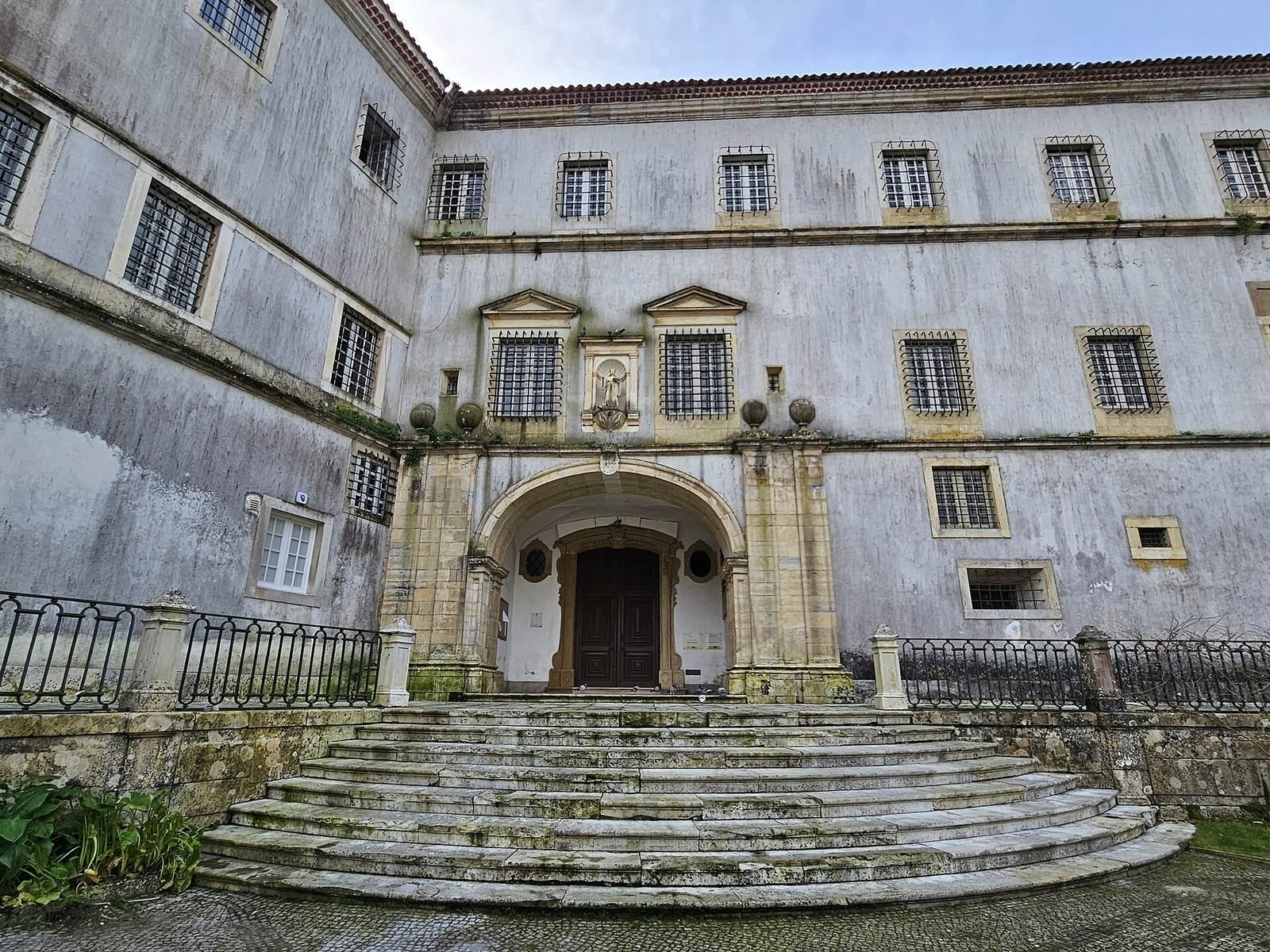
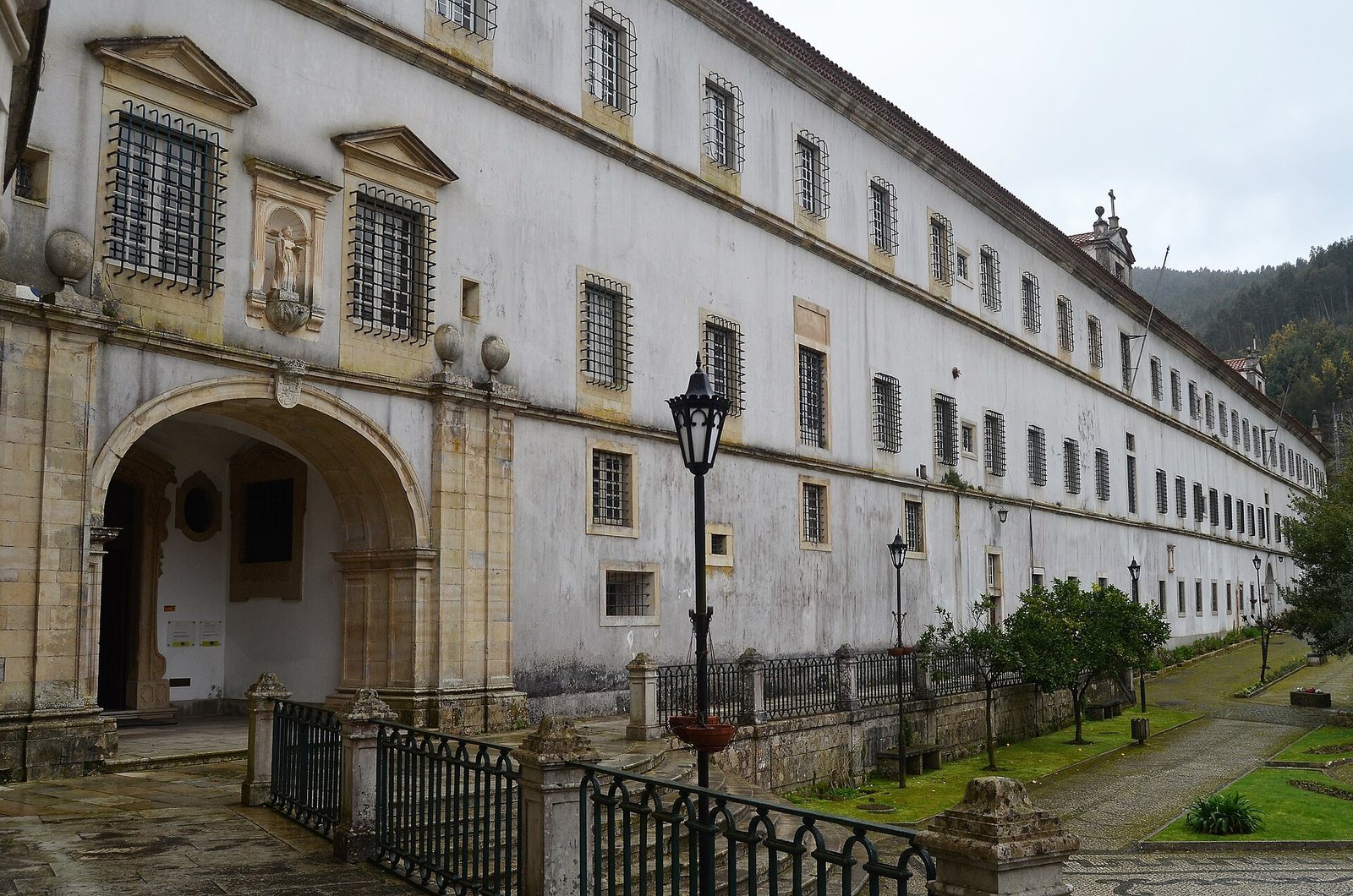
During the Estado Novo, Portugal’s authoritarian regime from 1933 to 1974, the buildings and surrounding area, already in advanced disrepair, were converted into a psychiatric hospital. The hospital closed in 2012, after a psychiatric hospital opened in Coimbra in 2007.
Remains
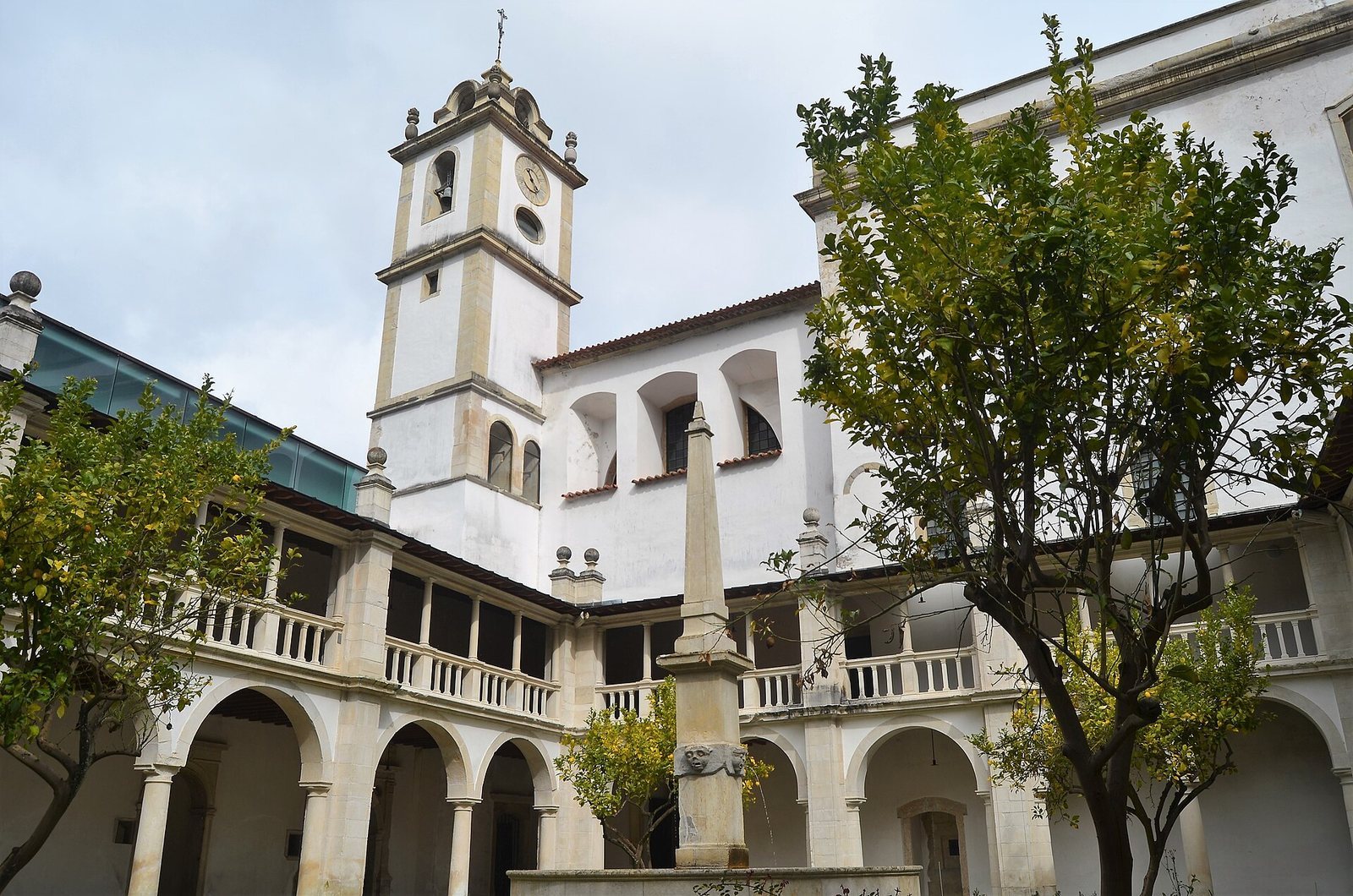
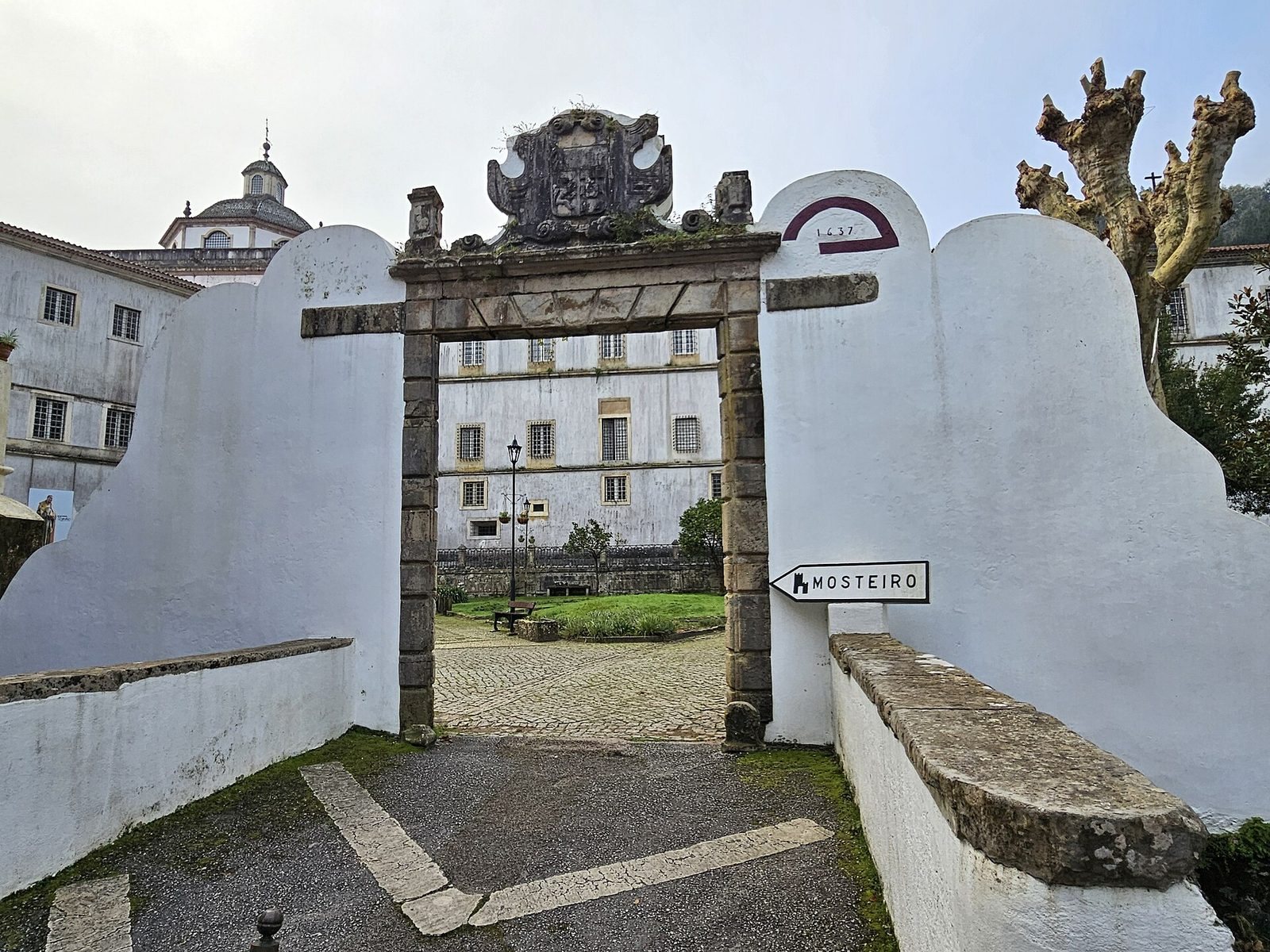
The surviving complex includes a church and cloister, with the buildings reflecting successive medieval, Renaissance, and Baroque campaigns. The church was planned with three naves during the likely late-twelfth-century rebuilding, while later work gave the complex much of its Baroque character.
Church and choir
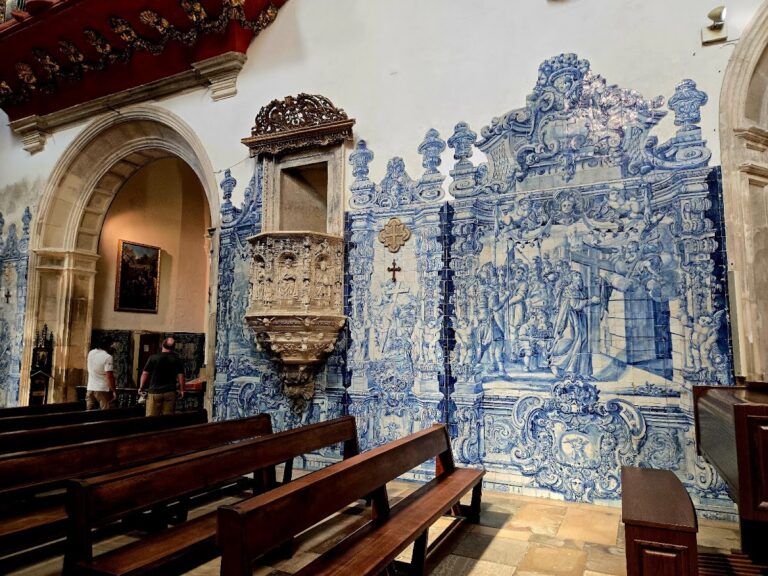
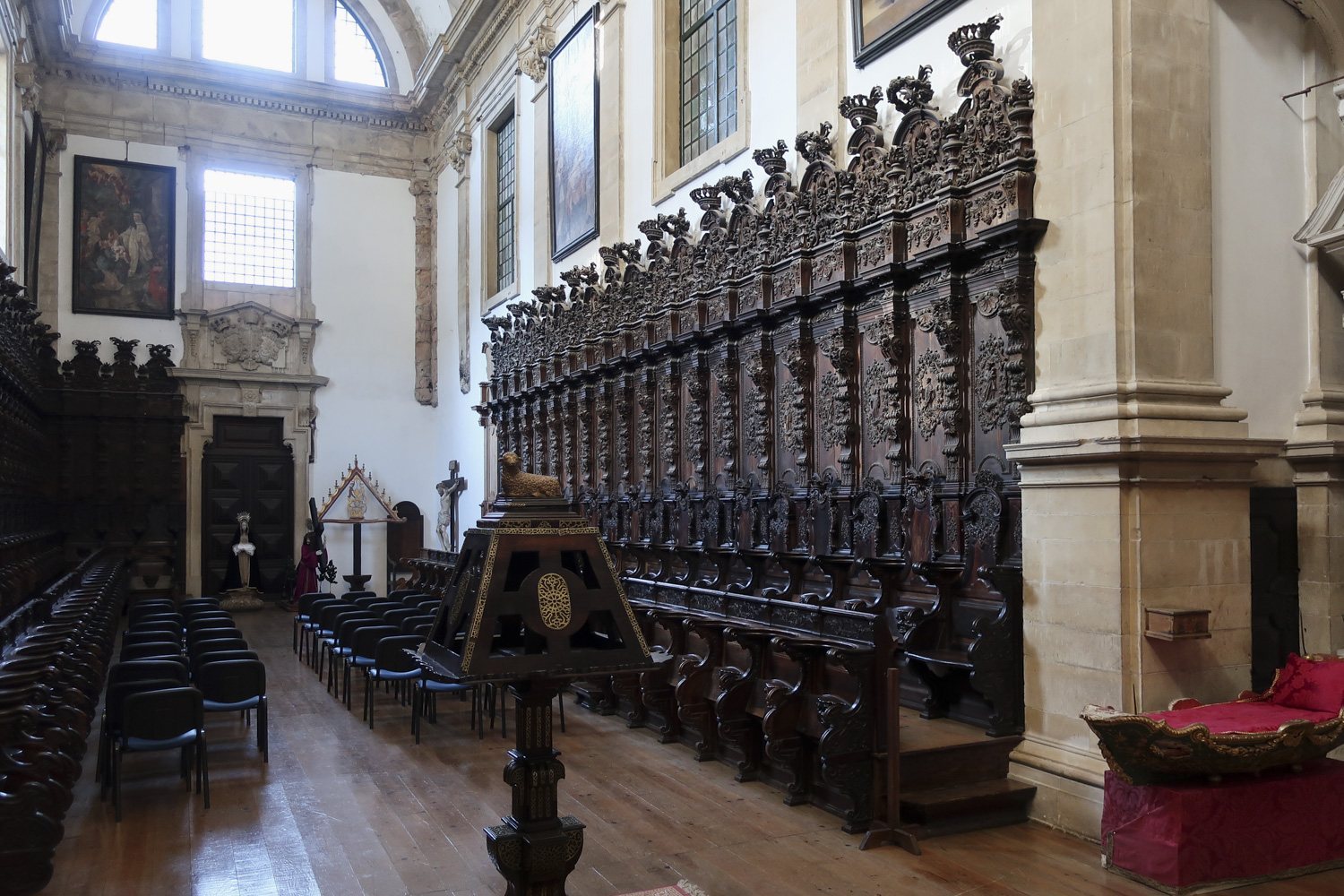
Building campaigns begun in the 1620s continued into the eighteenth century. The church porch dates to 1630, and gilded woodcarving decorates the interior. The church was rebuilt between 1748 and 1761 under the influence of the Palace of Mafra, a Portuguese royal palace and convent complex. Its surviving features include a high altar and a dome. The lower choir stalls, made from rosewood and walnut between 1742 and 1747, accompany a Rococo-style grille, an ornate wrought-iron screen. Teresa and Sancha’s tombs take the form of eighteenth-century urns made in 1714 by Porto goldsmith Manuel Carneiro da Silva.
Cloister and sculpture
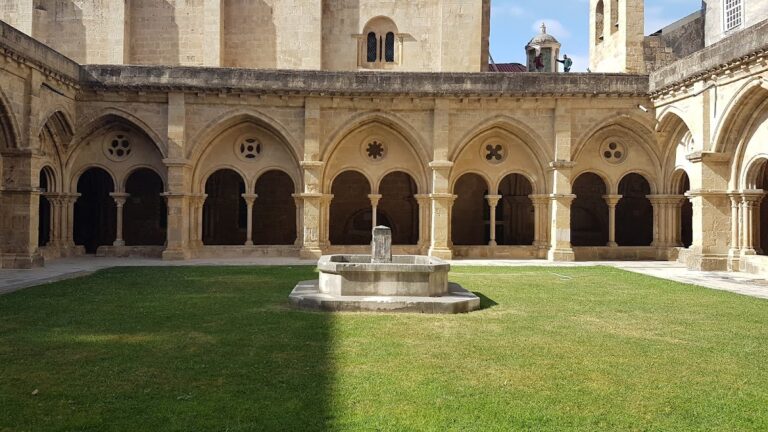
A new cloister formed part of the likely late-twelfth-century renovations. Romanesque capitals in its chapels are surviving medieval architectural elements. The cloister was remodelled in Renaissance style in the last quarter of the sixteenth century, and balconies were added in 1677. The Cloister of Silence remains among the monastery’s surviving features. In 2014, the cloister was adapted as a museum of sacred art. Manueline-period sculpture, associated with Portugal’s late Gothic artistic style, is also linked to the monastery.
Manuscripts
The monastery’s workshop produced the Book of Birds in 1184, a bestiary, or illustrated work about animals, based on a text by Hugh of Fouilloy, a cleric who lived under a religious rule. In 1189, the workshop made the Apocalypse of Lorvão, an illuminated version of the eighth-century monk Beatus of Liébana’s commentary on the Apocalypse. The monk Egeas illuminated both manuscripts. The Apocalypse of Lorvão was moved to the National Archive of Torre do Tombo in 1853.
Organ
The church contains an eighteenth-century Iberian double-sided organ, with a façade on each side, noted for its unusual size and sound. Its restoration took about 25 years and was inaugurated on 3 May 2014.