Montebello Castle: Historic Fortification Guarding Alpine Passes in Switzerland
Visitor Information
Google Rating: 4.7
Popularity: Medium
Official Website: www.fortezzabellinzona.ch
Country: Switzerland
Civilization: Early Modern, Medieval European
Site type: Military
Remains: Castle
History
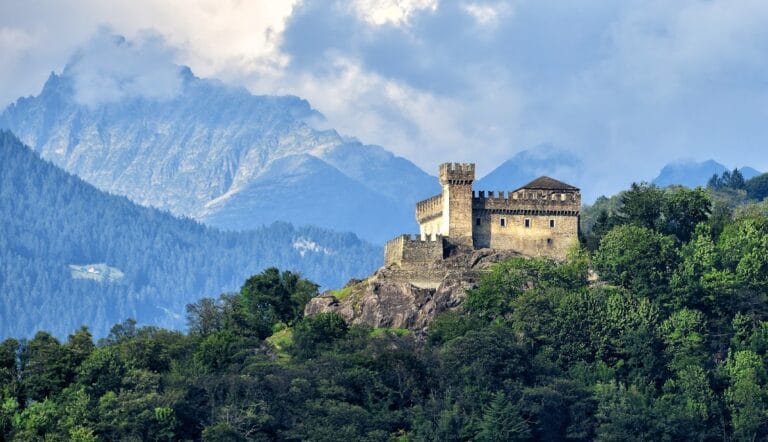
Montebello Castle stands on the eastern side of Bellinzona and was built in the late 13th century during the political struggles that shaped control of the region. It is traditionally associated with the pro-Imperial Rusca family, who constructed the first fortification before 1313 as part of their contest with rival factions aligned with Milan and Como. Its elevated position allowed oversight of routes linking the Ticino valley with the Alpine passes, complementing the broader defensive system that protected this strategic corridor.
During the 14th century, the castle was strengthened with new walls and a fortified gatehouse as regional power shifted between the Holy Roman Empire, the Visconti of Milan, and local noble families. A major expansion followed between 1462 and 1490 under Milanese rule, when the outer walls and deep moats were added, giving Montebello much of its present form. After Bellinzona joined the Swiss Confederation in 1500, the castle’s military role declined, though it continued to serve administrative and storage functions. Restoration of the structure began in the early 20th century, preserving its late medieval layout and integrating it into Bellinzona’s cultural heritage.
Remains
The Castles of Bellinzona consist of three main fortifications: Castelgrande, Montebello, and Sasso Corbaro. They occupy rocky hills and control the surrounding valleys. The castles show construction phases from Roman times through the late Middle Ages, with later restorations preserving many features.
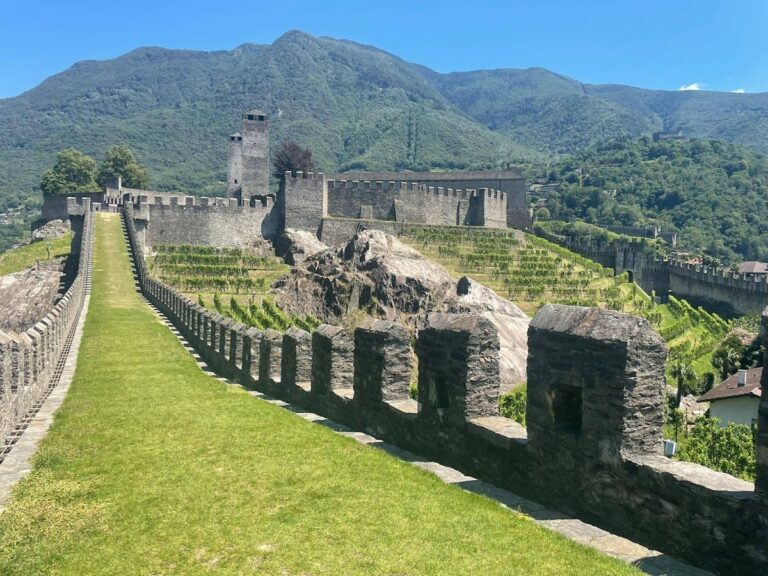
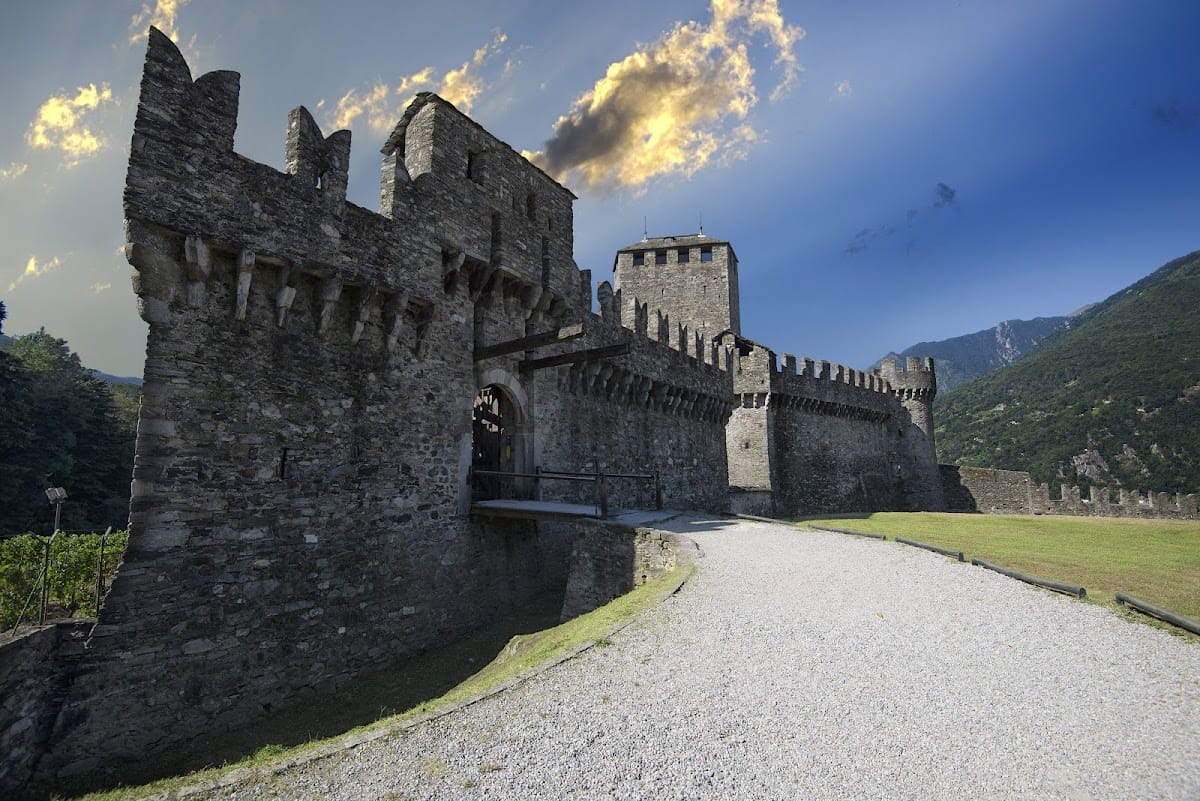
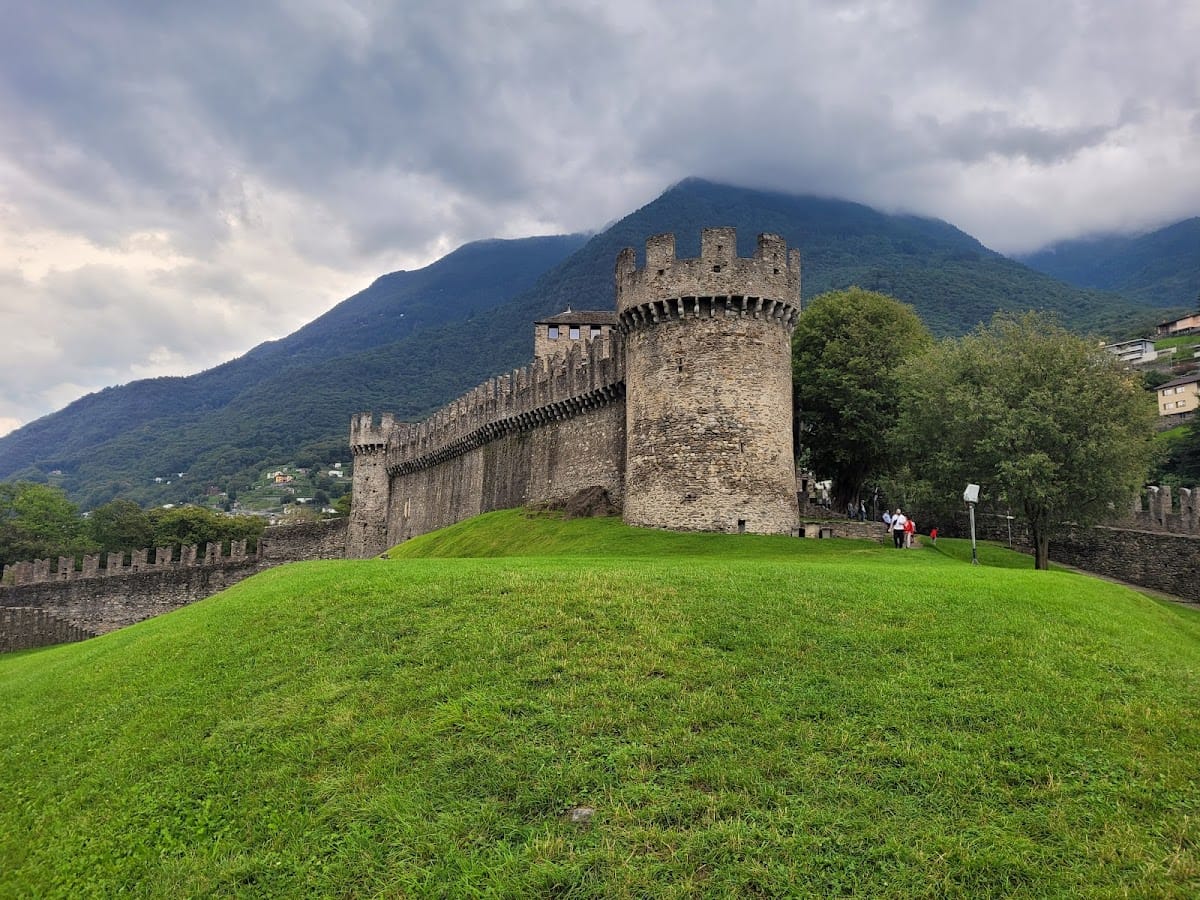
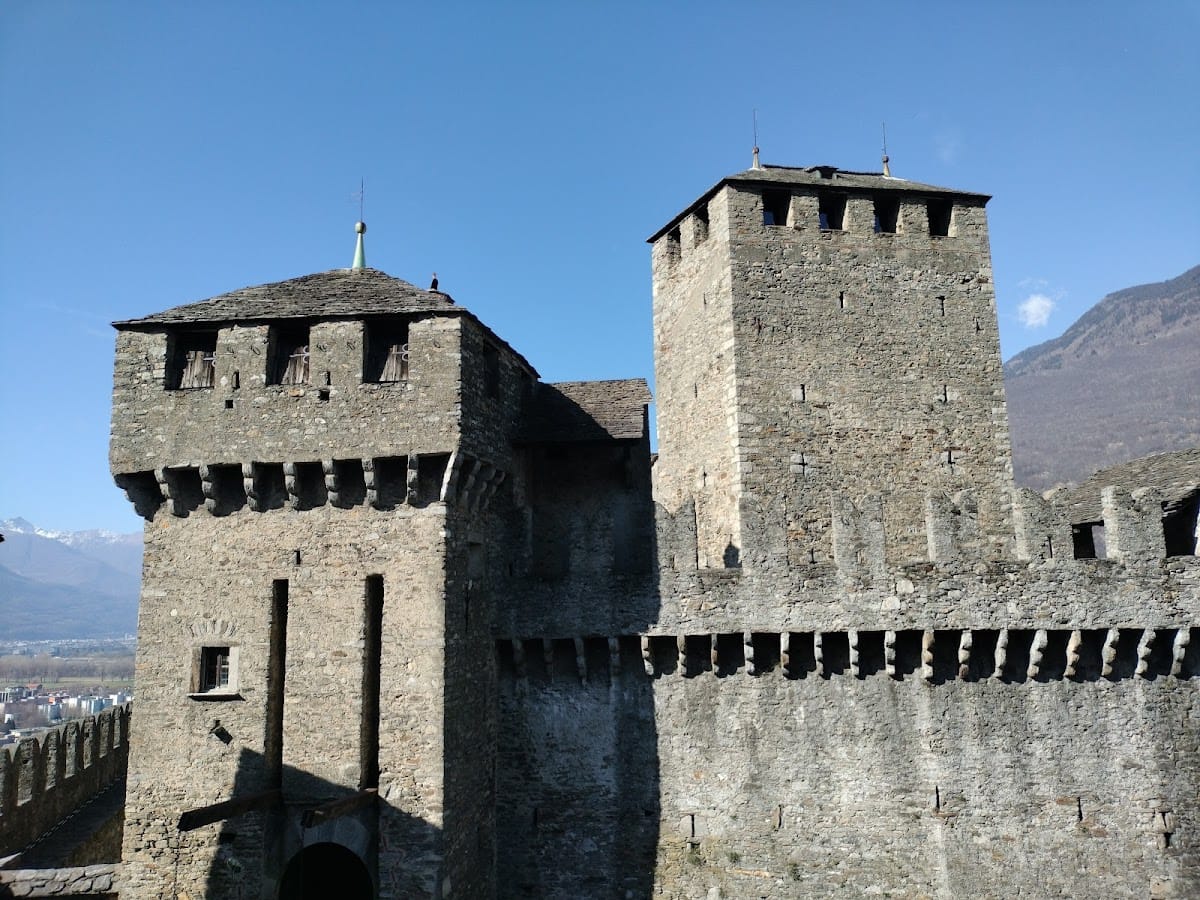
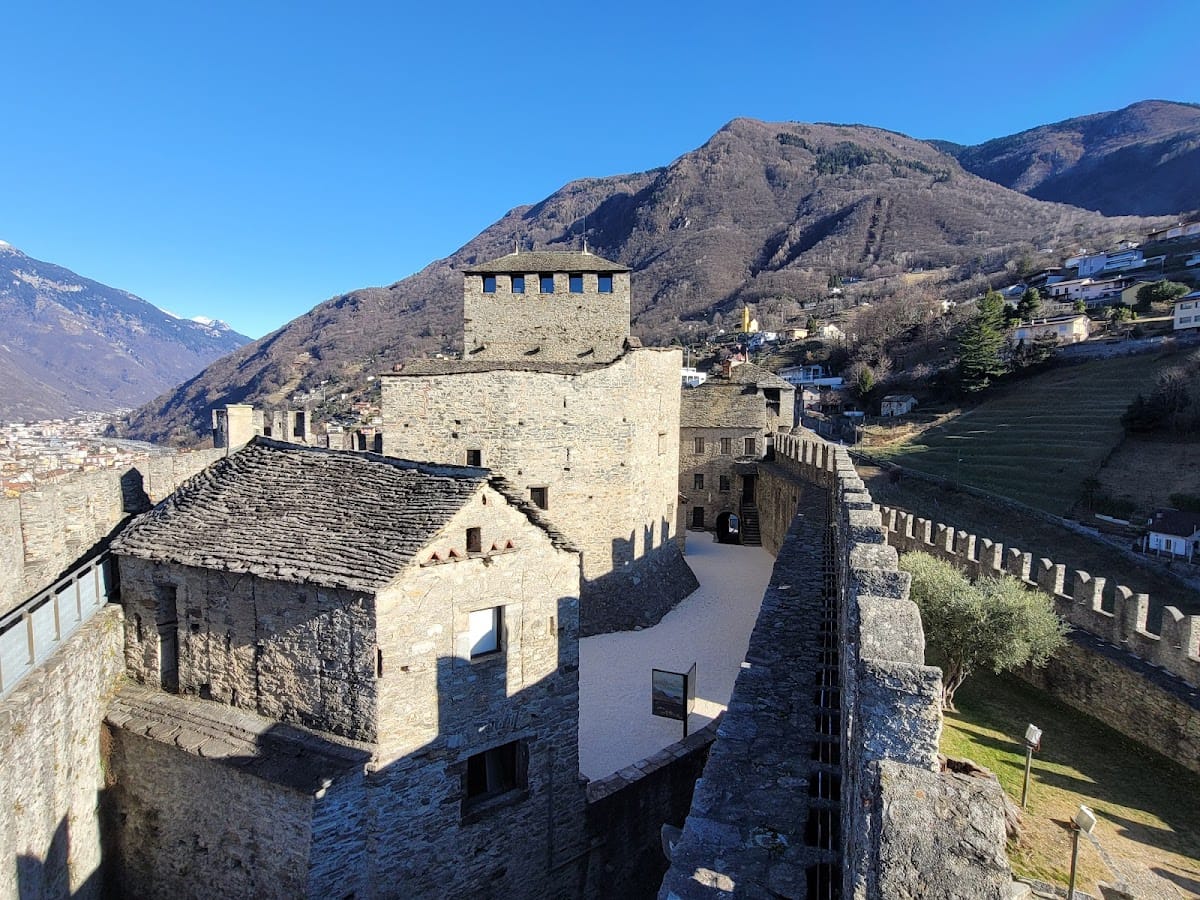
Montebello Castle occupies a narrow ridge above the old town and is enclosed by a system of walls and moats that reflect three major construction phases. The innermost structure, built before 1313, forms an irregular rectangular keep surrounded by a high curtain wall that once housed living quarters and service rooms. Its original entrance sits high on the western wall and was reached by exterior steps, a defensive feature characteristic of early medieval strongholds.
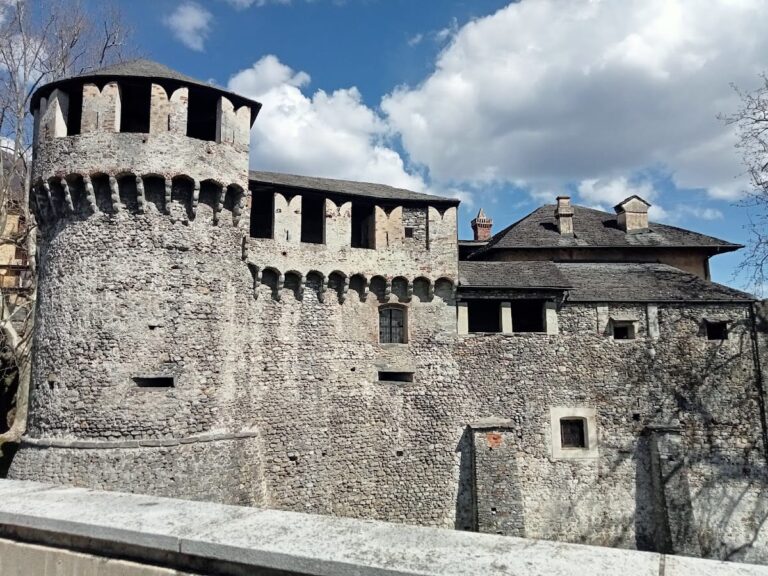
The 14th-century additions include a gateway protected by a projecting gatehouse. Modern reconstructions of the inner and outer drawbridges illustrate how the complex was originally accessed. The 15th-century expansion pushed the defensive perimeter outward, adding a second ring of walls, a large eastern moat, and an arrowhead-shaped barbican designed to shield the castle from artillery and direct assault. Machicolations, battlements, and a gate fitted with a murder-hole further enhanced its defenses.
A small chapel dedicated to Saint Michael, built around 1600 against the southern wall, is one of the few architectural elements added during Swiss rule. Today Montebello houses the Archaeological and Civic Museum, displaying finds ranging from Bronze Age artifacts to medieval sculpture, arms, and architectural elements. The vaulted cellars beneath the castle continue to serve practical use as storage for regional cured meats, maintaining a link between the site’s historic fabric and local tradition.
Nearby sites