Cawdor Castle: A Scottish Tower House and Campbell Residence


Site at a Glance
- Rating
- 4.6
- Popularity
- Medium
- Country
- United Kingdom
- Primary era
- Early Modern
- External website
- Open
- Eras represented
- Medieval, Early Modern, Modern
- Civilizations
- British, Kingdom of Scotland
- Site type
- Domestic
- Remains
- Castle
On this page11 sections
History
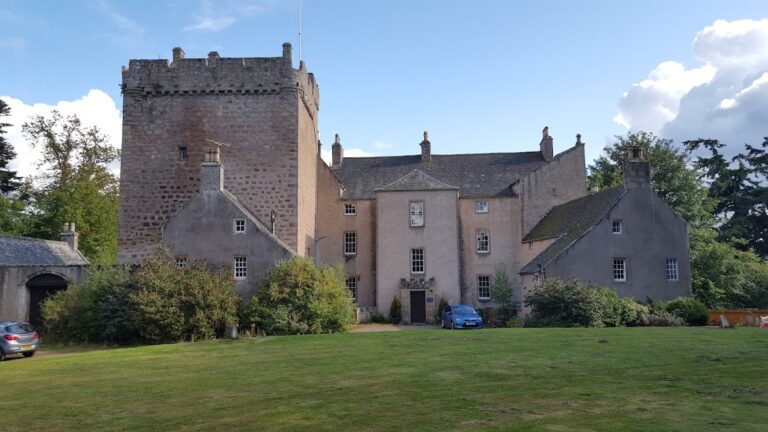
Cawdor Castle is a fortified residence in Scotland, United Kingdom, developed around a fifteenth-century tower house and still associated with the Campbell family. It is a Category A listed building, a Scottish designation for national architectural or historic importance, and its grounds form part of Scotland’s Inventory of Gardens and Designed Landscapes.
The Calder foundations
The earliest recorded date connected with the castle is 1454, when William Calder, sixth Thane of Cawdor, received permission to fortify the site. A thane was a high-status landholder or official in medieval Scotland. Parts of the tower may be older than this licence, and the oldest masonry has been dated to about 1380. Scientific testing of the holly tree around which the tower was built found that the tree died around 1372, supporting the possibility of an earlier building phase.
The castle was originally held by the Calder family. In 1510, the Calder heiress Muriel married Sir John Campbell of Muckairn, who began extending the building. Their children included Katherine Campbell, who became Countess of Crawford. Further improvements followed under John Campbell of Cawdor, who had acquired substantial estates on Islay.
Campbell expansion and changing residence
A garden had been established by 1635. After the Restoration, the return of the Scottish monarchy in 1660 following the republican governments of the Wars of the Three Kingdoms, Sir Hugh Campbell of Cawdor added to or improved the north and west ranges. He employed the Nairn masons James and Robert Nicolson.
In the 1680s, Sir Alexander Campbell, Sir Hugh’s son, married Elizabeth Lort of Stackpole Court after meeting her at Milford Haven during a storm. The Campbells of Cawdor thereafter lived mainly on their Pembrokeshire estates, while younger members of the family stayed at Cawdor to manage the property. A walled flower garden was created in 1720, and extensive woodlands were established during the later eighteenth century.
John Campbell of Cawdor, a Member of Parliament, married a daughter of the Earl of Carlisle in 1789. He was ennobled as Lord Cawdor in 1796, and his son became Earl Cawdor in 1827. During the nineteenth century, the earls used Cawdor as a summer residence. In the twentieth century, John Campbell, 5th Earl Cawdor, moved there permanently. His second son, James Campbell, who lived from 1942 to 2019, was born at the castle. John was followed by the 6th Earl, whose second wife was Angelika, Dowager Countess Cawdor, born Countess Lažanský of Bohemia. She remains associated with the castle as the stepmother of Colin Campbell, 7th Earl Cawdor.
Macbeth and the castle’s later history
Cawdor Castle’s connection with Shakespeare’s Macbeth is literary rather than historical. The historical Macbeth ruled Scotland from 1040 to 1057, after his forces killed Duncan I in battle near Elgin. Macbeth was never Thane of Cawdor. Hector Boece, a fifteenth-century Scottish historian, helped introduce that fictional connection, and Cawdor Castle did not exist during the lifetimes of Macbeth or Duncan. The castle is also not directly mentioned in Shakespeare’s play.
In 2001, the Dowager Countess apparently prevented her stepson from sowing genetically modified rapeseed on the Cawdor estate. The following year, she took the Earl to court after he moved into the castle while she was away. The building was designated a Category A listed building in 1971, while its gardens and designed landscape were included in Scotland’s national inventory.
Remains
The tower and later ranges
Fifteenth-century tower house
The surviving castle is organized around a fifteenth-century tower house, a fortified residence arranged around a tall defensive tower. The tower was built around a small living holly tree, whose remains can still be seen at the lowest level. Some of its walls may predate the 1454 licence to fortify the site. An iron yett, a heavy fortified gate used in Scottish strongholds, was brought to Cawdor from nearby Lochindorb Castle. William Calder dismantled Lochindorb around 1455 on the orders of King James II after the castle was forfeited by the Earl of Moray.
North, west, south, and east ranges
The castle’s later fabric includes the north and west ranges improved after the Restoration. The south and east ranges were added in the nineteenth century by the architects Thomas Mackenzie and Alexander Ross. Together, these additions enclosed a courtyard reached by a drawbridge, a movable bridge that could be raised across an entrance gap or defensive boundary. A panel dated 1672 carries the arms of Sir Hugh Campbell and his wife, Lady Henrietta Stewart.
Gardens and woodland
Walled and flower gardens
The grounds preserve several phases of designed planting. The Walled Garden originated in the seventeenth century, while the Flower Garden dates from the eighteenth century. These cultivated areas form part of the grounds’ historical landscape, alongside the later Wild Garden, which was added in the 1960s.
Woodland and lichen
The grounds also contain woodland with numerous tree species and more than 100 species of lichen. The woodland belongs to the wider landscape associated with the castle and reflects the expansion of the estate’s planted environment during the later eighteenth century.
Nearby sites