Marugame Castle: A Stronghold and Domain Seat in Japan
Site at a Glance
- Country
- Japan
- Primary era
- Early Modern
- Eras represented
- Medieval, Early Modern, Modern
- Civilizations
- Ashikaga shogunate, Japanese, Tokugawa, Toyotomi regime
- Site type
- Military
- Remains
- Castle
On this page10 sections
History
Marugame Castle is a hilltop fortress on Kameyama in central Marugame, Japan, begun in 1597 by the Ikoma family to control western Sanuki. Sanuki was a historic province corresponding roughly to present-day Kagawa Prefecture. The castle later served as the seat of the Marugame Domain, a territorial lordship under the Tokugawa shogunate.
Early fort and Ikoma construction
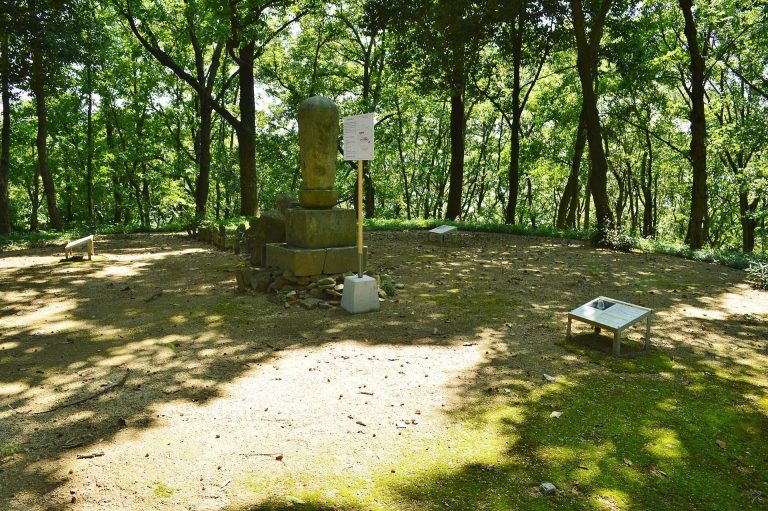
An earlier fort on Kameyama is attributed to Nara Motoyasu, a retainer of Hosokawa Yoriyuki, around the fourteenth century. In 1575, three Nara retainers defected to the Kagawa clan, which attacked Nara territory. The Nara family lost Naka District.
After Toyotomi Hideyoshi granted Sanuki to Ikoma Chikamasa in 1587, Chikamasa established Takamatsu Castle as his principal seat and developed Marugame as a stronghold in the west. Construction began in 1597, and the castle was nearly complete by 1602. Chikamasa entrusted it to his son, Ikoma Kazumasa.
At the 1600 Battle of Sekigahara, Chikamasa supported Ishida Mitsunari’s Western Army, while Kazumasa joined Tokugawa Ieyasu’s Eastern Army. This division of allegiance was intended to protect the Ikoma family whichever side prevailed. After Ieyasu established the Tokugawa shogunate, the family’s lands in Sanuki were confirmed.
A 1615 order restricting each domain to one castle threatened Marugame with demolition, since Takamatsu was the Ikoma seat. Ikoma Masatoshi protected Marugame by concealing important parts of it among trees and limiting access.
Rebuilding and the Marugame Domain
Following a dispute within the Ikoma family, the shogunate transferred it to Yashima in Dewa Province in 1640 and divided its former lands. Dewa was a historic province in northern Honshu. Yamazaki Ieharu, formerly lord of Tomioka in Higo Province, received the Marugame area, and the Marugame Domain was established in 1641. Ieharu had taken part in rebuilding castles at Osaka and Shimabara and was praised for his courage during the 1637–1638 Shimabara Rebellion, an uprising involving Christian peasants and other local people.
Major rebuilding at Marugame began in 1643. The shogunate may have intended the work to strengthen defenses against a possible uprising by Christians on islands in the Seto Inland Sea. It supplied the domain with 300 kan of silver, using a historical unit for weight and accounting, and exempted it from alternate attendance, which required lords to maintain residences in Edo and travel between there and their domains. These measures helped the extensive works proceed rapidly; they were completed in the early 1670s.
The Yamazaki line ended without an heir in 1658, after three generations. Kyōgoku Takakazu then arrived from Tatsuno in Harima Province with a grant of 60,000 koku, an assessment based on rice yield. In 1660, he made the castle’s seaward rear gate its main entrance and completed the three-story keep. The two principal Ote gates followed in 1670. The Kyōgoku family ruled the domain until the end of the Edo period. Its lords were classified as tozama, a designation for lords whose allegiance to the Tokugawa house was established after its rise to power.
During the Bakumatsu, the final years of the shogunate before the Meiji period and restoration of imperial government, the Marugame Domain firmly supported the imperial side, a coalition backing the emperor against the shogunate.
Meiji changes and preservation
A fire in 1869 destroyed the lord’s palace and the Inui turret. In 1872, remaining castle buildings were offered for demolition at auction, but the sale was cancelled after the Imperial Japanese Army selected the site for its newly formed 12th Infantry Regiment. Most other turrets and much of the castle walling were dismantled in 1876, while the keep and central part of the castle were retained. The regiment, a court, and schools also used grounds formerly occupied by samurai residences. Reclamation during and after the Meiji period progressively eliminated the outer moat.
The upper castle grounds opened as Kameyama Park in 1919. The keep underwent major dismantling and repair in 1950, and repairs to the front entrance gate, guard post, longhouse, and earthen wall were completed in 1968. The Marugame City Museum, which displays historical material relating to the castle and the Kyōgoku family, opened in 1972. The grounds became a National Historic Site in 1953. The keep received National Treasure status under the former system in 1943 and became an Important Cultural Property in 1950; the Ote Ichi-no-mon and Ote Ni-no-mon gates received that designation in 1957.
Heavy rain in July 2018 and Typhoon No. 24 contributed to a collapse that October on the southwest side of the castle ruins. The failure affected part of a narrow defensive enclosure and the site of a southwest turret in the third enclosure. Restoration work followed.
Remains
Enclosures and stone defenses
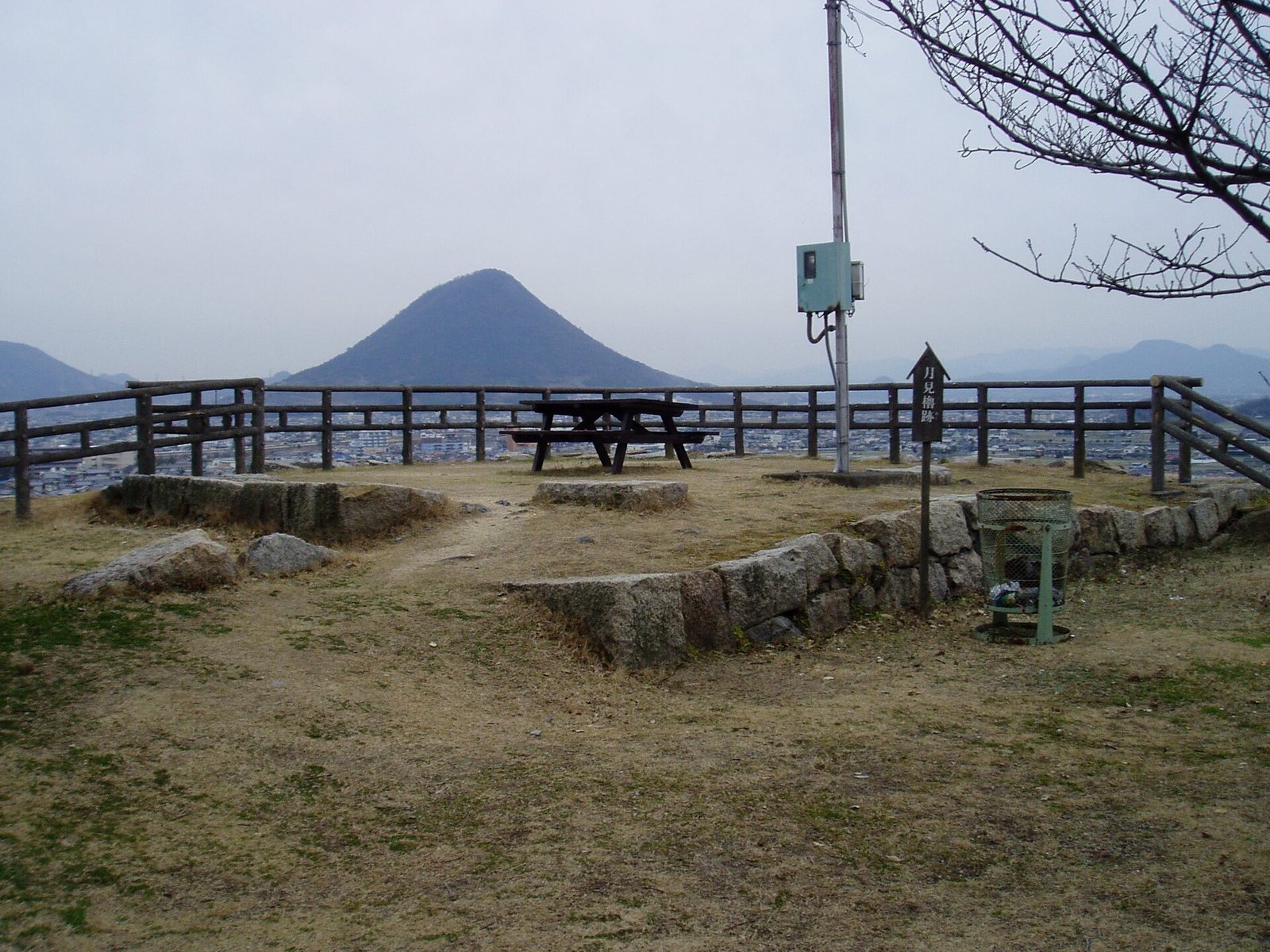
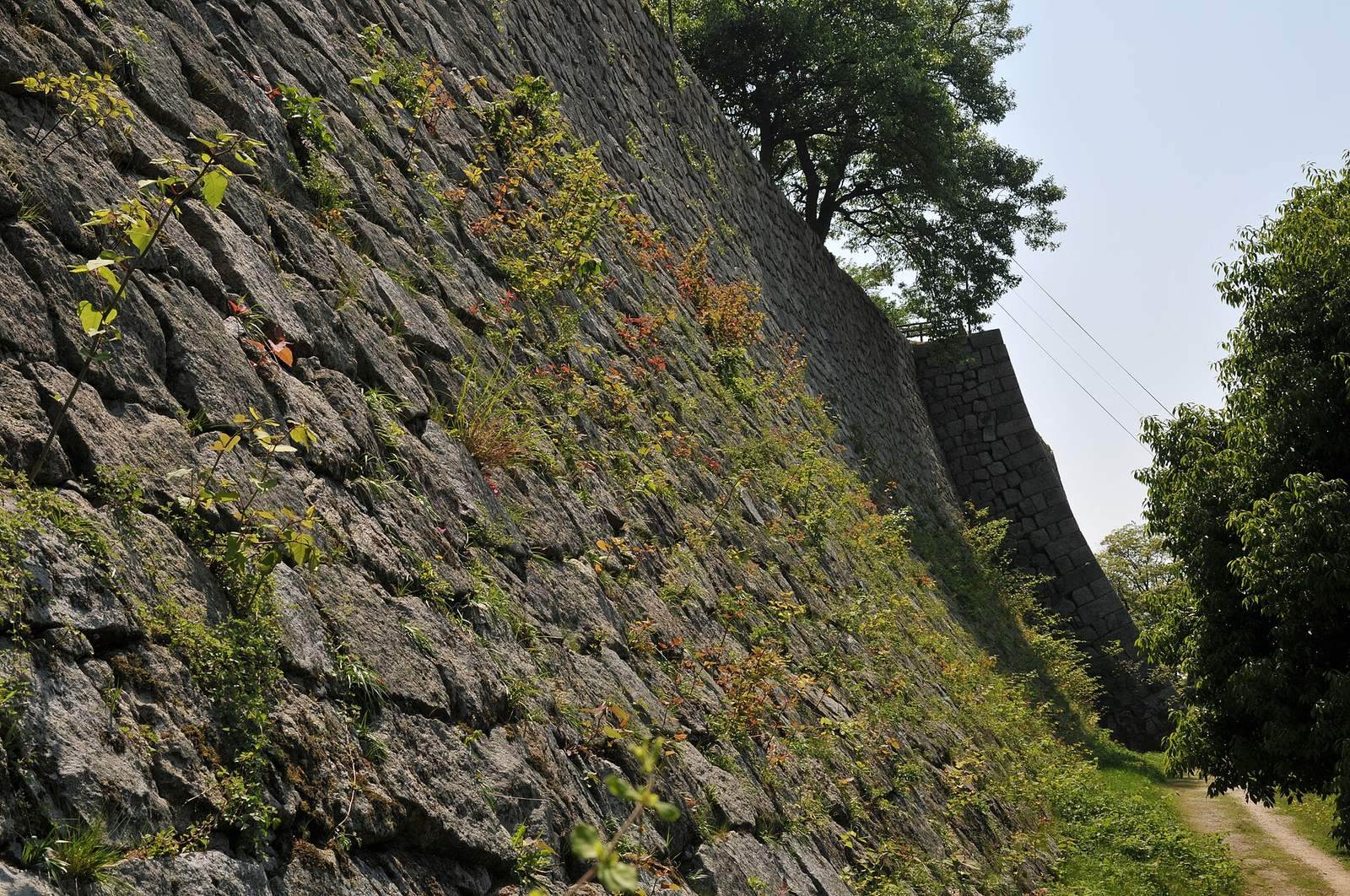
The castle occupies Kameyama, a hill about 66 metres high, and has a roughly square plan with enclosures arranged in a spiral. An inner moat encircles the hill. An outer moat once enclosed the larger square area of samurai residences. Stone walls rise through four successive levels from the hill’s foot to its summit. Together, these levels reach about 60 metres, the greatest combined height of castle stone walls in Japan; this is not the height of one continuous wall.
The masonry combines rough fieldstones with carefully fitted corner stones. Its profile curves and steepens toward nearly vertical upper faces. In the third enclosure, the wall reaches as much as 22 metres at its highest exposed point. Dismantling after the 2018 collapse revealed that it continues down to the natural ground and reaches 31 metres in total, with a separate reinforcing wall in front.
Surviving buildings
Keep
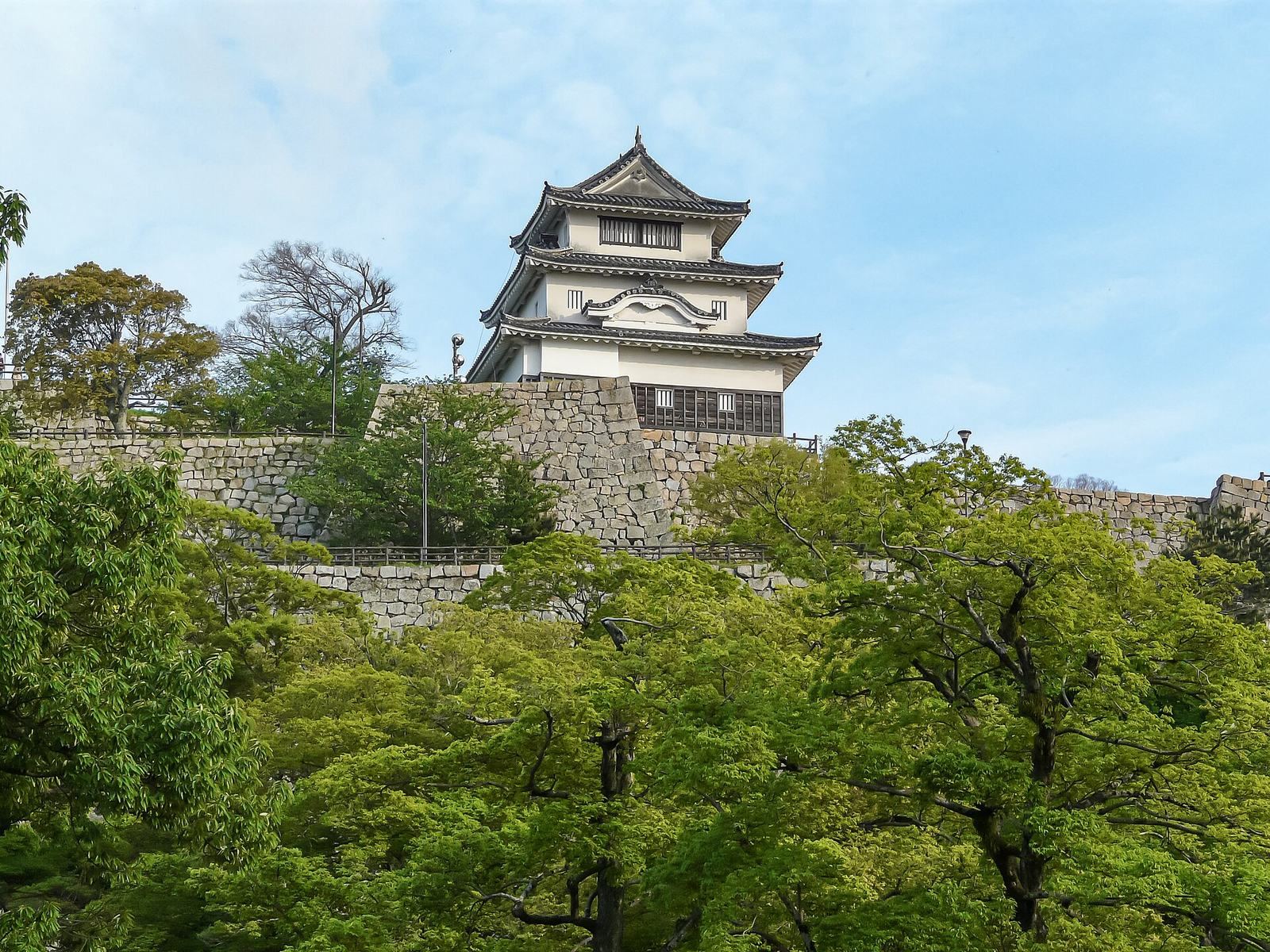
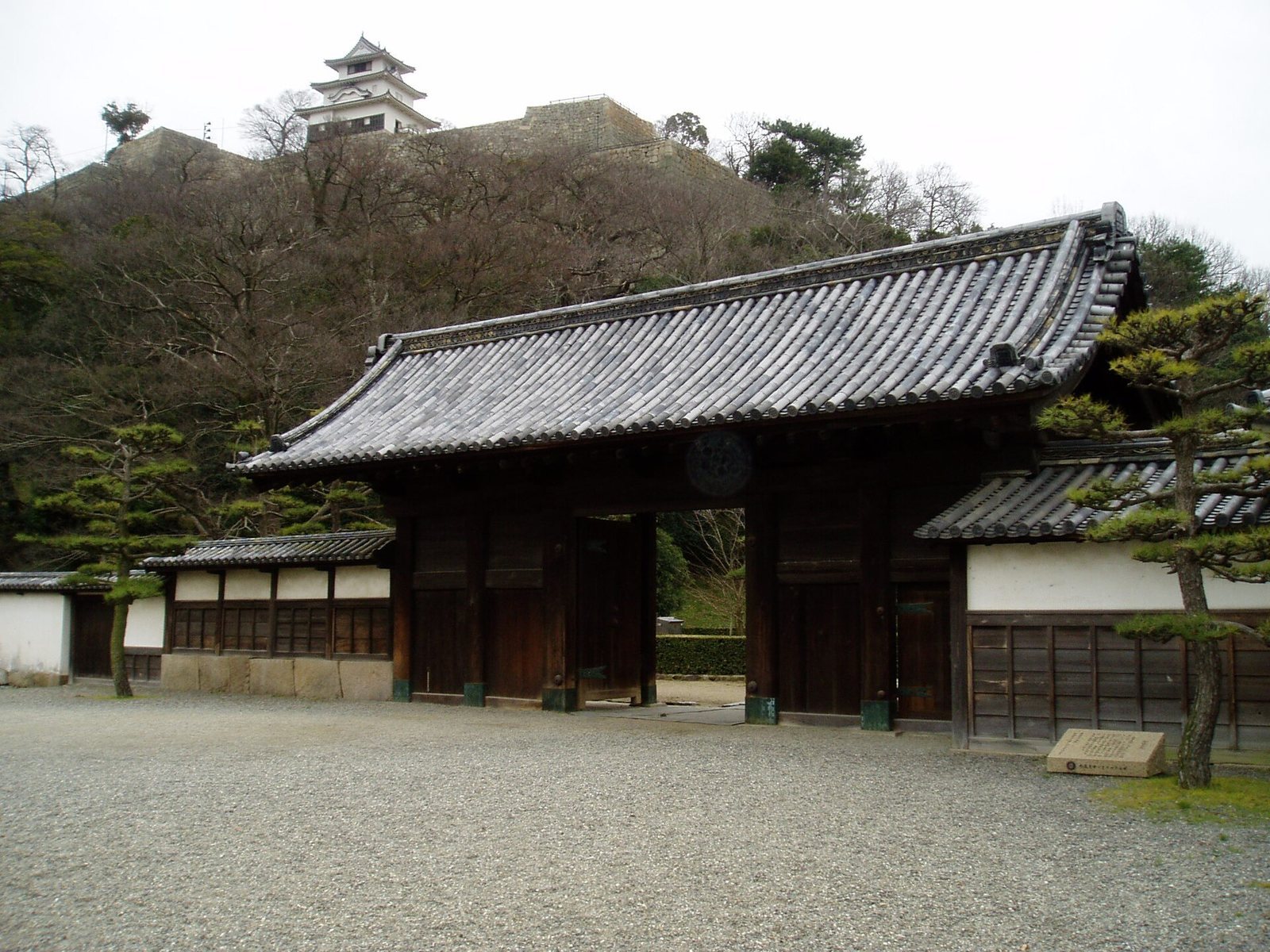
The surviving principal tower, or keep, is a three-story, three-tier wooden structure completed in 1660. About 15 metres high, it has white plastered walls, curved roof ends, and projecting triangular roof features. It is the smallest surviving Japanese castle keep. The original structure was joined to another building; in 1877, it was altered to stand as a separate tower.
Gates and associated structures
The Ote Ichi-no-mon and Ote Ni-no-mon gates were built in 1670. Their entrance arrangement includes an enclosed square space that makes passage indirect. Marugame is one of only three Japanese castles, alongside Hirosaki and Kochi, to retain both a main gate and a keep. Other surviving structures include the lord’s front entrance gate, a guard post, a palanquin room, and a longhouse.
Villa and model
The Enjukan villa was moved from the castle town into the third enclosure in 1933 and dismantled in 1985; its detached villa remained. A wooden model of the castle, made to a scale of 1:650, is held at the Marugame City Museum. It is said to have been submitted to the shogunate with plans during major gate works, and is the only surviving example of its type.