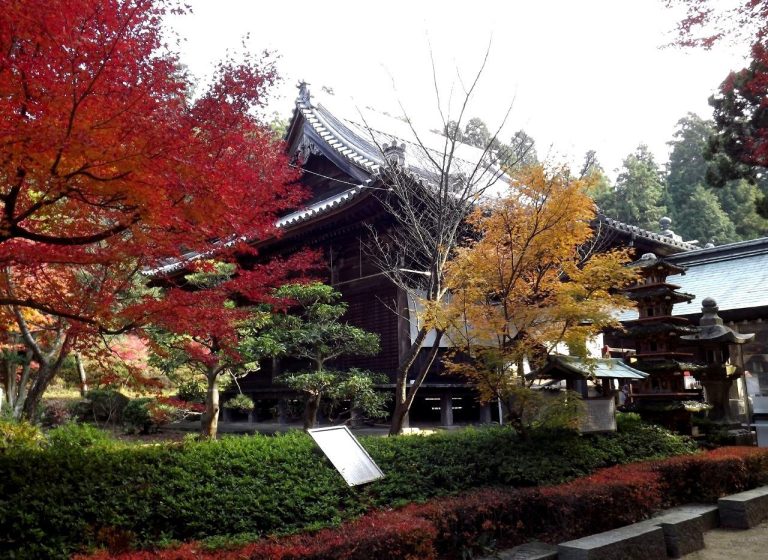
Gōshō-ji Temple: A Shingon and Ji-shu Pilgrimage Temple in Japan


Site at a Glance
- Rating
- 4.2
- Popularity
- Low
- Country
- Japan
- Primary era
- Early Modern
- External website
- Open
- Eras represented
- Medieval, Early Modern, Modern
- Civilizations
- Tokugawa
- Site type
- Religious
On this page17 sections
History
Gōshō-ji Temple, formally Bukkōzan Kōtokuin Gōshō-ji, is a Buddhist temple in Utazu, Kagawa Prefecture, Japan, founded according to tradition in 725 by the Nara-period monk Gyōki. It belongs jointly to the Shingon tradition, an esoteric form of Buddhism centered on ritual practice and mandalas, and Ji-shu, a movement known for devotional recitation of Amida Buddha’s name. The temple is the 78th stop on the Shikoku 88-temple pilgrimage.
Foundation and early Buddhist associations
Gyōki is traditionally said to have established the temple under the name Dōjō-ji and installed an image of Amida Buddha as its principal object of worship. Amida is the Buddha of the Pure Land tradition, and devotion to him has remained central to the temple’s identity.
In 807, Kūkai, the founder of Japanese Shingon Buddhism, is traditionally said to have visited Dōjō-ji. Temple tradition credits him with reorganizing the buildings, carving a wooden image of himself, and making a vow intended to remove calamities. The image became revered as the Utazu Great Master Who Removes Calamities, and it continues to be associated with prayers for protection from misfortune.
Rigen Daishi, a Buddhist master associated with the Shingon institution of Daigo-ji in Kyoto, is traditionally said to have practiced the Amida Samadhi at the temple between 851 and 854. Around 985 to 987, Genshin, a major Tendai monk known for writings on devotion to Amida Buddha, is said to have presented a painting of Shaka Buddha and built a hall to house it.
Ji-shu connections and reconstruction
In 1288, Ippen stayed at the temple for three months while travelling. He established a center for dancing nenbutsu, a devotional practice that combines the recitation of Amida’s name with rhythmic movement and percussion. The temple’s associated verse recalls dancing, keeping time, and striking a bell during the practice. Ippen later became the founder of the Ji-shu movement, helping explain the temple’s enduring connection with that tradition.
The temple flourished after these developments, but its buildings were destroyed in fires during the wars of the Tenshō period, approximately 1576 to 1585. Reconstruction took place in 1664 under the patronage of Matsudaira Yorishige, lord of Takamatsu. During this rebuilding, the temple acquired the name Gōshō-ji and became affiliated with Ji-shu through the relationship between its presiding priest and the Tokugawa family.
The earlier name Dōjō-ji continued to appear in an 1800 pilgrimage guide and an 1826 pilgrimage register. This surviving use of the older name reflects the persistence of the temple’s earlier identity alongside its post-1664 name. Gōshō-ji remains notable within the Shikoku pilgrimage for the coexistence of Shingon and Ji-shu affiliations, its Amida image, and the continued veneration of the calamity-averting image associated with Kūkai.
Cultural properties
The wooden seated Amida Buddha and the silk painting of Shaka’s triad with two disciples were designated cultural properties of Kagawa Prefecture on May 23, 1972. The painting is deposited with the Kagawa Prefectural Museum, while the Amida image remains part of the temple’s religious and artistic heritage.
Remains
Temple precinct and upper halls
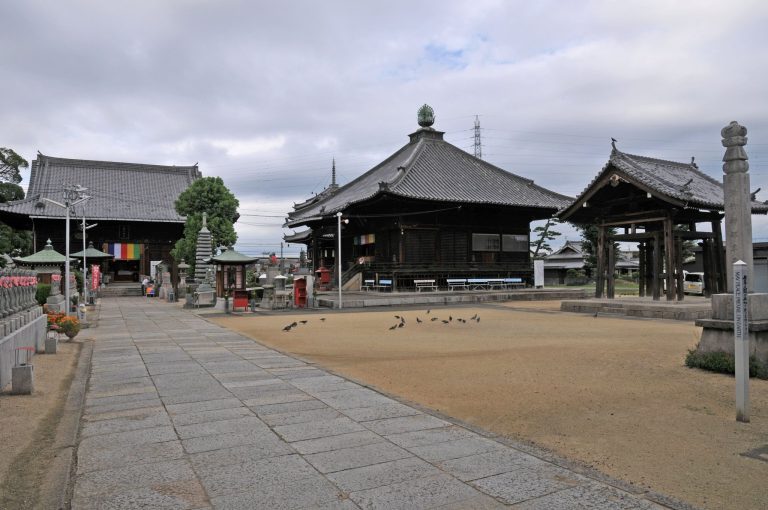
The precinct occupies elevated ground and is entered through a mountain gate. A stone stairway on the left rises into the grounds. Beyond the reception area, the main hall forms the central point of the lower temple area, while the Kōshin Hall stands in front and to its right. Kōshin observances relate to particular days in the East Asian sixty-day cycle, and the hall’s principal image is Shōmen Kongō. The grounds also include the temple residence and a pond garden along the route from the main hall toward the upper halls.
Main hall and Ippen chapel
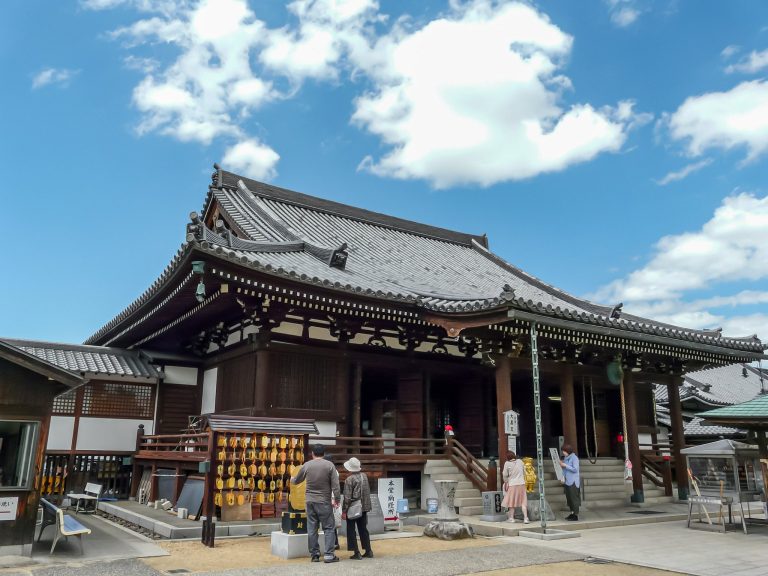
The main hall stands beyond the reception area. An image of Ippen is installed in a side chapel on its right side, linking the building’s present arrangement with the teacher who established dancing nenbutsu at the temple in 1288.
Great Master Hall
The Great Master Hall lies beyond the main hall on the left. It is reached by a passage and additional stone steps, and it is a place where many worshippers pray for protection from misfortune. Its devotional purpose is connected with the revered image of Kūkai known as the Utazu Great Master Who Removes Calamities.
Ten-Thousand Kannon Hall
The Ten-Thousand Kannon Hall is reached by descending into a cave from the area in front of and to the left of the Great Master Hall. The cave contains a very large number of images of Kannon, the bodhisattva associated with compassion.
Shrines, statues, and garden
Awashima Shrine Hall and Tokiwa Shrine
The Awashima Shrine Hall stands above the Great Master Hall and is dedicated to pilgrims associated with Awashima. The Tokiwa Shrine is also located within the temple precinct, adding shrine buildings to the complex of Buddhist halls and devotional spaces.
Jizō statues
The Daikichi Jizō statue, regarded as a sacred figure bringing good fortune to poor people, originally stood in front of the main hall. The stone statue called Pokkuri Jizō is identified as one of the three great Pokkuri Jizō statues of Sanuki. These named Jizō figures form part of the precinct’s devotional features.
Garden and bell tower
Behind the main temple residence is a garden with a pond. The residence and its strolling garden lie along the route from the main hall toward the upper halls. The bell tower stands on the elevated grounds and provides views toward the Seto Inland Sea and the Seto Bridge.
Fudō Myōō purification hall
A purification hall dedicated to Fudō Myōō was built in 2024. It contains a seated image of Fudō Myōō, with an image of Kūkai and a standing image of Fudō Myōō placed on either side. Fudō Myōō is represented here within a dedicated devotional space in the temple grounds.
Buddhist images and painting
Seated Amida Buddha
The principal wooden seated Amida Buddha is made from cypress using the joined-block technique, in which a large sculpture is assembled from separately carved sections. Its eyes are inlaid with crystal. The figure sits cross-legged with the right leg uppermost and forms the welcoming mudra, a hand gesture associated with receiving devotees.
The image is a small, refined work in the Jōchō style, a classic Japanese Buddhist sculptural manner known for calm expression, balanced proportions, and joined-block construction. Its pedestal and halo date from the late Kamakura period, while the sculpture demonstrates the orthodox joined-block technique associated with workshops in central Japan.
Shaka’s triad painting
The silk painting of Shaka’s triad with two disciples dates from the later Kamakura period and incorporates strong artistic conventions from the Song dynasty. It shows Shaka Buddha preaching with the bodhisattvas Monju and Fugen, who represent wisdom and Buddhist practice, together with two disciples. Two additional Buddhas stand above the main group. The painting is deposited with the Kagawa Prefectural Museum.