Drukgyal Dzong: A Bhutanese Frontier Fortress
Site at a Glance
- Country
- Bhutan
- Primary era
- Early Modern
- Eras represented
- Early Modern
- Civilizations
- Bhutanese
- Site type
- Military
- Remains
- Fort
On this page7 sections
History
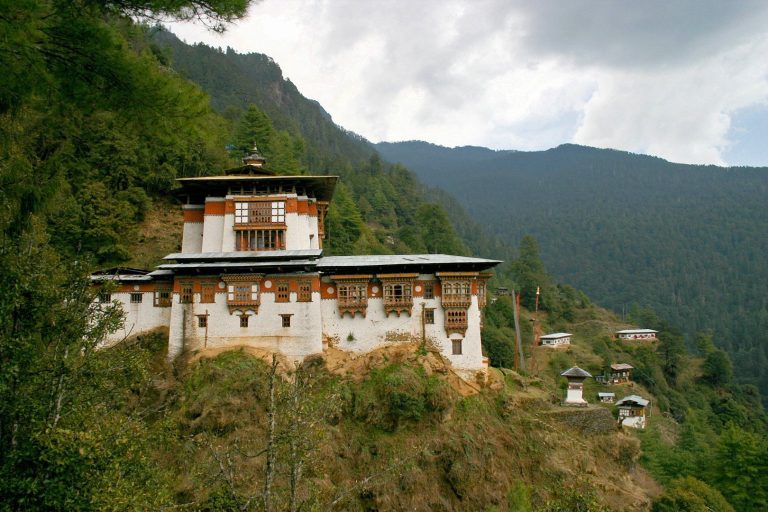
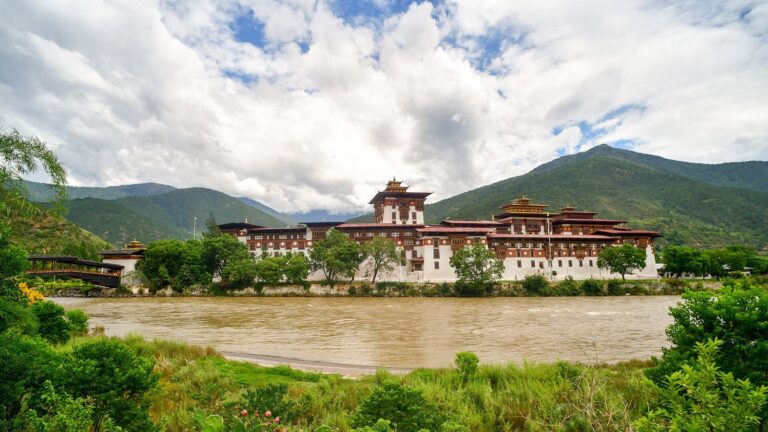
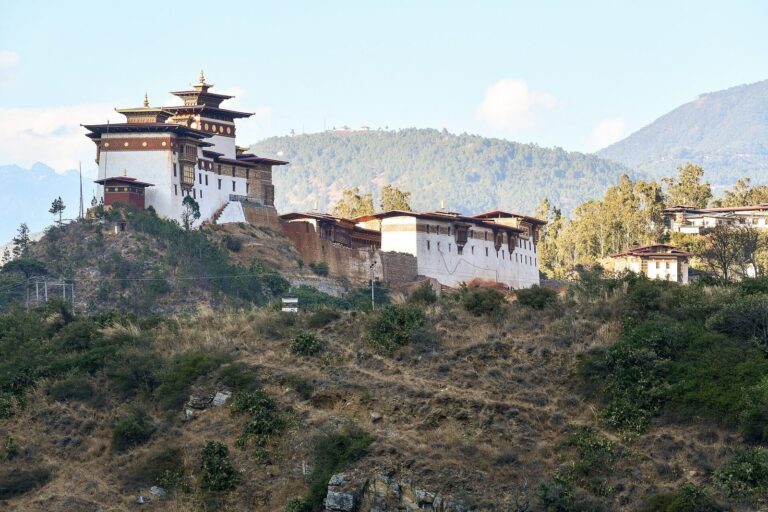
Drukgyal Dzong is a Bhutanese dzong, a fortified complex often associated with religious institutions and administration, in the upper Paro Valley of Bhutan. Built in 1649 at the behest of Zhabdrung Ngawang Namgyal, a Tibetan Buddhist religious and military leader credited with unifying Bhutan, its construction is generally attributed to Tenzin Drukdra, then the second Paro Penlop, a governor of the Paro region.
Foundation and military role
The dzong’s name commemorates Bhutan’s victory in 1644 over combined Tibetan and Mongol forces, following repeated attempts to invade. Positioned near Tibet, it was intended to strengthen defenses against further incursions from the north. Unlike dzongs that served administrative or religious roles, Drukgyal was principally a military fortress and held Bhutan’s best weapons arsenal of its time.
It also served as the annual residence of the Rinpung Rabdey, a monastic administrative body, until 1951.
Fire and restoration plans
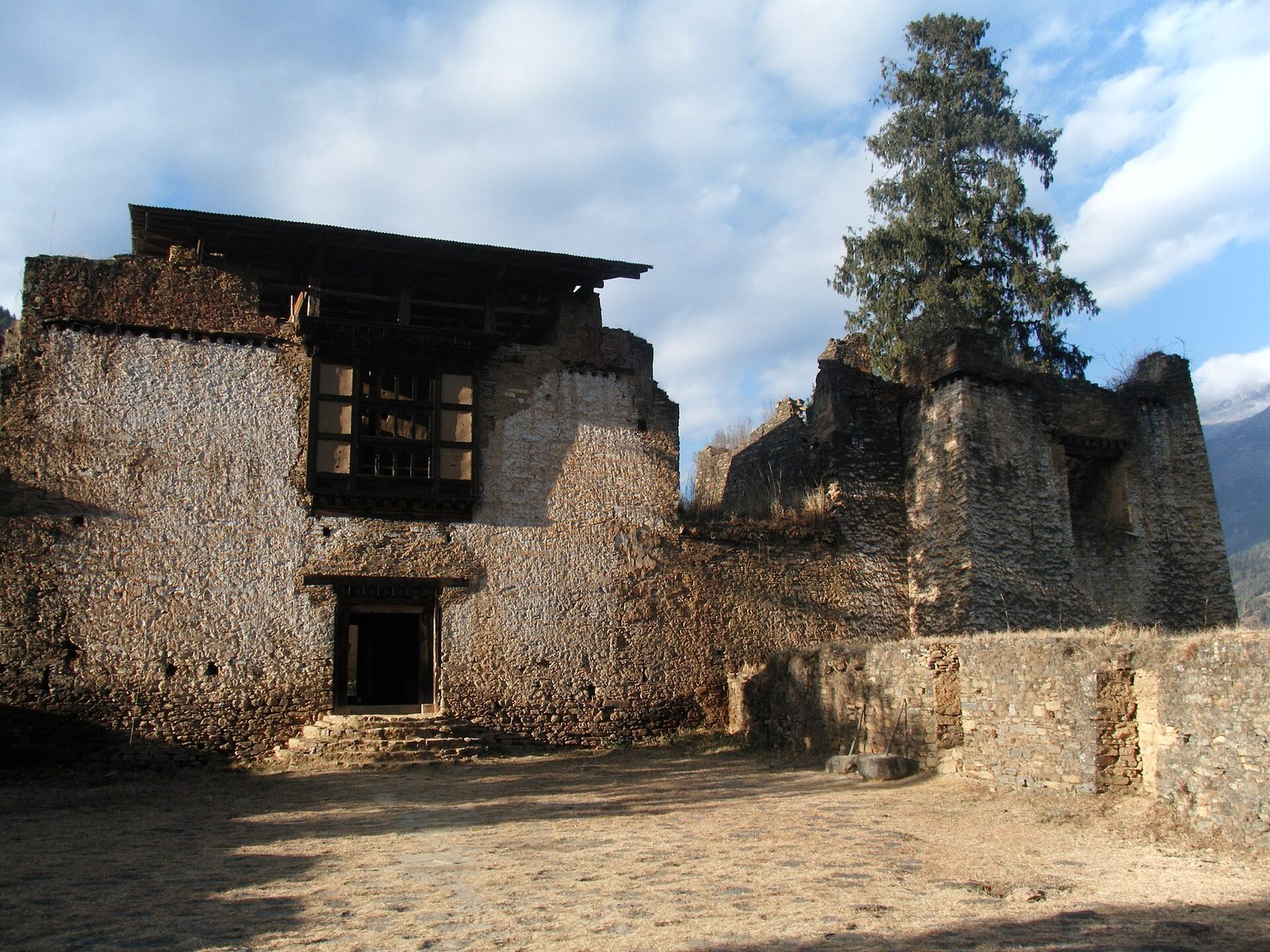
A butter lamp caused a fire in 1951 that almost completely destroyed the fortress. Its ruins were provisionally stabilized in 1985. In 2016, Prime Minister Tshering Tobgay announced plans for reconstruction and restoration, and a groundbreaking ceremony followed. The project was intended to commemorate Ngawang Namgyal’s arrival in Bhutan in 1616 and the birth year of Guru Rinpoche, the Buddhist master Padmasambhava.
Remains
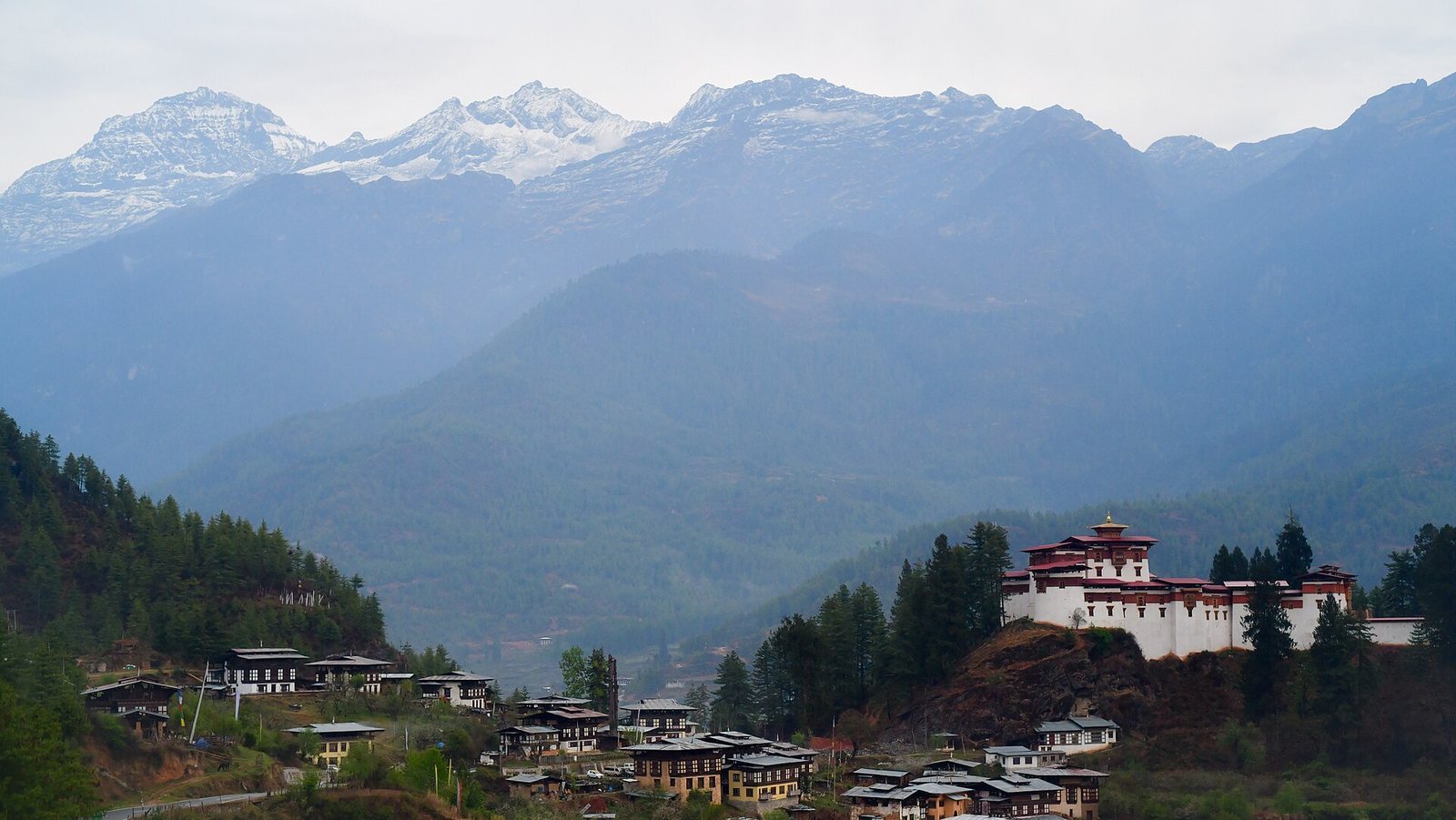
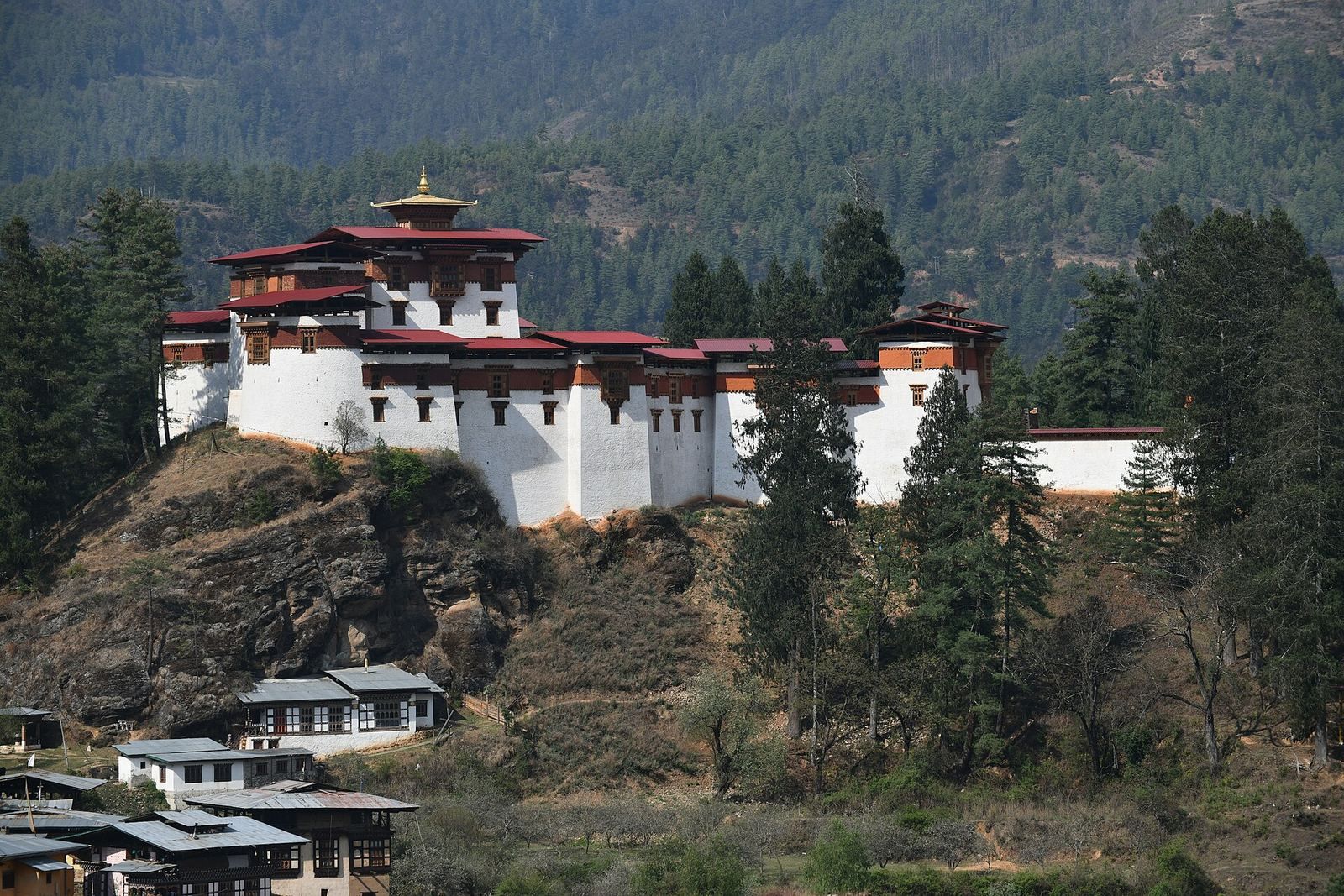
The fortress occupied a rocky plateau above a village, with steep rocky slopes on three sides. Stone and rammed-earth structures survived the destruction and later decay of much of the timber construction, leaving the defensive arrangement comparatively legible.
Central buildings and courtyards
A four-storey central tower, called the utse, stood among angular Shabkhor buildings arranged around three courtyards. Shrines in the tower were dedicated to the Buddhist protector deities Mahakala, also called Yeshey Gonpo, and Palden Lhamo, identified with Mahakali. Its ground floor contained the largest granary among Bhutanese dzongs.
Walls and defensive approaches
Massive stone walls followed the steep slopes around the tower and enclosed the interior. The single entrance was guarded by several defensive towers. Watchtowers known as Ta Dzongs stood along the path between the entrance and the foot of the fortress hill.
Water defenses and surrounding sites
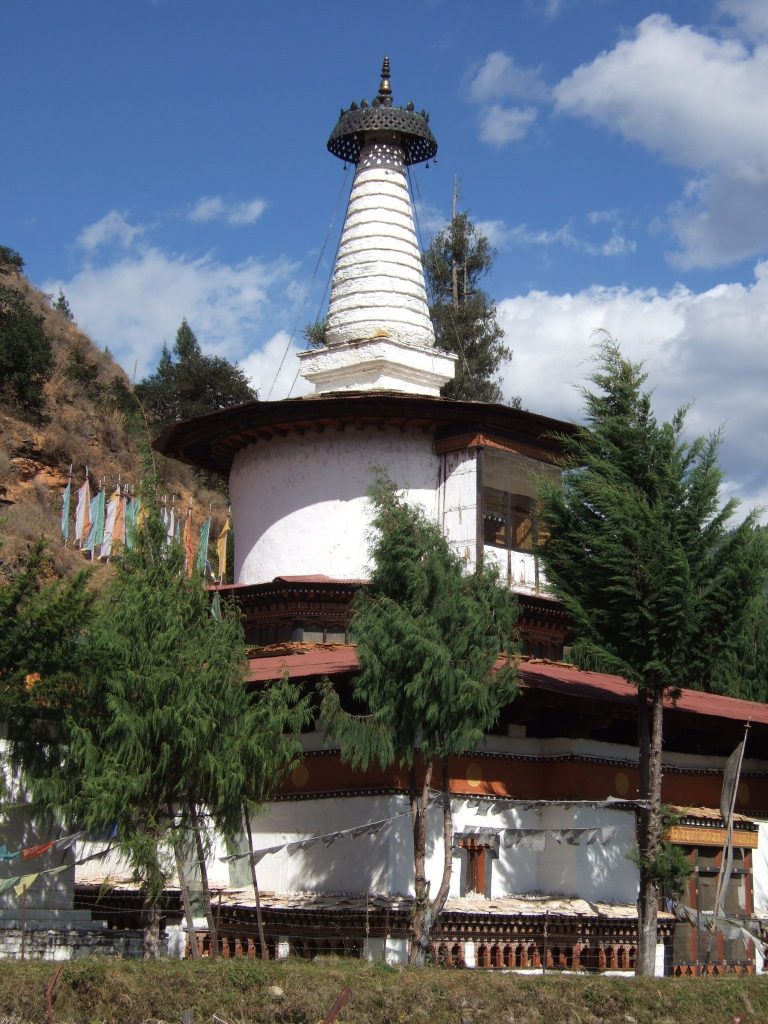
Cylindrical towers called Chu Dzongs, or water fortifications, were connected by defensive walls and paths. A concealed underground passage was said to link the fortress with flowing water in the river below the hill. It may have supplied water during a siege and allowed troops to leave quickly or receive reinforcements. The dzong overlooks sacred sites including Jowo Drakegang, Bumo Pundunmagang, the Namgola cremation ground, Chagri Tsen sacred cliff, Draknang Gonpa, Lomochi Gonpa, Gorinang, Tenchen Gonpa, Kichu Lakhang, and Santsam Chorten.