Sanctuary of Our Lady of the Angels in Villa Chiarini, Italy
Site at a Glance
- Country
- Italy
- Primary era
- Early Modern
- Eras represented
- Early Modern, Modern
- Civilizations
- Italian, Papal States
- Site type
- Religious
- Remains
- Church
On this page8 sections
History
Foundation and religious use
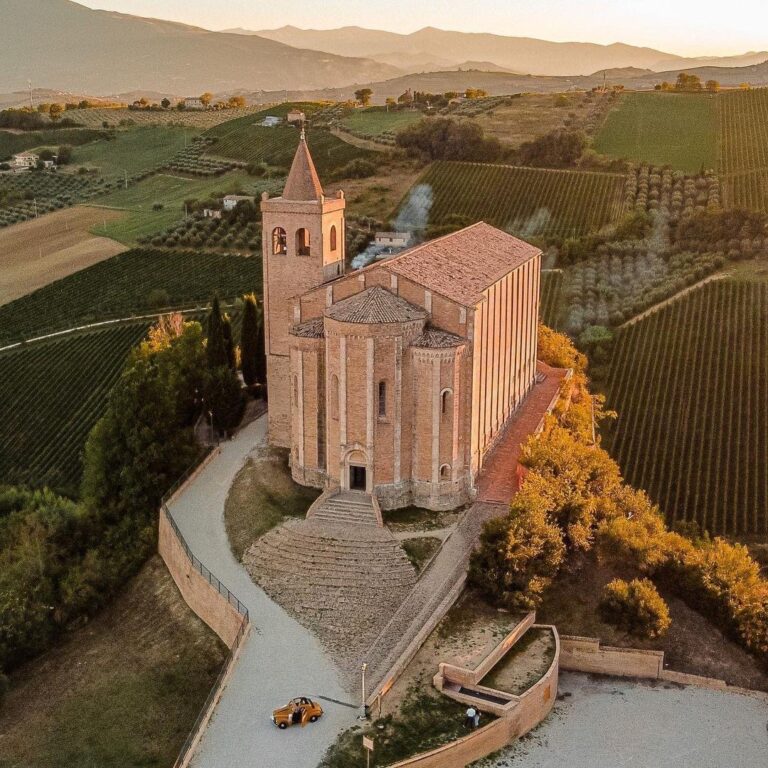
The Sanctuary of Our Lady of the Angels is a Catholic church in Villa Chiarini, within Castel di Lama, Italy. Built between 1693 and 1695 over the remains of an older rural church, it is one of the principal monuments of the local area.
An image of Saint Augustine, a late-antique Christian bishop and theologian, in one of the church’s paintings has prompted the suggestion that Augustinian friars from Offida may have been entrusted with religious services there. The friars belonged to a Catholic order following the Rule of Saint Augustine. The sanctuary belongs to the Diocese of Ascoli Piceno, and a traditional feast in honor of Our Lady of the Angels takes place in Villa Chiarini each August 2.
Attribution and later history
The main apse’s stucco decoration has been attributed to Giuseppe Giosafatti, an Italian Baroque sculptor, through comparison with works securely assigned to him. No conclusive records establish the attribution; the relevant documents are thought to have been lost during the French incursion of 1799. After the 2009 earthquake, regional authorities declared the church unsafe, and it closed on April 24, 2009.
Remains
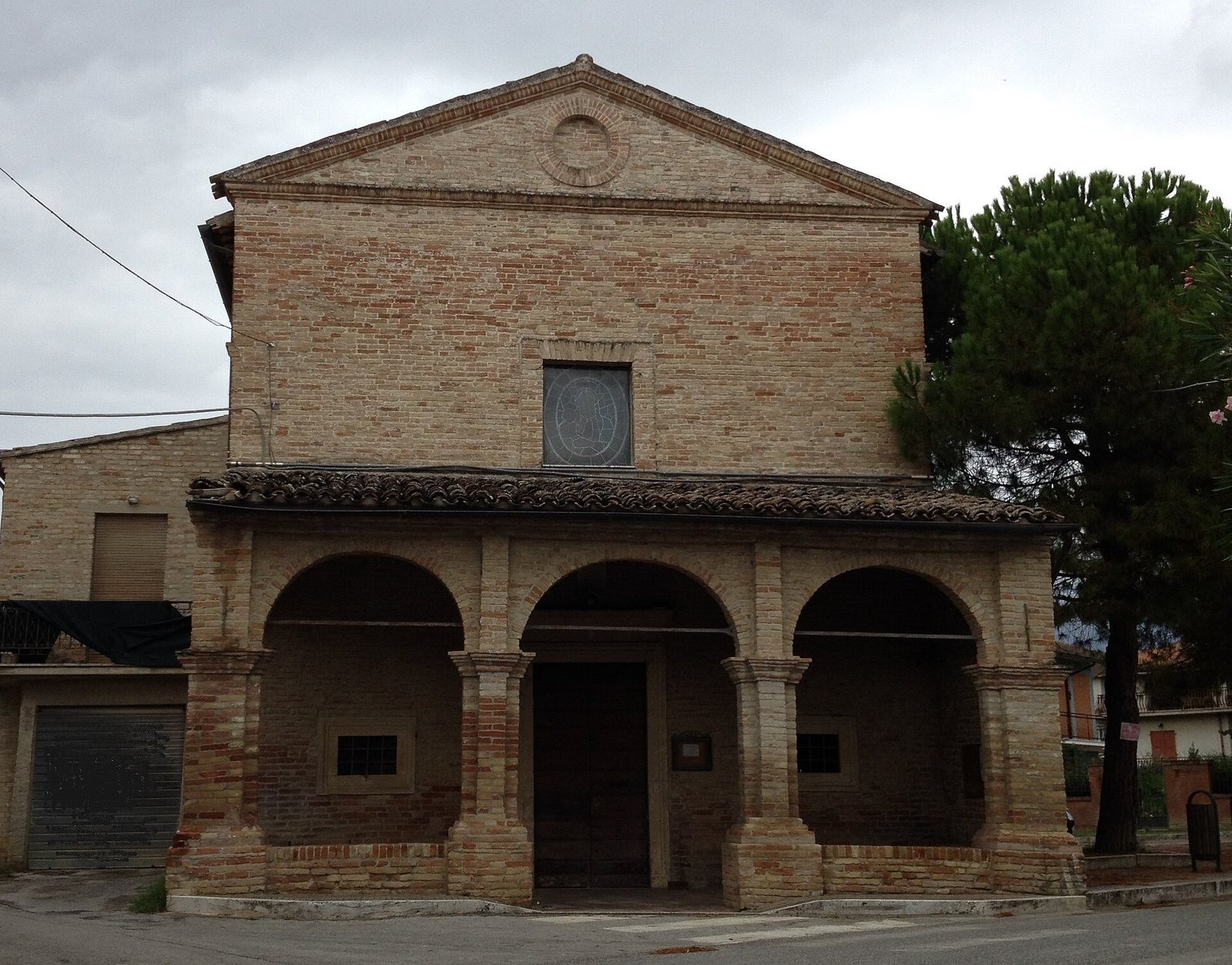
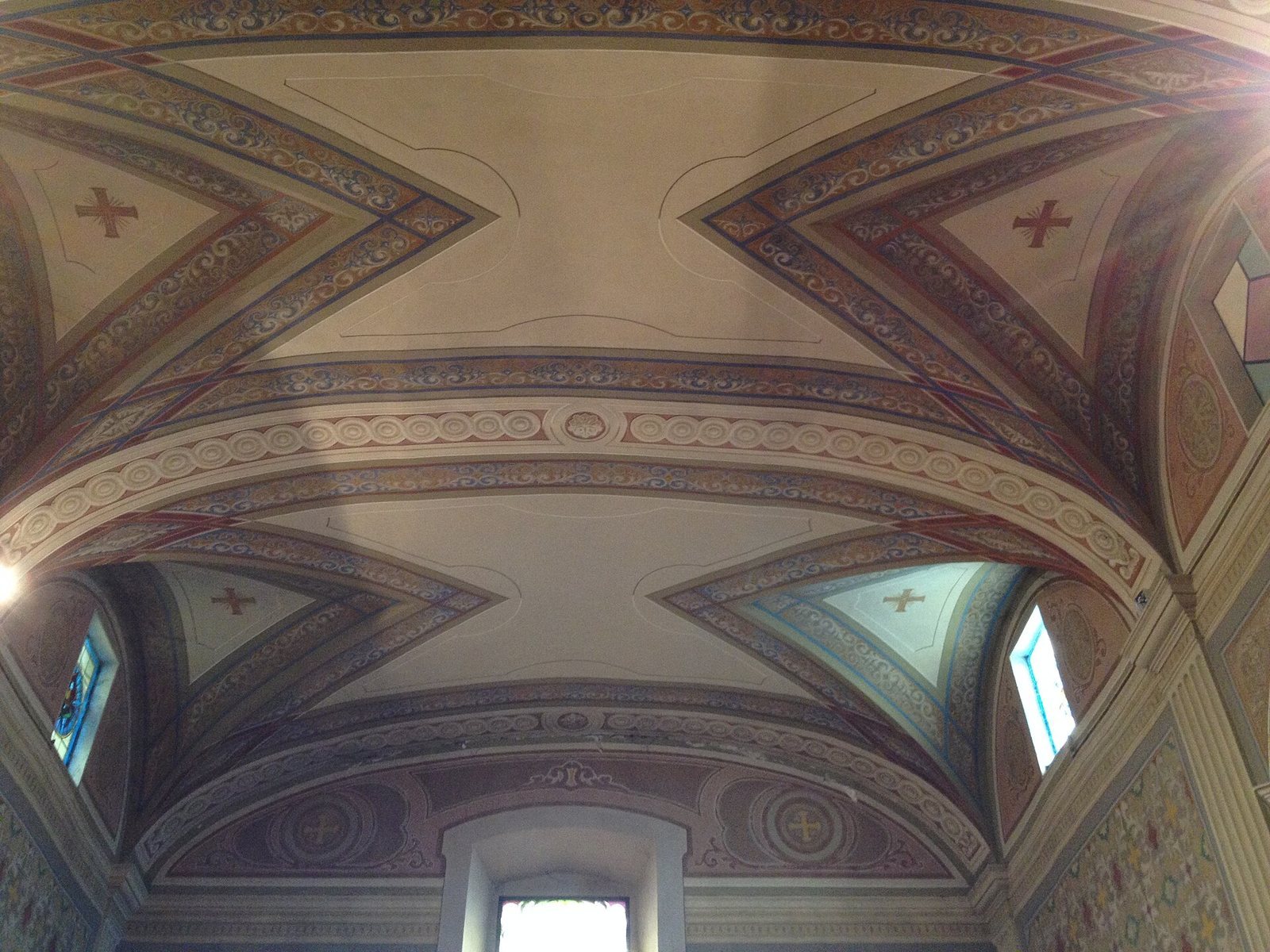
The sanctuary combines a fired-clay brick façade and portico with a decorated interior centered on the altar and apse. The church also has a ceiling and a bell tower.
Exterior
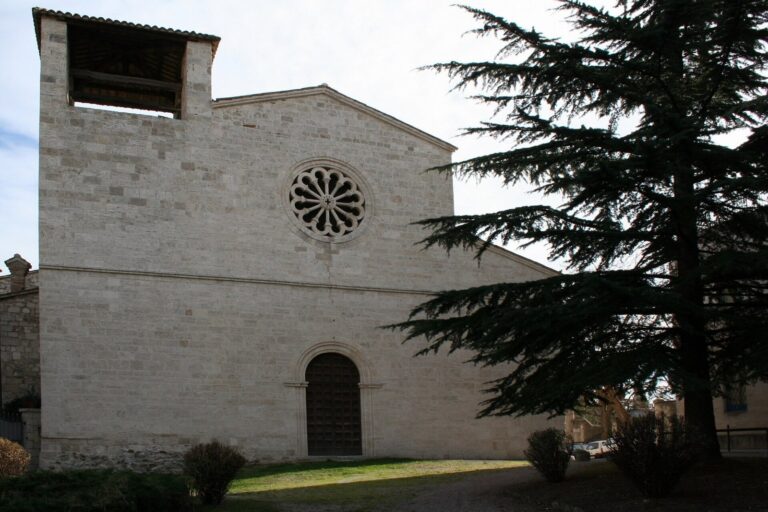
The façade is in the Roman style and faced with fired-clay brick. Its portico has three arches across the front and one at the side, added in 1880. A large window high on the façade broadly echoes the Madonna and Child image in the apse. Domenico Ferri’s 1886 painting I paganini del villaggio (The Village Paganinis) depicts two elderly men playing violins in front of the sanctuary.
Altar and interior decoration
The altar is decorated in Baroque style, and the apse behind it contains a fresco of the Madonna holding the Child. An oval plaster frame surrounds the image, shaped like a reliquary, or shrine for relics. Slightly raised angel figures appear to support the frame, suggesting the Madonna’s ascent to heaven accompanied by angels. Pasqualino Loggi, a decorator from Ascoli, painted colorful geometric and floral patterns across the church walls in 1950.
Paintings
Two large oil paintings on canvas by the Ascoli painter Nicola Antonio Monti (1736–1795) are in the church. Their Roman Neoclassical style draws on classical Greek and Roman forms. One shows the Virgin crowning Saint Monica, traditionally identified as Augustine’s mother, and Saint Augustine. The other shows the Madonna presenting the Child to Saints Lucy and Apollonia, early Christian martyrs, and Cajetan of Thiene, a sixteenth-century Italian priest and co-founder of the Theatines.
Restoration
Severe rising damp, especially near the altar and in the sacristy, prompted restoration work in 1994–1995. The work involved cutting the walls at their rubble-stone foundations and inserting a reinforced-concrete base sealed with a polyester waterproof membrane. Workers restored the wall and altar decoration, laid hand-worked terracotta flooring from Marche, and installed stained-glass windows bearing the Madonna and her symbols. Massimo Ceroni restored Monti’s paintings in 1994.