Bordj Tamentfoust: A Coastal Fort Defending Algiers
Site at a Glance
- Country
- Algeria
- Primary era
- Early Modern
- Eras represented
- Early Modern
- Civilizations
- Ottoman
- Site type
- Military
- Remains
- Fort
On this page9 sections
History
Bordj Tamentfoust is a coastal fort in Tamentfoust, Algeria, commissioned in 1661 as part of the defenses of Algiers during the Regency of Algiers, an Ottoman polity centered on the city. Agha Ramadan, a senior military or administrative official, commissioned it under Ismail’s authority.
Maritime use and construction
The coast near the fort had a role before its construction. After the fleet of Charles V, a Habsburg ruler and Holy Roman Emperor, was destroyed during his failed 1541 campaign against Algiers, he used a nearby port to re-embark troops for evacuation to France. Tamentfoust also served maritime traffic as a quarantine station from the sixteenth century until the French occupation in the nineteenth.
The fort’s precise construction date is disputed. Émile Boutin placed it in 1685, linking it to the campaign of French naval commander Abraham Duquesne, while Georges Marçais dated it to 1722, during the rule of dey Muhammad Pasha. A dey was the ruler of Algiers. The fort formed part of the coastal defenses protecting the city, and cannon fire announced the arrival and appointment of a new pasha, a senior Ottoman official sent from Istanbul.
Naval attacks and coastal defense
Following Duquesne’s naval attacks on Algiers in 1682 and 1683, Hussein Mozomorto, dey of Algiers, rebuilt and restored the fort in 1685. French incursions continued in 1688, when Admiral Jean II d’Estrées led an attack on the orders of Louis XIV, king of France. The fort and Tamentfoust Port were also targets during European naval campaigns against the Casbah of Algiers. Bordj Amar stood about 15 kilometres away by sea, and artillery at the two forts could target ships roughly 7.5 kilometres offshore.
Resistance after 1830
After Algiers fell to France on July 5, 1830, resistance to French expansion spread. Bordj Tamentfoust hosted a meeting of tribal leaders and representatives of Sufi lodges, religious centers associated with Sufism. The gathering was linked to a declaration of jihad, here an armed struggle framed in religious terms, and an agreement to unite resistance under Mohamed Ben Zamoum and Ali Ould Si Saadi. The participating groups included Bani Khalil, Bani al-Khashana, and Bani al-Sabt.
Marshal de Bourmont accused local tribes of seizing livestock that the Bey of Titteri, a provincial governor, had sent to provision the French army. On July 23, French forces set out for Blida with about 1,000 infantry, 300 cavalry, and artillery. Blida’s inhabitants feigned surrender, then attacked on the morning of July 24 from the Chréa mountains and nearby plains. French losses were reportedly 80 soldiers; survivors escaped through Bab El-Djazaïr, a gate in Blida, by crawling.
After the fighting, the French abandoned efforts to extend their control beyond Algiers, and Mustapha Boumezrag, Bey of Titteri, declared independence from French authority. The resistance aimed to besiege French forces in the city and cut their land supply routes. French soldiers who ventured beyond the walls were attacked, and Colonel Frécheville was killed at El Harrach while attempting to break the siege.
Heritage and museum
Algeria classified the fort as cultural heritage in 1967 under Ordinance No. 67-281, issued on December 20 to protect cultural property and replace the colonial-era legal framework. The fort became a historical museum under the Ministry of Culture on May 27, 1999. It was included in a restoration program carried out between 2002 and 2005 and has since received periodic restoration. In April 2015, Algiers Province began archaeological excavations across 117 hectares around the fort, focusing on the ancient Roman town of Rusguniae and involving archaeologists from Bab Ezzouar University and other Algerian cultural institutions.
Remains
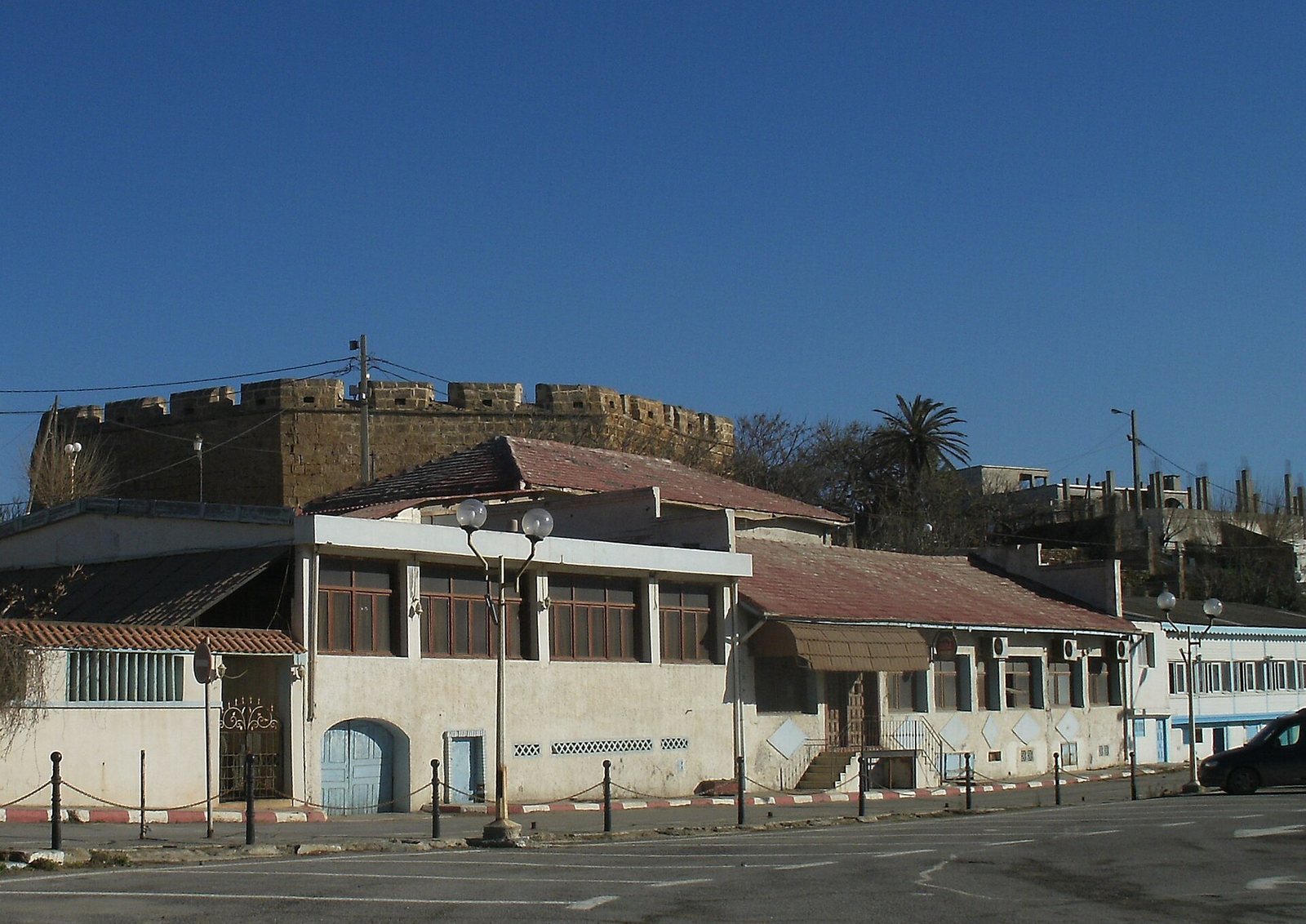
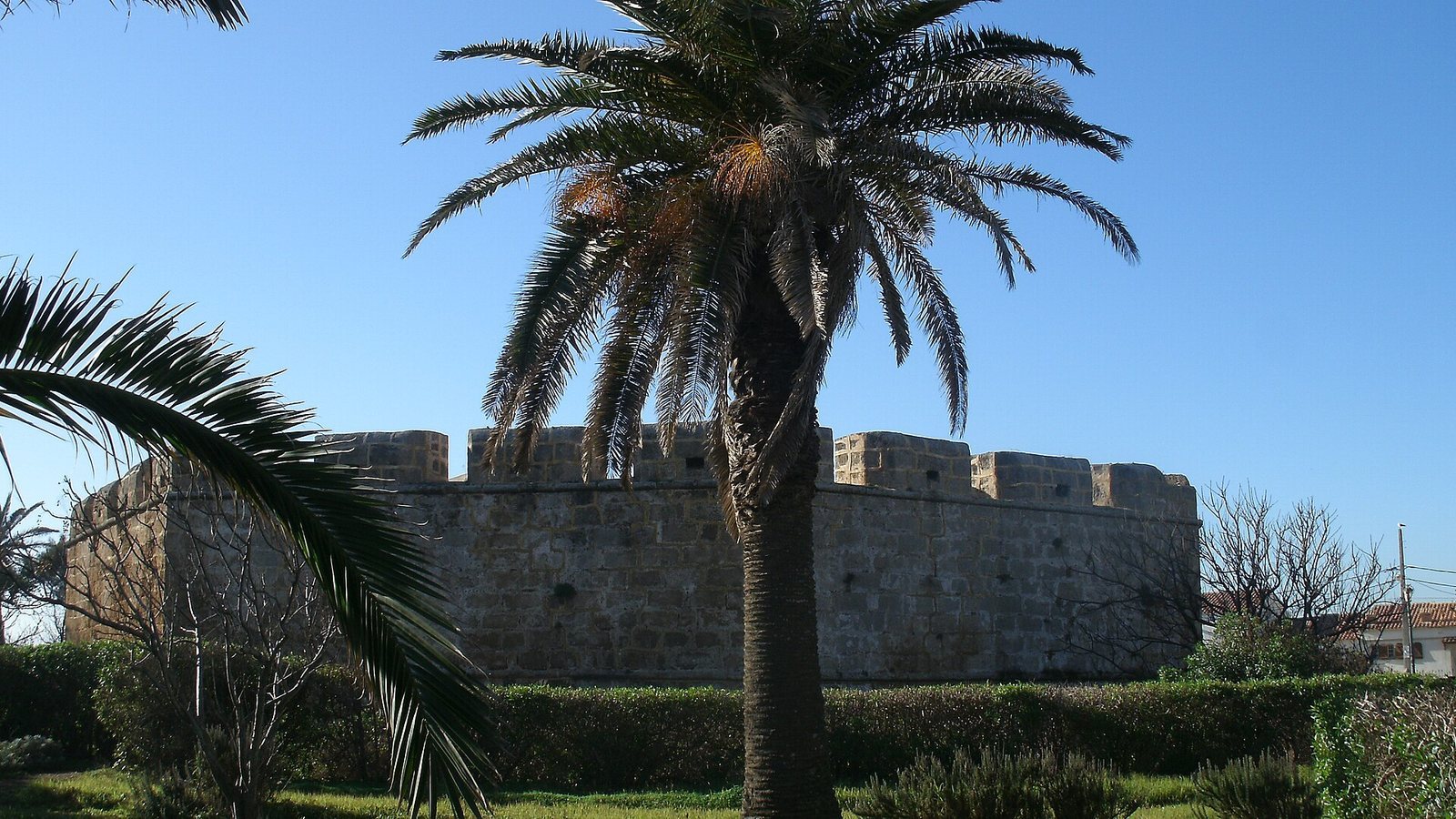
The fort stands on Tamentfoust’s highest point, on the coast overlooking the Bay of Algiers and the Mediterranean. Near Tamentfoust Port and the mouth of Oued El Harrach, it occupies the coastal edge of the Mitidja Plain and the Kabylie region. Its stone exterior rises from an octagonal base into a body shaped like a solid with six parallelogram faces, a configuration unique in the Maghreb. Much of the stone came from the ruins of the ancient Roman town of Rusguniae.
Outer defenses
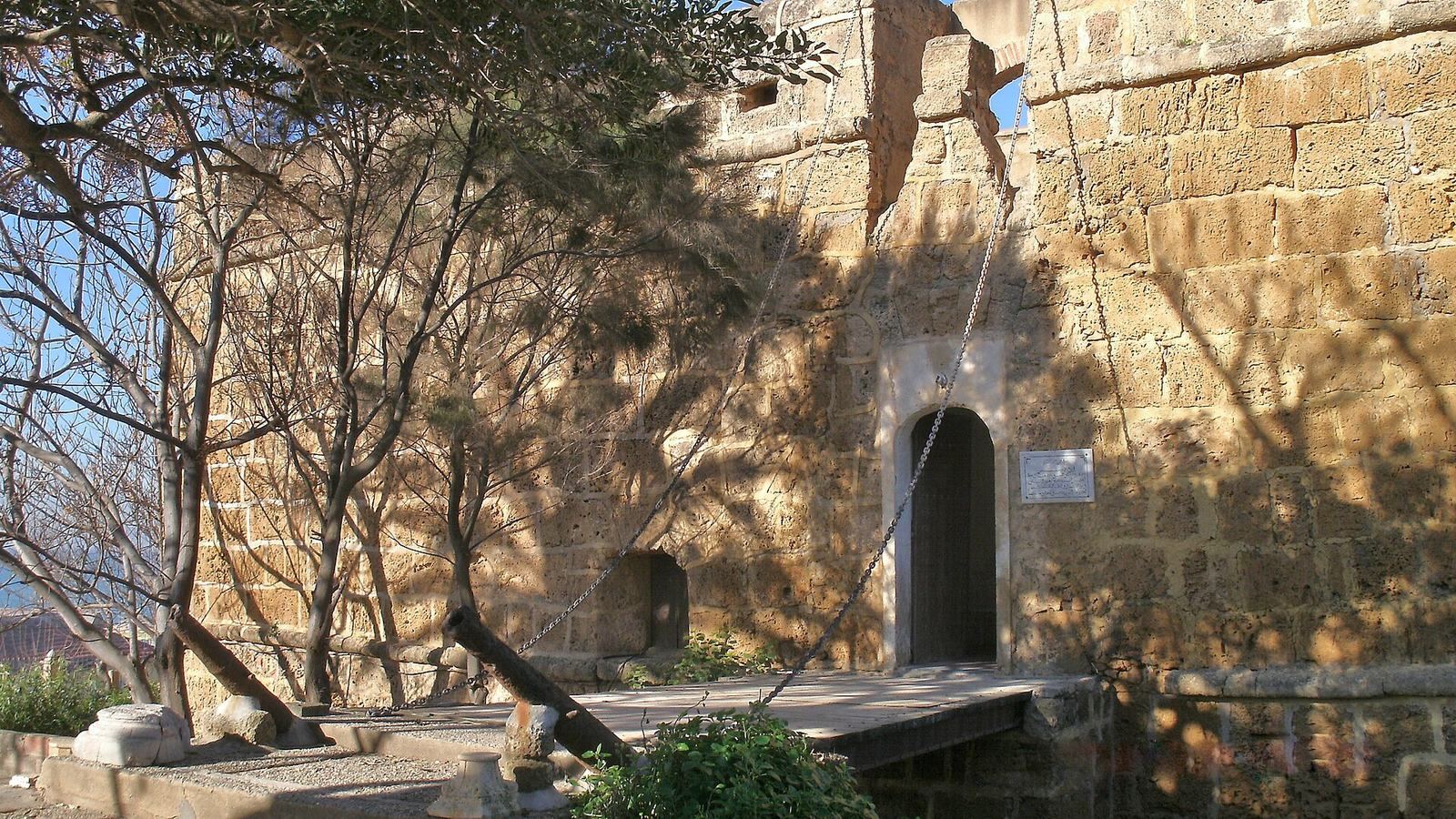
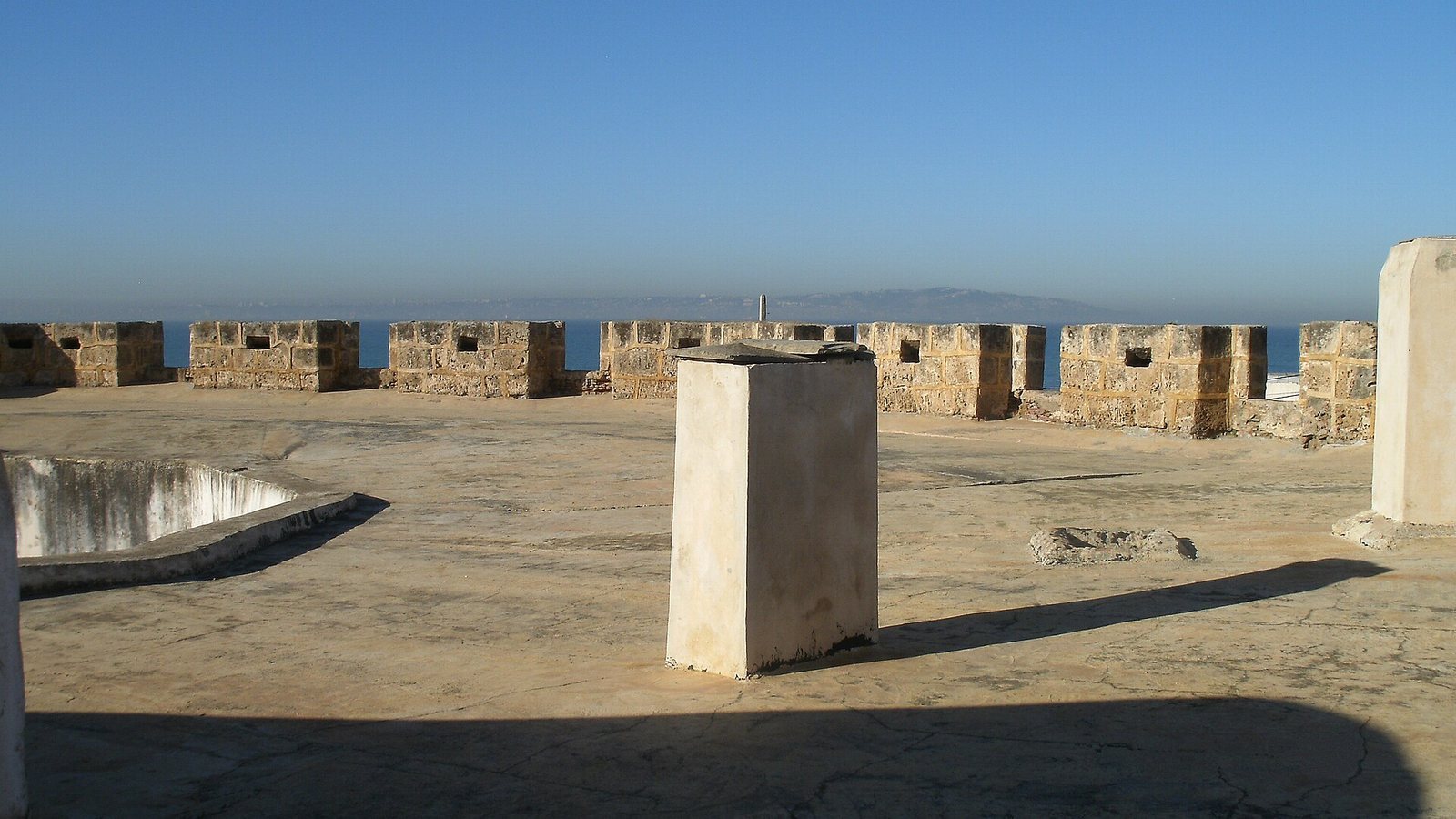
A moat about three metres deep surrounds the fort. On its southeast side, a drawbridge measuring five metres long and 1.5 metres wide links the rear entrance to the moat floor. At the main façade, a platform lies behind walls rising about nine metres above the moat’s bottom. Small, roofed, sharply angled turrets with narrow firing openings crown the walls. The fort adjoined another moated fort, Bordj al-Ingliz.
Courtyards and interior
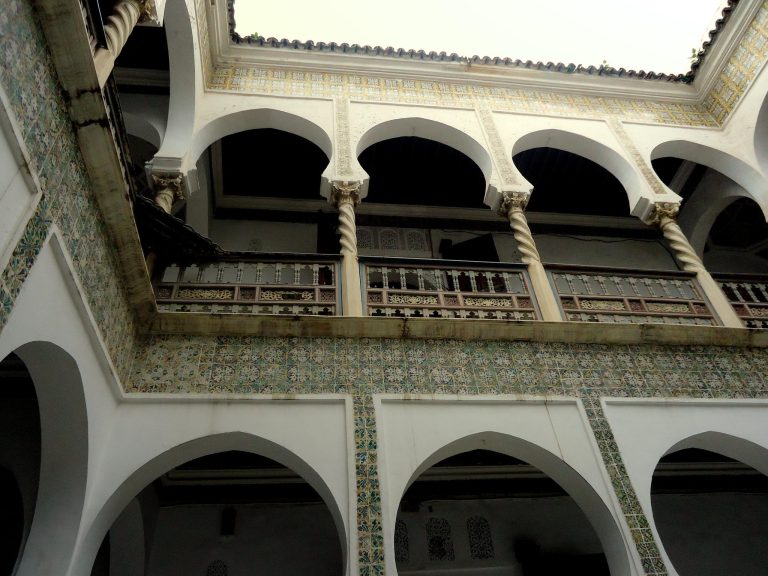
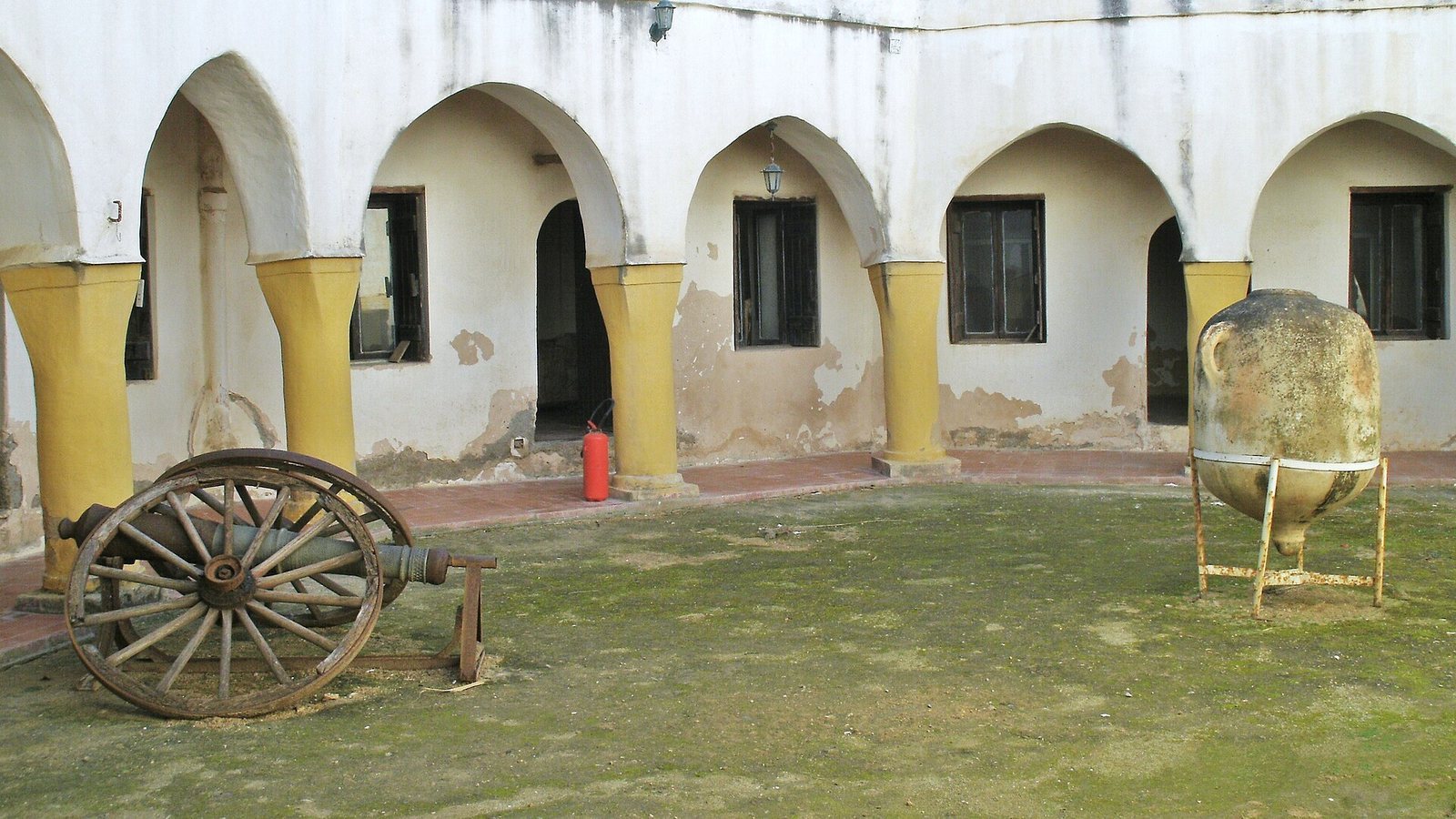
The upper exterior courtyard has a broad circular gallery, reached by stairs to the right of an arched corridor, and overlooks Cape Tamentfoust and the bay. The fort also has a ground floor and a lower courtyard. A winding entrance passage leads through a columned, arched corridor to a central courtyard; the corridor opens onto a kitchen, prayer room, prison, bathhouse, and weapons store. Eleven of the fort’s twelve rooms are arranged in three groups around the courtyard, extending along more than seven sides. The remaining room is a prayer room with an undecorated niche indicating the direction of prayer. Four museum exhibition halls are arranged around the ground-floor courtyard, displaying artifacts from prehistoric, Roman, and Islamic periods supplied by the National Museum of Bardo through Algeria’s national archaeology agency.
Artillery
The upper courtyard originally held 22 cannons, arranged to defend against hostile fleets and protect the Algerian fleet. One stood above the entrance, with three on each of the courtyard’s other seven sides.