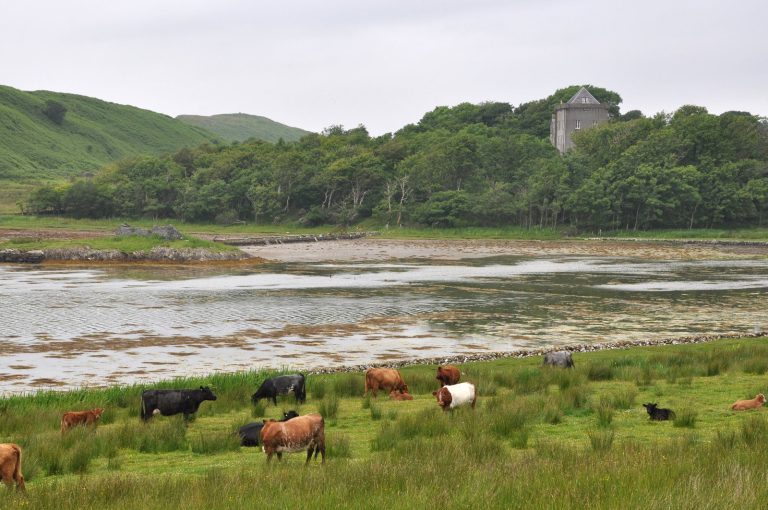
Finlaggan Castle: A Fortified Residence of the Lords of the Isles
Site at a Glance
- Popularity
- Very Low
- Country
- United Kingdom
- Primary era
- Medieval
- Eras represented
- Iron Age, Medieval, Early Modern
- Civilizations
- Kingdom of Scotland
- Site type
- Military
- Remains
- Castle
On this page18 sections
History
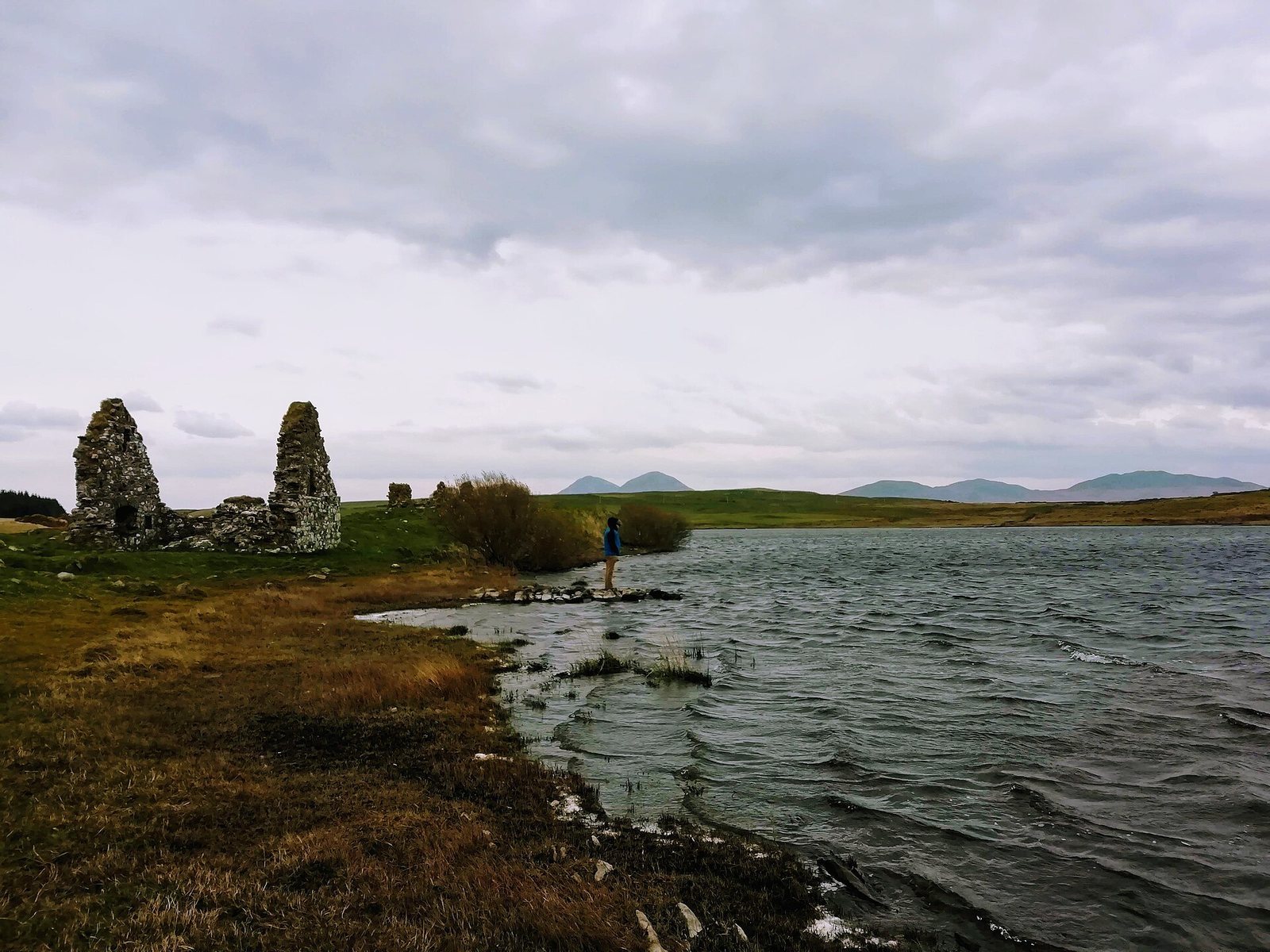
Finlaggan Castle is a ruined fortified residence on Eilean Mòr in Loch Finlaggan, on the Isle of Islay in Scotland, part of the United Kingdom. Its surviving masonry belongs to a 13th-century building. From the 13th to the 15th centuries, Eilean Mòr and Eilean na Comhairle, or Council Island, served as the seat, home and administrative centre of the Lords of the Isles and Clan Donald, the MacDonald family. Their lordship encompassed western islands and part of the mainland coast, from Kintyre to Lewis, and was nearly independent of the Scottish Crown.
Early settlement and monastic community
Gaels from Ireland began settling Islay and the surrounding islands in the 3rd century. A monastic community was established on Eilean Mòr in the first half of the 7th century. It was dedicated to Findlugan, an Irish monk and contemporary of Columba, or may have been founded by him. Findlugan was also identified as the first abbot of Tamlaght, a monastery founded by the Irish missionary Columba in 585. In the Middle Ages, Eilean Mòr was also known as the Isle of St Finlagan.
Viking attacks began in the late 8th century and were followed by Norse settlement. From about 850 to 1100, the islands were more or less independent of both Norwegian and Scottish kings.
Somerled and the rise of the MacDonalds
In 1156, after island rulers asked for his help against the Norwegian king, Somerled defeated a Norse fleet of eighty galleys. They had offered to make his son king if Somerled freed them from Norwegian rule. His territories included Mull, Coll, Tiree, Colonsay, Islay, Gigha, Kintyre, Knapdale, Lorne and Argyll. Somerled died fighting Malcolm IV of Scotland in 1164. He may have been buried at Saddell Abbey, and his lands were divided among his three sons, with Donald receiving Islay.
After the Battle of Largs in 1263, the territories passed to the Scottish Crown in 1266. Angus Og MacDonald, a supporter of Robert the Bruce who fought at Bannockburn in 1314, helped strengthen his family’s position. By the 14th century, Donald’s descendants had become the most influential of the three families descended from Somerled.
The Lords of the Isles
John of Islay, Angus Og’s son, was the first to take the title Lord of the Isles. He succeeded his father after his death in 1328 and ruled from about 1329 to 1387. In 1350, John married Margaret Stewart, daughter of Robert Stewart, then regent of Scotland and king from 1371. John provided a new roof for the chapel on Eilean Mòr and probably founded Oronsay Priory around 1350. He died at Ardtornish Castle on Mull in 1387, aged at least eighty.
John II, the fourth Lord of the Isles, held the title from 1449 to 1493 and fought against the Scottish Crown. In 1493, James IV confiscated his estates and banished him from the islands; John died at Paisley Abbey in 1503. The Crown thereafter administered the lordship’s territory through a tenant-in-chief, a landholder who held directly from the Crown. The title Lord of the Isles became a Crown title in 1542 and is now held by the Prince of Wales.
Finlaggan after the lordship
After the lordship fell, Finlaggan passed to the MacGillespie family, who may have had a residence on the island. In 1541, Donald MacGilleasbuig held Finlaggan from the Crown. Iain Mòr MacDonald, third of Dunnyveg, and his son Iain Cathanach were later captured at Finlaggan through the deception of MacIain of Ardnamurchan. Their capture was connected with the execution of the governor of Dunaverty Castle. Both men were tried and hanged at Burgh Muir in Edinburgh.
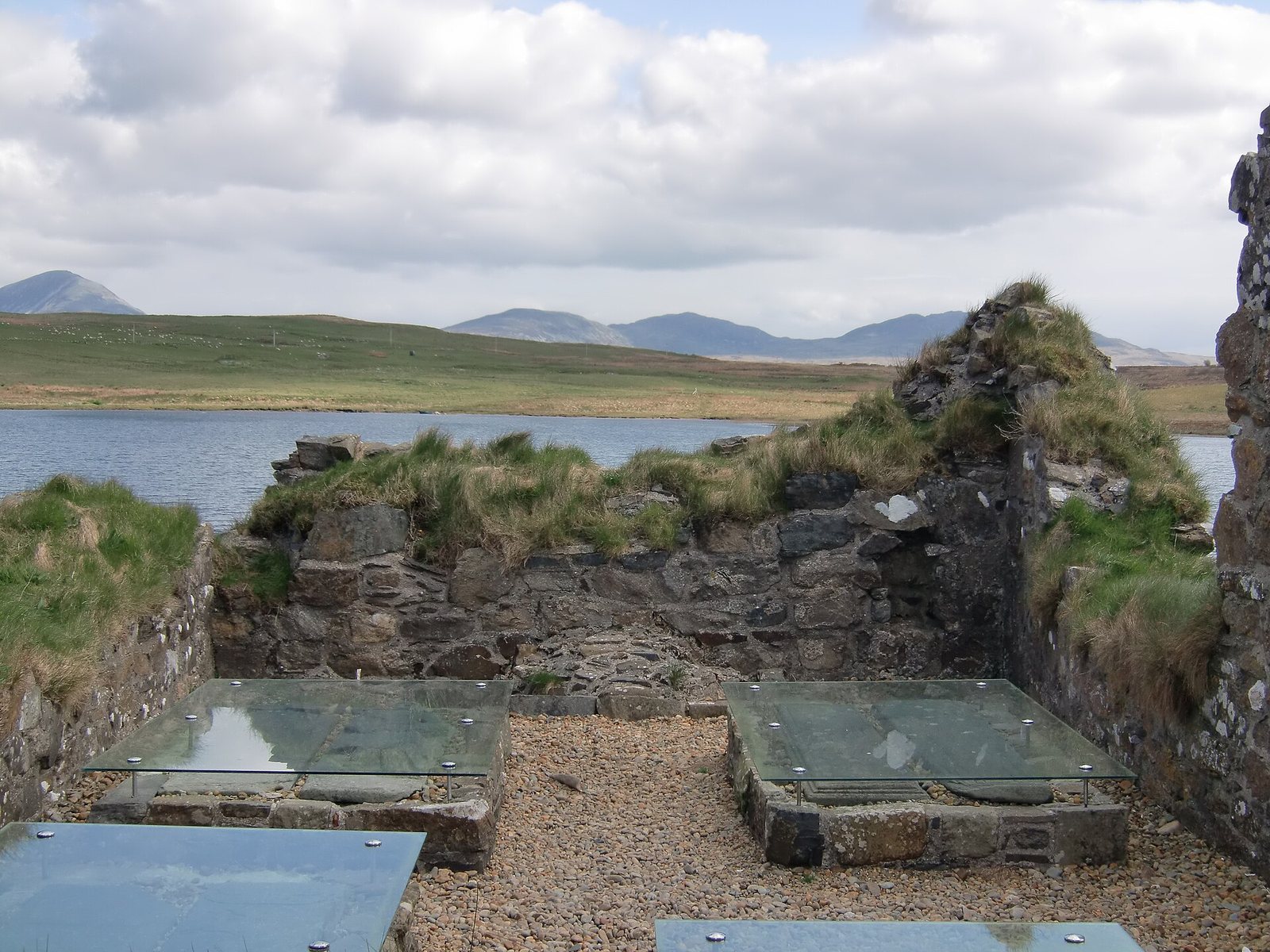
Archaeological investigations have taken place at Finlaggan, and the Finlaggan Trust maintains the site. The medieval chapel walls were stabilised, and six 16th-century graves were placed on display beneath large glass panels. Finlaggan was designated a protected monument in the United Kingdom on 26 November 1963.
Remains
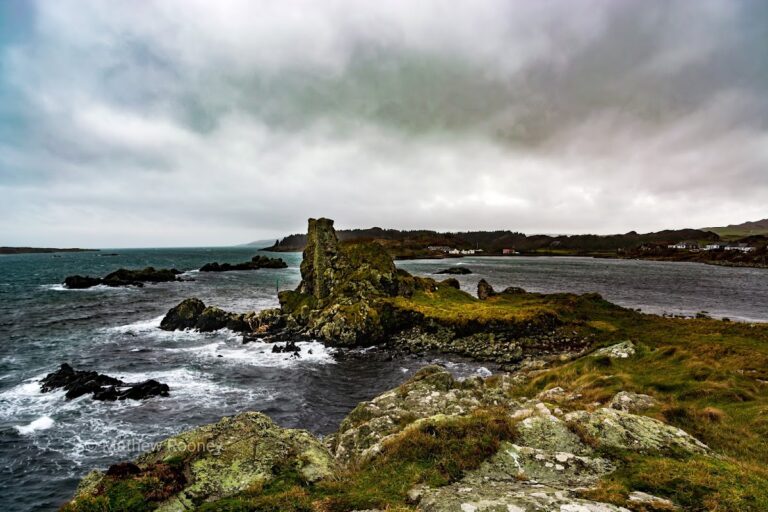
The historic remains are centred on Eilean Mòr and Eilean na Comhairle, two of Loch Finlaggan’s three islands, linked by a stone causeway. Their features include masonry buildings, earth-and-timber defences, paved routes and a burial ground. Eilean Mòr runs from southwest to northeast; its northern part expanded substantially, and the island was originally smaller. Marshy ground lies along its northern approach.
Eilean na Comhairle
Causeway
Eilean na Comhairle is probably a crannog, an artificial or partly artificial island. A stone causeway about two metres wide and fifty metres long joins it to Eilean Mòr. Paving survives in parts of the causeway’s middle and northeast sections. A drawbridge may have stood where its southwest end reached the island.
Castle and council buildings
Foundations of a castle on the island date to the 13th century, and the building was probably demolished in the 14th. The remains of three buildings from the 15th century may have served as council buildings.
Wall and earlier occupation
A thick dry-stone wall follows the island’s south and west sides. It may have belonged to an Iron Age fortified enclosure or prehistoric dry-stone tower. A Neolithic stone axe head found on the island indicates habitation during that period.
Eilean Mòr
Defences and island layout
Eilean Mòr was defended by earth and timber works. A stone causeway is also evidenced between the island and the loch shore. The island contained a great hall, residential buildings, a chapel and paved roads, arranged around its principal building group at the southwestern point.
Castle
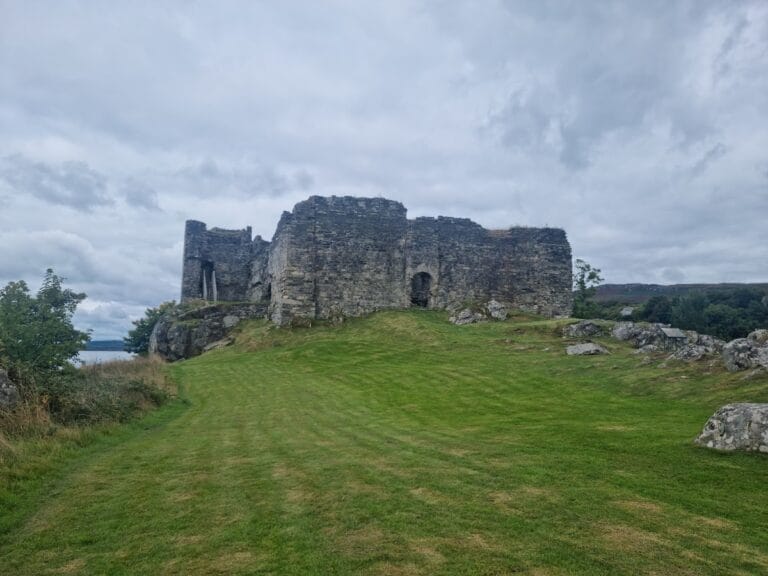
The principal group, known as Finlaggan Castle or Eilean Mòr Castle, occupied the island’s southwestern tip. Its surviving walls are masonry. An earlier structure, probably built of timber, was erected by Somerled in 1138 and may have stood over an Iron Age fort. The castle appears to have been demolished in the 15th or 16th century.
Great hall
The great hall stood north of the Lords’ residential quarters. It measured 16.5 by 7 metres and dates to the 14th century. Alterations in the 15th century included a hearth and a wooden floor. The hall’s long axis ran southwest to northeast.
Residential and working buildings
Three smaller buildings between the hall and the island’s southern tip may have been residential quarters, given their sheltered position. Southeast of the hall are remains of 16th- and 17th-century residential buildings and a barn. A food-preparation area lay north of the hall. A boat landing was west of it, between the hall and that working area; a paved path linked the landing with the chapel at the island’s northwest. Before the medieval period, the chapel site marked the island’s northernmost point.
Kilfinlaggan Chapel and cemetery
Kilfinlaggan Chapel, dedicated to Findlugan, stands on the site of an older chapel and is probably a 14th-century ruin. It measures 10.1 by 6.1 metres, and its walls survive to a maximum height of three metres. An earlier cemetery surrounds the chapel.
Gravestones and effigy
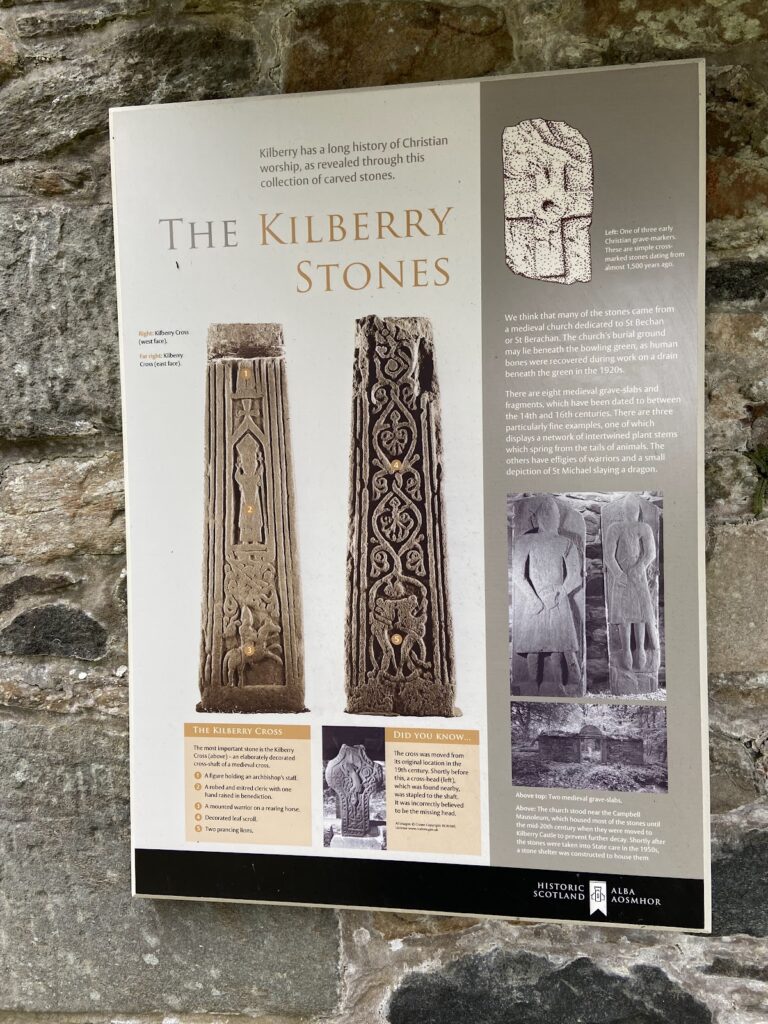
Ten gravestones dating from 1350 to 1500 are known from the cemetery. They bear designs including swords, galleys and plant motifs. One shows an anvil and may mark a smith’s grave. The stones were traditionally associated with the women and children of the Lords of the Isles, while the lords themselves were buried on Iona. A small stone intended for a child’s grave follows the Iona school, a style of medieval West Highland stone carving associated with the island of Iona.
A carved tombstone from 1500 to 1600 depicts a warrior wearing an aketon, a padded garment worn beneath armour, with a galley beneath his feet. It almost certainly marks the grave of MacGilleasbuig of Finlaggan, who died after the Lords of the Isles lost their title. Its inscription names Donald, son of Patrick, son of Celestine. Steer and Bannerman attributed the carving to an independent sculptor outside the West Highland schools and judged its workmanship inferior to that of the Iona school. The sword shown had fallen out of general use by the end of the 15th century, around the time black Lombardic lettering, a decorative medieval script, came into use.
Cross and excavated finds
The upper part of the Finlaggan Cross was found in the cemetery in 1990. Excavations also yielded a cross associated with the Lords of the Isles and a quilted sheep-wool aketon worn beneath armour.