Konsho-ji Temple: A Historic Tendai Buddhist Center in Japan


Site at a Glance
- Rating
- 4.3
- Popularity
- Low
- Country
- Japan
- Primary era
- Medieval
- Eras represented
- Medieval
- Civilizations
- Unclassified
- Site type
- Religious
- Remains
- Temple
On this page13 sections
History
Konsho-ji Temple is a Tendai Buddhist temple in Japan, located in the mountains south of Ritto in Shiga Prefecture. Traditionally founded in 733, it developed as a major Buddhist center in the southern Lake Biwa region and was formerly known as Daibodai-ji.
Early foundation traditions
The most familiar foundation tradition dates the temple to 733, when Ryoben established it at the command of Emperor Shomu. The temple was intended to protect Shigaraki Palace from the northeast, described in the tradition as the “demon gate,” a direction associated with spiritual danger. Ryoben was an influential Buddhist monk traditionally regarded as the founder and first abbot of Todai-ji, and he was also associated with Konshuku Bosatsu, a sacred Buddhist figure linked to the Konze mountains.
Other accounts place an earlier sacred site at the location. The medieval record Kofukuji Kanmu Chosho states that En no Ozunu, a semi-legendary ascetic associated with early mountain religious practice in Japan, practiced there in 672, during the reign of Emperor Tenmu. The same tradition says that Ryoben founded a temple at the site in 717 to protect the northeastern side of Heijo-kyo.
A government document from 897 gives a different account of the temple’s institutional beginnings. It states that Gan’an, a monk of Kofukuji who practiced at the sacred site associated with Ryoben, established the temple complex between 810 and 824. During the reign of Emperor Ninmyo, the temple is said to have received an imperial plaque and adopted the name Konsho-ji.
State recognition and religious development
The Shoku Nihon Koki records that “Konshozan Daibodai-ji” became a state-recognized temple in 833. This status identified it as a Buddhist institution granted official government recognition. In 897, a government order granted the temple an annual quota of two ordinations, meaning that two monks each year were authorized to receive formal ordination.
Konsho-ji was initially affiliated with the Hosso tradition, a Japanese Buddhist school based on Yogacara thought. Around the later Heian period, it became associated with Tendai Buddhism, a major Japanese school centered on the Lotus Sutra. Tendai influence was especially strong in the Omi region because of the institutional power of Mount Hiei.
At its height, Konsho-ji administered a broad religious network. The institution had 36 subtemples in the mountains and 25 affiliated branch temples in the surrounding area. Temples believed to have belonged to this network remain in the vicinity, reflecting the former reach of the mountain center.
Imperial patronage and later decline
In 1335, Emperor Go-Daigo designated Konsho-ji as a temple for imperial prayers. Go-Daigo was the fourteenth-century emperor who sought to restore direct imperial rule and issued religious and political commands during the Kenmu era.
The complex burned in 1549 and declined thereafter. It was rebuilt during the Genroku period, and Tokugawa Ieyasu granted the temple an income of 30 koku, a historical unit used to measure rice-based income. The rebuilding restored the institution, but Konsho-ji did not recover the scale it had possessed during its earlier prominence.
Remains
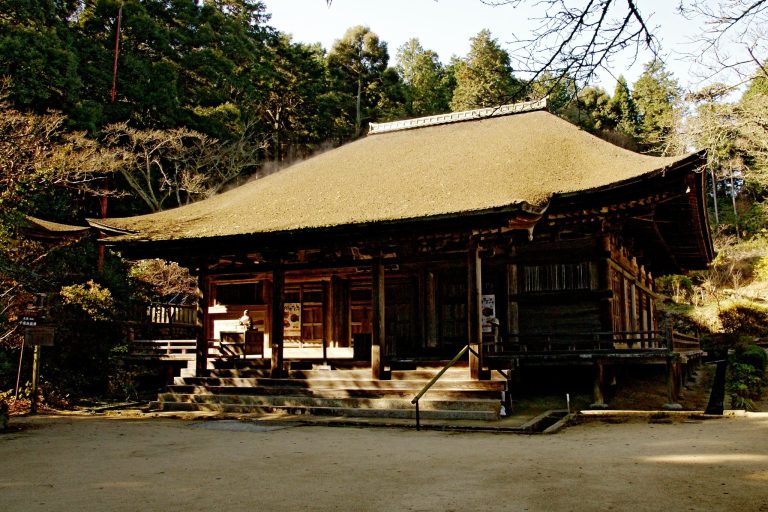
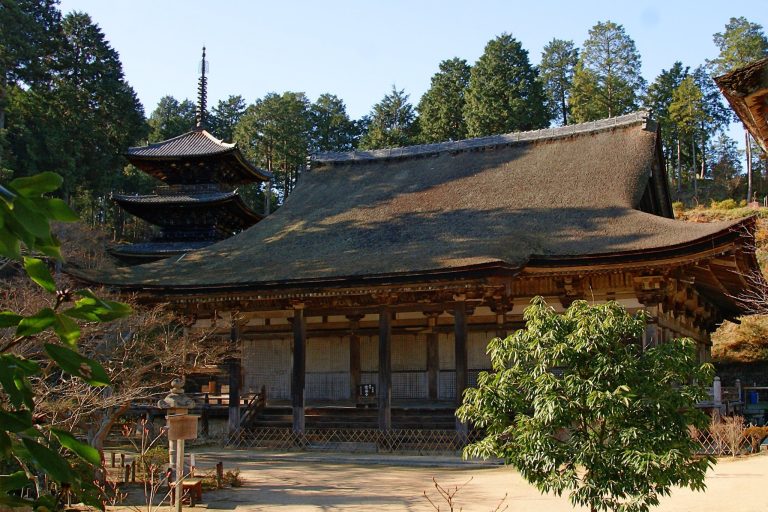
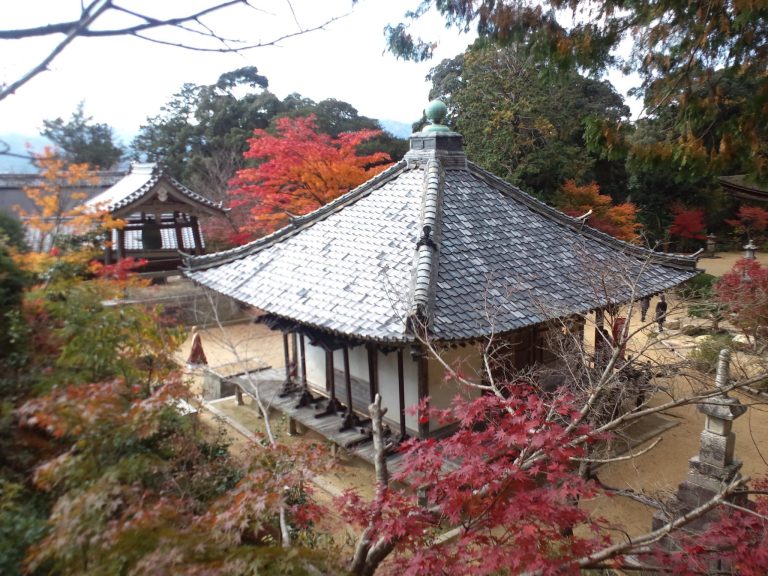
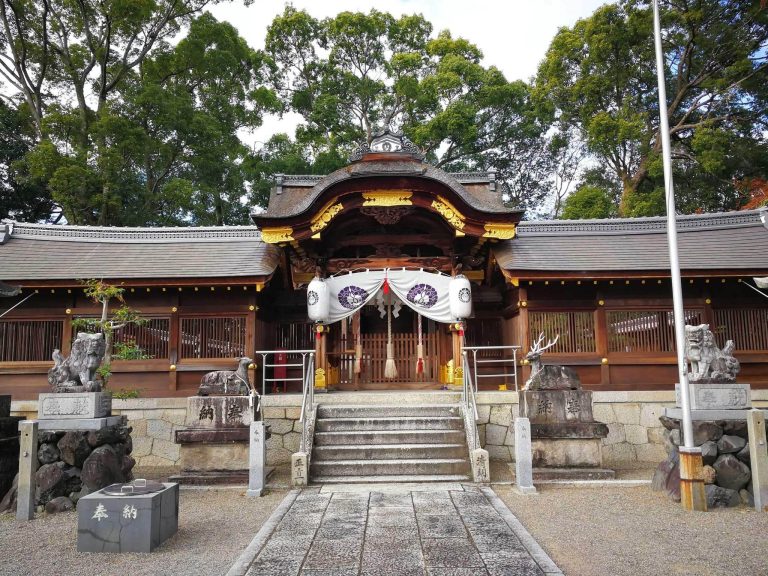
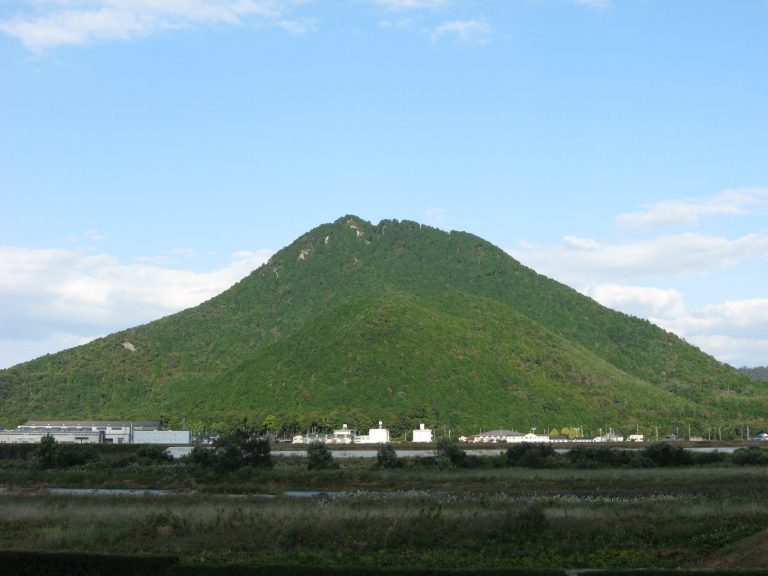
Konsho-ji occupies a mountain precinct in the area known as Mount Konze. Mount Konze refers to a mountain system rather than a single summit, including Mount Ryu-o, which rises to 605 meters, and Mount Keikan, which reaches 491 meters. Mount Ahoshi to the northeast and Mount Hando to the east are also regarded as sacred places associated with Konshuku Bosatsu. The precinct contains the Nio Gate, Main Hall, February Hall, and Kokuzo Hall, while a foothill subtemple stands near Kasuga Shrine.
Mountain precinct buildings
Nio Gate
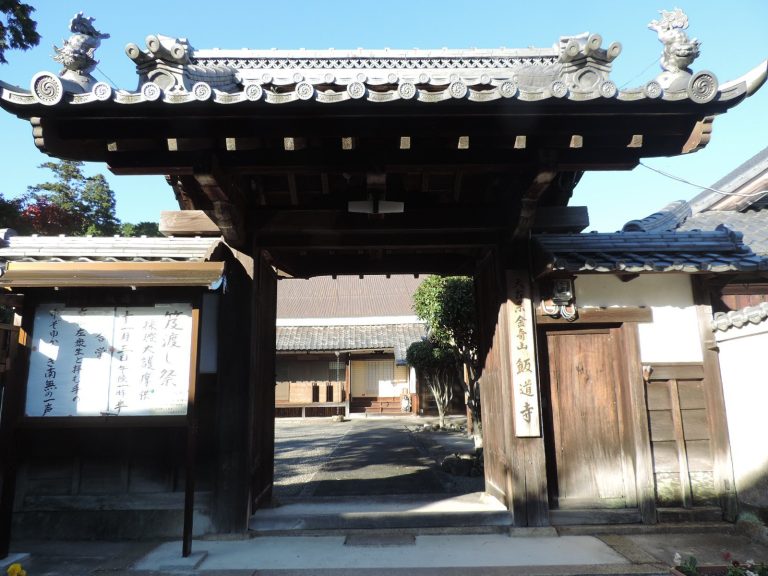
The Nio Gate forms the entrance to the mountain precinct. A Nio Gate is traditionally guarded by two muscular Buddhist guardian figures, although the supplied description does not specify the surviving gate’s individual sculptural details.
Main Hall
The Main Hall houses the temple’s principal image, a seated wooden sculpture of Shakyamuni measuring 218 centimeters in height. The image dates from the Heian period. The hall itself is a temporary building erected during the rebuilding that followed the fire.
February Hall
The February Hall contains a standing wooden sculpture of Gundari Myoo, 360.5 centimeters high and dating from the Heian period. Like the Main Hall, the building is a temporary structure from the post-reconstruction period.
Kokuzo Hall
The Kokuzo Hall houses a semi-seated wooden sculpture of Kokuzo Bosatsu measuring 194 centimeters in height. A semi-seated, or half-lotus, image has one leg lowered while the other remains folded. The hall also contains standing wooden sculptures of Bishamonten, 168 centimeters high, and a seated wooden sculpture of Jizo Bosatsu, 84 centimeters high. All three sculptures date from the Heian period. The Jizo image was formerly kept at Yamaguchi-ji Temple in Arahari, Ritto.
Mountain images and natural features
Komazaka rock-carved images
Komazaka rock-carved Buddhist images lie in the mountains west of Konsho-ji. Attributed to the early Heian period, the figures are carved directly into a rock face. Their presence is associated with the long history of Buddhist culture in the surrounding mountains.
Ancient trees
The precinct includes notable trees, among them a cedar said to be a thousand years old and stands of maple. These natural features form part of the surviving mountain environment around the temple buildings and religious images.