Jōraku-ji Temple: A Historic Buddhist Temple in Konan, Japan


Site at a Glance
- Rating
- 4.1
- Popularity
- Low
- Country
- Japan
- Primary era
- Medieval
- External website
- Open
- Eras represented
- Medieval
- Civilizations
- Ashikaga shogunate
- Site type
- Religious
- Remains
- Monastery
On this page14 sections
History
Jōraku-ji Temple is a Buddhist temple in Konan, Japan, traditionally founded around 708 to 715 during the Wadō era through the patronage of Empress Genmei and the monk Rōben. Its early foundation remains uncertain because the temple’s documentary evidence was lost, but tradition associates it with protecting the northeastern direction of Shigaraki Palace.
Early Buddhist development
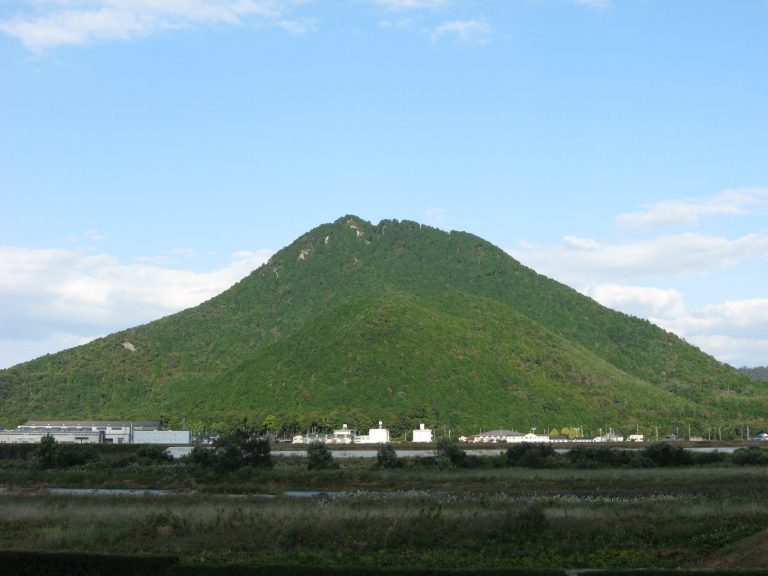
During the Enryaku era, from 782 to 806, Jōraku-ji was converted to the Tendai school, a Japanese Buddhist tradition centered on the Lotus Sutra and a broad range of practices. Under the patronage of successive emperors during the Heian and Kamakura periods, it developed into a large Tendai complex on Mount Aboshi. Temple tradition described the mountain as having five thousand monastic establishments.
Jōraku-ji is traditionally known as Nishi-dera, meaning “Western Temple,” in contrast to Chōjū-ji, or “Eastern Temple.” Along with Chōjū-ji and Zensui-ji, it now forms the Three Mountains of Konan. Jōraku-ji also serves as the first station of the Ōmi Saigoku Thirty-three Kannon pilgrimage, established in 1734 as a local route modeled on the Saigoku Kannon pilgrimage.
Destruction and rebuilding
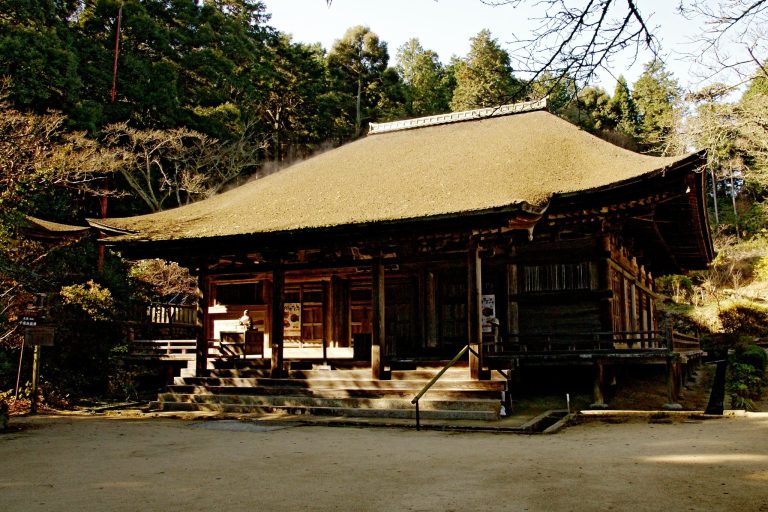
Lightning caused a fire in 1360 that destroyed the Main Hall and other temple buildings. The principal image was also lost in the disaster. The Main Hall was rebuilt in the same year by Kankei and other craftsmen, creating the structure that survives today.
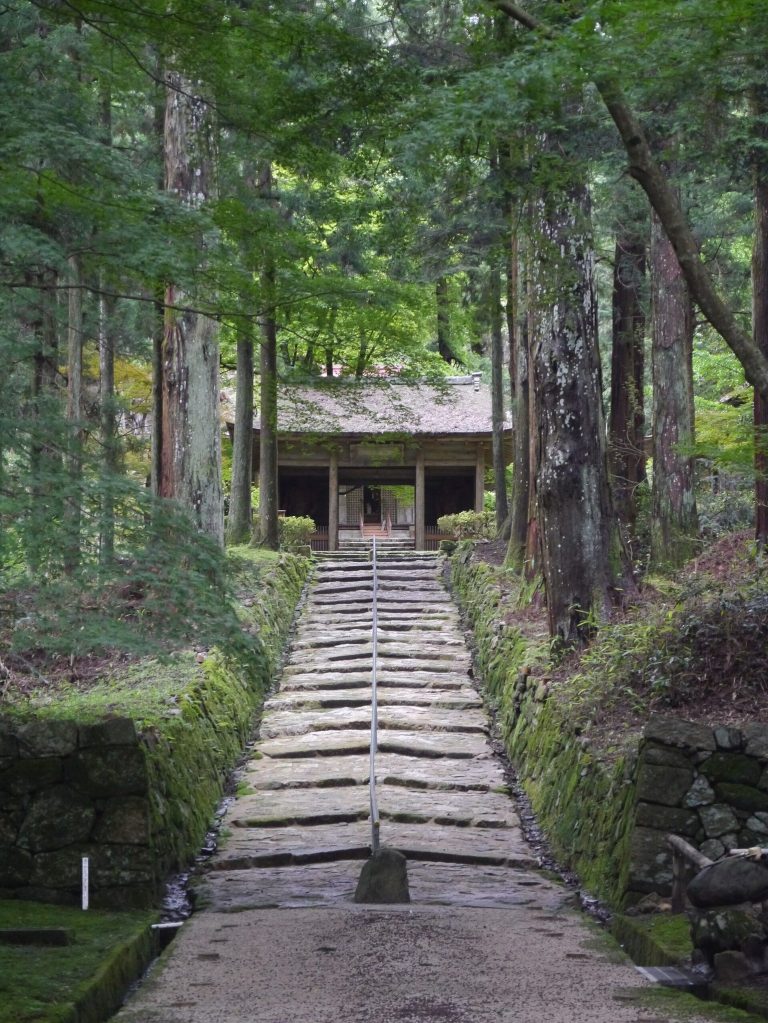
The Three-story Pagoda was rebuilt in 1400. The temple’s Niōmon, or guardian gate, was constructed in 1452. Toyotomi Hideyoshi transferred the gate to Fushimi Castle between 1592 and 1594, after which Tokugawa Ieyasu moved it to Mii-dera in 1601. It became the main gate of Mii-dera and remains there as an Important Cultural Property.
Warfare, religious change, and modern identity
In 1571, during Oda Nobunaga’s campaign against the Ikkō-ikki, organized leagues of religious followers, warrior bands, and other supporters associated with the Ikkō branch of Pure Land Buddhism, Sakuma Nobumori established his field headquarters at Jōraku-ji. His position formed part of Nobunaga’s campaign against forces concentrated at Kanamori in present-day Moriyama during Japan’s Sengoku period of prolonged political and military conflict.
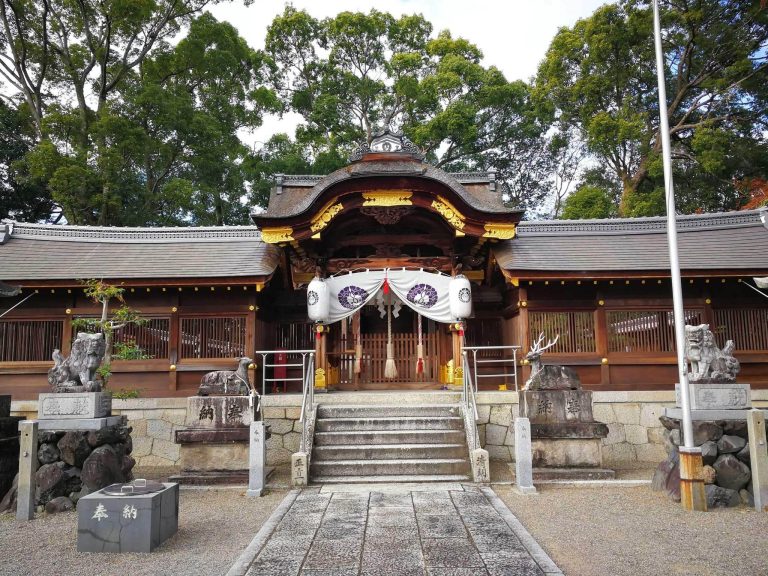
During the Meiji period, the separation of Buddhism and Shinto made Sansei Shrine, formerly the temple’s guardian shrine, an independent institution. After Ishibe and Kosei towns merged to create Konan City in 2004, Jōraku-ji, Chōjū-ji, and Zensui-ji established the Three Mountains of Konan in autumn 2005. The temple left the Tendai organization in 2022 and became independent.
Jōraku-ji’s Main Hall and Three-story Pagoda are National Treasures, Japan’s highest major category of legally designated cultural property. Other nationally protected holdings include the Nirvana Painting, the seated Shaka Nyorai, the standing Twenty-Eight Legions, the seated Senjū Kannon, ritual implements, a dated stone lantern, and three scrolls of the temple’s fundraising document with an attached bronze Buddhist offering vessel. In 2022, the temple sold its Important Cultural Property Jōdo Mandala to the Agency for Cultural Affairs to help support repairs to the Main Hall’s damaged cypress-bark roof.
The temple also holds the mid-January observance called Oni Bashiri, or “Demon Running,” a traditional religious ceremony that remains part of Jōraku-ji’s ritual life.
Remains
Jōraku-ji’s surviving buildings combine a fourteenth-century Main Hall with a rebuilt fifteenth-century Three-story Pagoda. The complex also preserves Buddhist sculptures, paintings, ritual objects, and documentary materials associated with its long religious history. The principal image is a hidden statue of Senjū Kannon, the thousand-armed form of the bodhisattva of compassion.
Principal buildings
Main Hall
The Main Hall belongs to the Nanboku-chō period, the fourteenth century when rival Northern and Southern imperial courts divided Japan. Rebuilt in 1360 after the lightning fire, it is an irimoya-zukuri building, a roof form with a gabled upper section and hipped lower slopes. The hall measures seven bays by six bays and has a roof covered with shingles of hinoki cypress bark.
Three-story Pagoda
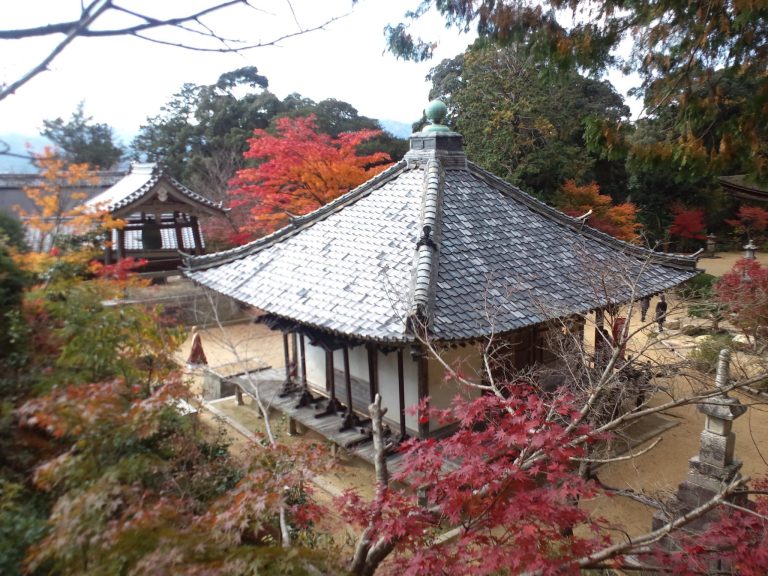
Rebuilt in 1400, the Three-story Pagoda is arranged on a three-bay-by-three-bay plan. Its three levels carry tiled roofs, distinguishing its construction from the cypress-bark roof of the Main Hall.
Sculpture and painted images
Principal Buddhist images
The hidden Senjū Kannon is associated with the Nanboku-chō period. A hidden sacred image, or hibutsu, is kept from public view. The temple also preserves a seated statue of Shaka Nyorai dating from the Heian period, which lasted from 794 to 1185.
Twenty-Eight Legions
A group of twenty-eight standing guardian statues dates from the Kamakura period, which lasted from 1185 to 1333. The set includes Fūjin and Raijin, the traditional wind and thunder deities. Two statues were stolen in 1981, and their whereabouts remain unknown.
Nirvana Painting
The Nirvana Painting is executed in ink and color on silk. It is deposited with the Kyoto National Museum, while its place within Jōraku-ji’s holdings reflects the temple’s wider collection of Buddhist paintings and images.
Jōdo Mandala
The Kamakura-period Jōdo Mandala is a Buddhist painting traditionally attributed to the monk Genshin. Formerly deposited with the Kyoto National Museum, it was sold to the Agency for Cultural Affairs in 2022 in connection with the repair of the Main Hall’s roof.
Ritual and documentary objects
Associated objects include a ritual staff, a gilt-bronze offering vessel, a copper offering vessel without its foot, and a gilt-bronze incense burner. The collection also includes a stone lantern dated to the Ōei era, which lasted from 1394 to 1428, together with three scrolls of the temple’s fundraising document and an attached bronze Buddhist offering vessel.