Chōju-ji Temple: A Tendai Buddhist Temple in Konan, Japan


Site at a Glance
- Rating
- 4.3
- Popularity
- Low
- Country
- Japan
- Primary era
- Medieval
- External website
- Open
- Eras represented
- Medieval
- Civilizations
- Ashikaga shogunate, Kamakura shogunate
- Site type
- Religious
- Remains
- Monastery
On this page9 sections
History
Chōju-ji Temple is a Tendai Buddhist temple in Konan, Japan, traditionally founded during the Tenpyō era (729–749). Tendai is a major Japanese Buddhist school that combines a broad range of teachings and practices. The temple’s foundation remains uncertain because its early documentary records were lost, although its traditions connect it with Emperor Shōmu and the monk Rōben.
Imperial Foundation Tradition
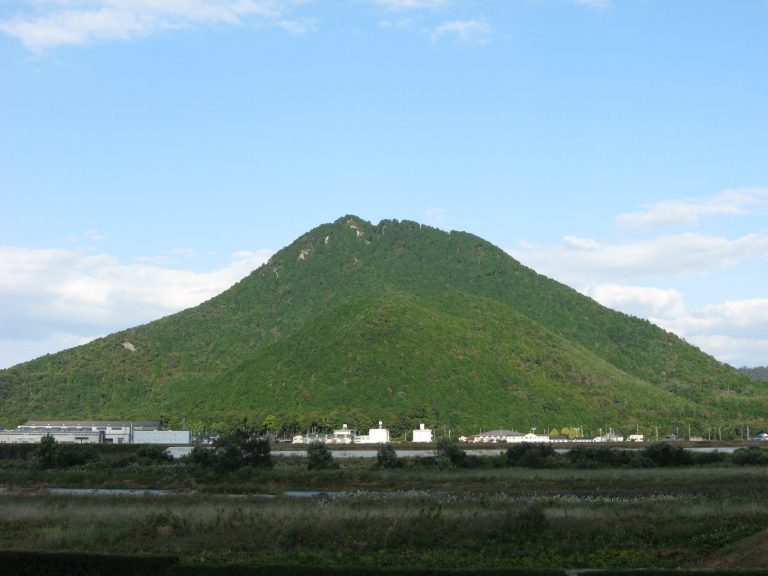
According to temple tradition, Rōben prayed on Mount Aboshi for the birth of an imperial child at Emperor Shōmu’s request. After a princess was born, later known as Empress Kōken, the emperor established a temple at the northeastern “demon gate” of Shigaraki Palace. The foundation was intended to protect the palace spiritually and to pray for the princess’s long life. The temple received the name Chōjū-ji, while Gyōki was said to have carved its principal image, a Jizō Bosatsu. Jizō Bosatsu is a Buddhist bodhisattva associated with protection and care for beings in difficult states of existence.
The original institution was traditionally described as a major imperial prayer temple containing seven halls and 24 subordinate establishments. Chōju-ji later developed into a Tendai center on Mount Aboshi. Its religious network was reputed to have included 5,000 temple establishments before declining over time.
Hakusan and Early Reconstruction
A shrine dedicated to Hakusan was established south of the temple either around the time of Chōju-ji’s foundation or during the Jōgan era (859–877). Hakusan is a sacred mountain and a related religious tradition in Japan. Temple tradition attributes the later foundation of the shrine to Jōkai, a temple monk who held the ritual office of an ajari, or ritual master. The shrine was separated from Chōju-ji during the Meiji-period separation of Buddhism and Shinto.
The Main Hall burned during the Jōgan era and was rebuilt soon afterward. Chōju-ji and the Hakusan Shrine were traditionally said to have been restored by Minamoto no Yoritomo in 1183. Yoritomo founded the Kamakura shogunate, Japan’s first government led by a shogun, and Chōju-ji later served as a place of prayer under his patronage during the Kamakura period. The temple also received patronage from the Ashikaga family during the Muromachi period, when its halls were repaired or rebuilt. The Ashikaga family ruled through the Muromachi shogunate.
Sengoku Changes and Religious Identity
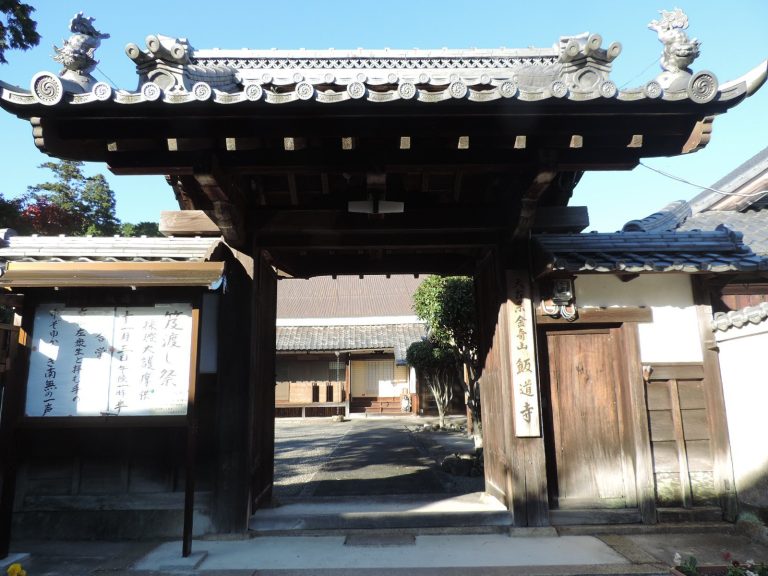
During the Sengoku period, an era of widespread political and military conflict, Oda Nobunaga transferred Chōju-ji’s three-story pagoda to Sōken-ji in the mountains near Azuchi Castle. The pagoda survives there as an Important Cultural Property. Nobunaga also moved the temple gate to the former Rendai-ji in present-day Rittō; neither the gate nor Rendai-ji survives.
Chōju-ji is also called Higashi-dera, meaning “Eastern Temple,” in contrast to Jōraku-ji, or “Western Temple.” Together with Jōraku-ji and Zensui-ji, it forms the Three Konan Temples. The temple’s principal image is a normally concealed Jizō Bosatsu. A ritual called Oni Bashiri is held there in mid-January. The Main Hall became a National Treasure in 1953, and Benten-dō and several Buddhist statues also hold national Important Cultural Property status.
Remains
Main Hall
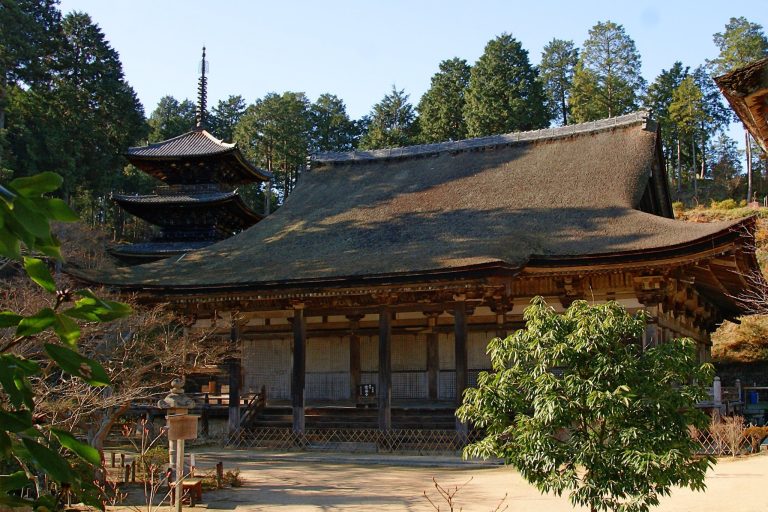
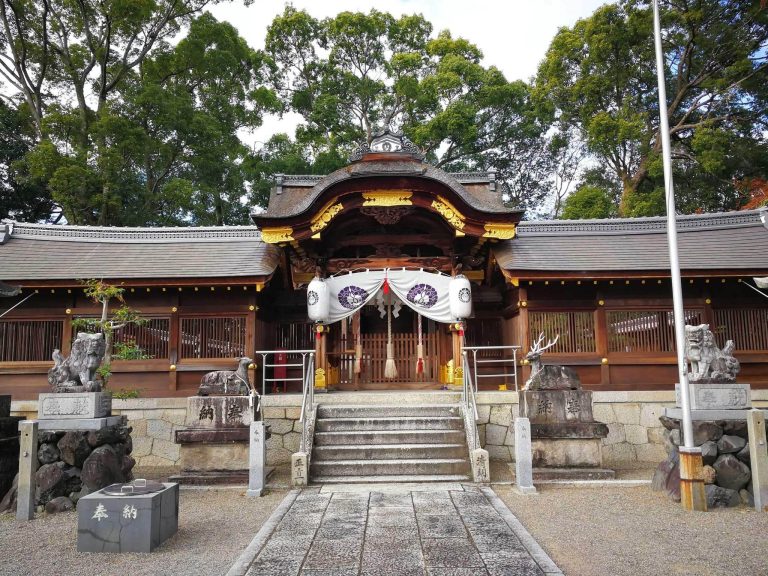
The Main Hall is a five-by-five-bay, single-story building from the late Heian period or early Kamakura period. A bay is the structural interval between two columns, while a ken is a traditional Japanese measure of structural spacing. The building follows Japanese architectural practice and measures approximately 12.73 by 13.15 metres. Its hipped roof slopes on all four sides and is covered with cypress-bark shingles, made from thin layers of bark. A three-ken entrance canopy shelters the stairway leading into the hall.
At the center of the altar stands a miniature shrine called a zushi. An inscription dates it to 1480, and the shrine is itself designated a National Treasure. The Main Hall also houses a Buddhist group ordinarily kept from public view. Its central figure is a seated wooden Shaka Nyōrai, the Japanese designation for the historical Buddha, measuring 177 centimetres in height. A seated wooden Amida Nyōrai, the Buddha of the Pure Land tradition, stands to the right and measures 142 centimetres. Both figures rest on lotus cushions and are Important Cultural Properties. Another sacred figure stands farther back and is designated an Important Cultural Property by Shiga Prefecture.
Amida Nyōrai Storehouse
A separate seated wooden image of Amida Nyōrai is kept in a medium-sized storehouse behind and to the right of the Main Hall. The statue is 2.85 metres high and dates from the Heian period, Japan’s classical era. It is designated an Important Cultural Property.
Benten-dō and Pond
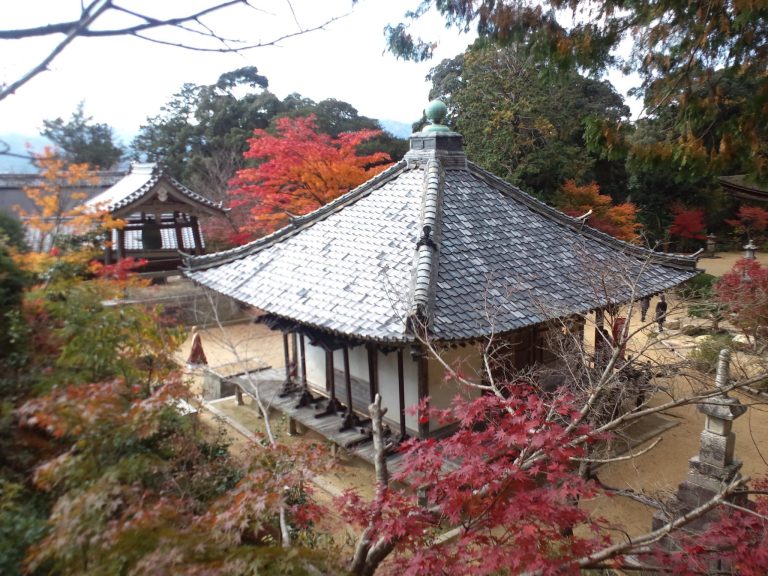
Benten-dō stands on a small island in the pond on the right side of the temple grounds. The square building measures 1.8 metres on each side and has a roof covered with cypress-bark shingles. Dating from the Muromachi period, it is dedicated to Benzaiten, a Buddhist deity associated with eloquence, music, learning, and prosperity.
Approach and Relocated Structures
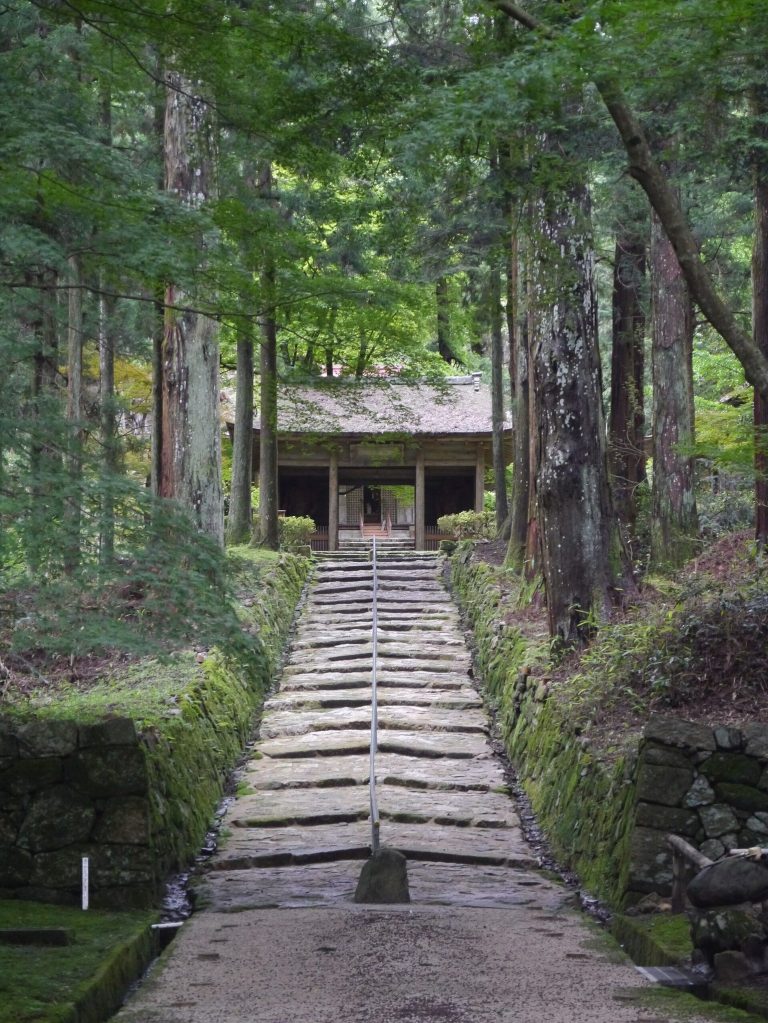
Maple trees line the approach to the Main Hall. Chōju-ji’s former three-story pagoda and gate are no longer part of the temple grounds. The pagoda was transferred to Sōken-ji, where it survives, while the gate was moved to the former Rendai-ji and was later lost.